Your backyard should be a safe place for your dog or cat to explore—but it can also hide surprising risks. Many common garden plants, “natural” pest products, compost piles, and everyday household chemicals can cause poisoning. The tricky part is that some toxins cause immediate symptoms (vomiting, drooling, tremors), while others cause delayed, life-threatening damage (kidney failure, internal bleeding) that starts hours later.
This guide covers the most common backyard toxins in the US and Europe, what symptoms to watch for, how to reduce risk at home, and when you need veterinary help immediately.
1. First: What to Do if You Think Your Pet Ate Something Toxic
If you suspect toxin exposure, act quickly—especially if your pet is showing symptoms.
Remove access: take the item away and move your pet to a safe area.
Try to identify the toxin: plant name, product label, amount eaten, and time of exposure.
Call a veterinarian or emergency clinic right away: early treatment is often the difference between mild illness and a crisis.
Do not induce vomiting unless a professional tells you to: some substances can cause more damage coming back up.
Bring evidence: packaging, photos of the plant, or a sample (sealed) can help your vet identify the toxin.
Emergency note: If your pet is having trouble breathing, collapses, has seizures, or can’t stay awake, seek urgent care immediately.
2. Toxic Garden Plants (Common in US and European Yards)
Plant toxicity depends on the species, the part eaten (leaf, bulb, berries), and the amount. Some cause mild stomach upset; others can be life-threatening.
2.1 High-Risk Plants (Treat as Urgent)
Lilies (cats): even small exposures can be extremely dangerous for cats.
Oleander: toxic to heart function.
Foxglove: affects the heart.
Yew: highly toxic; small amounts can be severe.
Sago palm: very dangerous; can cause severe liver damage.
2.2 Moderate-Risk Plants (Still Important)
Tulips and daffodils (bulbs): can cause GI upset and more serious signs if large amounts are eaten.
Azaleas/rhododendrons: can cause drooling, vomiting, weakness.
Hydrangea: can cause GI issues and lethargy.
Ivy: can cause vomiting, drooling, irritation.
2.3 Plants That Cause Mouth Irritation
Some plants cause intense burning and drooling due to mouth and throat irritation.
Dieffenbachia (dumb cane): common houseplant that may be near patios.
Calla lily-type plants: can cause mouth pain and drooling (different from true lilies).
Practical tip: If you garden, keep a list (or photos) of what you’ve planted so identification is easier in an emergency.
3. Backyard Foods That Can Poison Pets
Backyard “food” risks often come from compost, outdoor parties, fruit trees, and neighbors feeding pets.
3.1 Compost and Food Scraps (High-Risk for Dogs)
Moldy food: can cause serious neurologic symptoms (tremors, seizures).
Fatty scraps and bones: can cause vomiting, pancreatitis, or obstruction.
Onions/garlic scraps: can be harmful, especially in large amounts.
3.2 Common “Party Foods” Dropped Outdoors
Chocolate: toxic to dogs and dangerous in larger amounts.
Grapes/raisins: can be dangerous to dogs.
Alcohol: toxic to pets.
Xylitol products: some sugar-free gums/candies can be extremely dangerous for dogs.
3.3 Fruit and Plants from the Yard
Stone fruit pits (peaches, plums, cherries): choking/obstruction risk and potential toxicity if chewed.
Unripe or large amounts of fruit: can cause diarrhea and stomach upset.
4. Lawn and Garden Chemicals (Often the Biggest Backyard Danger)
Many poisonings happen because pets walk through or lick substances on their paws.
4.1 Pest Control Products
Slug/snail bait: can be extremely dangerous if swallowed.
Rodent bait: a major emergency risk; can cause internal bleeding or other life-threatening effects.
Insecticides: some are irritating, others more serious depending on formulation.
4.2 Fertilizers and Soil Products
Fertilizer granules: can cause GI upset; some mixes are more dangerous, especially if they contain pesticides.
Blood meal/bone meal: can attract dogs and cause vomiting and possible obstruction when eaten in large amounts.
4.3 Weed Killers and Lawn Treatments
Herbicides: risk varies, but ingestion and paw-licking are common exposure routes.
“Natural” products: can still irritate or harm pets—don’t assume “natural” means safe.
4.4 Antifreeze and Garage Runoff (Yards Near Driveways)
Antifreeze spills are a classic high-risk poison because pets may be attracted to the taste.
Why it’s serious: can cause rapid and severe kidney damage.
Where it shows up: driveways, garages, near outdoor storage.
5. Household Chemicals That End Up Outdoors
These often show up in sheds, patios, pools, and outdoor cleaning routines.
Pool chemicals: can irritate mouth and stomach and cause more serious issues if swallowed.
Cleaning products: bleach-based or strong detergents used on patios/decks.
Paints, stains, solvents: garage or shed spills can be dangerous if licked.
6. Symptoms of Poisoning: What to Watch For
Symptoms vary by toxin. Any sudden change after outdoor time should be taken seriously.
GI signs: vomiting, diarrhea, drooling, refusing food
Neurologic signs: tremors, wobbliness, seizures, confusion
Breathing issues: coughing, labored breathing
Heart signs: weakness, collapse
Mouth irritation: pawing at face, drooling, swollen lips
High urgency: seizures, collapse, severe lethargy, repeated vomiting, difficulty breathing, or pale gums.
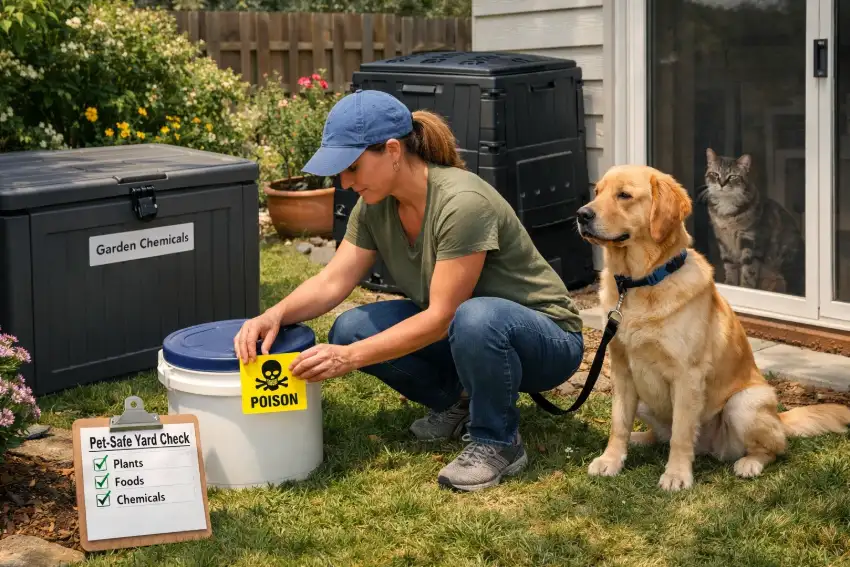
7. Prevention: Make Your Backyard Pet-Safe (Simple Checklist)
Fence off compost: use a secure bin and keep pets away.
Store chemicals locked up: in a closed shed or high shelf.
Pick up dropped foods: after BBQs and outdoor meals.
Choose pet-safe plants when possible: especially if you have a cat that chews plants.
Supervise yard time: especially for puppies and dogs that eat everything.
Rinse paws if needed: after walking on treated lawns.
Use dog-proof trash bins: keep lids secure.
8. When to See a Vet Immediately
You know your pet ate rodent bait, slug/snail bait, antifreeze, or unknown chemicals
Your cat may have chewed a lily or you suspect lily exposure
Any seizure, collapse, breathing trouble, or severe weakness
Repeated vomiting/diarrhea or inability to keep water down
Signs of pain, swelling, or sudden behavior changes after outdoor access
Don’t wait for symptoms if you know the toxin is high-risk. Early treatment is often far more effective.
Final Thoughts: Prevention and Fast Action Save Lives
Backyard toxins are common because many dangerous plants and products are ordinary household items. The best protection is a “layered” approach: remove attractants, lock up chemicals, pet-proof compost and trash, supervise outdoor time, and keep emergency numbers handy. If you suspect poisoning, act quickly—identify the toxin if you can and contact a veterinarian immediately.
Your action step: walk your yard today like a curious puppy. Identify the top 3 risks (a plant, a compost spot, a chemical shelf) and fix those first. Small changes can prevent the biggest emergencies.