Stand in any pet aisle in the US or Europe and you’ll see shelves of shiny cans, pouches and big bags of kibble. Every label insists it’s “complete and balanced”. But for indoor cats who spend most of their life on the sofa and at the food bowl, does it actually matter if you feed wet or dry?
The short answer: yes, it does – but not in a simple “one is good, one is bad” way. Wet and dry cat foods each have strengths and weaknesses. The best choice depends on your cat’s age, health, lifestyle and your daily routine.
In this guide, you’ll learn:
The key differences between wet and dry cat food
Pros and cons of each for weight, teeth, urinary health and convenience
How to decide which type (or mix) is right for your cat
How to switch safely without upset stomachs or food strikes
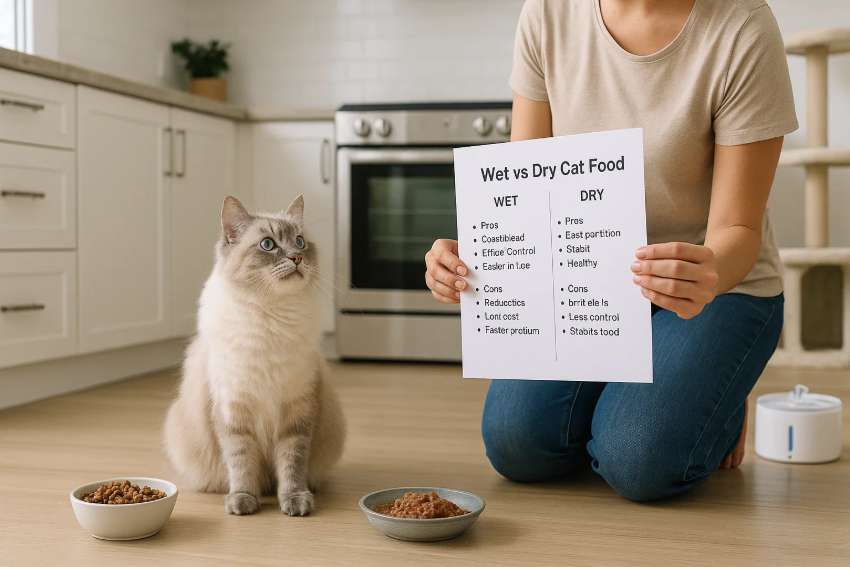
1. Wet vs Dry: What’s the Real Difference?
Both wet and dry foods can be:
Complete and balanced: supplying all essential nutrients
Tailored to life stage: kitten, adult, senior
Formulated for special needs: weight, urinary, hairballs, sensitive stomach
The real differences are:
Water content (moisture %)
Energy density (calories per gram/cup)
Texture and palatability
Storage and convenience
Price per calorie
In simple terms:
Wet food: high water, fewer calories per gram, softer texture.
Dry food: low water, more calories per gram, crunchy texture.
2. Wet Cat Food: Pros and Cons
2.1 Benefits of wet cat food
High moisture (often 70–80%)
Helps increase total water intake – important for urinary health.
Can be especially helpful for cats prone to urinary crystals, cystitis or kidney issues (when your vet approves).
Lower calorie density
More volume for the same calories – your cat may feel fuller with fewer calories.
Can support weight management when properly portioned.
Often more palatable
Stronger smell and softer texture can tempt picky eaters.
Helpful for cats who have lost some sense of smell or have dental issues.
Softer texture
Easier for older cats with missing or painful teeth to eat.
2.2 Drawbacks of wet cat food
More expensive per calorie
You’re paying for more water and packaging.
Monthly cost is often higher than kibble for the same cat.
Shorter shelf life once opened
Must be refrigerated and used within a limited time once opened.
Leftover food can’t sit in the bowl for many hours without drying or spoiling.
Less convenient for free-feeding
Can’t be left out all day like dry food – not ideal if you’re away long hours.
3. Dry Cat Food: Pros and Cons
3.1 Benefits of dry cat food
Convenient and easy to store
Stable at room temperature when sealed properly.
Easy to measure, pour and use in automatic feeders.
Cost-effective
Usually cheaper per calorie than wet food.
A good option for multi-cat homes or big eaters.
Works well with puzzle feeders
Perfect for interactive toys and “hunting games” that keep indoor cats active.
3.2 Drawbacks of dry cat food
Low moisture (often around 8–10%)
Cats naturally have a low thirst drive; some may not drink enough to compensate.
For cats with urinary or kidney issues, dry-only diets may not be ideal unless your vet endorses it and water intake is excellent.
Easy to overfeed
Very calorie-dense – a “small” extra handful can add a lot of calories.
Free-feeding (bowl always full) is a common cause of indoor cat obesity.
Dental benefits are limited
Most regular kibbles do not clean teeth significantly, despite marketing.
Only specific dental diets with special kibble structure have measurable dental benefits.
4. Dental Health: Does Crunchy Kibble Really Clean Teeth?
Many owners believe that “dry food cleans the teeth”. In reality:
Most cats don’t chew kibble much – they crack it a few times and swallow.
Standard kibble shatters easily and doesn’t scrape plaque off effectively.
True dental benefits mainly come from:
Specific dental diets with special kibble design (vet-recommended).
Toothbrushing with cat-safe toothpaste.
Some approved dental treats or gels.
So, choosing dry food only for dental reasons is usually not enough. Dental care needs its own plan, wet or dry.
5. Weight, Urinary Health and Senior Cats
5.1 Weight management
Wet food can help some cats feel more satisfied on fewer calories (more volume, more water).
Dry food is easier to overfeed; careful measuring is essential.
Many owners have success with:
Dry food measured in puzzle feeders for mental work +
Wet food for main meals to increase satiety and hydration.
5.2 Urinary health
High-moisture diets (wet food or mixed feeding) help increase urine volume and dilution.
Cats with urinary issues often benefit from:
More wet food
Prescription urinary diets (wet and/or dry) when prescribed
Multiple water sources or a fountain
5.3 Senior cats
Older cats may:
Lose some sense of smell
Have dental pain or missing teeth
Need extra help with hydration
For many seniors, soft, aromatic wet food is easier and more appealing.
Some seniors do well on a mix of senior-formula dry + wet, tailored by your vet.
6. Mixed Feeding: Best of Both Worlds?
You don’t have to choose “team wet” or “team dry” forever. Many vets and owners use mixed feeding:
Dry food for:
Convenient, measured calorie base
Use in puzzle feeders or timed dispensers
Wet food for:
Hydration and urinary support
Palatability and variety
Examples of mixed routines:
Morning: measured dry food
Evening: wet food mealDry food in a puzzle feeder during the day + wet food when you’re home
Mostly wet food for urinary cats, with a small amount of dry for enrichment toys (if your vet approves)
The key is to manage total daily calories – wet plus dry plus treats must fit your cat’s needs.
7. How to Decide: Wet, Dry or Both for Your Cat?
Ask yourself these questions:
Health: Does my cat have urinary problems, kidney disease, obesity, diabetes or dental issues?
Water intake: Does my cat naturally drink a lot, or hardly ever visit the water bowl?
Age: Kitten, adult, senior – and are there any age-related issues?
Schedule: Am I away for long hours each day?
Budget: What can I realistically afford month to month?
General patterns:
Healthy adult indoor cat: quality dry or mixed feeding is usually fine.
Overweight cat: wet or mixed feeding with strict portions can help.
Cat with urinary problems: usually needs more water via wet food or special diets (follow vet advice).
Senior cat or dental problems: wet or soft foods are often more comfortable.
When in doubt, bring your cat’s current food (or photos of the labels) to your vet appointment and ask:
“Would you prefer this cat to be on mostly wet, mostly dry, or a mix?”
“Are there specific formulas you recommend for my cat’s age and health?”
8. Switching Between Wet and Dry Safely
Cats dislike sudden changes – both their digestive systems and their picky brains. To change food:
Days 1–2: 75% old food, 25% new food
Days 3–4: 50% old food, 50% new food
Days 5–6: 25% old food, 75% new food
Day 7+: 100% new food, if your cat’s stools and appetite are normal
Tips:
For dry-to-wet transitions, you can:
Mix a small amount of wet into the dry at first.
Warm wet food slightly to enhance smell (never too hot).
For wet-to-dry transitions, try:
Moistening the dry slightly at first (if safe for that brand).
Mixing wet and dry in the same bowl, gradually reducing the wet portion.
Never let a cat go more than 24 hours without eating – especially overweight cats, who are at risk of serious liver problems if they stop eating.
9. Final Thoughts: The “Best” Choice Is the One That Works for Your Cat
There is no universal answer to “wet vs dry cat food”. The right decision is the one that:
Supports your cat’s health (weight, kidneys, urinary, teeth, digestion)
Fits your budget and schedule
Is complete, balanced and from a reputable brand
Is something your cat will actually eat happily and consistently
For many modern indoor cats, a thoughtful combination of wet and dry food – with measured portions, puzzle feeders and plenty of fresh water – gives the best of both worlds. Add regular vet checks, a good litter box setup and daily play, and you’ll have a healthy, satisfied cat who doesn’t care whether their dinner came from a can or a bag… only that it arrived on time.