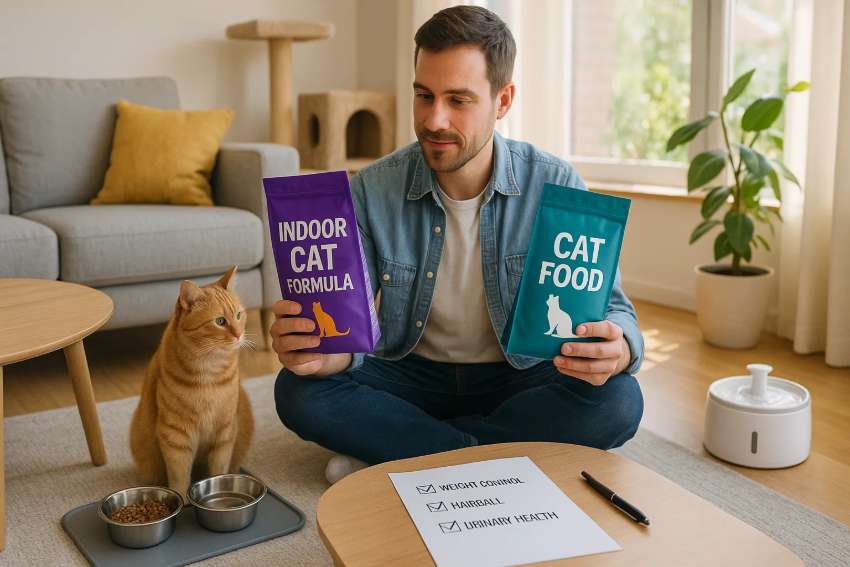
Indoor cats live a very different life from outdoor hunters. They sleep more, move less, and spend their days between the sofa, the window and the food bowl. That cozy lifestyle is great for safety, but it also means more risk of weight gain, hairballs and urinary problems.
The good news: choosing the right cat food – and feeding it in the right way – can make a huge difference. This guide is for indoor cat owners in the US and Europe who want to:
Keep their cat at a healthy weight (not “chubby cute”)
Reduce hairballs and vomiting from grooming
Protect urinary health (cystitis, crystals, urinary blockages)
Understand what to look for on cat food labels
Important: if your cat has frequent vomiting, straining in the litter box, blood in urine, crying when peeing, or stops eating, call a vet immediately. Diet helps, but it cannot replace proper medical care.
1. Why Indoor Cats Need Different Nutrition
Compared with outdoor cats, indoor cats tend to:
Burn fewer calories – less hunting, climbing and roaming
Groom more – lots of licking and self-care while they relax
Use litter boxes for every pee and poop – so urine problems are easier to notice (and smell)
This changes their risk profile:
Extra weight and obesity
Hairballs and constipation
Lower urinary tract issues (stress cystitis, crystals, blockages – especially in male cats)
Indoor cat diets are designed to:
Control calories
Add the right type and amount of fiber
Support a healthy urinary environment
2. Weight Management: Preventing the “Indoor Cat Belly”
Many indoor cats quietly become overweight. Extra fat doesn’t just change how they look – it also increases the risk of:
Diabetes
Joint problems and arthritis
Heart and respiratory issues
Shorter lifespan
2.1 What to look for in weight-friendly indoor cat food
Controlled calories: Indoor formulas usually have fewer calories per cup than standard adult foods.
High-quality animal protein: Cats are obligate carnivores; protein should still be relatively high.
Moderate fat: Not extremely low (cats still need fat), but not overloaded.
Balanced fiber: Enough to help your cat feel full and keep stools regular.
2.2 Portion control is more important than the bag
Use the feeding guide as a starting point, not a fixed rule.
Measure food with a proper measuring cup or kitchen scale.
Adjust based on your cat’s body condition (ribs should be easy to feel under a thin layer of fat).
If your cat is already overweight, ask your vet whether you should use an indoor/light formula or a specific weight-loss diet. Some weight-loss foods are more calorie-restricted and should only be used with veterinary guidance.
3. Hairball Control: Less Vomit on the Carpet
All cats groom. Indoor cats often groom more, which means they swallow more hair. That hair has to go somewhere – either through the digestive tract and out in the stool, or up onto your floor as a hairball.
3.1 How hairball-control foods help
Dedicated hairball formulas typically:
Use a mix of soluble and insoluble fibers (for example, beet pulp, cellulose, certain grains or vegetable fibers)
Encourage hair to move through the intestines instead of clumping in the stomach
Sometimes include specific prebiotics to support gut motility
3.2 Extra things you can do beyond food
Brush your cat regularly, especially long-haired breeds – less loose hair swallowed.
Use vet-approved hairball gels or pastes if your vet recommends them.
Keep your cat hydrated (see section 4) – water helps everything move more smoothly.
If your cat frequently vomits hairballs or food, talk to a vet. Regular vomiting is not just “normal cat behavior”; it can be a sign of deeper issues.
4. Urinary Health: Protecting the Bladder and Urethra
Indoor cats are often at higher risk of urinary tract issues, especially male cats. Problems include:
Inflammation of the bladder (cystitis)
Crystals or stones in the urine
Dangerous urinary blockages (especially in neutered males)
4.1 Why water intake matters
Cats naturally have a low thirst drive – they evolved to get moisture from prey.
Dry food alone = lower total water intake for many cats.
More water = more dilute urine, which can help reduce crystal formation and irritation.
4.2 Diet features that support urinary health
Special urinary diets and some indoor formulas aim to:
Encourage slightly more acidic urine (within a safe range) to reduce certain types of crystals
Control levels of minerals like magnesium and phosphorus
Increase moisture (especially in wet/canned versions)
If your cat has a history of urinary issues, your vet may recommend:
A prescription urinary diet (dry, wet or mixed)
Switching to more wet food or mixed feeding
Multiple water bowls or a cat fountain to encourage more drinking
5. Dry vs Wet vs Mixed Feeding for Indoor Cats
There’s no one perfect format for every cat, but each has pros and cons.
5.1 Dry food (kibble)
Convenient and usually cheaper per calorie.
Easy to use with puzzle feeders and automatic feeders.
Typically lower moisture – may not be ideal alone for cats with urinary issues, unless your vet agrees.
5.2 Wet food (cans, pouches, trays)
Much higher moisture – helps increase total water intake.
Often more aromatic, which can be good for picky eaters.
More expensive per calorie, and needs refrigeration after opening.
5.3 Mixed feeding (a very popular compromise)
Combination of dry and wet food (for example, dry in the morning, wet at night).
Lets you benefit from convenience of dry and hydration of wet.
Still needs portion control – treats + wet + dry can quietly add up.
For many indoor cats, a balanced wet + dry routine works very well, especially for weight and urinary support. Ask your vet what split (for example 50/50, 70/30) makes sense for your cat.
6. How to Read Indoor Cat Food Labels
When you pick up a bag or can, look for:
6.1 Life stage and lifestyle
“Adult Maintenance”, “Kitten”, or “All Life Stages” – match this to your cat’s age.
“Indoor”, “Hairball control”, “Urinary care” – choose according to your cat’s main needs (sometimes you will combine, for example indoor + wet urinary diet from your vet).
6.2 Protein and fat levels
Cats need good animal protein – look for named meats (chicken, turkey, salmon) near the top of the list.
Indoor/weight formulas usually have a bit less fat, but still must be complete and balanced.
6.3 Fiber and special ingredients
Hairball and indoor formulas will mention fiber sources (beet pulp, cellulose, etc.).
Some foods add prebiotics/probiotics for gut health.
6.4 Calorie information
Look for kcal per cup (dry) or per can/pouch (wet).
Use this to calculate roughly how many calories your cat gets per day.
If the label is confusing, take a photo and ask your vet or vet nurse to help interpret it for your specific cat.
7. Practical Feeding Tips for Indoor Cats
7.1 Use measured meals, not unlimited bowls
Free-feeding (bowl always full) is a major cause of indoor cat weight gain.
Offer measured portions 2–3 times per day, or use timed feeders if you’re out.
7.2 Turn meals into “hunting time”
Use puzzle feeders, food balls or hiding small portions around the home.
This provides mental stimulation and gentle exercise.
7.3 Monitor your cat’s body condition
Feel the ribs: you should feel them easily with a light touch, but not see them sharply.
Look from above: your cat should have a slight waist behind the ribcage.
If you’re not sure, ask your vet to show you how to score body condition.
8. When You Need a Veterinary or Prescription Diet
Some indoor cats have medical conditions that need special diets, for example:
Chronic urinary problems (crystals, stones, recurrent cystitis)
Diabetes
Kidney disease
Severe obesity that hasn’t improved with standard weight-control food
In these cases, your vet may recommend a prescription diet, which can come as:
Urinary care foods (to manage urine pH and minerals)
Kidney diets (controlled protein and phosphorus)
Metabolic/weight-loss formulas (precise calorie and nutrient balances)
Do not switch away from a prescription diet without talking to your vet first – especially in urinary or kidney cases, where the wrong food can quickly cause a relapse.
9. How to Safely Change Your Indoor Cat’s Food
Cats are sensitive to both taste and gut changes. To avoid stomach upset and refusal:
Days 1–2: 75% old food, 25% new food
Days 3–4: 50% old food, 50% new food
Days 5–6: 25% old food, 75% new food
Day 7+: 100% new food (if stools and appetite are normal)
For picky cats, go slower. Mix foods thoroughly so they can’t just eat the old bits. Never starve a cat to “force” a diet change – cats that don’t eat for even 1–2 days are at risk of liver problems.
10. Final Thoughts: One Indoor Cat, Three Big Goals
The “best” cat food for indoor cats is not a single brand or magic recipe. It’s a diet that helps you achieve three goals:
Healthy weight: no quiet slide into obesity.
Comfortable digestion and hairball control: fewer vomits, regular stools.
Protected urinary health: good hydration, comfortable trips to the litter box.
Start with a high-quality indoor or hairball-control diet from a reputable company, add wet food for moisture (especially if urinary health is a concern), and feed measured portions rather than free-choice bowls. Combine that with play, brushing and regular vet checks, and your indoor cat can enjoy a long, healthy, lazy life – just the way they like it.