Adopting a dog is exciting—and it can also feel overwhelming once the reality hits: paperwork, meet-and-greets, new routines, unexpected nerves, and a dog who may behave differently at home than they did in the shelter. That doesn’t mean you made a mistake. It means adoption comes with an adjustment period for both humans and dogs.
This guide walks you through what typically happens when adopting a dog from a shelter or rescue in the US or UK: the process, the first days at home, common behavior patterns, how to set your dog up for success, and when to involve a vet or trainer.
1. Shelter vs Rescue: What’s the Difference?
The terms overlap, but these are common differences:
Shelters: often have a physical facility with many dogs; some are municipal/local-authority run, others are private.
Rescues: often use foster homes and may have fewer dogs on-site; many are volunteer-led and may focus on specific breeds or needs.
What it means for you: shelters may have faster adoption timelines; foster-based rescues may know a dog’s home behavior better, but the process can be more selective.
2. The Typical Adoption Process (What You’ll Likely Go Through)
Every organization is different, but many adoptions include several of the steps below.
2.1 Application and Screening
Basic questions about your home, schedule, and experience
Landlord permission check (especially in rentals)
References (sometimes)
2.2 Meet-and-Greet
Meeting the dog in a quiet room, yard, or outdoor space
Staff/volunteers observing your interaction and answering questions
2.3 “Dog-Dog” or “Dog-Cat” Testing (Sometimes)
Some organizations introduce dogs to another calm dog
Cat testing varies widely and is not always definitive
2.4 Home Visit or Virtual Home Check (Common with Rescues)
Looking for safety hazards, fence conditions, and setup
Helping you plan where the dog will sleep, eat, and decompress
2.5 Adoption Fee and Paperwork
Adoption contract, medical/vaccination records, microchip info
Spay/neuter info (done already or scheduled)
3. What Your New Dog Might Be Like on Day One
Many adopters expect their dog’s personality to show up immediately. Often, it doesn’t—especially after a stressful shelter experience.
Shy or shutdown: quiet, sleeping a lot, hiding, avoiding eye contact
Overly excited: jumping, mouthing, zoomies, barking
Clingy: following you room to room
Not eating much: common in the first day or two due to stress
Key idea: your dog is not “showing their final personality” yet. Think of the first week as decompression, not evaluation.
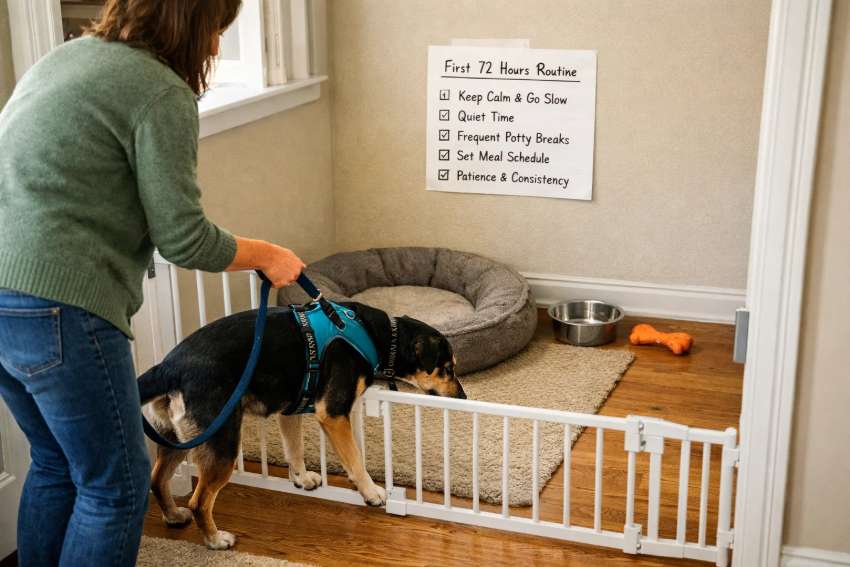
4. The First 72 Hours: A Calm, Structured Plan
If you do one thing right after adoption, do this: keep life quiet and predictable.
4.1 Set Up a Safe Zone
A quiet room or a covered crate area away from the front door
Water, a bed, and a chew or enrichment toy
Baby gates to reduce chaos and prevent door-dashing
4.2 Keep the Routine Simple
Short potty breaks on leash (even in fenced yards at first)
Short walks focused on sniffing, not exercise goals
Regular meal times and plenty of rest
4.3 Limit New People and New Places
No big “welcome home” parties
Skip dog parks and busy streets initially
Let the dog observe the home first before meeting visitors
5. The First 2–4 Weeks: Common Issues (And Why They Happen)
Many dogs change as they settle. Some “problem behaviors” are actually stress behaviors that improve with routine.
5.1 House-Training Gaps
Even adult dogs may not be fully house-trained
Stress can cause accidents in new environments
Use frequent potty breaks and reward outdoor toileting
5.2 Separation Stress
Whining, barking, pacing, or destroying items when left alone
Often improves with gradual alone-time practice
Avoid “sudden long absences” in the first week if possible
5.3 Leash Pulling or Reactivity
Shelter dogs may have little leash training
New environments can make dogs more reactive
Start with quiet routes and short sessions
5.4 Guarding and Resource Sensitivity
Some dogs guard food, toys, or resting spots due to insecurity
Don’t test or challenge guarding—manage and get professional help
5.5 “Honeymoon Period” and Late-Onset Behaviors
Some dogs are quiet at first and then become more confident (and sometimes more challenging) as they feel safe.
Week 1: shutdown or overly polite
Weeks 2–4: personality emerges; boundaries get tested
Month 2+: training consistency pays off
6. The “3-3-3” Adjustment Idea (Helpful as a General Framework)
Many adopters find the “3-3-3” concept useful as a broad expectation guide:
First 3 days: overwhelmed, decompressing, learning the new environment
First 3 weeks: starting to settle, learning routines, showing more behavior
First 3 months: bonding deeper, habits forming, training becomes clearer
Note: Some dogs settle faster; others take longer. Use this as a patience reminder, not a strict timeline.
7. What You Should Get From the Shelter/Rescue (And What Might Be Missing)
Usually provided: adoption contract, microchip info, basic vaccines, spay/neuter status.
Sometimes unknown: exact age, breed mix, triggers, true dog/cat compatibility, full medical history.
Practical tip: plan a vet visit soon after adoption even if the shelter provided care. It’s a good baseline and helps you set up prevention plans.
8. Your First Vet Visit After Adoption (What to Cover)
Physical exam and weight check
Vaccine schedule confirmation
Parasite prevention plan (fleas/ticks/heartworm where relevant)
Dental and skin/ear check
Behavior notes: anxiety, digestive issues, sleep patterns
If your dog is extremely fearful or reactive, mention this when booking so the clinic can plan a calmer visit.
9. Gear You Actually Need in the First Week
Secure harness + leash: many newly adopted dogs can slip collars when startled.
ID tag + updated microchip info: do this immediately.
Baby gate or exercise pen: prevents chaos and supports decompression.
Crate or safe bed zone: not mandatory for every dog, but helpful for many.
Enrichment: chews, food puzzles, lick mats for calm focus.
10. When to Get a Trainer (Sooner Is Often Better)
A good trainer helps prevent small issues from becoming big ones.
Separation anxiety signs in the first week
Growling, guarding, or snapping
Leash reactivity that makes walks stressful
Fear that doesn’t improve with time and routine
Look for reward-based, humane training approaches that prioritize safety and confidence-building.
11. When to Contact the Shelter/Rescue Again
Many reputable rescues prefer you reach out early if you’re struggling.
Major behavior concerns or safety issues
Medical issues that appeared immediately after adoption
You feel the match is not workable (better to act early than wait until crisis)
Final Thoughts: Expect a Transition, Not an Instant “Perfect Dog”
Most shelter and rescue dogs need time to settle, learn routines, and feel safe. The first weeks are about decompression and structure: calm environment, predictable schedule, gentle training, and careful introductions. If you go into adoption expecting an adjustment period—and you plan for it—you’ll have a much smoother experience and a better long-term outcome.
Your action step: plan your first week before you bring your dog home—quiet days, short walks, no visitors, and a vet appointment. A little planning makes adoption dramatically easier for both you and your new dog.