Some animals stood out in 2025 because of a mix of social-media visibility, conservation attention, unusual biology and cultural popularity. Capybaras, axolotls, red pandas, sloths and tardigrades were especially recognizable examples. This is not a scientific popularity ranking, but a snapshot of animals that attracted unusual public attention during the year.
Looking for this year's list? See our Top 10 Trendy Animals in 2026.
The list below keeps the focus on trending animals in 2025 while separating online popularity from conservation status. An animal can be widely shared online and still face serious threats in the wild, while another may simply be popular because of its appearance or unusual behavior.
Top 10 Trendy Animals in 2025 at a Glance
| Animal | Why people noticed it | Key fact | Conservation note |
|---|---|---|---|
| Sloths | Slow movement, expressive faces and viral wildlife clips | Tree-dwelling mammals from Central and South America | Status varies by species |
| Axolotl | Regeneration, unusual appearance and strong online following | A salamander that usually retains aquatic larval features as an adult | Critically Endangered in the wild |
| Capybara | Relaxed group behavior and meme popularity | World’s largest living rodent | Least Concern |
| Penguins | Distinctive movement, social behavior and conservation visibility | A diverse group of flightless seabirds | Status varies by species |
| Fennec Fox | Huge ears, small body and desert adaptations | Native to North African desert regions | Least Concern |
| Red Panda | Distinctive face, reddish coat and conservation appeal | A Himalayan and southwestern Chinese forest specialist | Threatened and declining |
| Koala | Iconic appearance and continued conservation attention | Eucalyptus-feeding marsupial native to Australia | Conservation status and legal protection vary by assessment and region |
| Tardigrades | Extreme survival abilities and science-media attention | Microscopic animals also called water bears | Not represented by one single global Red List category |
| Komodo Dragon | Huge size, venom and prehistoric appearance | World’s largest living lizard | Endangered |
| Octopuses | Intelligence, camouflage and problem-solving behavior | Cephalopods with highly flexible bodies and complex nervous systems | Status varies by species |
What Makes an Animal “Trendy”?
There is no official scientific index of trendy animals. Public interest can rise for very different reasons, including:
Social-media visibility: short videos, memes and photographs can suddenly make a species familiar worldwide.
Unusual biology: regeneration, camouflage, extreme endurance or distinctive anatomy can attract science coverage.
Conservation attention: threatened species often receive more public interest when new assessments or conservation campaigns appear.
Cultural exposure: films, games, merchandise and online communities can keep certain animals highly visible.
Appearance and behavior: animals people perceive as cute, unusual or charismatic tend to spread easily online.
Because these influences change constantly, a list of trendy animals should be treated as a cultural snapshot rather than a permanent biological ranking.
Sloths
Sloths remained highly recognizable in 2025 because of their slow movement, calm appearance and constant presence in wildlife videos and animal-themed merchandise.

However, “sloth” includes several species with different conservation situations. It is more accurate to discuss them species by species rather than assign one Red List category to all sloths.
Their popularity has also created an important welfare issue: close-contact tourist experiences and social-media handling can encourage people to view wild sloths as props rather than specialized forest animals.
Axolotls
The axolotl (Ambystoma mexicanum) remained one of the most recognizable amphibians online in 2025. Its external gills, broad head and permanent aquatic form give it an appearance unlike most adult salamanders.
Axolotls are also famous for regeneration. They can regenerate limbs and repair several other tissues, which makes them important research animals as well as internet favorites.
There is a sharp contrast between captive popularity and wild conservation. The wild axolotl is Critically Endangered and survives in a heavily altered remnant of its native habitat around Xochimilco in Mexico City.
Capybaras
Capybaras became one of the clearest examples of an animal turning into an internet personality. Their large size, social lifestyle and calm-looking interactions with other animals made them especially common in memes and short videos.
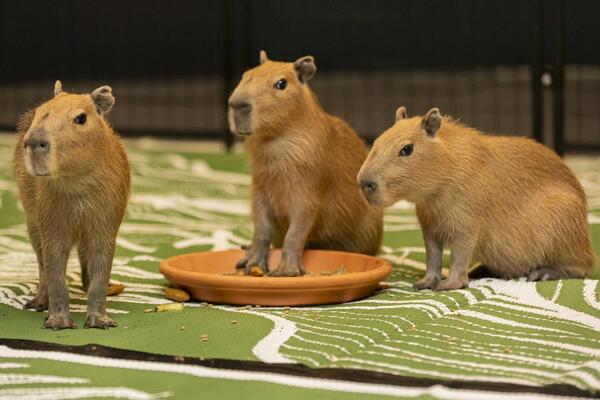
Capybaras are the world’s largest living rodents. They are semi-aquatic and highly social, often living in groups near rivers, wetlands and other water sources in South America.
Online portrayals sometimes make them seem like universally relaxed “cuddle animals,” but wild capybaras are still large rodents with normal defensive behavior, social structure and habitat needs.
Penguins
Penguins remain perennial favorites because of their upright posture, social colonies, swimming ability and strong presence in documentaries and popular culture.
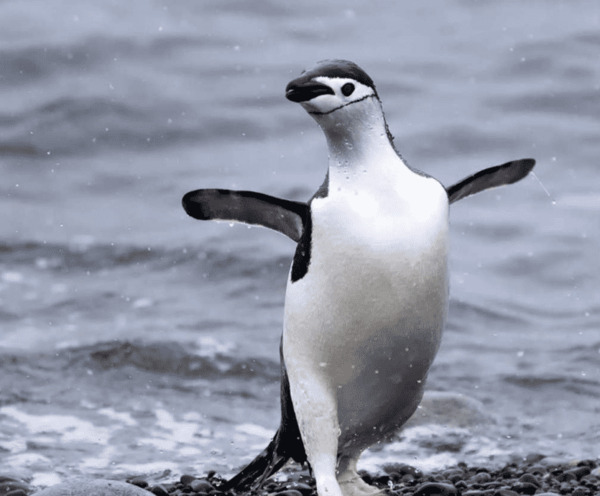
It is important not to give all penguins one conservation label. The group contains multiple species with very different ranges and threats. Some are relatively secure, while others face serious pressure from warming oceans, fisheries interactions, habitat change and disease.
That conservation visibility is part of why penguins continue to receive attention far beyond ordinary “cute animal” content.
Fennec Foxes
The fennec fox (Vulpes zerda) is one of the smallest foxes and is instantly recognizable by its oversized ears. Those ears help with heat exchange and also support highly sensitive hearing in desert environments.

Fennec foxes are native to desert and semi-desert regions of North Africa. Their unusual proportions make them extremely shareable online, but popularity has also contributed to demand for exotic pets.
They are wild canids, not miniature domestic dogs. Their behavior, activity cycle and digging instincts are adapted to desert life.
Red Pandas
Red pandas are consistently popular because of their reddish coat, ringed tail and highly recognizable face. They live in cool temperate forests of the Himalayas and southwestern China, where bamboo forms an important part of the diet.
Public interest is closely tied to conservation. Habitat fragmentation, forest degradation and other human pressures continue to threaten wild populations.
Red pandas are sometimes casually compared with giant pandas because of the shared name, but they belong to a completely different family, Ailuridae.
Koalas
Koalas remained globally visible in 2025 through conservation campaigns, wildlife rehabilitation stories and their status as one of Australia’s most recognizable animals.
Koalas are marsupials specialized for a eucalyptus-based diet. They spend much of the day resting because leaves provide limited usable energy and require extensive digestion.
Conservation descriptions need regional context. Different assessments and legal frameworks can use different categories, so a broad statement such as “all koalas are simply Vulnerable everywhere” is less useful than specifying the jurisdiction or assessment being discussed.
Tardigrades
Tardigrades, often called water bears, are microscopic animals famous for surviving environmental extremes by entering states of greatly reduced metabolic activity.
Their reputation grew through science reporting about tolerance to dehydration, cold, radiation and even exposure to the vacuum of space under experimental conditions.
That does not mean a tardigrade can survive every extreme indefinitely. Their resilience depends on species, life stage and the conditions under which dormancy occurs.
Tardigrades also should not be assigned one single conservation status. They represent a large group containing many species rather than one globally assessed animal.
Komodo Dragons
The Komodo dragon (Varanus komodoensis) is the world’s largest living lizard and one of the most recognizable reptiles on Earth.
Its size, serrated teeth, venom system and hunting behavior make it a natural subject for documentaries and viral wildlife clips. But its popularity should not obscure its conservation status.
The Komodo dragon is currently classified as Endangered, not Vulnerable. Habitat change and future climate impacts are among the concerns affecting its limited island distribution in Indonesia.
Octopuses
Octopuses attract attention for a very different reason: behavior and intelligence. They can solve problems, manipulate objects, squeeze through extremely small spaces and use rapid skin-pattern changes for camouflage and signaling.
There is no single conservation status for “octopuses” as a whole. The order includes many species with different distributions and levels of fishing pressure.
Their combination of flexible bodies, complex nervous systems and unusual behavior makes them a recurring subject in science media as well as general animal content.
Which Animal Was the Most Popular in 2025?
There is no authoritative global ranking because “popular” depends on the platform, country, age group and time period being measured.
Capybaras, axolotls and sloths were especially strong examples of animals with broad internet visibility, while red pandas, koalas and penguins combined popularity with conservation awareness. Tardigrades and octopuses gained attention mainly through unusual biology and science communication.
For that reason, it is better to ask why an animal became popular than to claim that one species definitively won the year.
Trendy Animals vs Popular Animals
| Trendy animal | Popular animal |
|---|---|
| Interest rises sharply because of a current cultural or online moment | May remain well known for many years |
| Often driven by memes, viral videos or news | Often supported by long-term cultural familiarity |
| Can change rapidly from year to year | Usually changes more slowly |
| Example: capybara meme cycles | Example: penguins as long-term favorites |
Frequently Asked Questions
What animals were trending in 2025?
Examples include sloths, axolotls, capybaras, penguins, fennec foxes, red pandas, koalas, tardigrades, Komodo dragons and octopuses.
What was the trendiest animal in 2025?
There is no official global ranking. Capybaras and axolotls were especially visible online, while sloths, red pandas and penguins remained long-term favorites.
Why were capybaras so popular?
Their social behavior, relaxed-looking posture and frequent appearance in memes and mixed-species videos made them highly recognizable online.
Why are axolotls popular?
Axolotls combine an unusual appearance with remarkable regenerative abilities. They are also common in games, merchandise and online animal communities.
Are trendy animals always endangered?
No. Popularity and conservation status are separate issues. Some trendy animals are threatened, while others are widespread or belong to broad groups containing many species with different statuses.
Are Komodo dragons Vulnerable?
No. The Komodo dragon is currently classified as Endangered.
Are all sloths Vulnerable?
No. Different sloth species have different conservation categories, so “sloths” should not be given one universal status.
Are tardigrades endangered?
Tardigrades include many species and are not represented by one single global conservation category.
Reference Sources
Final Takeaway
The most talked-about animals of 2025 became popular for different reasons. Some, like capybaras and sloths, benefited from meme culture and highly shareable behavior. Others, like axolotls, tardigrades and octopuses, attracted attention through unusual biology. Red pandas, koalas, penguins and Komodo dragons also remained visible because conservation stories kept them in the public eye. The important point is that online popularity and real-world conservation are not the same thing.