The trendiest animals of 2026 are not all popular for the same reason. The horse became unavoidable because 2026 is the rare Year of the Fire Horse; axolotls and capybaras continued to dominate online culture; an Adélie penguin became a viral meme; desert rain frogs and emperor penguins drew major conservation attention; and Pallas’s cats, red pandas, orcas and numbats all had unusually visible moments in science, zoos or wildlife news. This is a 2026 cultural and conservation snapshot, not a scientific popularity ranking.
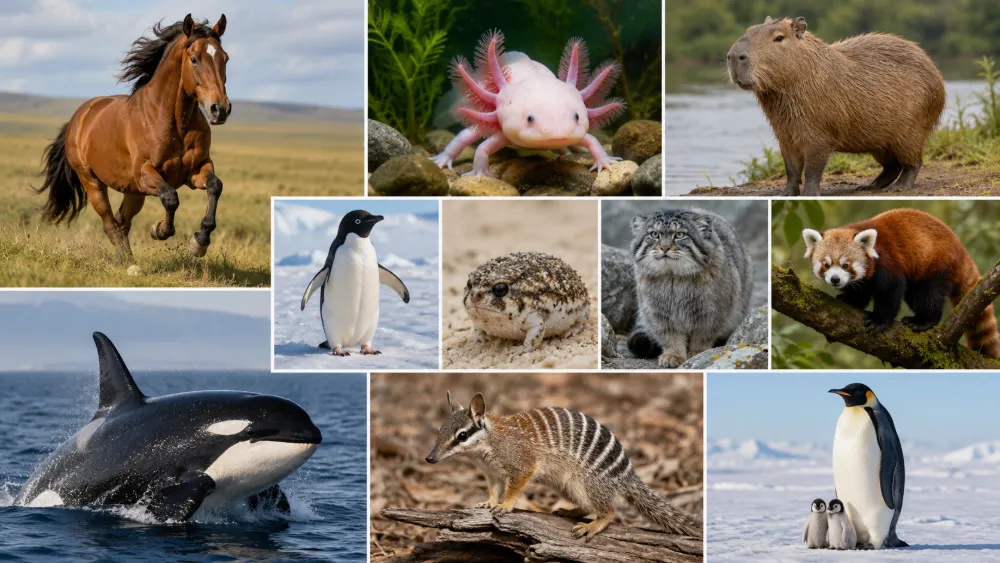
As of September 2026, these 10 animals stand out because they combine clear public-interest signals with a story worth learning beyond the meme. Some are thriving online while struggling in the wild, and others became popular precisely because new research or conservation news changed how people see them.
Top 10 Trendy Animals in 2026 at a Glance
| # | Animal | Why it is trending in 2026 | Why the story matters |
|---|---|---|---|
| 1 | Horse | 2026 is the Year of the Fire Horse, the first in 60 years | Cultural symbolism, festivals and “horse energy” made it one of the year’s most visible animals |
| 2 | Axolotl | Gen Alpha merchandise, games and social media kept expanding its popularity | Its online abundance contrasts sharply with its critical condition in the wild |
| 3 | Capybara | The long-running capybara meme cycle remained huge in 2026 | Online fame can increase wildlife tourism and exotic-pet demand |
| 4 | Adélie Penguin | The “nihilistic penguin” clip became a major 2026 meme | A decades-old wildlife scene was transformed into a modern internet symbol |
| 5 | Desert Rain Frog | Viral squeaking videos and a major 2026 IUCN update | Social-media popularity is now linked to suspected pet-trade pressure |
| 6 | Pallas’s Cat | Its “grumpy” face continued to fuel a strong online fan culture | Internet fame is introducing more people to a little-known Central Asian wild cat |
| 7 | Red Panda | New cubs and conservation stories drew strong public attention in 2026 | Cuteness is helping conservation groups reach a wider audience |
| 8 | Orca | Dramatic new hunting footage and continued boat-interaction research | Orcas remain one of the clearest examples of socially learned animal behavior |
| 9 | Numbat | A rare positive conservation-status change in 2026 | Its recovery shows that long-term predator control and reintroduction can work |
| 10 | Emperor Penguin | Moved to Endangered on the IUCN Red List in April 2026 | It became a powerful symbol of how sea-ice loss affects Antarctic wildlife |
What Makes an Animal Trendy in 2026?
There is no official global leaderboard for “trendy animals.” Public attention can come from very different sources, so this list uses several kinds of 2026 evidence rather than pretending that one social platform measures the whole world.
Culture: an animal becomes unusually visible because of festivals, symbolism or a major cultural event.
Social media: memes, short videos and fan communities create sustained online attention.
Science: new research reveals surprising behavior or biology.
Conservation: a Red List change, recovery story or emerging threat moves a species into the news.
Public institutions: zoo births and conservation programs can turn a rare species into a widely followed animal.
This approach produces a more useful answer than simply listing animals that look cute.
Horse — The Animal of the Year of the Fire Horse
No animal has a stronger claim to being culturally “on trend” in 2026 than the horse.

Lunar New Year on February 17, 2026 began the Year of the Fire Horse, a combination that appears only once every 60 years. The previous Fire Horse year was 1966.
Horse imagery became especially visible in festival decorations, cards, lanterns, fashion and social-media discussions around “horse energy.” In Chinese zodiac traditions, the horse is associated with movement, independence, endurance and forward momentum, while the fire element intensifies themes of energy and activity.
This is cultural symbolism rather than zoology, but it makes the horse one of the most recognizable animal motifs of 2026.
Axolotl — From Endangered Salamander to Gen Alpha Icon
The axolotl (Ambystoma mexicanum) did not become famous in 2026, but its transformation into a mainstream character accelerated dramatically.
By early 2026, axolotls had moved far beyond aquarium hobby circles. Their wide-set eyes, external gills and apparently smiling faces were appearing across plush toys, LEGO sets, games and youth-oriented merchandise. Their popularity is especially strong with younger audiences.
The biological story is more serious. Axolotls are salamanders native to the Xochimilco wetland system in Mexico City and are Critically Endangered in the wild. Their extraordinary ability to regenerate limbs and other tissues also makes them important research animals.
The contradiction is part of what makes the axolotl such a compelling 2026 animal: it can feel common in shops and online while remaining extremely threatened in its natural habitat.
Capybara — The Meme That Refuses to Disappear
Capybaras have outlasted the normal life cycle of an internet meme. In 2026, the world’s largest living rodent was still appearing constantly in short videos, music edits, plush toys and novelty products.
A February 2026 report from Humane World for Animals noted that more than 750,000 TikTok videos had been posted under the capybara hashtag. That scale helps explain why the animal remains instantly recognizable far beyond South America.
But the “chill capybara” image can be misleading. Capybaras are large, social, semi-aquatic wild rodents with complex group behavior. Viral popularity can also increase demand for wildlife encounters and private ownership.
The capybara trend is therefore a useful case study in how internet affection can create both conservation opportunities and animal-welfare problems.
Adélie Penguin — The “Nihilistic Penguin” Meme
One of the clearest animal memes of early 2026 came from a much older piece of wildlife footage.
A clip from Werner Herzog’s 2007 documentary Encounters at the End of the World shows an Adélie penguin leaving its colony and walking inland toward distant mountains rather than toward the sea. The clip went viral again in January 2026 and became widely known online as the “nihilistic penguin.”
Internet users turned the solitary penguin into a symbol of nonconformity, existentialism and walking away from expectations.
It is important not to over-interpret the animal’s motivation. The meme gives the scene a human philosophical meaning, but we cannot know that the penguin was making a symbolic decision. The 2026 trend says more about human internet culture than about penguin psychology.
Desert Rain Frog — When Viral Fame Becomes a Conservation Problem
The desert rain frog (Breviceps macrops) is famous online for its round body, tiny legs and high-pitched defensive call. In 2026, that popularity became part of a much more serious conservation story.
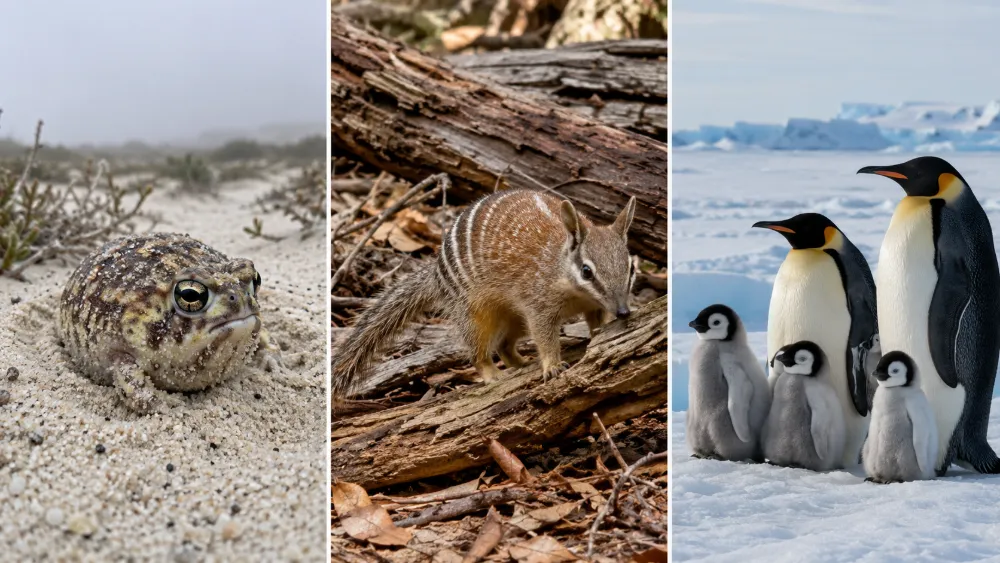
In July 2026, the IUCN moved the species from Near Threatened to Vulnerable. Diamond mining and proposed industrial and energy development are damaging its narrow coastal habitat in Namibia and South Africa.
IUCN also highlighted suspected increasing demand for the frog in the pet trade following viral videos of its distress call.
This is one of the strongest examples of why a “trendy animal” article should go beyond cuteness. A viral video can make a rare species famous while simultaneously creating new pressure on wild populations.
For a deeper look at the species and why it is a poor choice for ordinary pet keeping, see Desert Rain Frog as a Pet?.
Pallas’s Cat — The Internet’s Grumpy Wild Cat
The Pallas’s cat or manul (Otocolobus manul) has developed one of the strongest niche wildlife fan cultures online.
Its flat-looking face, low-set ears, dense fur and round pupils create expressions that people often describe as permanently grumpy. In 2026, new zoo arrivals, breeding news and wildlife features kept the species visible far beyond its Central Asian range.
The Pallas’s cat is roughly the size of a domestic cat, but it is not a house-cat breed and is not adapted to domestic life. It occupies cold steppes, rocky slopes and high-elevation landscapes across Central Asia.
Its online popularity works best when it encourages interest in wild-cat conservation rather than private ownership.
Red Panda — Cute Enough to Carry a Conservation Message
Red pandas (Ailurus fulgens) remained powerful online attention magnets in 2026, helped by a wave of conservation stories and new zoo births.
In August, the Smithsonian announced three red panda cubs born at its conservation campus in Virginia. Public reaction to photos and videos of the cubs was strong, giving conservation teams a chance to explain why the species remains Endangered in the wild.
Red pandas live in temperate forests across parts of the Himalayas and southwestern China, where they depend heavily on bamboo-rich habitat. Forest loss and fragmentation continue to threaten wild populations.
Their 2026 visibility shows how “cute animal content” can be useful when it leads people toward real conservation information.
Orca — Intelligence, Culture and New Viral Hunting Behavior
Orcas (Orcinus orca) remained among the most talked-about wild animals in 2026 because new observations kept revealing unusual behavior.
Researchers documented orcas in the Gulf of California cooperating to ram large sunfish with such force that the prey broke apart. The spectacular footage circulated widely in July 2026 and raised questions about whether the behavior helps younger animals feed, functions as social play, or does both.
At the same time, research into Iberian orcas interacting with boats continued. A 2026 scientific paper documented variation ranging from curiosity to more forceful behavior and emphasized that the motivation is still not fully understood.
Orcas are especially compelling because many behaviors appear to spread socially through groups, making them one of the clearest examples of animal culture.
For another heavily searched orca question, see Where Are Orca Eyes?.
Numbat — One of 2026’s Best Wildlife Comeback Stories
The numbat (Myrmecobius fasciatus) became a rare source of good conservation news in July 2026.
The IUCN moved the Australian marsupial from Endangered to Near Threatened after decades of predator control, captive breeding, translocations and fenced conservation work.
Numbat numbers had fallen to roughly 300 animals by the late 1970s. IUCN reported that the population has now increased to around 2,000–3,000.
The recovery is not complete. Numbats occupy only a tiny fraction of their original range and still depend heavily on continued management of feral cats and foxes.
That is exactly why the species belongs on a 2026 trend list: not every wildlife story needs to be about decline.
Emperor Penguin — A Climate Icon With a New 2026 Status
The emperor penguin (Aptenodytes forsteri) entered 2026 with a dramatically more urgent conservation story.
In April 2026, the IUCN moved the species from Near Threatened to Endangered. The assessment concluded that changes in Antarctic sea ice caused by climate change could halve the population by the 2080s.
Emperor penguins rely on stable fast ice for breeding and for raising chicks. If the ice breaks up before young birds have developed waterproof feathers and swimming ability, breeding failure can be catastrophic.
The emperor penguin therefore became more than a popular Antarctic animal in 2026. It became one of the clearest wildlife symbols of rapid climate-driven habitat change.
Which Animal Is Trending the Most Right Now?
There is no reliable global answer because trends differ by platform and country.
If the question is cultural visibility in 2026, the Horse has a unique advantage because the Fire Horse zodiac year affects celebrations across many countries and communities.
If the question is internet animal culture, axolotls and capybaras remain exceptionally strong. For a single viral event, the “nihilistic penguin” was one of the most recognizable animal memes of early 2026.
If the question is conservation attention, desert rain frogs, numbats and emperor penguins had particularly important 2026 status changes.
What Changed From the Trendy Animals of 2025?
Some animals carried their popularity into another year. Axolotls and capybaras remained major online favorites, while penguins stayed highly visible.
But 2026 also developed its own identity:
the Fire Horse created a once-in-60-years cultural animal theme
the “nihilistic penguin” became a distinctly 2026 meme
desert rain frogs became part of a major Red List story
numbats delivered a rare conservation comeback
emperor penguins received a new Endangered status
new orca research kept animal intelligence and culture in the headlines
See the previous year’s list in Top 10 Trendy Animals in 2025.
Why Viral Animals Need More Than Viral Content
Wildlife popularity can have real consequences.
Positive attention can increase donations, research interest and public support for conservation. But viral fame can also encourage inappropriate handling, wildlife selfies, exotic-pet demand and misinformation.
The desert rain frog is an especially clear 2026 warning: IUCN specifically connected its social-media popularity with suspected increased demand in the pet trade.
A useful animal trend should therefore lead to better understanding, not simply more clicks.
Frequently Asked Questions
What animals are trending in 2026?
Major examples include horses, axolotls, capybaras, Adélie penguins, desert rain frogs, Pallas’s cats, red pandas, orcas, numbats and emperor penguins.
What is the trendiest animal in 2026?
There is no official global ranking. The horse has exceptional cultural visibility because 2026 is the Year of the Fire Horse, while axolotls and capybaras remain extremely strong online.
What animal is trending right now?
It depends on the platform and country. In 2026, animal trends have included the Fire Horse, axolotls, capybaras, the “nihilistic penguin,” Pallas’s cats and several conservation-news species.
Why are axolotls so popular in 2026?
Their unusual appearance, regenerative biology and exposure through games, toys and Gen Alpha merchandise have turned axolotls into a mainstream character far beyond the aquarium hobby.
Are capybaras still popular in 2026?
Yes. Capybara memes and short videos remain widespread, and their image continues to appear in toys and novelty products.
What is the nihilistic penguin?
It is a 2026 meme based on older documentary footage of an Adélie penguin walking away from its colony and heading inland. The philosophical meaning comes from internet culture, not from evidence about the penguin’s intentions.
Why is the desert rain frog trending?
Its squeaking defensive call made it popular online, while a 2026 IUCN reassessment moved the species to Vulnerable and highlighted growing habitat and pet-trade concerns.
Why are orcas trending in 2026?
New footage of coordinated hunting behavior and continued research into Iberian orca interactions with boats have kept killer whales prominent in science and wildlife news.
Which animal had good conservation news in 2026?
The numbat was one of the strongest examples. Its IUCN status improved from Endangered to Near Threatened after decades of targeted conservation work.
Why are emperor penguins in the news in 2026?
The IUCN moved emperor penguins to Endangered in April 2026 because sea-ice loss linked to climate change is expected to cause major population declines.
Reference Sources
Final Takeaway
The animals defining 2026 reflect three major forces: internet culture, scientific discovery and conservation change. The Fire Horse gives the year a unique cultural symbol; axolotls, capybaras and the “nihilistic penguin” show how quickly animals can become online icons; and desert rain frogs, numbats and emperor penguins show that real-world conservation can change just as quickly. The most valuable animal trend is one that turns curiosity into a better understanding of the species behind the image.