For more than two thousand years, Aesop’s fables have used animals to teach simple but powerful lessons about life. Foxes and crows, wolves and sheep, lions and mice – these characters are so familiar that many children meet them long before they can even read.
If you searched for “aesop’s animals list”, you’re probably looking for:
a clear list of animals that appear in Aesop’s fables,
examples of which fables they come from, and
what each animal typically represents or symbolizes.
This page gathers the most famous animals in Aesop’s fables into one place. You can use it as:
a reference for school projects and lesson plans,
a starting point for storytelling and illustrations, or
a quick way to connect Aesop’s animal characters with their traditional morals.
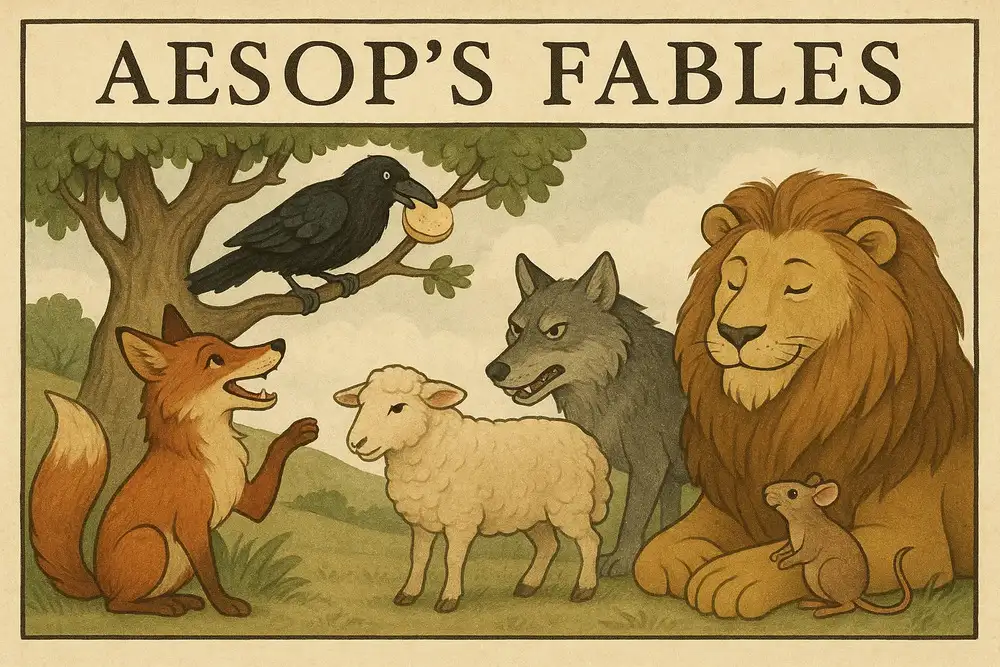
Note: This is not every single animal that ever appears in every version of Aesop’s fables.
It’s a curated list of the best-known and most frequently used animals.
1. Aesop’s Animals List (with Stories and Meanings)
Below you’ll find a list of classic animals from Aesop’s fables.
For each animal you’ll see:
Typical fable(s) where it appears
Role in the story
What it usually represents
You can turn this section into a table on your website, or keep it as a simple list.
Fox
Fables:
The Fox and the Grapes
The Fox and the Crow
The Fox and the Stork
The Fox and the Goat
Role:
The fox is almost always clever, smooth-talking and a bit dishonest. It tricks other animals with flattery or lies.Represents:
Cunning and intelligence
Trickery and manipulation
The danger of believing flattery
Crow / Raven
Fables:
The Fox and the Crow
The Crow and the Pitcher
Role:
In one story, the crow is vain and easily fooled by compliments. In another, it is clever and persistent, dropping stones into a pitcher to raise the water level.Represents:
Vanity and pride (when it loses the cheese)
Intelligence and problem-solving (when it gets the water)
The idea that effort and creativity can solve problems
Lion
Fables:
The Lion and the Mouse
The Lion’s Share
The Lion and the Fox
Role:
The lion is usually a powerful ruler. Sometimes noble and kind, sometimes selfish and unfair.Represents:
Power and authority
The responsibility that comes with strength
The idea that even the mighty sometimes need the weak
Mouse
Fables:
The Lion and the Mouse
Role:
A tiny, frightened animal that seems unimportant but later saves the lion by chewing through the ropes.Represents:
The value of kindness, even from the small
The idea that no one is too weak to help
Gratitude and returning favors
Wolf
Fables:
The Boy Who Cried Wolf
The Wolf in Sheep’s Clothing
The Wolf and the Crane
Role:
The wolf is often a dangerous predator and a symbol of threat or deceit.Represents:
Danger and deception
The consequences of lying
Hidden threats disguised as something harmless
Sheep
Fables:
The Wolf in Sheep’s Clothing
The Wolf and the Shepherd
Role:
Sheep are usually innocent, gentle victims that trust too easily.Represents:
Innocence and vulnerability
The need to be cautious and wise
People who follow others without question
Dog
Fables:
The Dog and the Shadow
The Dog in the Manger
The Wolf and the Dog
Role:
Dogs in Aesop can be both loyal workers and foolish or greedy characters.Represents:
Loyalty and service (guard dogs, working dogs)
Greed and dissatisfaction (dog who drops his bone for a shadow)
Jealousy and selfishness (dog in the manger who won’t eat hay but won’t let others eat it either)
Tortoise
Fables:
The Tortoise and the Hare
Role:
The tortoise is slow but steady, keeping up a constant pace until it wins.Represents:
Patience and perseverance
The idea that steady effort beats lazy talent
Confidence without arrogance
Hare / Rabbit
Fables:
The Tortoise and the Hare
Role:
Fast, confident, even overconfident. The hare wastes time and loses the race.Represents:
Speed and natural talent
Pride and overconfidence
The danger of underestimating others
Ant
Fables:
The Ant and the Grasshopper
Role:
Hardworking, serious and prepared, even if it seems boring.Represents:
Industry and hard work
Planning for the future
The idea that effort now prevents suffering later
Grasshopper
Fables:
The Ant and the Grasshopper
Role:
The grasshopper plays and sings all summer instead of working.Represents:
Laziness and short-term thinking
Living only for the moment
The consequences of failing to prepare
Donkey / Ass
Fables:
The Miller, His Son and the Donkey
The Ass in the Lion’s Skin
The Ass and the Lapdog
Role:
Donkeys are often stubborn, simple or foolish, but also hardworking.Represents:
Stubbornness and lack of wisdom
Trying to be something you’re not (wearing the lion’s skin)
The idea that you can’t please everyone
Horse
Fables:
The Horse and the Ass
The Horse and the Stag
Role:
Horses can be noble and strong, but sometimes proud or easily misled.Represents:
Strength and nobility
Pride that brings trouble
How alliances and jealousy can change your fate
Cat
Fables:
The Cat and the Mice
The Cat and the Birds
Role:
Clever, patient hunters. The cat often tricks mice or birds with a disguise or a fake promise.Represents:
Hidden danger and cunning
The idea that a predator is still a predator, even if it pretends to change
Suspicion and the need for caution
Mouse / Mice (as a group)
Fables:
Belling the Cat
Role:
A group of mice meets and talks about plans but struggles to act.Represents:
The gap between talking and doing
The difficulty of carrying out brave ideas
Group fear and indecision
Frog
Fables:
The Frog and the Ox
The Frogs Desiring a King
Role:
Frogs sometimes pretend to be more important than they are, or they demand a “stronger ruler” and regret it.Represents:
Vanity and pretending to be bigger than you are
Discontent with simple, safe leadership
The danger of asking for too much power over you
Goat
Fables:
The Fox and the Goat
The Goatherd and the Wild Goats
Role:
Often naive or easily tricked, like the goat who jumps into the well with the fox.Represents:
Lack of foresight
The importance of thinking before you follow
How trusting the wrong leader can trap you
Dove
Fables:
The Ant and the Dove
Role:
A kind dove saves an ant from drowning; later the ant saves the dove.Represents:
Kindness and generosity
Mutual help and gratitude
The idea that good deeds return to you
Snake / Serpent
Fables:
The Farmer and the Snake
Role:
A snake is rescued but later bites its rescuer.Represents:
Ingrateful and dangerous nature
The idea that some characters will always be harmful
The warning not to trust proven danger
Bear
Fables:
The Travelers and the Bear
Role:
A threat that reveals who your true friends are when danger appears.Represents:
Danger that tests friendship
Cowardice vs. loyalty
The lesson that some “friends” disappear when you need them most
Monkey
Fables:
The Monkey and the Dolphin
The Monkey and the Cat
Role:
Monkeys are often playful tricksters, but not always as clever as they think.Represents:
Pretending to know more than you do
Selfishness and using others for your own gain
The risk of lying to impress others
Peacock
Fables:
The Peacock and the Crane
Role:
The peacock is proud of its beautiful feathers but cannot fly well.Represents:
Vanity about appearance
The idea that beauty is not everything
Comparing yourself to others in the wrong way
Goose
Fables:
The Goose that Laid the Golden Eggs
Role:
A goose lays golden eggs; the owner kills it out of greed and loses everything.Represents:
Greed and impatience
Destroying long-term benefits for a quick reward
The danger of killing your own source of wealth
Owl
Fables:
The Owl and the Birds
Role:
The owl sees more clearly and gives good advice that others ignore.Represents:
Wisdom and foresight
The danger of ignoring good counsel
How pride can make you reject wise warnings
Eagle
Fables:
The Eagle and the Fox
The Eagle and the Beetle
Role:
A powerful bird who sometimes misuses its strength and underestimates weaker creatures.Represents:
Power and high status
The idea that even the mighty can be punished
Respect for those who seem small or weak
2. Grouping Aesop’s Animals by Traits and Morals
Another useful way to explore Aesop’s animals is to group them by the traits they represent.
Clever or Cunning Animals
Fox
Cat
Crow (in The Crow and the Pitcher)
Monkey
They remind us that intelligence can be used for good or for trickery, and that we must be careful who we trust.
Hardworking and Responsible Animals
Ant
Some Dogs (as workers or guards)
Tortoise
These animals show the value of steady effort, patience and planning ahead.
Proud or Vain Animals
Peacock
Crow (in The Fox and the Crow)
Hare
Horse
They warn us that pride and vanity can lead to embarrassment or failure.
Kind and Helpful Animals
Dove
Ant (when it repays the dove)
Mouse (helping the lion)
These characters show that kindness and gratitude are powerful, even in a world full of danger and selfishness.
Dangerous or Deceitful Animals
Wolf
Snake
Some Cats (when hunting)
Some Eagles
They represent hidden threats, betrayal and ingratitude, teaching us to be careful about whom we trust.
3. How to Use This Aesop’s Animals List
For Teachers
Let students pick one animal from the list and:
summarize its fable,
describe its character, and
explain the moral.
Ask: “Do you think real foxes/mice/wolves are actually like this? Why does Aesop use them this way?”
Create a classroom chart where each animal is linked to its fable and moral.
For Parents
Use the animals list as a bedtime reading plan:
Each night, choose one fable with a new animal.
Talk with your child about whether they have seen that animal in real life or in other stories.
Encourage your child to draw the animals and write a sentence about what they learned.
For Writers & Creators
Use this list to design characters for comics, games or picture books.
You can follow Aesop’s traditional meanings – or twist them:
For example, make a wolf who is kind, or a fox who is honest, and see how the story changes.
4. Do Aesop’s Animals Behave Like Real Animals?
Aesop’s fables are not scientific reports.
They are moral stories where animals act like humans:
Foxes talk and plan tricks,
Ants save food for winter,
Lions negotiate and make deals.
In real life, animals follow their instincts and natural behavior. Foxes are not “evil,” lions are not “honorable kings,” and goats are not “stupid.” These are human ideas placed onto animals to make stories easier to remember.
That’s part of what makes Aesop’s fables so powerful:
they are simple and memorable, but they open the door to deeper questions, like:
Is it fair to call someone “a fox” or “a donkey”?
Do we sometimes judge people as quickly as we judge Aesop’s animals?
How can we learn the moral without unfairly labeling real animals?
By exploring this Aesop’s animals list, you get more than just a set of names.
You get a map of human character traits – cleverness, laziness, pride, kindness, greed, courage – all wrapped up in short stories that have survived for centuries.