The eland is one of the most iconic hoofed animals of the African savanna—and also one of the most surprising. At first glance it can look like a “cow–antelope hybrid”: a huge, heavy-bodied herbivore with a deep chest, a noticeable dewlap, and long spiral horns. But despite its size, an eland can be agile, jump high fences, and move across dry landscapes while getting much of its moisture from food.
There are two living species of eland:
Common eland (Taurotragus oryx)
Giant eland / Lord Derby’s eland (Taurotragus derbianus)

Quick facts (at a glance)
Largest antelope group: Elands are among the largest antelopes on Earth
Horns: Both males and females have twisted, corkscrew-like horns
Diet: Mainly browsers + grazers (leaves, shoots, pods, plus grasses)
Social life: Herd animals; herd size varies with season and conditions
A weird sound: Herds can produce a distinctive “clicking” when walking
What does an eland look like?
Elands are built like living tanks—big, muscular, and deep-chested.
Key physical features
Large, robust body with a slightly sloped/arched back and strong shoulders
Coat color often tan to light brown; some populations show pale vertical stripes
Dewlap (throat flap), usually larger and more noticeable in adult males
Big hooves suited for long-distance travel over mixed terrain
Spiral horns in both sexes (males’ horns are typically thicker/shorter; females’ often longer/slimmer)
Some individuals also have a darker mane/crest along the neck/back

Common eland vs giant eland: what’s the difference?
1) Common eland (Taurotragus oryx)
Generally the more widespread and often seen in southern/eastern African savannas and open woodlands
Frequently described as more “manageable” in captivity; it has been farmed or semi-domesticated for meat/milk in some places
2) Giant eland (Taurotragus derbianus)
Typically larger on average than the common eland
Occurs in West and Central Africa (not southern Africa) with scattered populations
Includes two main subspecies often discussed in conservation: western giant eland and eastern giant eland
How big is an eland? (Length and weight)
Exact size depends on species, sex, and local conditions—but elands are undeniably massive.
Common eland: adult males commonly in the 500–900 kg range; females lighter
Giant eland: adult males can reach roughly 400–1,200 kg; females often ~300–600 kg

Where do elands live?
Common eland range & habitat
Common elands live in East and Southern Africa, favoring savannas, shrublands, and open woodlands—often in semi-arid zones with bushy cover.
Giant eland range & habitat
Giant elands live across parts of West and Central Africa, using wooded savannas, open forest, and grassland mosaics—often in areas that are remote or lightly settled.
Outside Africa?
Common elands have also been kept outside Africa in farming/game ranch contexts (for example, in parts of Europe and the US, and on some private ranches in Mexico).
What do elands eat?
Elands are herbivores. They’re often described as browsers that also graze, meaning they don’t rely on grass alone.
They commonly feed on:
Leaves, shoots, twigs
Pods and fruit
Grasses when available
A big advantage in dry seasons: elands can get a large share of their water needs from moist plant material, which helps them cope when surface water is limited.

Behavior: are elands fast, social, or aggressive?
Daily activity
Elands often time their movement to temperature:
More active in cooler morning/evening
Resting in shade during the hottest hours
Herd life
They are social and can gather in herds whose size changes with:
rainfall patterns
food and water distribution
breeding season
Jumping and agility
Elands can be impressive jumpers for their weight:
Adults are often reported capable of clearing ~1.5 m (5 ft) vertical obstacles
Young animals may clear ~3 m (10 ft) fences in a burst
How fast can an eland run?
Speed reports vary by species and source:
Common eland is often described as relatively slow for an antelope, with a peak speed reported around ~40 km/h, though it can keep a steady trot for long periods
Giant eland is widely reported as capable of running over ~70 km/h
Why do elands “click” when they walk?
Eland herds can make a loud, rhythmic clicking sound. Explanations vary, with common theories including:
split hooves clapping together as the foot lifts, or
tendon/joint mechanics in the leg

Reproduction: mating and calves
Elands are viviparous (live birth). Typical pattern:
Usually one calf per pregnancy
Gestation is about nine months
Females often produce a calf roughly once per year under natural conditions (depending on nutrition and stress)
In many herds, adult males compete for breeding opportunities, and dominance can influence mating access.
Predators and role in the ecosystem
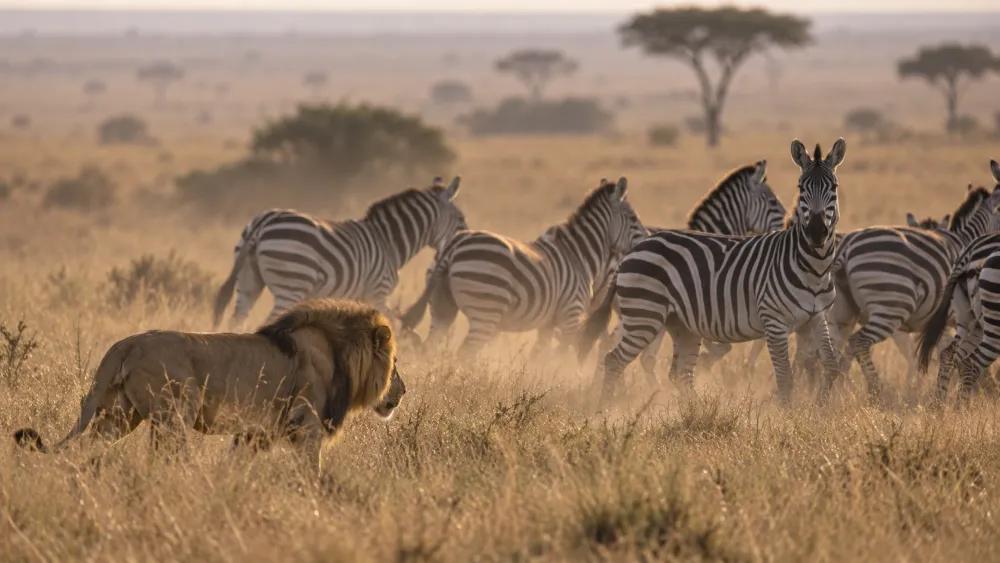
Elands are important prey for top predators. Depending on region and species, threats can include lions, and sometimes hyenas and leopards (especially for calves).
Ecologically, they’re a major link in the food chain—turning tough vegetation into biomass that supports large carnivores.
Conservation status and threats
Common eland
Listed as Least Concern in IUCN assessments and is considered stable or increasing in several areas, especially where protected areas and private land management support populations.
Giant eland
Listed as Vulnerable, with declining trends reported in many places. Key pressures include habitat loss, poaching/snaring, and instability/conflict in parts of its range.
Important detail: conservation can differ dramatically by subspecies. The western giant eland is often described as critically endangered, with very small remaining wild numbers in Senegal.
Disease has also played a role historically; for example, rinderpest outbreaks contributed to major declines in parts of the giant eland’s range in the past.
Fun facts about elands
That click is real: You can sometimes hear a herd before you see it.
Fence-jumpers: Their jumping ability is one reason elands are challenging to keep behind standard fencing.
Big impact herbivores: By browsing and moving across wide home ranges, they influence plant growth and savanna structure.
FAQ (for readers / SEO)
Are elands dangerous to humans?
They’re usually shy and avoid people, but a large male with heavy horns can be dangerous if cornered or stressed—as with most big wild ungulates.
What’s the easiest way to tell common vs giant eland?
Range is the simplest clue: common eland is mainly East/Southern Africa, while giant eland is West/Central Africa.
Do elands need to drink water every day?
Not always. They can obtain much of their moisture from food, especially when browsing on leafy plants.