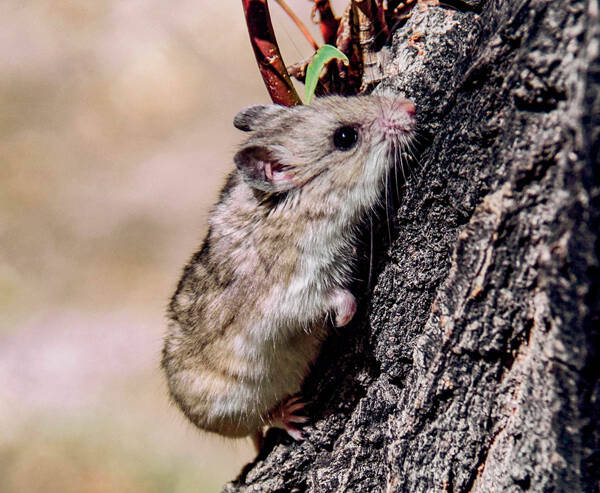
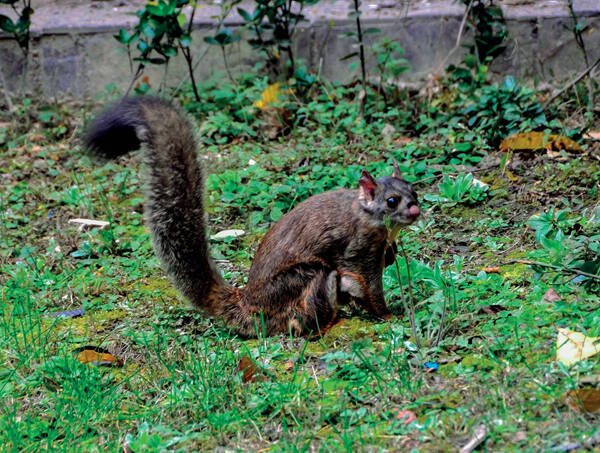
The broad-toothed rat (Mastacomys fuscus) is a stocky, grass-eating rodent native to cool, wet highland environments of south‑eastern Australia. It is best known for its unusually broad molars and robust incisors, which are well suited to chewing tough grasses and sedges. In alpine and subalpine ecosystems, this species is an important small herbivore and a key prey item for several predators, linking vegetation dynamics to higher levels of the food web.
Taxonomy and naming
The broad-toothed rat belongs to Class Mammalia, Order Rodentia, Family Muridae and Genus Mastacomys. In most modern treatments, Mastacomys is considered a largely single‑species genus, with M. fuscus as its principal representative. The common name “broad‑toothed” refers to the expanded grinding surfaces of the molars, an adaptation to a diet dominated by fibrous plants.
Physical characteristics
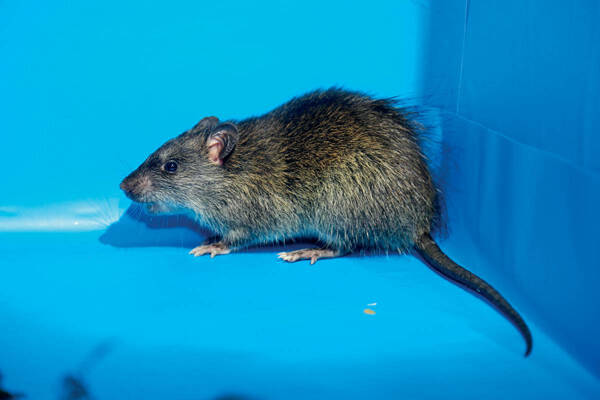
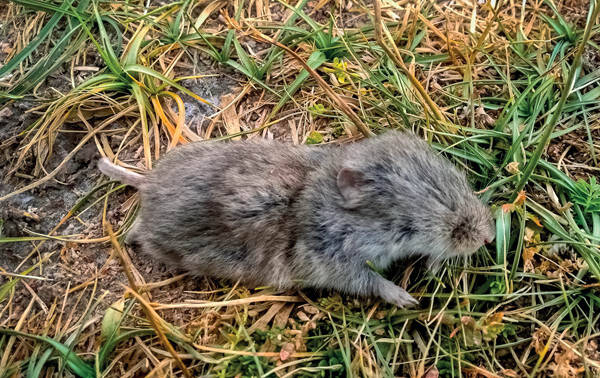
This is a medium-sized Australian rodent with a compact build, a relatively broad head and a short muzzle. Adults typically have a head–body length of about 14–18 cm and a tail of roughly 10–14 cm. Body mass commonly falls around 90–170 g, varying with season, elevation and food availability. The coat is generally dark brown to grey‑brown above, with paler greyish or buff underparts, and the fur is dense—an advantage in cold, damp upland climates.
The dentition is the signature feature. Strong incisors and broad, heavy molars help process tough grasses, sedges and rushes. The ears are moderate to small, the limbs are short but sturdy and the claws are useful for moving through thick ground cover and pulling vegetation into feeding sites. The tail is relatively short for a rat and is used mainly for balance rather than climbing.
Distribution and habitat
The broad-toothed rat occurs in cool, wet uplands of south‑eastern Australia, including the Australian Alps (in Victoria and the higher parts of New South Wales) and parts of Tasmania’s cooler highland and moist habitats. It is strongly associated with environments that retain moisture and dense ground cover, such as subalpine grasslands, heathlands, sedge swamps, peatlands, wet gullies and the understorey of moist eucalypt forests.
Within these habitats, the species depends on thick tussock grass, litter layers, moss and fallen logs that provide concealed runways, nesting materials and refuge from predators. Because it relies on cool, moist microclimates and intact ground structure, populations can decline rapidly when sites become drier, more open or repeatedly burned.
Behaviour and lifestyle
Broad-toothed rats are mostly nocturnal or crepuscular. By day they remain hidden in dense vegetation, shallow burrows, rock crevices or beneath logs, emerging after dusk to feed. They frequently use surface runways (“tunnels” through grass and litter) that allow them to move between cover and feeding patches while minimising exposure in open ground.
Home ranges are often small, and individuals tend to reuse familiar pathways and feeding sites. Activity can be strongly seasonal in alpine areas, with animals exploiting the insulating properties of dense vegetation, litter layers and, where present, subnivean spaces beneath snow to reduce heat loss and predation risk.
Diet
The diet is dominated by grasses, sedges and other fibrous ground-layer plants, supplemented at times by seeds, roots, fungi and occasional invertebrates. The broad molars are particularly effective for grinding tough plant material. In winter or during periods of low green growth, individuals may rely more on hardy sedges, basal plant parts and stored or dried vegetation within the litter layer.
Because food quality and availability can shift sharply with rainfall, snow cover and fire history, the species is closely tied to habitats that maintain persistent ground-layer productivity and moisture.
Reproduction and life cycle
Breeding is generally concentrated in milder months when food is abundant, though timing varies with local climate and elevation. Females typically produce litters of about 2–5 young. Pups develop in the nest and become independent after several weeks, learning the local runways and feeding patches used by adults.
Sexual maturity can be reached within the first year under favourable conditions. In the wild, lifespan is often around 1–3 years, with a few individuals potentially surviving longer where resources are stable and predation pressure is lower. Like many small mammals with specialised habitat needs, populations can fluctuate markedly following drought, severe winters or high-frequency fire.
Relationship with humans
Unlike commensal “pest” rats, the broad-toothed rat is largely confined to remote upland habitats and is rarely associated with urban areas. Ecologically, it contributes to alpine and wetland systems by consuming and redistributing plant material and by serving as prey for owls, snakes, foxes and feral cats. Its presence is often used as an indicator of intact, moisture‑retaining ground cover in highland landscapes.
Human impacts are mostly indirect, through habitat alteration. Infrastructure development in high country areas, changes in grazing pressure, trampling of wetlands and peatlands and shifts in fire regimes can all reduce the dense ground cover and cool microclimates the species depends on.
Conservation status and threats
The broad-toothed rat is widely regarded as a species of conservation concern because of its dependence on cool, wet highland habitats that can shrink or fragment under warming climates and altered disturbance regimes. In some assessments it is treated as near‑threatened, and in parts of its range it is managed as a threatened species at the regional level.
Major threats include habitat loss and fragmentation, repeated or high‑intensity fires that remove the protective litter and tussock layer, drying of peatlands and swamps during drought, climate change that reduces cool, wet microhabitats and increased predation pressure from introduced predators such as feral cats and red foxes. Effective conservation focuses on protecting and restoring moisture‑retaining grasslands and wetlands, managing fire frequency and severity, limiting habitat degradation from grazing and recreation, controlling invasive predators and maintaining long‑term monitoring to detect population changes across elevations and regions.