The common dunnart (Sminthopsis murina) is a small, insect-eating marsupial native to south-eastern Australia. Active mainly at dusk and at night, it hunts rapidly across the ground layer, using leaf litter, grass tussocks and fallen logs as cover. Although it can look superficially “mouse-like,” a dunnart is a carnivorous marsupial in the dasyurid family, more closely related to quolls and Tasmanian devils than to rodents.
Common dunnarts are important nocturnal predators of insects and other small invertebrates, and they help shape forest-floor food webs. They have a fast life cycle and can respond quickly to changes in rainfall, prey abundance and habitat structure. Local populations may fluctuate when frequent intense fires remove ground cover or when introduced predators such as feral cats and foxes are abundant.
Taxonomy and naming
The species belongs to Class Mammalia, Order Dasyuromorphia, Family Dasyuridae and Genus Sminthopsis. “Dunnart” is an Australian common name used for several small, mostly insectivorous species in this group. The common dunnart is often treated as a widespread, familiar member of the genus in south-eastern Australia.
Physical characteristics
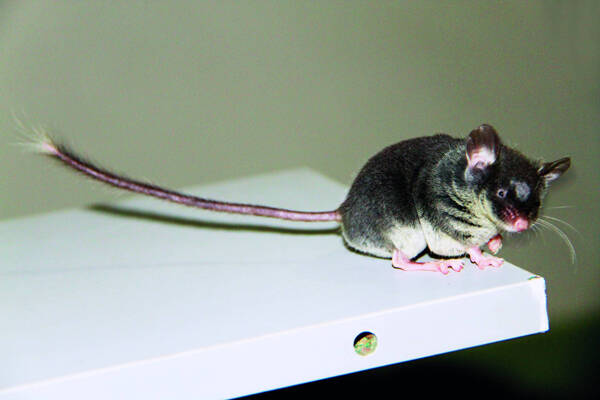
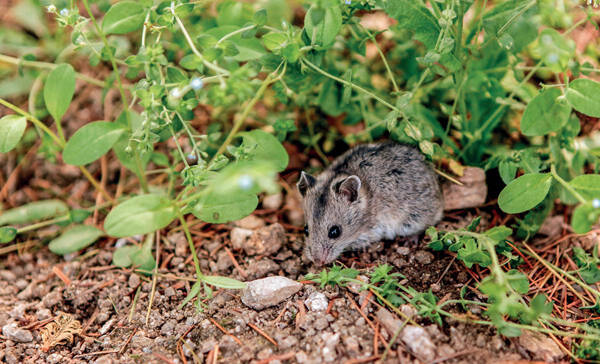
Common dunnarts are tiny, agile mammals with a slender, pointed muzzle, large eyes and thin upright ears. Adults typically measure about 7–10 cm in head–body length, with a tail around 7–10 cm (often similar to the body length). Body mass is usually around 15–30 g, varying with sex, season and condition.
Upper fur is generally grey-brown to brown, with paler underparts. The tail is slender; in some individuals the tail base can store fat, providing a short-term energy reserve when food conditions shift. Sharp teeth and well-developed canines reflect a diet dominated by animal prey rather than seeds or vegetation.
Distribution and habitat
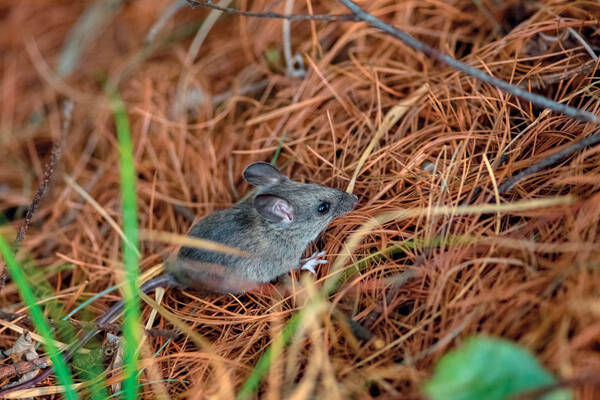
The common dunnart occurs mainly in south-eastern Australia, especially in habitats that provide abundant ground cover and prey. It is found in open woodland, grassy forests, heathlands, shrublands, farmland margins and some peri-urban reserves. At a fine scale, it depends on leaf litter, dense grass tussocks, fallen logs, rock piles and shrub bases for shelter and safe movement.
Where the ground layer is repeatedly cleared, heavily grazed or burned too frequently, dunnarts become more exposed to predators and weather extremes and local numbers can decline.
Behaviour and lifestyle
Common dunnarts are mostly crepuscular and nocturnal. They move quickly along the ground, often following concealed runways through litter and grass. During the day they rest in nests or shelters beneath logs, inside grass clumps, in rock crevices or in abandoned burrows, lining the nest with dry grass, leaves and plant fibres for insulation.
They rely strongly on smell and hearing to locate prey. When alarmed they usually dive into cover, freeze in place or make rapid, zig-zag movements toward shelter.
Diet
The diet is dominated by insects and other invertebrates, including beetles, crickets, ants, spiders and moth larvae. Depending on opportunity, they may also take small lizards or scavenge from carcasses. Because of their high metabolic rate, dunnarts need to feed frequently. In cold or food-poor periods, some individuals may reduce activity and temporarily lower body temperature (short-term torpor-like energy saving) to conserve energy.
Reproduction and life cycle
Breeding is usually linked to climate and insect availability, with spring and summer often being the most active seasons. Gestation is very short (around two weeks), and females can give birth to multiple young (often roughly 6–10, varying among individuals). Newborns are tiny and attach to teats in the pouch area (in dunnarts the pouch can be reduced to skin folds), where they continue development.
The life cycle is fast, with many individuals living only 1–2 years in the wild. Because generations turn over quickly, population size can track rainfall, prey pulses, fire history and predator pressure over relatively short time frames.
Relationship with humans
Common dunnarts are harmless to people and can be beneficial by consuming large numbers of insects. They may occur in parks and bushy gardens near natural habitat, but they are secretive and rarely noticed. Reducing night-time cat roaming, retaining leaf litter and shrubs and avoiding excessive “tidying” of ground cover can help these native small marsupials persist in peri-urban landscapes.
Conservation status and threats
The common dunnart is generally considered Least Concern (LC) overall, but local populations can be affected by habitat loss and fragmentation, frequent or high-intensity fires that remove the protective ground layer and predation by introduced predators such as feral cats and foxes. Roads and urban expansion can increase isolation and mortality in some areas.
Management that supports dunnarts typically focuses on maintaining ground-layer structure (leaf litter, logs and dense understorey), using fire regimes that allow cover to recover, controlling introduced predators in key habitats and monitoring population responses to drought and changing fire patterns.