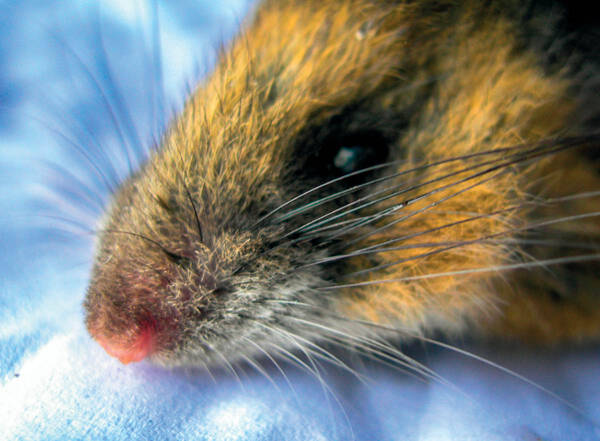
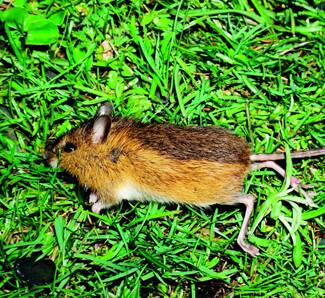
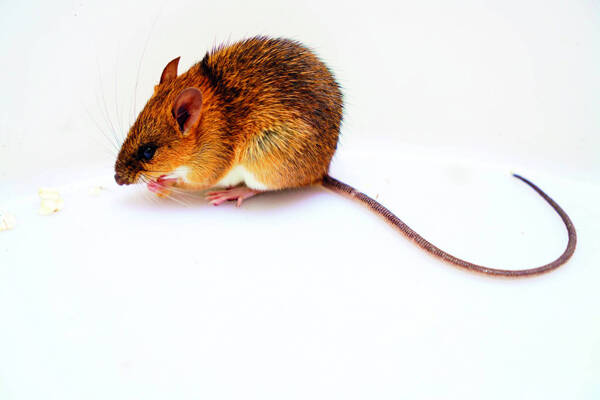
The house mouse (Mus musculus) is one of the most widespread mammals on Earth and is closely associated with human settlements. Its ability to exploit buildings, farms, and stored food has helped it expand across nearly every region of the world.
It is not an endangered species—globally it is assessed as Least Concern (LC). In fact, on some islands and sensitive ecosystems, house mice can behave as invasive pests, impacting native wildlife and habitats.
Taxonomy
The house mouse is a rodent in the family Muridae and the genus Mus. It has many regional forms and is a well‑known model organism in biomedical research.
Appearance
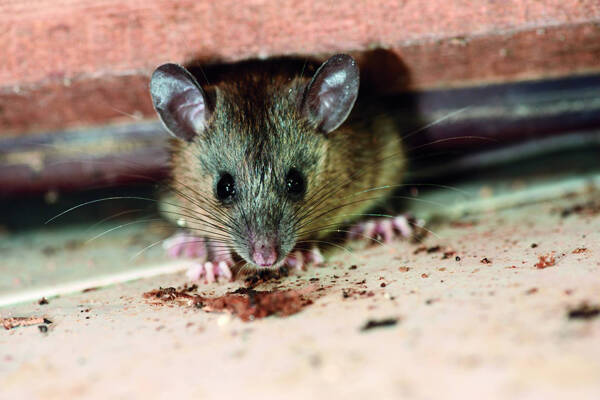
House mice are small with a pointed snout, large rounded ears, and a long, almost hairless tail. Wild individuals are often grey‑brown above and paler below, while captive or laboratory strains can show a wide range of coat colours.
Range and habitat
Although originally tied to Eurasia, the species has spread worldwide with human trade and travel. It thrives in and around buildings but can also live in fields, grasslands, and scrub—especially where food is available.
Behaviour
Activity is often crepuscular or nocturnal. Mice use narrow gaps for shelter and build nests from soft materials. They learn routes to food and water quickly and can adapt rapidly when conditions change.
Diet
House mice are omnivorous. They eat grains, seeds, fruits, and insects, and readily take advantage of human food scraps, animal feed, and waste.
Reproduction and lifespan
They reproduce quickly when food and warmth are available. In the wild, many individuals do not survive beyond about 12–18 months. In captivity, average lifespan is around 2 years, and some individuals can live longer under specialised conditions.
Relationship with humans
House mice are common household and agricultural pests and can contaminate food and damage materials. They are also among the most important animals in scientific research, contributing to medicine and genetics.
Conservation status and management
Globally, the house mouse is abundant and listed as Least Concern (LC). Management usually focuses on prevention (proofing buildings, reducing food access) and safe, humane control methods where necessary—especially to protect vulnerable island ecosystems.