The narrow-nosed planigale (Planigale tenuirostris) is one of Australia’s tiniest marsupial predators—an animal that looks a bit like a mouse, yet belongs to the carnivorous dasyurid family. Adults typically weigh under 10 grams, but they are fast, bold hunters that take a wide range of invertebrate prey and may even tackle small lizards when the opportunity arises.
What makes planigales famous is their unusually flattened skull. This low, wedge‑shaped head allows them to squeeze into soil cracks, grass bases and deep leaf litter—microhabitats that larger predators cannot access. By spending much of their time below the surface, they can hunt efficiently, avoid many predators and reduce exposure to extreme heat and dryness in inland Australia.
Taxonomy
This species is in the order Dasyuromorphia and the family Dasyuridae (which includes quolls, dunnarts and the Tasmanian devil). It belongs to the genus Planigale. The species name tenuirostris refers to its relatively slender snout (“narrow‑nosed”). It was described in 1928 by Troughton, who separated it from closely related planigales that had previously been lumped together.
Appearance
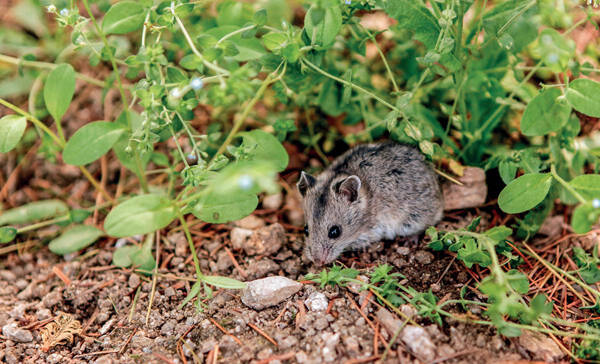
Narrow-nosed planigales are extremely small: head–body length is commonly about 5–7.5 cm with a tail around 5–6 cm, and body mass is often 4–9 g. Fur is generally brown to slightly rufous above with paler underparts. The head is notably low and flat, with a slender muzzle and relatively large eyes for nocturnal activity. Legs are short but agile, and the fine claws suit digging and prying through cracks and litter. Breeding males may show fur discoloration.
Range and habitat
In Australia, records span inland parts of New South Wales, the Northern Territory, Queensland and South Australia. The species is strongly associated with habitats that develop deep soil cracks—low shrubland and tussock grassland on cracking clay soils are typical. It often favours more open sites away from water, where cracks and cavities provide shelter and hunting corridors. In drier landscapes it can also occur on stony plains and hills, in chenopod shrublands, and in open woodlands where suitable ground structure and cover persist.
Behaviour
It is primarily nocturnal in both summer and winter. Individuals spend substantial time deep within soil cavities, emerging periodically to forage on or near the surface. Living “inside the cracks” offers a built‑in refuge from many predators because larger animals cannot follow. Narrow-nosed planigales are generally solitary, and local abundance can fluctuate with rainfall and prey availability.
Diet
This species is a generalist insectivore and arthropod predator: diets commonly include beetles, spiders and other terrestrial arthropods, reflecting what is available locally. Small reptiles may also be taken. Because they are so small, meals are frequent and tightly linked to short‑term prey availability.
Reproduction and life history
Breeding is seasonal and tends to coincide with higher food availability in spring and summer. Females have a pouch and 12 teats. Reported breeding seasons can run from July into mid‑January, with an average litter size of about six young. Gestation is around 19 days; young detach from teats at roughly 36 days, open their eyes at about 51 days and are weaned at around 95 days. In the wild, survival beyond two years appears uncommon, while captive records can reach roughly three years.
Conservation status and threats
The narrow-nosed planigale is listed by the IUCN as Least Concern (LC) and is not currently considered to be undergoing a rapid, widespread decline. However, local pressures can occur where cracking‑clay habitats are converted or heavily altered for agriculture and grazing, changing soil structure and vegetation cover. Maintaining intact ground cover and minimising severe soil disturbance helps preserve the soil‑crack microhabitat that this species depends on.