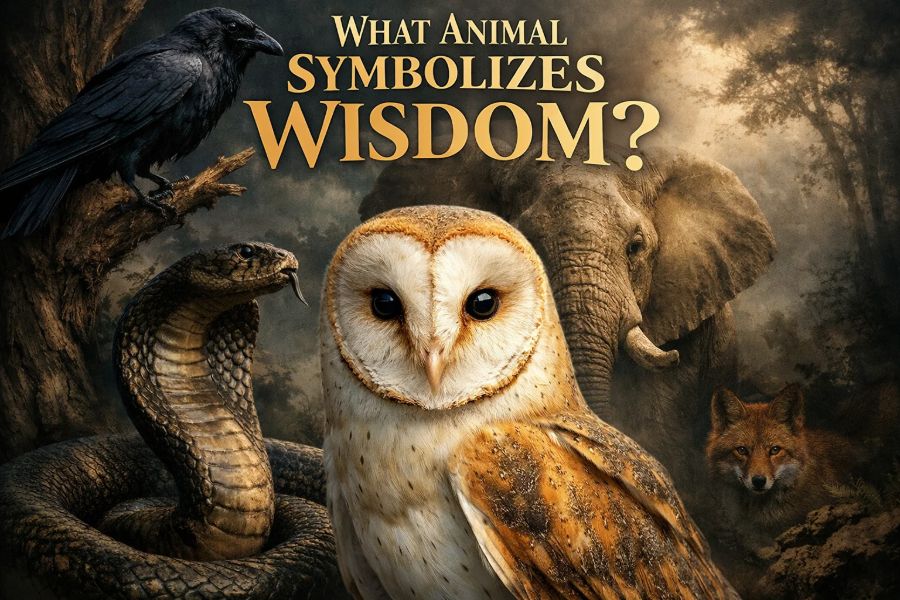
If someone asks, “What animal symbolizes wisdom?”, the most accurate zoological-and-cultural answer is: there is no single universal animal of wisdom. Different cultures attach wisdom to different animals, and the meaning of “wisdom” itself varies. In many Western traditions, the owl is the best-known symbol of wisdom because of its association with Athena, the Greek goddess of wisdom. But in other traditions, people may link wisdom with the elephant (memory and judgment), the snake (knowledge, renewal, hidden power, or healing), or the raven (intelligence, foresight, and mystery).
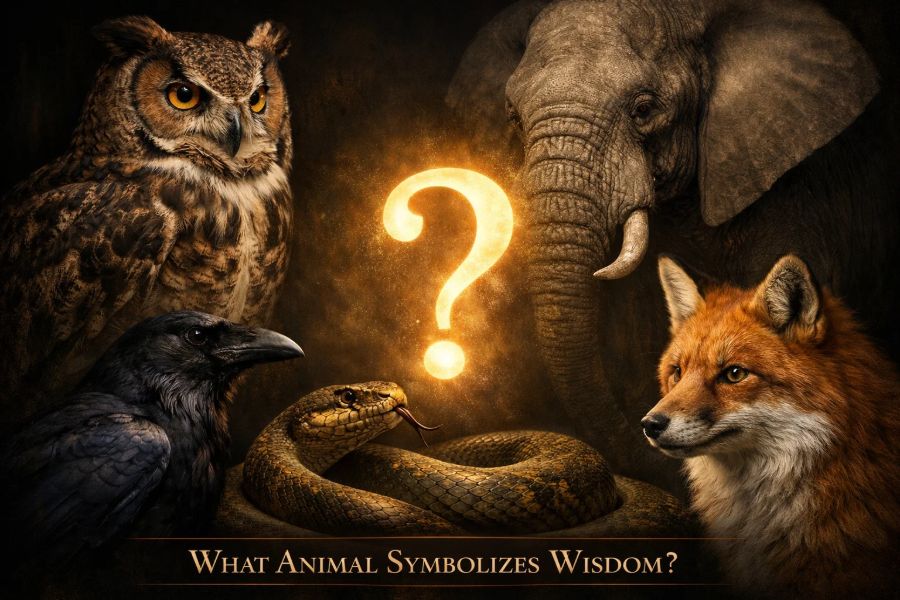
So the short answer is this: the owl is probably the most famous global symbol of wisdom today, but it is not the only one, and it is not universal.
Why animals become symbols of wisdom
Animals become symbols not just because of biology, but because humans interpret their behavior. Nocturnal animals may seem mysterious. Long-lived animals may suggest memory or experience. Clever animals may become linked with intelligence, planning, or strategy. Over time, mythology, religion, art, and folklore can turn those impressions into cultural symbols. That is why the same animal may mean wisdom in one place, danger in another, and trickery somewhere else. This is an inference from the cultural records below.
Quick comparison table
| Animal | Common symbolic meaning | Where that association is especially strong | Important nuance |
|---|---|---|---|
| Owl | Wisdom, intelligence, strategy | Ancient Greece and later Western traditions | Not universal; in some cultures owls can also symbolize death or omen |
| Elephant | Memory, judgment, dignity, power | South and Southeast Asian cultural contexts; also modern global symbolism | More often wisdom-through-memory than abstract philosophy |
| Snake / Serpent | Knowledge, renewal, healing, hidden wisdom | Indian traditions, alchemical symbolism, many mythic systems | Also carries negative meanings in some Abrahamic contexts |
| Raven | Intelligence, foresight, mystery, paradox | Northern European, some Indigenous North American, and broader folklore traditions | Can also symbolize death, prophecy, or trickster energy |
| Fox | Cleverness, cunning, practical intelligence | European and East Asian folklore | Usually “cunning intelligence,” not always moral wisdom |
These meanings vary by culture, period, and religious setting.
1. The owl: the best-known symbol of wisdom
If you had to pick one animal most strongly linked with wisdom in modern English-speaking culture, it would be the owl. Britannica states that Athena is associated with birds, especially the owl, and that the owl became famous as a symbol of Athens. World History Encyclopedia likewise identifies the owl as a symbol of Athena and of wisdom. Britannica’s little owl entry goes further, noting that because of this association, the owl has been viewed as a symbol of wisdom and intelligence in Western traditions.
This symbolism likely became so durable because owls seem observant, silent, and mysterious. Their forward-facing eyes and nocturnal habits make them appear thoughtful to humans, even though that is our interpretation rather than a scientific measure of intelligence. So culturally, the owl became the animal most people now answer first when they hear the phrase “symbol of wisdom.”
But even here, nuance matters. In some traditions, owls are not symbols of wisdom at all; they can be linked to death, omens, or the spirit world. So “owl = wisdom” is powerful, but not globally universal. This contrast is a broad cultural inference; the Western association itself is strongly documented.
2. The elephant: wisdom through memory and experience
Elephants are often treated as symbols of wisdom because they are associated with memory, social knowledge, and long experience. Britannica’s explanation of elephant memory notes that elephants have strong social memories and can remember water and food locations over long periods. Britannica also notes that elephants have long stood as symbols of power and pageantry in parts of Asia. Together, those traits help explain why people often read elephants as wise rather than merely strong.
This is slightly different from owl symbolism. The owl often represents intellectual wisdom or strategic thought. The elephant more often represents deep memory, patience, and mature judgment. In modern popular culture, elephants are frequently used as symbols of calm authority and thoughtful strength, and that likely grows out of the real animal’s reputation for memory and long social bonds. The memory-based part is directly supported; the symbolic interpretation is a cautious inference.
3. The snake: knowledge, renewal, and hidden wisdom
Snakes are among the most symbolically complex animals in human culture. Britannica’s discussion of animal symbolism in religion notes that snake cults are widespread and that the serpent appears in the Epic of Gilgamesh as one who knows the secret of rejuvenation. Britannica’s ouroboros entry adds that serpent imagery can represent unity and the eternal cycle of destruction and re-creation, while also noting that in Christian tradition snakes often have more negative meanings.
That makes the snake an unusual “wisdom animal.” It often stands not for calm scholarly wisdom, but for hidden knowledge, transformation, healing, renewal, or dangerous insight. In some Indian traditions, nāgas are powerful serpent beings with sacred and protective dimensions, which reinforces the serpent’s broader link to sacred knowledge and hidden power.
So if the owl is wisdom in the classroom sense, the snake is often wisdom in the mystical or transformational sense. But because snakes also carry negative meanings in some religious traditions, they are much less universally celebrated than owls.
4. The raven: intelligence, foresight, and mystery
Ravens deserve attention because they are not just symbolic animals; they are also genuinely intelligent birds. Britannica describes ravens as intelligent and notes evidence that they can save useful objects for later, behavior suggesting future-oriented planning. That biological intelligence likely helps explain why ravens became associated with knowledge, foresight, and mystery in folklore.
Symbolically, ravens are more ambiguous than owls. Britannica Kids notes that ravens have often been seen as symbols of dark prophecy, death, or pestilence, but also won admiration for their cleverness and fearlessness. A Trees for Life folklore summary similarly describes the raven as a bird of paradox in myth. A Smithsonian-style summary of raven cognition emphasizes just how smart corvids are, including planning and delayed gratification.
Because of that blend of intelligence and darkness, ravens often symbolize wise mystery rather than serene wisdom. In some traditions they are creators, messengers, watchers, or tricksters. So the raven is a strong wisdom symbol, but usually in a more complex, shadowed way than the owl.
5. The fox: cleverness more than wisdom
Foxes are often included in discussions like this, but a zoologist would separate wisdom from cunning. Britannica explicitly says the red fox is widely held as a symbol of animal cunning and has an enormous folklore tradition. That means the fox symbolizes a kind of intelligence, but usually not the same kind associated with Athena’s owl.
In folklore, the fox is often smart, but it is the smartness of improvisation, trickery, and social maneuvering. That is still a type of intelligence, but culturally it is usually closer to craftiness than to wisdom. So if someone asks for the animal of wisdom, the fox is usually a secondary answer, not the leading one.
Which animal is the strongest symbol of wisdom overall?
If the question is asked in modern English and without any cultural qualifier, the safest answer is:
The owl is the strongest and most recognizable symbol of wisdom.
That is especially true in Western education, literature, and visual culture because of its association with Athena.
But if the question is asked globally, the better answer is:
Wisdom is symbolized by different animals in different cultures.
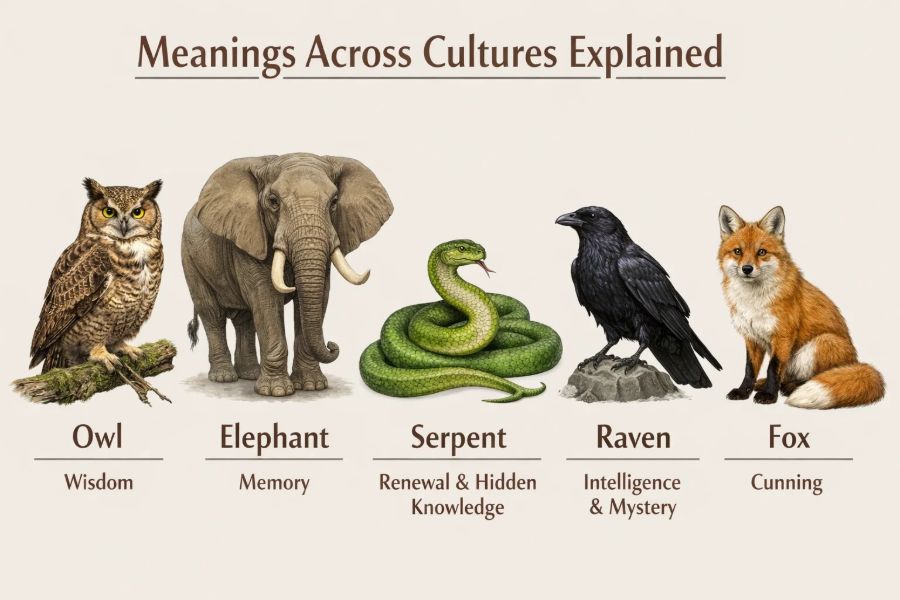
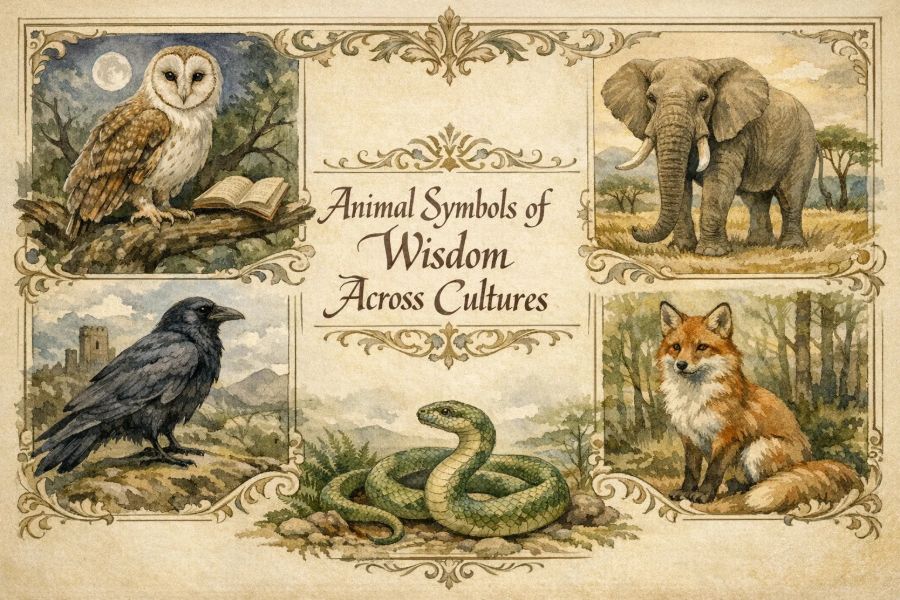
Owl for wisdom and learning, elephant for memory and judgment, snake for hidden knowledge and renewal, raven for intelligence and mystery, and fox for cleverness.
A more scientific way to phrase it
From an animal-behavior point of view, symbolic wisdom and biological intelligence are not the same thing. Humans may treat owls as wise even though corvids often outperform them in many cognitive tasks. Ravens may be biologically better examples of flexible problem-solving, while owls remain the stronger cultural symbol of wisdom. That contrast helps show how symbolism works: it follows human stories and visual impressions, not just scientific cognition rankings. The raven intelligence evidence is direct; the contrast with owl symbolism is an inference.
Final takeaway
So, what animal symbolizes wisdom?
If you want one answer: the owl.
If you want the more culturally accurate answer: it depends on the culture.
If you want the richest answer: wisdom has many animal symbols, each representing a different kind of knowing—the owl’s insight, the elephant’s memory, the snake’s hidden knowledge, the raven’s foresight, and the fox’s cunning.
References
Britannica. Athena. Owl as Athena’s animal symbol and its connection to Athens.
World History Encyclopedia. Athena. Owl as symbol of wisdom in Athena’s iconography.
Britannica. Little owl. Owl associated with Athena and viewed as a symbol of wisdom and intelligence in Western traditions.
Britannica. Do Elephants Have Good Memory? Elephant memory and long-term social/environmental recall.
Britannica. Elephant and related entry text. Elephant as a symbol of power and pageantry.
Britannica. Polytheism: Animal and human forms. Widespread serpent symbolism; serpent in Gilgamesh knows rejuvenation.
Britannica. Ouroboros. Positive serpent symbolism tied to unity and cyclical renewal; contrast with some Christian meanings.
Britannica. Raven. Raven intelligence and future-oriented planning.
Britannica Kids. Raven. Raven as symbol of prophecy/darkness but also admired for cleverness.
Britannica. Fox. Red fox widely held as a symbol of cunning.