Most crabs you see on the beach or on a plate have 10 legs.
Biologically, true crabs belong to a group of crustaceans called decapods, which literally means “ten-footed”.
But those “feet” are not all the same:
1 pair at the front is modified into claws (chelae)
4 pairs behind are used mainly for walking, digging or swimming
In this guide, we’ll explain how many legs crabs have, how those legs are built, what they’re used for, how they regenerate, and what’s going on with crabs that look like they have fewer than 10 legs.

How Many Legs Do Crabs Have?
True crabs (Brachyura) have 5 pairs of legs = 10 legs in total.
This is why they are classified in the order Decapoda (“deca” = ten, “poda” = feet).
Within those 10 legs:
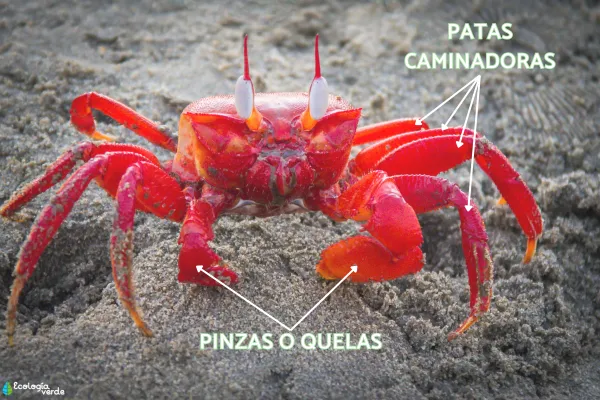
The first pair is modified into strong claws (also called chelae or chelipeds).
The other four pairs are walking legs, usually used to move sideways, climb, dig or stabilize the body.
There are more than 4,000 species of crabs in coasts, estuaries, rivers and deep sea. They vary a lot in size and shape, but almost all true crabs keep the “10-leg” pattern.
What Are Crab Legs Like?
Crab legs are jointed appendages protected by a hard exoskeleton made of chitin and minerals. Each leg is made up of several segments connected like little hinges, giving crabs surprising strength and flexibility.
1. The first pair: claws (chelae / chelipeds)
The front pair of legs is transformed into large, powerful claws:
These claws open and close like pincers using movable “fingers”.
They’re often thicker and stronger than the other legs.
In many species, one claw can be larger than the other (especially in males of some fiddler crabs).
2. The walking legs
The next four pairs are the walking legs, also called pereiopods:
They tend to be slimmer and longer than the claws.
They are segmented and often end in small pointed tips or tiny “nails” that help the crab grip rocks, sand, mud or roots.
Their sideways arrangement allows the crab to move quickly sideways, which is more efficient given the shape of its body and joints.
3. Special adaptations
Not all crab legs are identical—many species have specialized leg shapes:
Swimming crabs (like blue crabs)
The last pair of legs is flattened into a shape like a paddle or oar.
This helps them swim efficiently and make quick escapes in the water.
“False crabs” (anomuran crabs) such as hermit crabs or porcelain crabs
The fifth pair of legs is tiny and hidden in the gill cavity.
These reduced legs are used to clean the gills, not for walking.
This makes it look like they only have 8 legs.
All legs and claws are covered in small sensory hairs (setae):
These help crabs detect vibrations, currents and contact.
They also increase grip and help keep the shell clean.
What Do Crab Legs Do?
Crab legs are multi-purpose tools. Together, they allow the crab to eat, move, dig, defend itself and communicate.
1. Claws: feeding, fighting, digging and signalling
The front claws are essential for:
Feeding
Catching prey
Tearing food into small pieces
Bringing food to the mouth
Defense
Pinching predators or rivals
Holding or pushing away threats
Digging and construction
Excavating burrows in sand or mud
Moving stones or shells that block the entrance
Courtship and communication
In many species, males wave their claws to attract females.
Claws are also used to intimidate rivals or signal dominance.
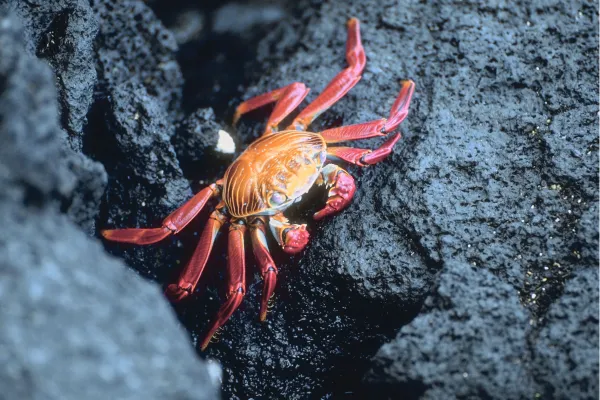
2. Walking legs: movement and support
The four pairs of walking legs:
Allow crabs to walk sideways, turn quickly and even climb rocks or roots.
Help with digging burrows and stabilizing the body.
Give support when the crab is feeding, fighting or carrying its shell (in the case of hermit crabs).
In some species, the last pair of walking legs is also used as paddles for swimming, helping them escape predators or move through the water column.
3. Hidden legs in anomuran crabs
In hermit crabs and other anomurans:
The reduced fifth pair of legs is hidden near the gills and used to clean and maintain them.
In hermit crabs, small legs inside the shell help anchor the body and hold onto the shell interior.
4. Sensory hairs: detecting the environment
The setae (tiny hairs) on the legs and claws:
Detect vibrations and water movements, helping crabs sense approaching animals or food.
Improve traction on slippery surfaces.
Help clean the shell and limbs, removing debris and parasites.
Can Crab Legs Grow Back If They’re Lost?
Yes. Crabs can regenerate lost legs and claws over time.
Many crustaceans, including crabs, are capable of autotomy:
They can shed a leg or claw on purpose to escape a predator’s grip or free themselves from danger.
The limb breaks off at a special “weak point”, which minimizes bleeding and damage.
How regeneration works
After a leg or claw is lost:
Regeneration begins under the exoskeleton.
A small bud forms inside where the limb used to be.
At the next molt (when the crab sheds its shell):
The new leg or claw appears, usually small and less functional at first.
With each subsequent molt:
The limb grows larger and stronger, until it eventually reaches normal size.
Studies suggest:
A lost claw may need 2–3 molts to fully regenerate, which in adult crabs can mean 1–2 years.
In young crabs (which molt more often), a limb may be restored in 1–2 molting cycles.
Costs and disadvantages
Regeneration is useful, but not free:
The new limb is small and weak at first, reducing the crab’s ability to feed or defend itself.
The process consumes a lot of energy, which could otherwise be spent on growth or reproduction.
Molting itself is a risky phase, when the crab is soft and vulnerable to predators.
Even so, the ability to regrow legs and claws greatly improves survival chances after injury.
Are There Crabs With Fewer Than 10 Legs?
All true crabs are decapods, meaning:
They always have 5 pairs of legs = 10 limbs,
even if some are small or modified.
However, some crabs look like they have fewer legs:
1. Hermit crabs and porcelain crabs (anomurans)
These are not “true crabs” in the strict sense, but they are close relatives and look similar.
In many anomurans:
The fifth pair of legs is reduced, tiny and hidden inside the gill cavity.
These small legs are used to clean gills or hold onto the inside of a shell (in hermit crabs).
To the casual observer, you only see:
3 pairs of walking legs + 1 pair of claws = 8 visible limbs
This creates the illusion that they have fewer than 10 legs.
2. Swimming crabs
In swimming crabs:
The last pair of legs is modified into flat paddles, so they don’t look like typical walking legs.
But anatomically, they are still part of the same “10-leg” plan.
3. Crabs that have lost limbs
If you see a crab with fewer than 10 legs, it might simply have:
Lost one or more legs or claws due to:
Predators
Fights
Fishing or other injuries
In many of these cases, the missing limbs are in the process of regenerating and will reappear after one or more molts.
Quick Summary
How many legs does a crab have?
➜ Most crabs have 10 legs: 1 pair of claws + 4 pairs of walking legs.What are crab legs used for?
➜ Feeding, walking, digging, swimming, defending and communicating.Can crabs regrow legs or claws?
➜ Yes. They regenerate them gradually through repeated molting.Why do some crabs seem to have fewer than 10 legs?
➜ Because some species have tiny hidden legs or highly modified legs, or they may have lost limbs.
So even if a crab doesn’t look like it has 10 legs at first glance, the decapod body plan is almost always still there—just adapted, reduced or temporarily missing.