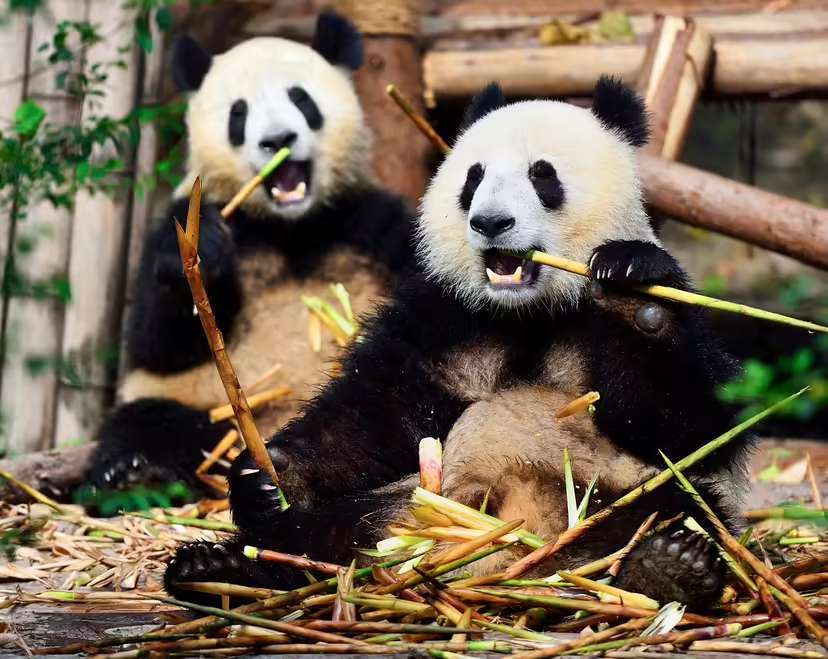
Giant pandas are famous for one thing above all else: bamboo. These black-and-white bears spend most of their day chewing through piles of it, earning their reputation as nature’s most enthusiastic plant-eaters.
But bamboo isn’t the only thing on the menu. Pandas have a surprisingly flexible diet, shaped by millions of years of evolution, their carnivore ancestry, and the unique mountain habitats they live in. Below is an in-depth look at what pandas eat, how they digest bamboo, and how their diet changes from cub to adult.

Pandas eat almost nothing but bamboo, making them a lot pickier than most animals.
Bamboo: The Core of a Panda’s Diet
More than 99% of a giant panda’s diet is bamboo. An adult panda eats anywhere from 26 to 84 pounds (12–38 kg) of bamboo every single day. That’s similar to a human eating hundreds of salads daily.
Pandas consume multiple bamboo species depending on availability, including:
Arrow bamboo
Black bamboo
Water bamboo
They aren’t picky about which part they eat—shoots, stems, and leaves all get devoured. Shoots are high in protein and preferred in spring, while leaves and stalks dominate other seasons.
Despite being classified as carnivores, pandas evolved to rely on a plant that is low in nutrients and difficult to digest, which is why they must:
Eat up to 14 hours per day
Consume massive quantities
Pass food quickly through their gut
Their digestive system works like a bamboo “conveyor belt”—constant eating and constant pooping.
Do Pandas Eat Anything Other Than Bamboo?
Although bamboo dominates their diet, pandas are not strict vegetarians. They also consume:
Other Plants
Wild fruits
Grasses
Roots and leaves
Occasional Animal Food
Although rare, pandas sometimes eat:
Small rodents
Birds
Eggs
This makes up a tiny portion of their diet and usually happens when bamboo is sparse.
Food Provided in Zoos
To ensure balanced nutrition, captive pandas often receive:
Fruits (apples, pears)
Carrots
High-fiber biscuits
Enrichment treats (like sugarcane or cooked grain cakes)
These supplements support digestion, provide extra calories, and keep pandas healthy.
How Do Pandas Manage to Eat So Much Bamboo?
Bamboo is tough, woody, and low in calories. To handle this, pandas have developed several adaptations:
1. A “Pseudo-Thumb”
Their enlarged wrist bone acts like an extra thumb, helping them:
Grip bamboo
Strip leaves
Hold stems with precision
2. Strong Jaws and Teeth
Powerful jaw muscles and molars allow pandas to crush bamboo stems that would challenge many other animals.
3. High Eating Frequency
Because they can only extract a small amount of nutrition from bamboo, pandas must eat almost non-stop to meet their energy needs.

What Do Giant Panda Cubs Eat?
Panda cubs start life completely dependent on their mothers.
Birth to 6 Months
Exclusively drink their mother’s milk
Grow rapidly despite being born tiny (about the size of a stick of butter)
Around 6 Months
Begin chewing soft bamboo
Learn feeding behaviors by copying their mothers
By 12 Months
Bamboo becomes their main food
Milk intake decreases
Constant eating begins, as cubs have high energy demands
Young pandas spend much of their day gnawing bamboo to fuel growth and play.
Where Do Pandas Find Their Food in the Wild?
Wild giant pandas inhabit the rugged bamboo forests of Sichuan, Shaanxi, and Gansu in central China. These mountainous regions provide the cool, moist climate bamboo needs to grow.
Because bamboo is seasonal and can die off in large patches, pandas migrate between elevations to find fresh growth. Unlike other bears, they do not hibernate—bamboo doesn’t provide enough fat to allow long winter sleep.
Are Pandas Good Swimmers and Climbers?
Despite their round bodies and slow walking style, pandas are surprisingly agile:
Excellent Climbers
They climb trees to escape danger
Cubs often climb for fun
Adults may rest high in branches
Strong Swimmers
They can cross rivers when searching for food
Swimming helps them access bamboo patches separated by water
Their physical skills help them survive in steep, forested habitats.