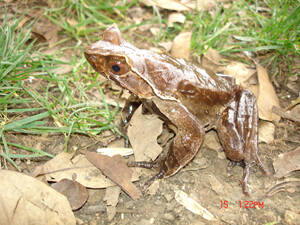
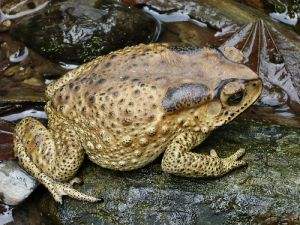
The Buzzing Nursery Frog is a tiny ground-dwelling frog from north-eastern Queensland, Australia. Its scientific name is Cophixalus bombiens, and it belongs to the family Microhylidae, the narrow-mouthed frogs. The common name refers both to the male’s distinctive buzzing call and to the unusual reproductive strategy typical of “nursery frogs”, in which eggs are laid on land in moist, sheltered sites.
Taxonomy & Names
English name: Buzzing Nursery Frog
Scientific name: Cophixalus bombiens
Family: Microhylidae (narrow-mouthed frogs)
Genus: Cophixalus (nursery frogs)
Appearance
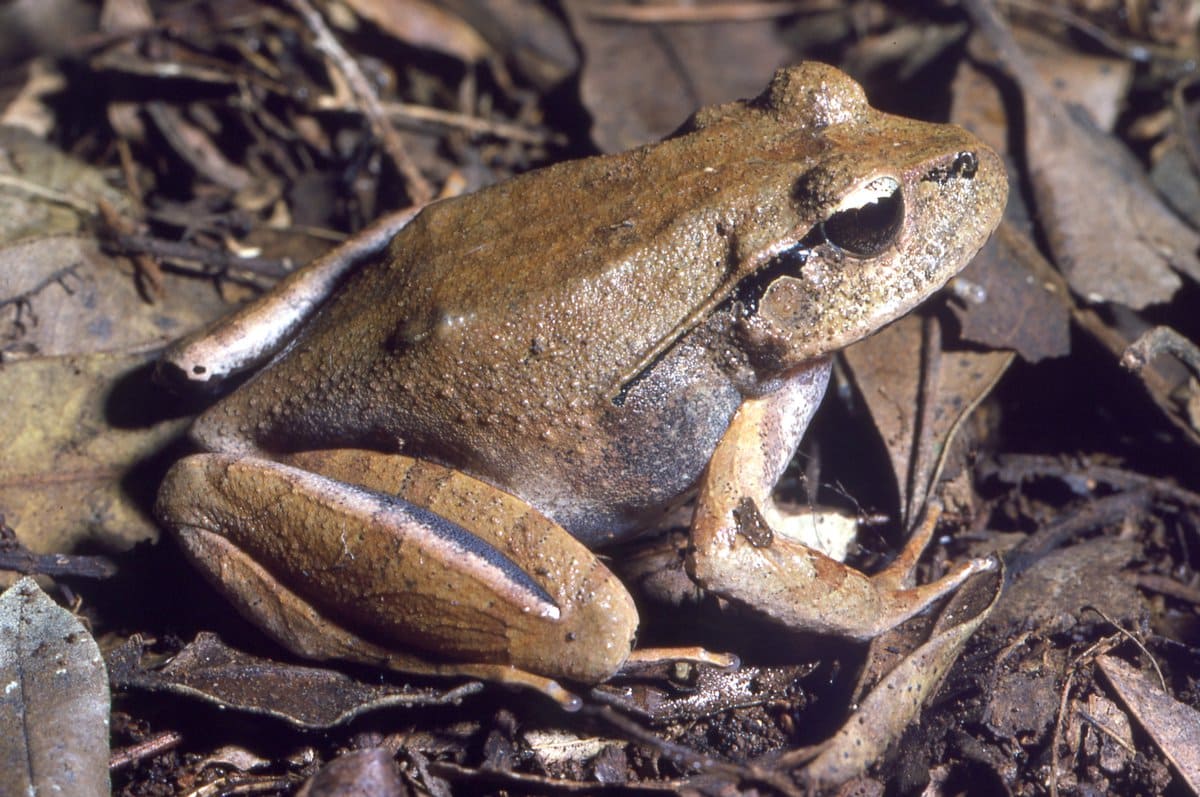
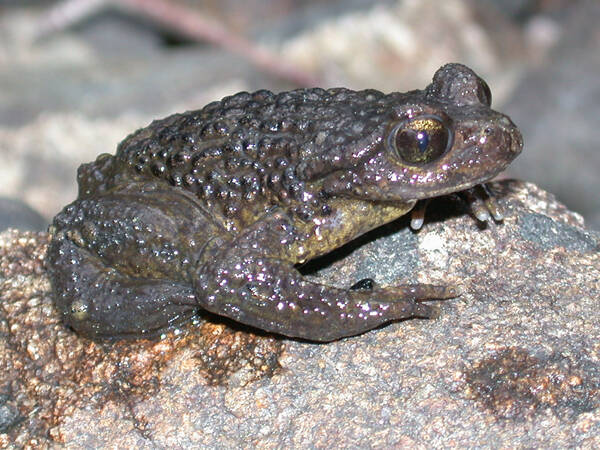
The Buzzing Nursery Frog is small and cryptically coloured, well suited to life among rainforest leaf litter:
Body size: adults are typically around 18–25 mm in length;
Build: a short, somewhat rounded body with relatively slender limbs, giving a compact appearance;
Dorsal colour: shades of brown, grey-brown or olive with irregular darker and lighter markings that blend with damp leaves, bark and soil;
Belly: usually paler, greyish or off-white with fine speckling;
Other features: slightly expanded toe and finger tips forming small discs that help the frog grip wet leaves and fine branches; the eyes are relatively large for a small frog, aiding vision in dim light.
Overall it looks like a tiny, inconspicuous brown frog that almost disappears against the rainforest floor.
Distribution & Habitat
Buzzing Nursery Frogs are endemic to north-eastern Queensland in Australia, where they inhabit high-rainfall hill and mountain rainforests:
wet tropical and subtropical rainforests in upland and some lowland areas;
steep slopes, gullies and mossy forest floors with deep leaf litter;
microhabitats with abundant fallen logs, tree roots and rock crevices.
Most of the time they remain hidden in leaf litter, under logs and among roots, only becoming more noticeable during wet weather or on humid nights.
Behaviour & Call
The Buzzing Nursery Frog is a nocturnal species that is far more often heard than seen:
by day it rests in moist refuges under leaves, logs and other debris;
after dark and during rainy periods it moves slowly across the forest floor or over low vegetation;
males produce a distinctive call – a series of soft, insect-like buzzing notes – which gives the species its name.
In suitable habitat, the chorus of buzzing calls after rain can be quite noticeable, even though the individual frogs are tiny and well camouflaged.
Diet
The Buzzing Nursery Frog feeds mainly on very small invertebrates:
ants, tiny beetles and flies;
springtails, small spiders and other leaf-litter arthropods;
occasionally other minute soft-bodied invertebrates and insect larvae.
It detects the movement of prey on the forest floor and flicks out its sticky tongue to capture them.
Reproduction & “Nursery” Strategy
Nursery frogs such as Cophixalus bombiens have a distinctive terrestrial breeding and direct development strategy:
breeding occurs during wetter periods when humidity is high;
males call from hidden positions on the ground, beneath leaf litter or in small cavities;
females lay eggs in moist soil, leaf litter or crevices under logs and roots rather than directly in water;
the embryos develop within these land-based nests and hatch as fully formed tiny frogs, without a free-swimming tadpole stage.
This direct development frees the species from dependence on permanent pools and allows it to exploit small, transient pockets of moisture on the forest floor.
Conservation Status & Threats
On current assessments, the Buzzing Nursery Frog is listed as Least Concern (LC) on the IUCN Red List, reflecting its relatively stable populations within suitable rainforest habitat.
Nevertheless, potential threats include:
loss and fragmentation of rainforest due to logging, agriculture and development;
changes in microclimate along forest edges and near roads and tracks;
long-term shifts in rainfall patterns associated with climate change.
Protecting intact rainforest and maintaining moist, shaded leaf-litter microhabitats are key to the long-term persistence of this and other small ground-dwelling frogs.