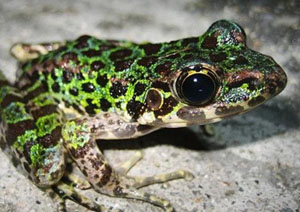
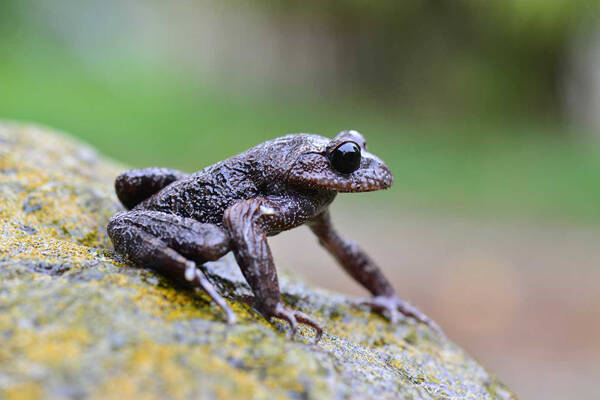
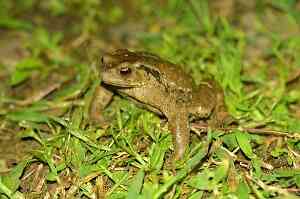
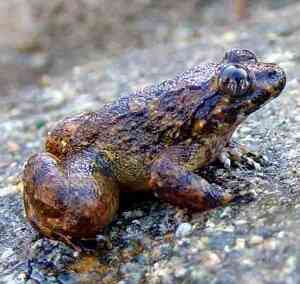
The Western Banjo Frog (Limnodynastes dorsalis) is a robust, ground-dwelling frog native to south-western Australia. It belongs to the family Limnodynastidae and the genus Limnodynastes. Like its eastern relatives known as “Pobblebonks”, it is famous for its banjo-like call, which sounds like a finger plucking a banjo string.
Taxonomy & Names
Common name: Western Banjo Frog;
Other common name: Pobblebonk (onomatopoeic name based on the call);
Scientific name: Limnodynastes dorsalis;
Family: Limnodynastidae (Australian swamp frogs);
Genus: Limnodynastes.
Appearance
The Western Banjo Frog is a medium-sized, stocky frog with typical ground-frog proportions:
Body size: adults are usually about 5–8 cm in snout–vent length, with females often larger than males;
Body shape: compact, robust body with a broad head and short snout;
Dorsal colour: brown, grey-brown or olive-brown with irregular darker blotches or marbling;
Dorsal stripe: some individuals show a paler mid-dorsal stripe, a feature common in several Limnodynastes species;
Belly: underside pale cream or light grey, sometimes mottled;
Skin texture: slightly rough or finely warty on the back, but not as coarse as that of many toads;
Limbs: strong limbs, with powerful hind legs for short hops and digging in soft soil;
Feet: partial webbing on the hind feet, suited to moving in shallow water and muddy substrates.
Distribution & Habitat
The Western Banjo Frog is a characteristic species of south-western Western Australia:
found across parts of south-western and southern Western Australia, including coastal plains and nearby inland areas;
most common in regions with winter-dominant rainfall.
Typical habitats include:
seasonal and permanent wetlands, swamps and farm dams;
creeks, drainage lines and roadside ditches that hold water after rain;
adjacent grasslands, shrublands, farmland edges and open woodland.
Behaviour
The Western Banjo Frog is primarily a nocturnal, ground-dwelling species:
by day it shelters under vegetation, logs, leaf litter or within moist soil;
at night it emerges to forage around wetlands, paddocks and low-lying areas;
during dry periods it can burrow into the ground and aestivate, waiting for the return of rain.
Call
The call of the Western Banjo Frog is one of its most distinctive features:
males produce a resonant “bonk… bonk…” note that sounds like a banjo string being plucked;
calling is most intense on wet nights during the breeding season and after heavy rain;
choruses of many males create a loud, rhythmic background sound around wetlands.
Diet
The species feeds mainly on small invertebrates:
spiders and other arthropods in grass and leaf litter;
occasionally small invertebrates encountered at the edges of waterbodies.
Reproduction & Life Cycle
Breeding is closely linked to rainfall and the availability of shallow waterbodies:
breeding generally occurs during wetter months, especially in winter and after heavy rain;
males call from the margins of ponds, swamps, puddles and drainage lines;
females lay eggs in shallow water, often in foam nests typical of many Limnodynastes frogs;
tadpoles develop in these temporary or semi-permanent waterbodies and must complete metamorphosis before they dry out;
newly metamorphosed froglets disperse into surrounding grassland and moist soil habitats.
Conservation Status & Threats
On the IUCN Red List, the Western Banjo Frog is currently listed asLeast Concern (LC), reflecting its relative abundance across much of its range.
Nevertheless, local populations may be affected by:
drainage, infilling and modification of natural wetlands and farm dams;
pollution of small waterbodies by agricultural chemicals and urban runoff;
changes in rainfall patterns and hydroperiods associated with climate change.
Maintaining natural wetlands, protecting vegetated buffers around waterbodies and limiting pollution are important for sustaining healthy populations of the Western Banjo Frog and other Limnodynastidae species.