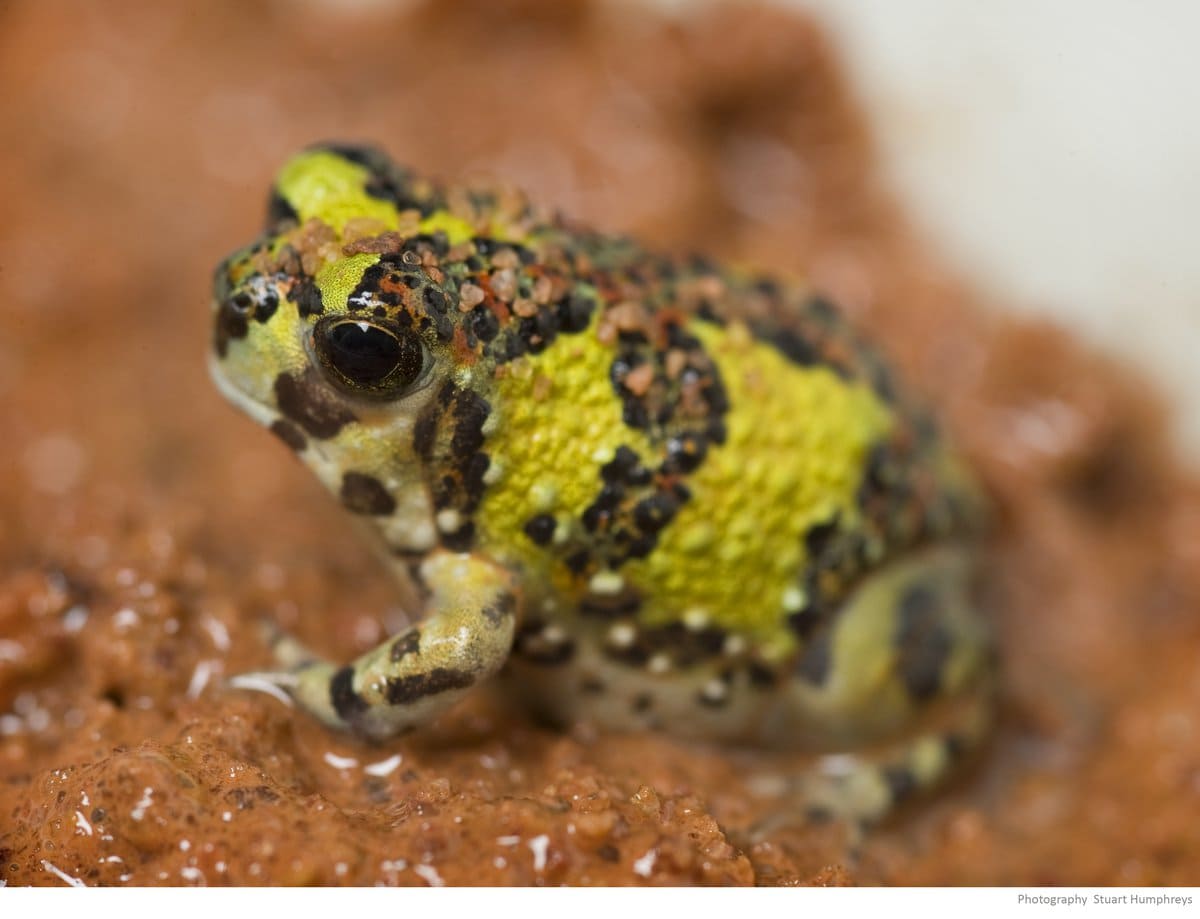
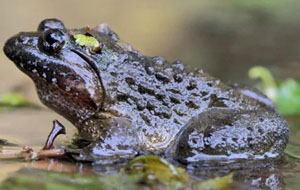
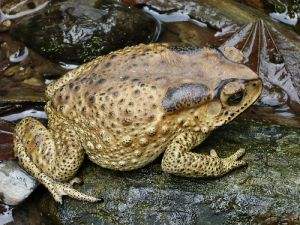
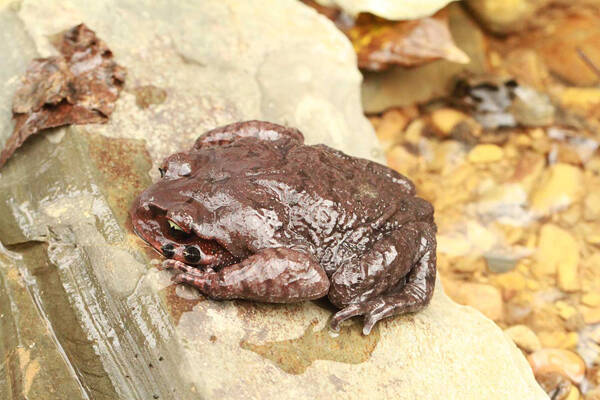
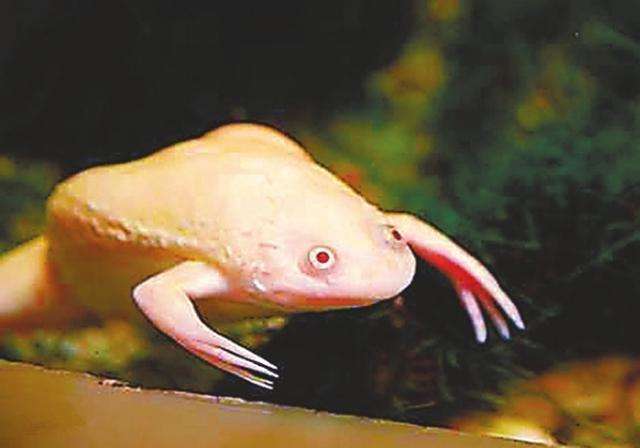
The Tusked Frog (Adelotus brevis) is a small to medium-sized, ground-dwelling frog endemic to eastern Australia. It belongs to the family Myobatrachidae and the genus Adelotus. Males possess distinctive bony “tusks” on the lower jaw that are used in close-range combat with rival males, giving the species its common name.
Taxonomy & Names
Common name: Tusked Frog;
Scientific name: Adelotus brevis;
Family: Myobatrachidae (Australian ground frogs);
Genus: Adelotus.
Appearance
The Tusked Frog looks like a typical forest ground frog at first glance, but males have unique jaw structures:
Body size: adults are generally around 3–5 cm in snout–vent length;
Sexual dimorphism: males have a broader head and paired bony “tusks” on the lower jaw, whereas females lack or only weakly show these structures;
Body shape: somewhat flattened body with a broad head and short snout;
Dorsal colour: dark brown, grey-brown or almost black, usually with irregular mottling that blends with wet leaf litter and soil;
Belly: paler underside, often cream, light grey or slightly mottled;
Skin texture: slightly rough or warty on the back but not as coarse as many toads;
Limbs: moderately long limbs, with strong forelimbs that help males grapple with rivals and hind limbs adapted for short hops on the forest floor。
Distribution & Habitat
The Tusked Frog is a localised species of eastern and south-eastern Australia:
occurs mainly from south-eastern Queensland south into parts of New South Wales and nearby regions;
associated with moist forested landscapes。
Key habitat types include:
rainforests, wet sclerophyll forests and other moist woodland along creeks and gullies;
stream banks with leaf litter, logs, rocks and dense ground cover;
shallow pools, puddles and temporary waterbodies used for breeding。
Behaviour
The Tusked Frog is primarily a nocturnal, ground-dwelling species:
by day it shelters under leaf litter, logs, rocks or in small burrows and cavities near creeks;
emerges at night to move slowly or hop short distances while foraging on the forest floor and around water;
activity is greatest in wet weather and during the breeding season。
Vocalisation & Male Combat
males call from the edges of pools, puddles or slow-flowing stream margins during the breeding season, producing short, low-pitched notes to attract females;
male–male combat is a notable feature of this species, with individuals using their jaw “tusks” and strong forelimbs to push and butt rivals at close range;
this tusked fighting behaviour is unusual among frogs and is one of the key traits that makes the species distinctive。
Diet
The Tusked Frog feeds mainly on small invertebrates found on or near the forest floor:
small spiders, larvae and other arthropods living in leaf litter and soil;
occasional prey taken from the margins of pools and streams。
Reproduction & Life Cycle
breeding is generally associated with wetter periods and suitable rainfall;
males call from shallow pools, puddles, drainage lines and quiet stream margins;
females lay eggs in shallow water or in moist microhabitats close to water, depending on local conditions;
tadpoles develop in small waterbodies and later metamorphose into froglets that move onto the surrounding forest floor。
Conservation Status & Threats
On the IUCN Red List, Adelotus brevis is currently assessed asLeast Concern (LC), reflecting its overall stable populations where suitable habitat persists。
Nonetheless, the species can be affected by:
loss and fragmentation of moist forest and creek-line habitats through logging, agriculture and urban development;
changes to stream flow and water quality from pollution and water extraction;
broader threats facing amphibians globally, including disease and climate-related shifts in rainfall patterns。
Protecting creek corridors, maintaining native forest cover and safeguarding water quality are important for the long-term conservation of the Tusked Frog and other ground-dwelling frogs。