The Stony Creek Frog is a small to medium-sized stream-dwelling tree frog from eastern Australia, most commonly associated with the species Ranoidea wilcoxii (often still referred to in older literature asLitoria wilcoxii). It belongs to the family Hylidae and the genus Ranoidea, and is closely tied to clear, rocky creeks in hilly and mountainous country.
Taxonomy & Names
Common name: Stony Creek Frog;
Scientific name: Ranoidea wilcoxii (formerly placed in Litoria);
Family: Hylidae (tree frogs);
Genus: Ranoidea.
Appearance
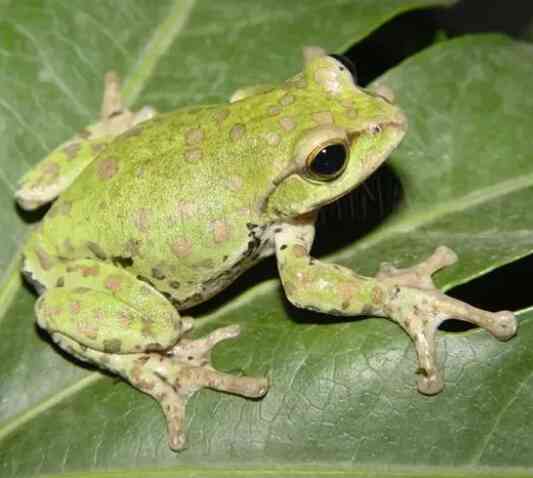
The Stony Creek Frog is a slender, agile tree frog adapted to life around fast-flowing streams:
Body size: adults are usually about 3–5 cm in snout–vent length, with males slightly smaller than females;
Body shape: relatively slim, with long limbs that aid climbing and jumping among rocks and streamside vegetation;
Dorsal colour: olive-green, yellow-brown or grey-brown, often with fine spots or mottling;
Lateral markings: a dark stripe is often present behind the eye, and some individuals show darker patches along the flanks;
Belly: underside pale cream or light yellow, generally with few markings;
Skin texture: smooth or only lightly granular compared with more warty toads;
Limbs & toe pads: long, well-developed limbs with webbing between the toes and expanded toe pads, allowing the frog to cling to wet rocks and vegetation;
Breeding colour: during the breeding season, males may show bright yellow or orange colouring on the forearms and sides of the body.
Distribution & Habitat
The Stony Creek Frog occurs in eastern Australia, particularly in hilly and mountainous regions:
found from south-eastern Queensland southwards into parts of New South Wales and nearby upland areas;
most often associated with rocky streams and creeks.
Key habitat features include:
clear, flowing streams with rocky or gravelly beds, including cascades and small waterfalls;
forest, woodland or dense shrub cover along stream banks, providing shade and humidity;
abundant hiding places under rocks, within leaf litter, under fallen logs and among mossy surfaces near water.
Behaviour
The Stony Creek Frog is a nocturnal, semi-aquatic tree frog that is strongly tied to running water:
by day it usually shelters in rock crevices, under logs or within streamside vegetation;
emerges from dusk onwards, moving among rocks, in shallow riffles and on low branches or leaves near the water;
shows good agility on wet, slippery surfaces thanks to its toe pads and limb structure.
Call
Male Stony Creek Frogs call during the breeding season to attract females and establish calling sites:
the call is a series of short, sharp notes often described as repeated “tck, tck, tck” or “tik-tik-tik” sounds;
males usually call from rocks or vegetation close to the water’s edge, with the sound of flowing water in the background;
on suitable warm, wet nights, many males may call together, forming a chorus along stretches of creek.
Diet
The Stony Creek Frog feeds mainly on small invertebrates:
insects such as ants, beetles, moths, small flies and other arthropods active around streams;
small invertebrates and larvae living in leaf litter and crevices near the creek;
it forages at night, moving between rocks and vegetation to ambush passing prey.
Reproduction & Life Cycle
Breeding is closely linked to rainfall patterns and stream flow:
breeding typically occurs in warmer, wetter months when creeks are flowing well;
males call from the edges of pools, riffles and slow-flowing stretches of creek;
females lay eggs in the water, often attached to submerged rocks or deposited in quieter sections of the stream;
tadpoles develop in running water and are adapted to life in streams, needing good oxygen levels and refuges from strong currents;
after metamorphosis, froglets leave the water but usually remain close to the creek and nearby forest.
Conservation Status & Threats
The Stony Creek Frog is currently regarded as ofLeast Concern (LC) on a global scale, with generally stable populations in suitable habitat.
However, local threats can affect populations, including:
degradation of stream habitats through pollution, sedimentation and water extraction;
clearing of riparian vegetation, which reduces shade and humidity along creeks;
climate-related changes to rainfall and stream flow, affecting breeding sites.
Protecting forested catchments, maintaining clean, free-flowing streams and conserving riparian vegetation are important for the long-term health of Stony Creek Frog populations and other stream-dwelling frogs.