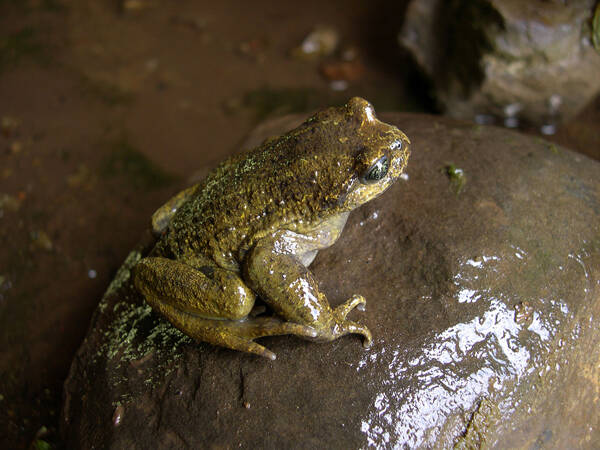
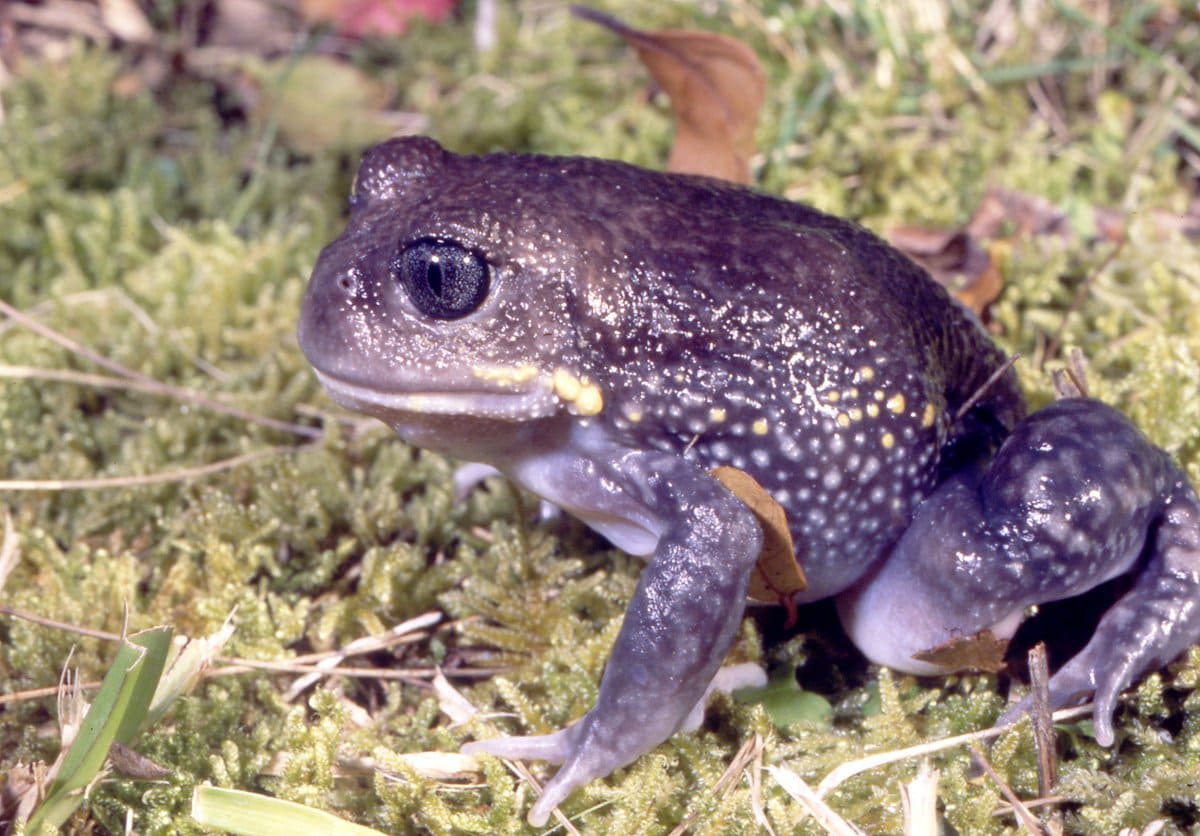
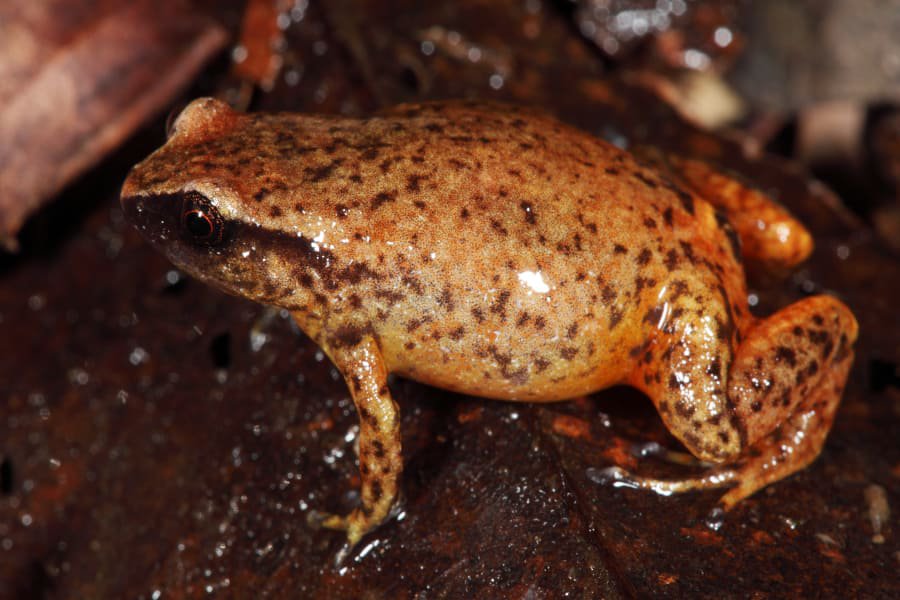
The Green and Golden Bell Frog (Litoria aurea) is a medium-sized, brightly coloured tree frog native to south-eastern Australia. Once common in coastal and lowland wetlands, it has declined markedly in many areas and is now considered a threatened species.
Taxonomy & Names
English name: Green and Golden Bell Frog
Scientific name: Litoria aurea
Genus: Litoria (Australian tree frogs)
Appearance
The Green and Golden Bell Frog is one of Australia’s most striking frogs:
Body size: adults usually reach about 5–8 cm in length, with females generally larger than males;
Dorsal colour: bright green background with golden or bronze patches and stripes, sometimes with darker spotting or marbling;
Side markings: dark brown or black stripes often run along the sides of the body, edged or broken by golden spots;
Belly: underside is cream to yellow, with breeding males sometimes showing a deeper yellow throat;
Skin texture: relatively smooth with a few small warty bumps;
Limbs: strong limbs with long, partially webbed toes and toe pads that allow the frog to move both in water and on vegetation.
Distribution & Habitat
The species is endemic to south-eastern Australia:
historically widespread in coastal and lowland wetlands of New South Wales and parts of Victoria and surrounding regions;
now more patchily distributed, persisting in a series of remnant wetlands, conservation areas and man-made water bodies.
Green and Golden Bell Frogs prefer warm, sunny, shallow wetlands:
swamps, marshes, farm dams, ponds and slow-flowing channels with emergent and floating vegetation;
they often use open water areas with nearby refuges such as rocks, logs and dense reeds;
some populations occupy artificial habitats such as disused quarries, treatment ponds and urban wetlands.
Behaviour
The species is a semi-aquatic tree frog that spends much time near or in the water:
by day frogs may bask on rocks, logs or floating vegetation at the water’s edge;
when disturbed they usually dive into the water and hide among plants or on the bottom;
at night they move around the margins of wetlands and in nearby vegetation to hunt.
Diet
The Green and Golden Bell Frog is carnivorous and feeds on a variety of small animals:
mosquitoes, moths and other flying insects;
ground and vegetation-dwelling insects such as beetles, crickets and ants;
occasionally small frogs and other suitably sized vertebrates.
They typically wait for prey to approach and then lunge forward, using a quick tongue flick to capture it.
Call & Breeding
Male frogs produce a distinctive, rhythmic call during the breeding season:
the call is a series of loud, slightly metallic notes often written as “crawk… crawk…” or “tok… tok…”;
calling usually takes place at dusk and into the night from vegetation, rocks or other structures around the water’s edge;
breeding is associated with warm, wet periods, particularly after rainfall.
Reproduction takes place in still or slow-moving water:
females lay eggs in clumps in shallow water or attached to aquatic plants;
tadpoles develop in ponds, dams and wetlands, requiring adequate water quality and depth;
after metamorphosis, juvenile frogs leave the water and gradually adopt a semi-aquatic, wetland-edge lifestyle.
Conservation Status & Threats
On the IUCN Red List the Green and Golden Bell Frog is listed as Endangered (EN), with many former populations lost or severely reduced.
Major threats include:
loss and fragmentation of wetlands through drainage, infilling and urban and agricultural development;
introduction of predatory fish and other invasive species that eat eggs, tadpoles and small frogs;
pollution from pesticides, heavy metals and other contaminants affecting all life stages;
disease, especially chytrid fungus, which has affected many amphibian populations worldwide;
changes in rainfall patterns and increased drought frequency linked to climate change.
Conservation actions involve protecting and restoring wetlands, managing water quality, creating suitable artificial breeding sites and, in some regions, captive breeding and reintroduction programmes.