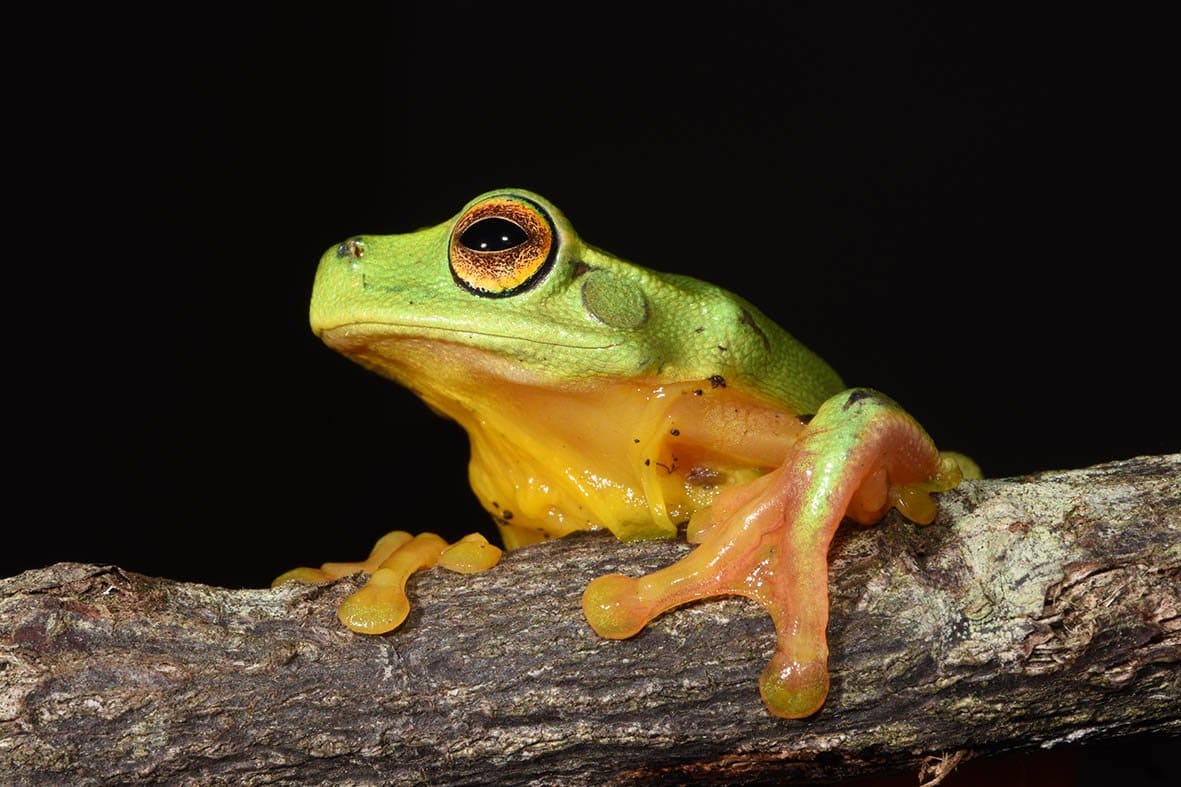
The Haswell Froglet (Crinia haswelli) is a tiny, ground-dwelling frog native to eastern Australia. It belongs to a group of small frogs often referred to as “froglets” and is typically found in damp forests, gullies and wetlands along the coastal and near-inland areas of New South Wales and nearby regions.
Taxonomy & Names
English name: Haswell Froglet
Scientific name: Crinia haswelli
Family: Myobatrachidae (Australian ground frogs)
Genus: Crinia – a genus of small, often cryptic froglets
Appearance
The Haswell Froglet is very small and modestly coloured, but close inspection reveals subtle markings:
Body size: adults are typically only about 1.5–2.5 cm in length;
Body shape: compact, slightly flattened body with relatively short limbs;
Dorsal colour: various shades of brown, grey-brown or olive-brown, often with darker and lighter mottling;
Patterns: some individuals show faint V-shaped, W-shaped or irregular markings on the back, helping them blend into leaf litter and soil;
Belly: underside is paler – whitish, greyish or cream – sometimes with fine speckling;
Skin texture: dorsal skin is slightly rough with small granular bumps;
Head & eyes: small head, proportionate eyes without exaggerated bulging.
Distribution & Habitat
The Haswell Froglet is endemic to eastern Australia:
recorded mainly from parts of eastern New South Wales and adjacent high-rainfall areas;
occurs in coastal and near-inland regions with moist climates.
It favours damp, ground-level habitats:
moist forests, woodlands, shrubby gullies and wet grasslands;
commonly found under leaf litter, in moss, among logs and stones and in soil crevices near water;
breeding sites are associated with still or slow-moving water in small pools, marshy patches and temporary puddles.
Behaviour
The Haswell Froglet is a nocturnal, terrestrial species:
by day it usually hides under leaves, logs, grass tussocks and stones to avoid drying out and predation;
at dusk and during the night it becomes active on the ground surface, especially after rain;
when disturbed it typically hops quickly into deeper cover within the litter layer or vegetation.
Call
Male Haswell Froglets call during the breeding season to attract females:
calls consist of short, repeated notes often described as soft “tik” or “crick” sounds;
males call from the ground or low vegetation near small pools, puddles and marshy areas;
on wet nights, the fine, high-pitched calls of many froglets form a background chorus in forests and gullies.
Diet
The species feeds mainly on tiny invertebrates:
small ants, springtails and other soil-dwelling arthropods;
tiny beetles, aphids and juvenile insects;
small spiders and other minute invertebrates encountered in leaf litter and on the ground surface.
Its small size allows it to exploit abundant micro-prey in the litter layer and topsoil.
Breeding & Life Cycle
Breeding is closely linked to rainfall and the availability of shallow water:
breeding tends to occur in warm, wet periods, especially following heavy rain;
males call from around small puddles, drains, marshy grass and shallow edges of wetlands;
eggs are laid in still or gently flowing shallow water, attached to plants or resting on submerged substrates;
tadpoles develop in these small water bodies and must complete metamorphosis before temporary pools dry out;
after metamorphosis, tiny froglets move onto land and adopt a typical ground-dwelling lifestyle.
Conservation Status & Threats
On the IUCN Red List Crinia haswelli is currently regarded asLeast Concern (LC), indicating that there is no evidence of rapid, large-scale decline across its range.
Nevertheless, local populations can be affected by:
loss and fragmentation of moist forest, woodland and wetland habitats due to clearing and development;
use of pesticides and other chemicals that alter soil fauna and contaminate small water bodies;
changes in rainfall patterns and more frequent droughts that reduce the availability of suitable breeding pools;
potential disease impacts affecting amphibians in general.
Conserving leaf litter, logs, small wetlands and natural ground cover, and reducing chemical inputs, can help maintain healthy populations of the Haswell Froglet and other small ground-dwelling amphibians.