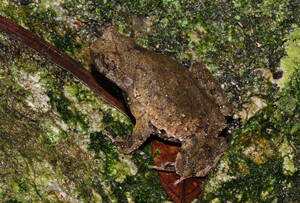
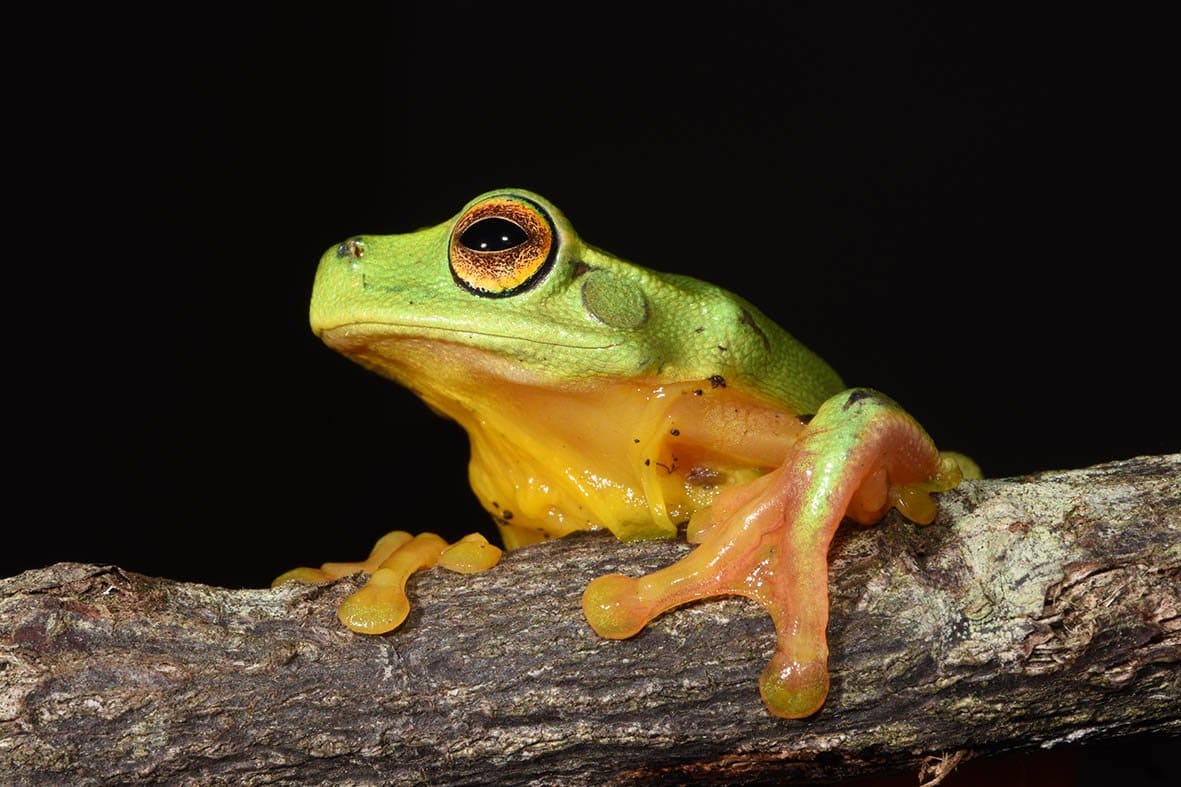
The Jervis Bay Tree Frog (Litoria jervisiensis) is a small to medium-sized tree frog native to the south coast of New South Wales, Australia. As its name suggests, it is closely associated with the Jervis Bay region and nearby coastal wetlands and dune systems.
Taxonomy & Names
English name: Jervis Bay Tree Frog
Scientific name: Litoria jervisiensis
Genus: Litoria (Australian tree frogs)
Appearance
The Jervis Bay Tree Frog is not large, but it has distinctive markings and proportions:
Body size: adults are usually about 3.5–5 cm in length, with females slightly larger than males;
Dorsal colour: olive-green, greenish-brown or brown background with darker mottling and irregular patches;
Side stripe: a dark stripe typically runs from the snout through the eye and over the eardrum along the side of the body, often bordered or broken by pale or orange spots;
Leg markings: hind legs, especially the inner thighs, often show orange, yellow-orange or brownish markings that are conspicuous when the frog jumps;
Belly: underside is cream to pale yellow, with the throat of calling males sometimes darker or slightly mottled;
Skin texture: dorsal skin is slightly rough with fine granular bumps;
Limbs: relatively long limbs with some webbing between the toes and toe pads that assist with climbing on grasses, shrubs and low vegetation.
Distribution & Habitat
The species is endemic to the south coast of New South Wales:
most closely associated with the Jervis Bay area and similar coastal environments nearby;
occurs in a limited region where coastal dune systems, wetlands and forest meet.
The Jervis Bay Tree Frog is strongly tied to coastal wetland and dune habitats:
found in low-lying swales and depressions behind coastal dunes;
uses tea-tree thickets, paperbark wetlands, moist heaths and eucalypt woodland edges;
breeding usually takes place in shallow, often seasonal pools, dune swales and other coastal wetlands.
Behaviour
This frog is a nocturnal, vegetation-perching tree frog:
by day it hides among dense shrubs, grass tussocks, fallen logs and leaf litter;
at night it becomes active around the edges of wetlands and seasonal pools, perching on low vegetation, reeds and grasses;
when disturbed it may leap into water or into thicker cover within the surrounding vegetation.
Call
Male Jervis Bay Tree Frogs call during the breeding season from positions close to water:
the call is a series of short, somewhat nasal notes often described as “creek… creek…” or repetitive “tik-tik-tik” sounds;
calling is most intense on warm, humid or rainy nights around shallow pools and dune swales;
choruses of males can create a distinctive night-time soundscape in coastal wetlands.
Diet
The Jervis Bay Tree Frog is carnivorous and feeds mainly on small invertebrates:
flying insects such as mosquitoes, midges and small moths around wetlands;
beetles, cockroaches and other arthropods living in grasses and shrubs;
small spiders and other tiny invertebrates encountered on vegetation and the ground.
Frogs usually hunt from perches on low plants, waiting to ambush passing prey with a quick flick of the tongue.
Breeding & Life Cycle
Breeding is closely linked to rainfall and the filling of shallow coastal pools:
breeding generally occurs in warmer, wetter periods when seasonal pools and swales hold water;
males call from emergent vegetation and margins of shallow pools to attract females;
eggs are laid in still or gently moving shallow water, attached to plants or resting on submerged substrates;
tadpoles develop in these small water bodies and must metamorphose before pools dry out;
newly metamorphosed froglets move into surrounding vegetation, remaining close to wetland habitats.
Conservation Status & Threats
On broad-scale assessments, the Jervis Bay Tree Frog is often treated asLeast Concern (LC) in terms of IUCN categories, but it is recognised as having a relatively restricted distribution and facing local pressures in coastal habitats.
Key threats include:
loss and fragmentation of coastal wetlands, dune swales and shrublands through urban development, roads and tourism infrastructure;
alteration of natural hydrology, drainage of wetlands and pollution affecting breeding pools;
changes in rainfall patterns, more frequent droughts and extreme weather linked to climate change;
potential disease risks affecting amphibians, including chytrid fungus.
Effective conservation involves protecting coastal wetlands and dune vegetation, minimising disturbance in key breeding sites and maintaining natural water regimes and water quality in the Jervis Bay region and surrounding coastal areas.