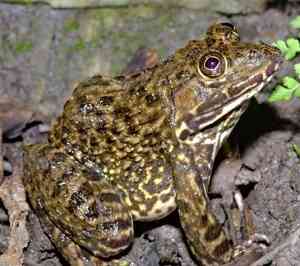
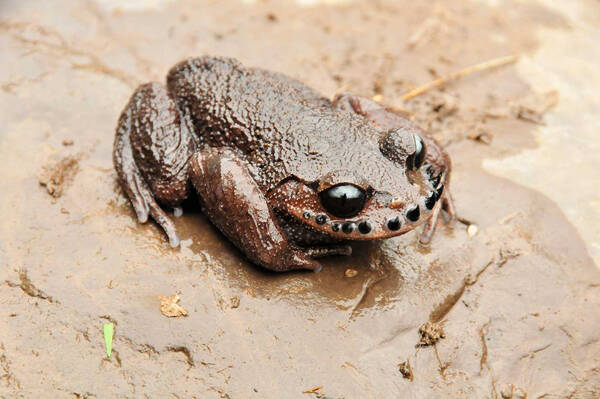
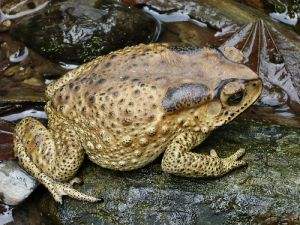
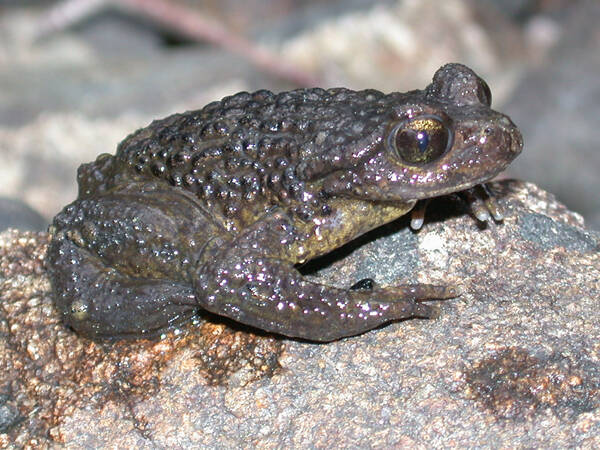
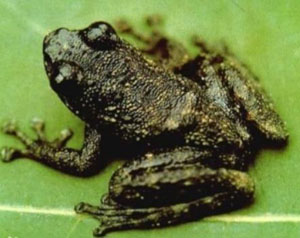
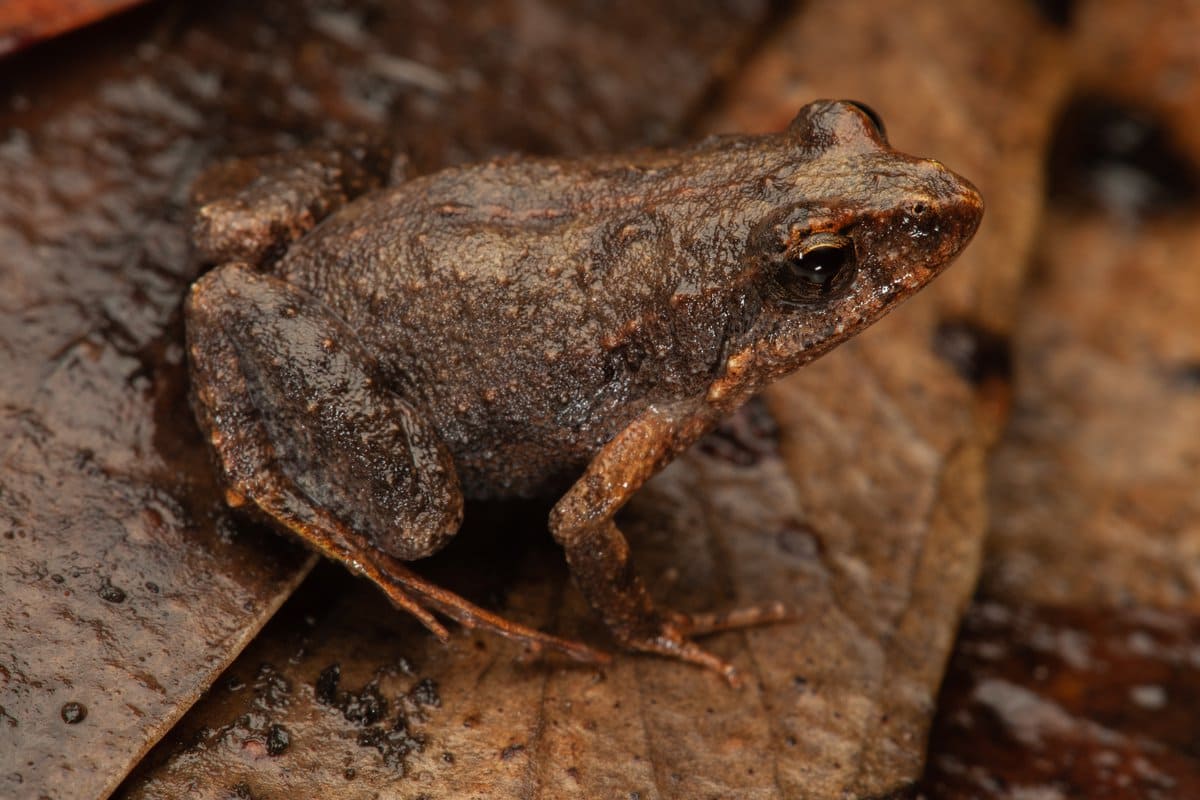
Peron’s Tree Frog (Litoria peronii) is a common small to medium-sized tree frog from eastern Australia. It is well known for its distinctive cross-shaped pupils and the striking yellow and black marbled patterns on the groin and inner thighs. Its call is often described as a rising cackle or “mad laughter” that becomes louder and faster.
Taxonomy & Names
Common names: Peron’s Tree Frog, Emerald Spotted Tree Frog and others;
Scientific name: Litoria peronii;
Genus: Litoria (Australian tree frogs).
Appearance
Peron’s Tree Frog is not large, but it has several distinctive features:
Body size: adults are usually about 4–6 cm in length, with males slightly smaller than females;
Dorsal colour: grey-brown, olive-brown or light brown background with small green spots or paler speckles, colour may look greener when the frog is moist;
Pupils: eyes have a characteristic cross-shaped pupil, one of the easiest ways to recognise the species;
Groin & thigh pattern: the groin and inner thighs show vivid yellow and black marbled markings that become obvious when the frog jumps or spreads its legs;
Belly: underside is pale, whitish to cream, sometimes with faint mottling;
Skin texture: dorsal skin is slightly rough with small warty bumps;
Limbs: slender limbs with partial webbing between the toes and rounded toe pads for climbing on vegetation and man-made structures.
Distribution & Habitat
This species is native to eastern Australia and has a reasonably wide range:
occurs from south-eastern Queensland through much of New South Wales into eastern Victoria and parts of South Australia;
found from coastal dunes and lowland forests to more open woodland and farmland edges.
Peron’s Tree Frog uses a variety of habitats:
natural environments such as streams, ponds, swamps and floodplains with surrounding forest or woodland;
artificial water bodies including farm dams, garden ponds, roadside drains and water tanks;
commonly seen around houses, sheds, toilets, bathrooms and garden structures, making it one of the frogs people most frequently encounter.
Behaviour
Peron’s Tree Frog is a nocturnal, arboreal and semi-arboreal species:
by day it hides in tree hollows, under bark, in rock crevices, roof spaces or other cool, moist refuges;
at night it becomes active, especially during warm, wet weather;
individuals often sit near lights where insects gather, hunting from windowsills, walls, pipes and vegetation.
Call
The call of Peron’s Tree Frog is very distinctive:
it is a series of notes that rise in pitch and tempo, frequently likened to a cackling or “maniacal laughter”;
males call from vegetation or perches around the edges of ponds, dams and slow-flowing creeks;
on rainy nights, choruses of males can be heard over a wide area, especially near wetlands and urban water bodies.
Diet
Like most tree frogs, Peron’s Tree Frog is carnivorous and feeds mainly on small invertebrates:
moths, beetles, crickets, flies, mosquitoes and other insects;
spiders and various small arthropods;
larger individuals may occasionally take small frogs or other soft-bodied prey.
Breeding & Life Cycle
Breeding is closely linked to rainfall and the availability of suitable water:
breeding usually takes place in warmer months with good rain;
males call from the edges of ponds, farm dams, swamps and slow-flowing creeks to attract females;
eggs are laid in still or gently moving water, often in clumps or small masses attached to vegetation or floating at the surface;
tadpoles develop in the water and later transform into small froglets that leave the water and move into surrounding vegetation and structures.
Conservation Status & Threats
On the IUCN Red List, Litoria peronii is currently assessed asLeast Concern (LC), reflecting its wide distribution and generally stable populations.
Nevertheless, the species can be locally affected by:
loss and modification of wetlands and surrounding vegetation due to urbanisation, agriculture and infrastructure;
pollution, pesticides and other chemicals entering ponds and drains;
climate change and shifts in rainfall patterns that alter the timing and reliability of breeding sites;
disease risks that affect amphibians more broadly.
Maintaining clean water bodies, preserving native vegetation and reducing chemical use around homes and farms all help to support healthy populations of Peron’s Tree Frog.