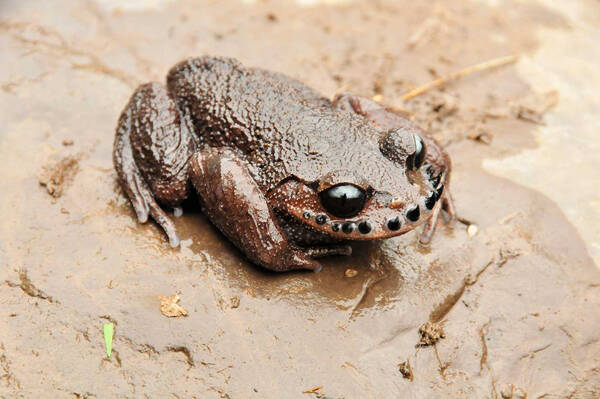
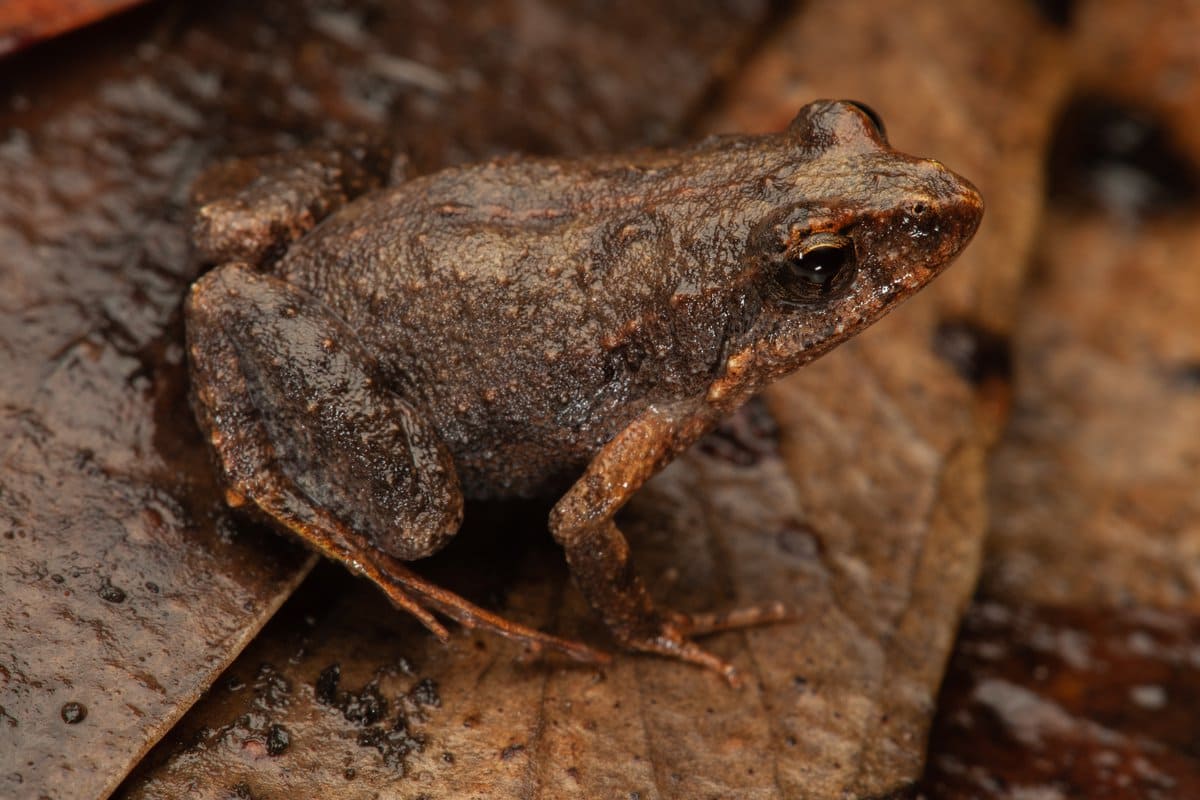
The Rattling Nursery Frog (Cophixalus crepitans) is a tiny ground-dwelling frog in the family Microhylidae, endemic to the rainforests of north-eastern Queensland, Australia. It is one of the so-called nursery frogs, named for their terrestrial eggs and direct-developing young, and the common name “rattling” refers to the male’s series of short, rattling calls on humid nights.
Taxonomy & Names
Common name: Rattling Nursery Frog;
Scientific name: Cophixalus crepitans;
Family: Microhylidae (narrow-mouthed or microhylid frogs);
Genus: Cophixalus (nursery frogs).
Appearance
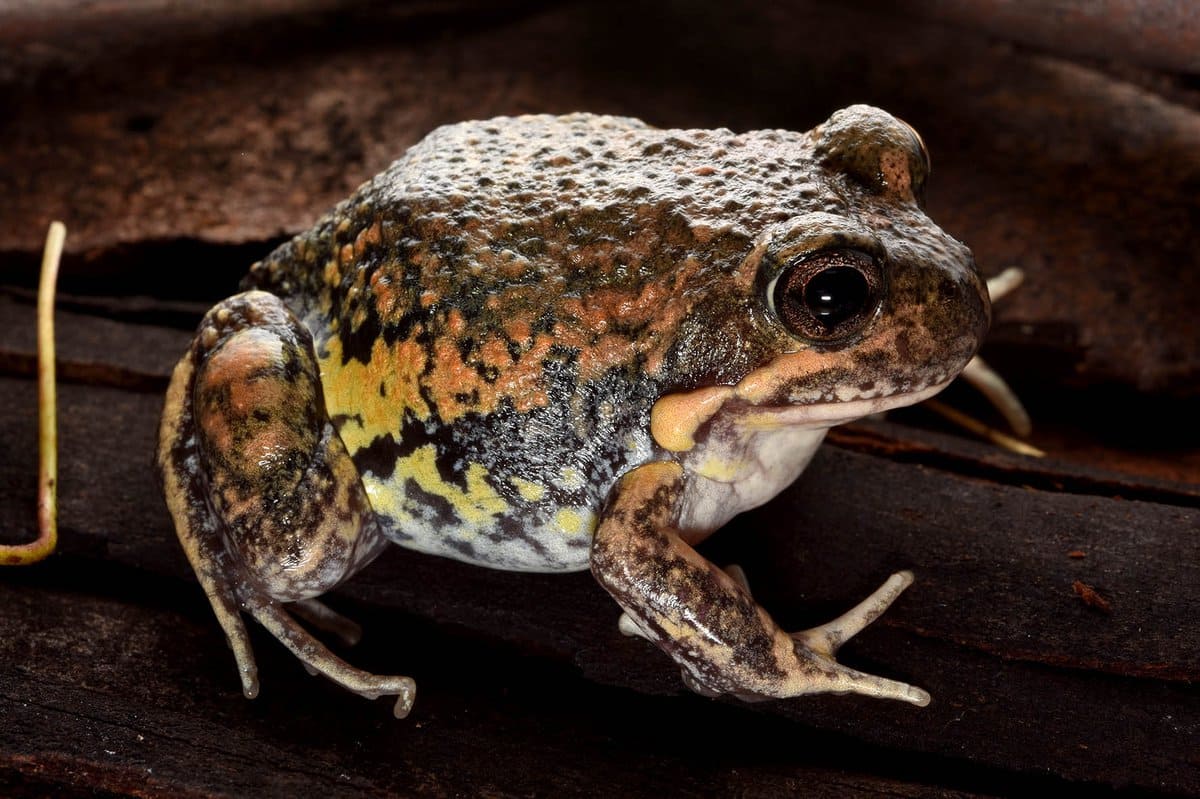
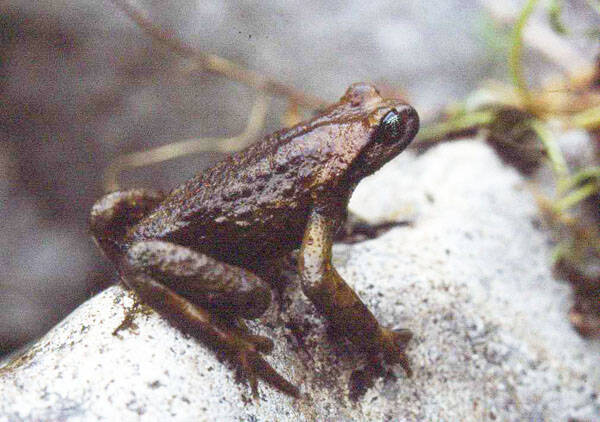
Although very small, the Rattling Nursery Frog shows a set of features typical of leaf-litter frogs:
Body size: adults are roughly 1.6–2.3 cm in snout–vent length;
Dorsal colour: brown to grey-brown or olive-brown with mottled darker and paler markings;
Pattern: some individuals show faint V- or W-shaped marks on the back that help break up the outline;
Body shape: short, somewhat rounded body with a small head and blunt snout;
Belly: underside pale, cream to greyish, sometimes lightly mottled;
Limbs: short, sturdy limbs with little or no webbing and no expanded toe pads, well suited to walking and hopping through leaf litter rather than climbing;
Eyes: relatively large eyes for such a small frog, useful for spotting prey and predators in low light.
Distribution & Habitat
The species is restricted to the Wet Tropics region of north-eastern Queensland:
found in upland and mid-elevation rainforests and adjacent moist forests;
occurs in areas where conditions remain cool, shaded and humid for much of the year.
Typical habitat characteristics include:
closed-canopy rainforest with a deep layer of leaf litter and decomposing wood;
microhabitats beneath fallen logs, rocks, roots and within moist litter pockets;
populations may occur away from standing water, because the species breeds on land.
Behaviour
The Rattling Nursery Frog is a nocturnal, secretive ground-dwelling frog:
spends the day hidden under logs, stones and litter on the forest floor;
emerges at dusk and is most active at night, especially after rain when humidity is high;
moves by short hops and crawling, rather than long leaps or climbing into vegetation.
Call
The male’s call gives the species its English name:
males produce a series of short, sharp notes that together sound like a faint rattle or clucking noise;
the call is not especially loud, but many males calling together create a distinctive background chorus near the forest floor;
listening for this rattling call is often the best way to detect the species in the wild.
Diet
The Rattling Nursery Frog feeds mainly on tiny invertebrates:
ants and other small insects are important components of the diet;
springtails and minute arthropods living in moist leaf litter;
frogs forage slowly at night, snapping up any suitably sized prey they encounter.
Reproduction & Direct Development
As a nursery frog, Cophixalus crepitans has a terrestrial, direct-developing life cycle:
breeding is associated with periods of high humidity, often during the rainy season;
females lay small clutches of relatively large eggs in moist sites such as under logs, in leaf litter or in soil crevices;
males typically remain near the eggs, and in many related species they provide some level of guarding and care;
embryos develop completely within the eggs – there is no free-swimming tadpole stage;
tiny froglets hatch directly from the eggs and begin life on the forest floor.
Conservation Status & Threats
On the IUCN Red List, the Rattling Nursery Frog is currently assessed asLeast Concern (LC), with populations considered stable in suitable rainforest habitat.
However, the species can be affected by:
loss, degradation and fragmentation of rainforest through clearing, roads and infrastructure;
climate change that alters temperature, rainfall and cloud cover, potentially drying out leaf-litter microhabitats;
localised disturbances such as severe storms and inappropriate fire in surrounding landscapes.
Long-term conservation of the Rattling Nursery Frog depends on protecting Wet Tropics rainforests and maintaining the cool, moist conditions of the forest floor.