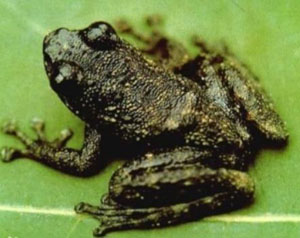
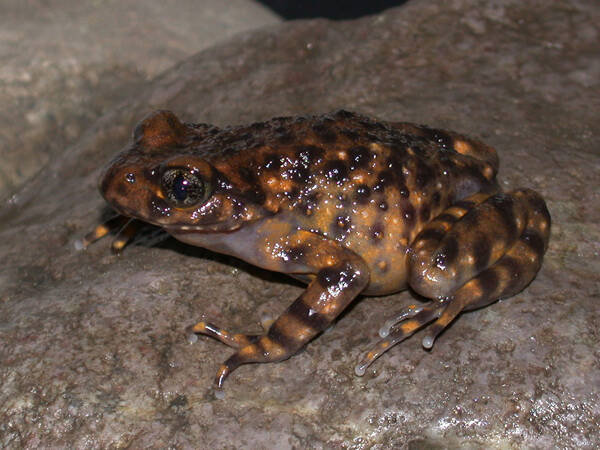
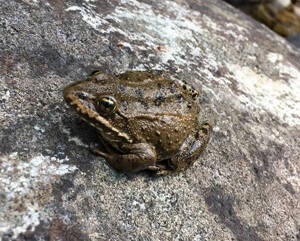
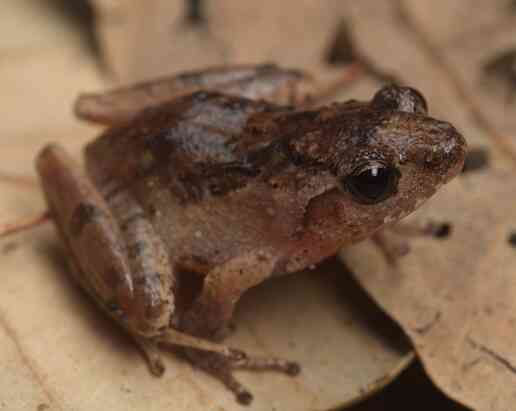
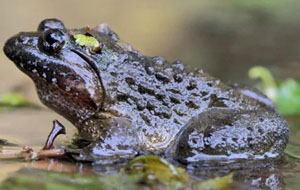
The Red-crowned Toadlet (Pseudophryne australis) is a small, strikingly patterned ground-dwelling frog native to eastern New South Wales, Australia. It belongs to the family Myobatrachidae and the genus Pseudophryne. The species is best known for the bright orange-red patches on the crown of the head and behind the eyes, and the vivid orange or yellow-orange markings in the armpits, groin and under the limbs that contrast sharply with the otherwise dark body.
Taxonomy & Names
Common name: Red-crowned Toadlet;
Scientific name: Pseudophryne australis;
Family: Myobatrachidae (Australian ground frogs);
Genus: Pseudophryne (toadlets).
Appearance
Despite its small size, the Red-crowned Toadlet is very distinctive:
Body size: adults are generally about 2.0–3.0 cm in snout–vent length;
Dorsal colour: the back is usually black or very dark grey with a slightly rough, warty texture;
Crown marking: a bright orange-red or orange patch on the top of the head and behind the eyes forms a “red crown” that gives the species its common name;
Side & limb markings: vivid orange or yellow-orange patches occur in the armpits, groin and on the underside of the limbs, creating a strong colour contrast with the dark dorsal surface;
Belly: the belly is mostly dark, often blackish with irregular pale mottling;
Body shape: a short, somewhat flattened body with a broad head and blunt snout;
Limbs: short, robust limbs with little or no webbing, suited to walking and short hops among rocks, leaf litter and moss rather than climbing;
Eyes: relatively large eyes with dark irises that blend into the dark face.
Distribution & Habitat
The Red-crowned Toadlet is endemic to eastern New South Wales and has a relatively restricted range:
occurs mainly within and around the Sydney Basin on sandstone plateaus and slopes;
populations are patchily distributed in sandstone heath, open forest and woodland.
Typical habitat features include:
heath and open forest on sandstone substrates;
shallow depressions, seepage lines and temporary soaks where rainwater accumulates;
microhabitats under rocks, logs, leaf litter and dense ground cover near these moist areas.
Behaviour
The Red-crowned Toadlet is a terrestrial frog with a relatively small home range:
spends most of its time on or just below the surface of the ground, sheltering in crevices, litter and moss;
activity is closely linked to rainfall and moist conditions, with calling most frequent in wetter periods;
more likely to be encountered on overcast or rainy days and at night, when humidity is high.
Call
The male’s call is short and rhythmic:
often described as a series of simple, separated notes, sometimes transcribed as soft “bock” or “pock” calls;
males call from shallow depressions, seepage zones and damp litter near potential breeding sites;
although not particularly loud, the calls can be clearly heard in quiet heath and woodland habitats after rain.
Diet
The Red-crowned Toadlet feeds mainly on small invertebrates:
spiders and other arthropods living in leaf litter and soil;
the frog forages slowly among rocks, litter and moss, snapping up any suitably sized prey.
Reproduction & Life Cycle
The species exhibits a breeding strategy typical of many Pseudophryne toadlets, combining terrestrial eggs with later flooding by rain:
breeding is linked to periods of higher rainfall;
males call from small burrows, cavities or natural depressions in moist soil, often along seepage lines or in shallow soaks;
females lay clutches of eggs in these hidden, moist chambers, where embryos develop on land;
when heavy rain causes water to pool and flood the nests, eggs or newly hatched larvae enter the temporary pools;
tadpoles then complete their development in the shallow water before metamorphosing into froglets that leave the pool.
Conservation Status & Threats
Although not among the most critically endangered frogs globally, the Red-crowned Toadlet has a restricted distribution and is under pressure from habitat loss and modification. It is recognised as a threatened species within New South Wales, reflecting concerns about the long-term security of its sandstone heath and seepage habitats.
Major threats include:
urban expansion, road construction and other infrastructure that clear or fragment sandstone heath and woodland;
alteration of natural drainage patterns by roads, drains and earthworks, which changes the formation of seepage zones and temporary breeding pools;
polluted runoff affecting breeding sites and surrounding microhabitats;
inappropriate fire regimes that alter vegetation and the structure of the forest floor.
Protecting sandstone heath and drainage lines, maintaining natural rainfall-runoff patterns and limiting habitat fragmentation are all important for the long-term conservation of the Red-crowned Toadlet.