Found a hedgehog out in November? It does not always need rescuing. In the UK, wild European hedgehogs often begin hibernating in late autumn, but the exact timing depends on temperature, food availability and the individual animal.
A healthy hedgehog searching for food after dark in November may still be preparing for winter. Some hedgehogs also wake during hibernation to change nests or feed.
However, a hedgehog that is active in daylight, appears weak or injured, or is very small for the time of year may need urgent help.
Quick answer: A healthy-looking hedgehog moving normally at night can usually be observed without disturbing it. A hedgehog that is staggering, injured, unusually exposed during the day or struggling in cold weather should be assessed with advice from a wildlife rescue professional.
This guide focuses on wild European hedgehogs in the UK and similar temperate European habitats. Pet African pygmy hedgehogs have different temperature and health requirements.
Is It Normal to See a Hedgehog in November?
Yes. November falls within the period when many European hedgehogs are preparing to hibernate or beginning their winter dormancy.
Hedgehogs are nocturnal mammals. They usually search for food at night and shelter during the day.
In autumn, they need to build sufficient energy reserves to survive periods when food becomes scarce.
The RSPCA explains that UK hedgehogs may start hibernating around October or November and emerge during March or April, depending on weather conditions.
During a mild autumn, some individuals may remain active into December.
Seeing a hedgehog walking normally through your garden after sunset in November is therefore not automatically unusual.
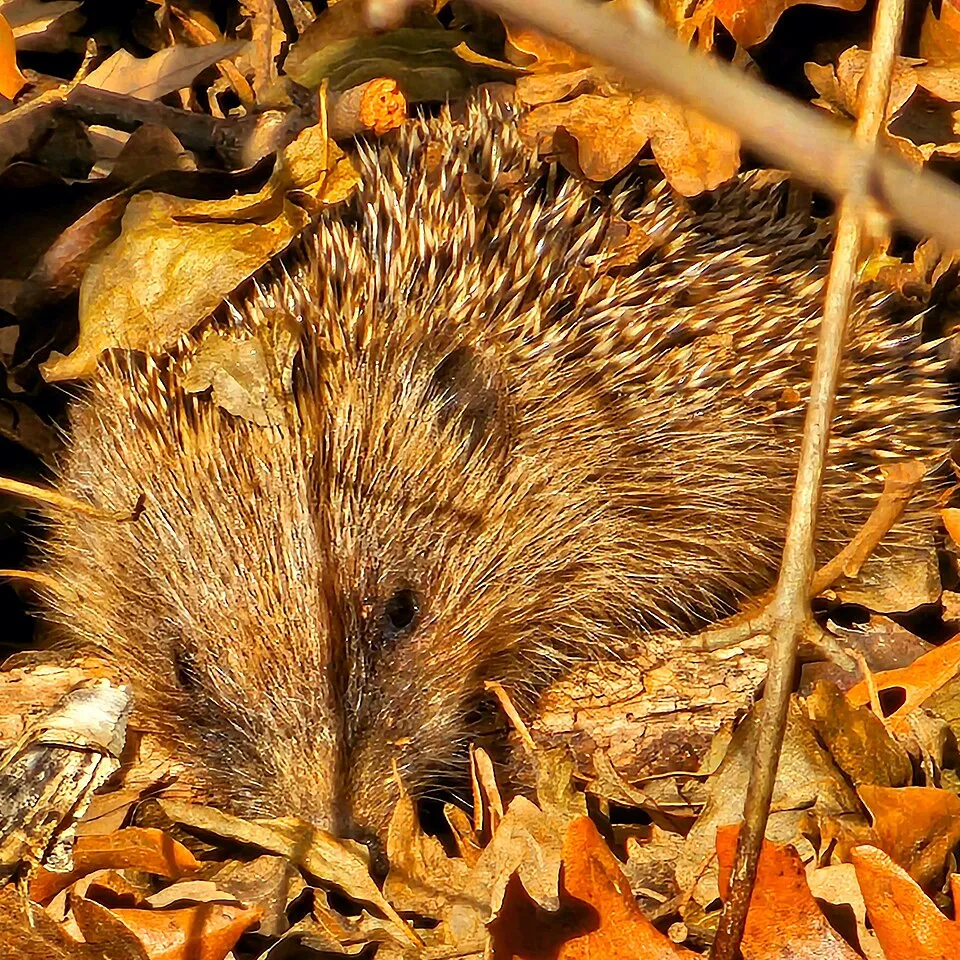
A hedgehog among autumn leaves. Photo: Matteo.Valerio / Wikimedia Commons, CC BY-SA 4.0. The image illustrates a hedgehog in leaf litter and does not establish its health or hibernation status.
When Do Hedgehogs Hibernate in the UK?
European hedgehogs generally hibernate during the colder months, often from November until around March.
However, the calendar does not control hibernation.
Temperature, food availability, body condition and local weather all influence when an individual becomes inactive.
For example, a hedgehog in a relatively mild urban garden may remain active later than one living in a colder rural area.
Young hedgehogs born toward the end of summer may also continue feeding later into autumn as they build up their energy reserves.
Hibernation is not the same as ordinary nighttime sleep.
During hibernation, a hedgehog enters a state of torpor in which its body temperature, heart rate and metabolic activity decrease substantially.
These changes allow it to conserve energy while natural food is difficult to find.
Hedgehogs do not necessarily remain continuously dormant throughout winter. They can occasionally wake, move to another nest or forage during milder periods.
For a broader introduction, read our guide to animals that hibernate and why they do it.
Does a Hedgehog Out at Night Need Help?
Not necessarily.
If the hedgehog is moving normally, appears well nourished and is searching for food after dark, it may be behaving naturally.
You can help by leaving fresh water and suitable supplementary food in a safe part of the garden.
Avoid picking it up simply to inspect or photograph it.
However, nighttime activity does not guarantee that an animal is healthy.
A hedgehog that staggers, repeatedly falls over, struggles to breathe or has an obvious injury needs professional assessment regardless of when you find it.
What if You See a Hedgehog During the Day?
A hedgehog wandering in daylight deserves closer attention because the species is primarily nocturnal.
The British Hedgehog Preservation Society advises that daytime activity in autumn and winter may indicate serious illness, injury, hunger or disturbance.
Some exceptions exist. For example, a healthy hedgehog might move purposefully for a short time after its nest has been disturbed. A nursing mother may occasionally venture out during daylight in the breeding season.
These exceptions should not be used as a reason to ignore a distressed animal.
Signs that a hedgehog may need urgent assistance include:
Staggering, wobbling or repeatedly falling over.
Lying exposed in the open without normal movement.
Obvious wounds, bleeding or damaged spines.
Flies, fly eggs or maggots on the body.
Laboured or unusual breathing.
Severe weakness or inability to stand.
Being very small, cold or wet during harsh weather.
Appearing unresponsive outside a protected nest.
If you find a hedgehog displaying these signs, contact a wildlife rescue or veterinary professional promptly.
In the UK, the British Hedgehog Preservation Society offers advice and can help direct callers to local independent rehabilitators.
Read the British Hedgehog Preservation Society's official advice for daytime hedgehog sightings.
Hedgehog Found in November: What Should You Do?
Use the following table as an initial guide.
| Situation | What It May Mean | Recommended Response |
|---|---|---|
| Healthy adult moving normally at night | Normal foraging or preparation for hibernation | Observe from a distance; provide water and suitable food |
| Hedgehog active briefly during mild winter weather | It may have woken naturally | Monitor without disturbing it unless there are signs of illness |
| Small juvenile seen in late autumn | May have insufficient reserves for winter | Seek advice from a hedgehog rescue, particularly in cold weather |
| Hedgehog wandering or lying exposed in daylight | Possible illness, disturbance or exhaustion | Contact a wildlife professional; urgent intervention may be needed |
| Hedgehog staggering, injured or covered in fly eggs | Potential medical emergency | Arrange immediate professional assistance |
| Healthy hedgehog hidden inside an intact winter nest | Normal resting or hibernation | Leave the nest undisturbed |
These are general guidelines, not a substitute for evaluating an individual animal.
Weather, body condition, age and behavior all affect the correct response.
How Small Is Too Small for a Hedgehog in November?
Young hedgehogs born late in the season may have less time to accumulate the fat needed for winter.
Wildlife rescue organizations therefore pay particular attention to autumn juveniles.
The British Hedgehog Preservation Society advises that hedgehogs weighing less than approximately 250 grams in autumn are likely to be genuine orphans requiring help.
Its guidance also identifies around 450 grams as an important reference point for late-autumn juveniles.
However, 450 grams is not an automatic rescue rule for every hedgehog.
Some healthy juveniles may benefit from supplementary feeding and monitoring, while others require professional care.
The correct decision depends on more than one number:
Current weather and temperature.
The animal's body condition.
Whether it is gaining or losing weight.
Normal or abnormal behavior.
Signs of injury or illness.
The availability of natural and supplementary food.
If you are concerned about a small hedgehog in November, consult a wildlife rescue before attempting to keep it indoors.
Do not repeatedly disturb a healthy animal simply to weigh it.
British Hedgehog Preservation Society: Autumn Juveniles.
What Should You Do if a Hedgehog Needs Rescue?
If a hedgehog is obviously injured, weak or in immediate danger, professional wildlife guidance recommends taking practical steps to keep it safe while arranging qualified help.
Step 1: Contact a Wildlife Rescue
Try to contact a wildlife rehabilitation organization or veterinarian promptly.
In the UK, the British Hedgehog Preservation Society can offer guidance and information about local rescue services.
Step 2: Handle Only When Necessary
Use thick gardening gloves or a towel if the animal must be moved out of immediate danger.
Handling should be gentle and brief.
Step 3: Provide a Secure Temporary Box
Place the hedgehog in a high-sided, ventilated cardboard box lined with a clean towel or suitable paper bedding.
Keep the box somewhere quiet and away from children and pets.
Step 4: Provide Gentle Warmth if Advised
A sick or chilled hedgehog may need gentle warmth.
Wildlife organizations recommend a warm, wrapped hot-water bottle positioned so the animal can move away from it.
Avoid direct contact with a hot surface or overheating the animal.
Step 5: Arrange Professional Care
Fresh water and a small amount of suitable meaty food may be offered if appropriate, but do not force food or water into the hedgehog's mouth.
Do not administer medication without veterinary instructions.
A cardboard box is a temporary safety measure, not a long-term rehabilitation enclosure.
The Wildlife Trusts: How to Help a Hedgehog.
Where Do Hedgehogs Hibernate?
Hedgehogs build sheltered nests that help protect them during cold weather.
A winter nesting site is sometimes called a hibernaculum.
Suitable locations may include areas beneath hedges, dense vegetation, log piles and other protected spaces.
Dry leaves and plant material help create insulation.
Hedgehogs may select a nesting site that appears untidy to humans but provides important shelter from wind, rain and disturbance.
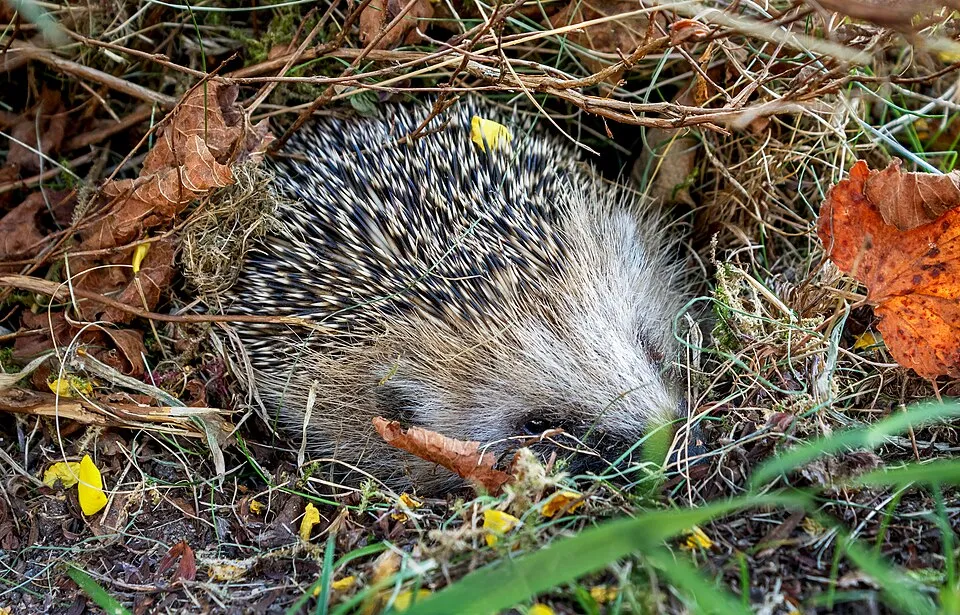
European hedgehog (Erinaceus europaeus) in a nest beneath a shrub in Tuntorp, Sweden. Photo: W.carter / Wikimedia Commons, CC BY-SA 4.0. The photograph shows a nesting site but does not confirm the animal was hibernating.
If you discover an intact hedgehog nest, leave it undisturbed whenever possible.
Do not uncover a nest simply to check whether the animal is sleeping.
If construction work, flooding or another immediate danger makes the site unsafe, contact a wildlife rescue for advice before relocating the animal.
Why Is Bonfire Night Dangerous for Hedgehogs?
In the UK, Bonfire Night takes place on November 5.
Unfortunately, piles of logs, branches and leaves prepared for a bonfire can look like ideal shelter to a hedgehog searching for a winter nest.
Animals may enter the pile without anyone noticing.
A hedgehog hidden inside a bonfire can suffer severe burns or die if the fire is lit without checking for wildlife.
In October and November 2026, British wildlife organizations again reminded the public to take precautions before lighting bonfires.
The RSPCA and RSPB recommend several straightforward safety measures.
How to Make a Bonfire Safer for Hedgehogs
Build the bonfire on the day it will be lit. This reduces the time available for wildlife to enter the pile.
Move stored material to a new, clear site before lighting. Rebuilding the pile helps reveal hidden animals and is safer than checking only the visible edges.
Inspect carefully. Use a torch and a broom handle or similar blunt tool to look beneath sections. Do not stab into the pile with a fork or spade.
Check for signs of wildlife. Hedgehogs, frogs, toads and other animals may be sheltering inside.
Seek advice if you discover an animal. Where necessary, carefully protect it from immediate danger and follow local wildlife rescue guidance.
Leave an escape route. Lighting from one side rather than the center may help any missed animals escape, but this does not replace a thorough inspection.
The safest way to reduce the risk is to avoid leaving a prepared bonfire pile in place for several days.
These precautions are relevant not just on Bonfire Night but whenever garden vegetation or stored wood is burned.
RSPCA: How to Make a Hedgehog-Friendly Bonfire.
What Can You Feed Hedgehogs in Autumn?
Wild European hedgehogs naturally eat a range of invertebrates, including beetles, caterpillars, worms and other small animals.
Supplementary feeding can help individuals build energy reserves when natural food becomes scarce.
The RSPCA and British Hedgehog Preservation Society recommend suitable options such as:
Meaty cat food.
Meaty dog food.
Specialist hedgehog food from a suitable supplier.
Fresh drinking water in a shallow dish.
Do not provide cow's milk. Hedgehogs are lactose intolerant, and milk may cause digestive upset.
Bread is also unsuitable because it does not provide the nutrition hedgehogs need.
Keep feeding areas clean, remove spoiled food and avoid attracting pests.
Supplementary food should support natural feeding, not replace a suitable wild habitat.
Seven Ways to Help Hedgehogs Through Winter
Even when a hedgehog does not need rescuing, small changes in a garden can make a difference.
1. Leave a Quiet Corner Untidy
Allow some leaves, logs and natural vegetation to remain in an undisturbed area.
These provide shelter and habitat for the invertebrates hedgehogs eat.
2. Provide Fresh Water
A shallow, accessible dish of clean water can help wildlife throughout the year.
Check and refill it regularly.
3. Avoid Disturbing Winter Nests
Inspect areas carefully before moving logs, clearing dense vegetation or dismantling old structures.
Do not deliberately wake a hibernating hedgehog.
4. Make Ponds Safer
Provide a gently sloping edge, suitable ramp or other escape route so small animals can climb out if they fall into a garden pond.
5. Reduce Garden Hazards
Store loose netting safely, check for hidden animals before using garden machinery and cover dangerous open drains or holes.
6. Allow Safe Movement Between Gardens
Where suitable, small ground-level gaps in fencing may help hedgehogs move between connected habitats.
Make sure such openings do not create safety or property-management problems.
7. Get Professional Advice When Necessary
A wildlife rescue can help determine whether a particular hedgehog should be left alone, monitored or taken into care.
Well-intended but unnecessary captivity can itself be stressful for wild animals.
Should You Wake a Hibernating Hedgehog?
No. Do not deliberately wake a hedgehog that is safely hibernating in an intact nest.
Waking from hibernation uses energy reserves, and repeated unnecessary disturbance may make winter survival more difficult.
Hedgehogs can wake naturally during the winter, but this does not mean people should encourage them to become active.
If you accidentally disturb an intact nest, stop the disturbance and seek specialist guidance where needed.
If the hedgehog is exposed, injured or at immediate risk, the situation requires different action from a healthy animal sheltering safely.
Do Pet Hedgehogs Hibernate Too?
This guide concerns wild European hedgehogs, not pet African pygmy hedgehogs.
The African pygmy hedgehog commonly kept as a pet is generally the four-toed hedgehog, Atelerix albiventris.
These animals originate from warmer African habitats and have different temperature requirements from European hedgehogs.
They should not be deliberately encouraged to hibernate.
A pet hedgehog that becomes unusually cold, inactive or unresponsive may be suffering from an environmental or medical emergency.
If this happens, contact a veterinarian experienced with exotic mammals promptly.
Never apply wild European hedgehog winter rescue advice to a pet without considering its species and veterinary needs.
Are There Wild Hedgehogs in the United States or Canada?
Hedgehogs are not native to North America.
Wild hedgehog populations naturally occur in parts of Europe, Africa and Asia, with some introduced populations elsewhere.
Most hedgehogs kept as pets in the United States and Canada are African pygmy hedgehogs.
If you encounter an apparent hedgehog outdoors in North America, it may be an escaped or released pet, or another animal may have been misidentified.
Contact an appropriate animal rescue or veterinarian rather than assuming it is a native wild hedgehog preparing to hibernate.
Frequently Asked Questions
Is it normal to see a hedgehog in November?
Yes. In the UK, some European hedgehogs remain active during November while preparing for winter. Healthy nighttime activity is not necessarily a reason for concern.
When do hedgehogs start hibernating?
European hedgehogs commonly begin hibernating during late autumn, often around November, but timing varies with weather, food availability and individual condition.
Should I rescue a hedgehog out during the day?
Daytime activity can be a warning sign, particularly in autumn or winter. If the animal is weak, exposed, injured or behaving abnormally, seek urgent wildlife rescue advice. Healthy, purposeful movements can occasionally have other explanations.
Is a hedgehog awake in winter always in trouble?
No. Hedgehogs can wake naturally during hibernation, especially during mild periods. Their behavior, physical condition and the weather help determine whether assistance is needed.
What should I feed a hedgehog before winter?
Suitable supplementary food includes meaty cat or dog food and specialist hedgehog food. Always provide fresh water. Avoid milk and bread.
Can a baby hedgehog survive winter?
Some young hedgehogs survive their first winter, but those born late in the season may struggle to build sufficient energy reserves. Seek professional advice about very small or underweight juveniles.
Should I move a hedgehog nest?
Not unless necessary for safety and preferably after advice from a wildlife rescue. Disturbing a winter nest can use up a hedgehog's energy reserves and expose it to danger.
Why do hedgehogs hide in log piles?
Log piles and leaf litter offer shelter from weather and predators. They can also provide suitable locations for daytime resting or winter nesting.
How can I protect hedgehogs on Bonfire Night?
Build bonfires on the day they will be lit, move previously stored materials to a new site, inspect carefully for wildlife and follow animal rescue guidance if a hedgehog is found.
Do all hedgehog species hibernate?
No. Hedgehog species have different adaptations to their native climates. European hedgehogs are well known for winter hibernation, while African pygmy hedgehogs kept as pets should not be deliberately exposed to cold conditions to trigger dormancy.
The Bottom Line
Finding a hedgehog in November does not automatically mean it needs rescuing.
A healthy European hedgehog moving normally at night may still be preparing for hibernation, and some individuals remain active during mild winter periods.
However, severe weakness, injury, unusual daytime exposure and concerns about very small juveniles require careful attention and professional advice.
Protecting natural nesting sites, providing suitable food and water, and checking bonfire materials can help wild hedgehogs survive the colder months.
The best way to help is to understand when to observe, when to provide practical support and when to seek specialist assistance.
For more general information, read our 10 Fascinating Facts About Hedgehogs.
Wildlife and Veterinary Sources
RSPCA — Hedgehogs in the UK: Wildlife Advice
RSPCA — Found a Sick or Injured Hedgehog?
British Hedgehog Preservation Society — Autumn Juveniles
British Hedgehog Preservation Society — Frequently Asked Questions
The Wildlife Trusts — Help a Hedgehog
RSPCA — How to Make a Hedgehog-Friendly Bonfire
RSPB — Four Ways to Look Out for Wildlife This Spooky Season (October 20, 2026)
Royal Veterinary College — African Pygmy Hedgehog Care
Photo Credits
Hedgehog Among Leaves — Matteo.Valerio, CC BY-SA 4.0. Original photograph used without editorial modification.
Hedgehog in Its Nest in Tuntorp — W.carter, CC BY-SA 4.0. A resized Wikimedia preview is used; no editorial changes beyond resizing.