Do fisher cats really scream at night? Fishers can make sounds, including growls and chuckle-like calls, but the famous bloodcurdling "fisher cat scream" is largely a wildlife myth. Many of the frightening nighttime cries people attribute to fishers actually come from red foxes.
According to Massachusetts wildlife officials, fishers are generally quiet animals. Unusual scream-like vocalizations are possible under extreme stress, but repeated loud screaming is not their normal hunting or mating behavior.
If you hear a high-pitched scream outside your home, the sound alone is not enough to identify the animal. A red fox, certain owls, a bobcat, or another animal may be responsible.
Here is how to separate the facts from the folklore.

A Pacific fisher (Pekania pennanti). Photo: U.S. Fish and Wildlife Service, Public Domain. This photograph shows the animal's appearance, not a vocalization event. Original photograph and licensing details.
What Does a Fisher Cat Actually Sound Like?
A fisher, scientifically known as Pekania pennanti, is a carnivorous mammal belonging to the weasel family.
Despite its nickname, it is not a domestic cat or a wild member of the cat family.
Fishers communicate using sounds, body language and scent. However, they generally do not need to make loud calls to find prey or communicate over long distances.
Wildlife agencies describe their more typical vocalizations as:
Low growls: Sounds that may occur during defensive or stressful encounters.
Chattering: Short, relatively quiet vocalizations.
Chuckle-like grunts: Soft, repeated noises that may sound vaguely similar to those of a ferret.
Hisses or snarls: Defensive sounds associated with agitation in some circumstances.
These sounds are usually much less dramatic than the piercing screams commonly described in online stories.
New York's Department of Environmental Conservation reports that the fisher vocalizations it recognizes are generally low-volume growls or chatter audible only at short distances.
Massachusetts wildlife authorities also note that scream-like vocalizations have occasionally been reported under unusual or extreme stress, particularly involving young animals in captivity.
The important distinction: Fishers can vocalize, but there is no reliable evidence that wild fishers routinely produce prolonged, bloodcurdling screams before making a kill.
Why Do People Think Fisher Cats Scream?
The belief has spread through local folklore, secondhand stories and videos labeled as fisher cat sounds.
Imagine hearing a high-pitched cry coming from the woods after dark. You cannot see the animal, and the sound seems unlike anything you have heard before.
If someone in your neighborhood says that fishers scream, it is easy to connect the strange sound with that explanation.
But many online recordings have a basic identification problem: the animal producing the sound is not visible.
Without verified video, a clear sighting or other evidence, a recording cannot reliably establish which species made the call.
Wildlife professionals in Massachusetts and New York regularly receive reports of supposed fisher screams and caution that other animals are more likely to be responsible.
Is the Screaming Animal Actually a Red Fox?
Often, a red fox is a more plausible explanation.
Red foxes (Vulpes vulpes) produce a variety of vocalizations, including barks, yelps and high-pitched screams.
Some fox calls can sound surprisingly similar to a person crying or screaming.
During the breeding season, vocal communication may become more noticeable. Foxes can also vocalize in other social or territorial situations.
A red fox scream may carry a considerable distance across a quiet neighborhood or woodland.
That is why Massachusetts wildlife officials identify foxes as a common source of calls incorrectly attributed to fishers.
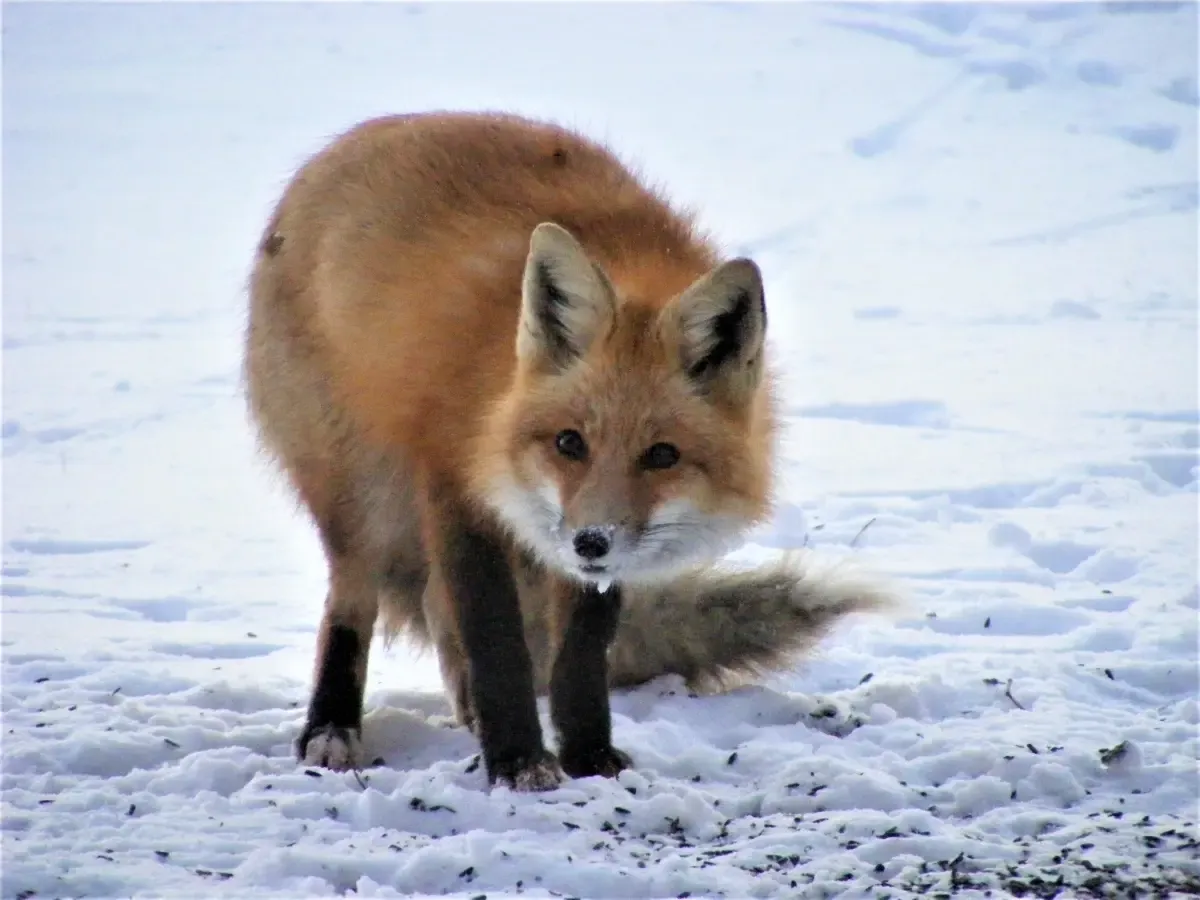
Red fox (Vulpes vulpes) at Waubay National Wildlife Refuge. Photo: U.S. Fish and Wildlife Service, Public Domain. The fox is not shown screaming. Original photograph and licensing details.
Fisher Cat vs. Red Fox: How Can You Tell the Sounds Apart?
Fisher and fox vocalizations can sometimes be distinguished by their general character, but there is no foolproof rule based on a single recording.
| Feature | Fisher | Red Fox |
|---|---|---|
| Typical calls | Quiet growls, chatter and short grunts | Barks, yelps and sometimes shrill screams |
| Loud nighttime screams | Not a typical documented wild behavior | Well-documented vocalization |
| Calling while hunting | No evidence of routinely screaming before killing prey | Vocalizations occur in various contexts, not necessarily during hunting |
| Breeding communication | Scent communication is important | Calls can be particularly noticeable during breeding season |
| Identification by sound | Requires caution and additional evidence | Some distinctive calls can support an identification |
These comparisons describe common patterns, not a rigid rule applying to every individual or situation.
For reference recordings, Massachusetts Division of Fisheries and Wildlife provides examples of fisher, red fox, barn owl and bobcat sounds on its official website.
Listen to the official wildlife sound examples from MassWildlife.
What Other Animals Make Screaming Sounds at Night?
A number of animals can produce sounds that surprise people who hear them without seeing the source.
Several species may occur in the same forests, suburbs or rural areas as fishers.
1. Red Fox
Red foxes produce loud screams, barks and yelps. Their calls are one of the most common explanations offered by wildlife agencies for supposed fisher screams.
2. Barn Owl
Barn owls do not make the familiar hooting call associated with some other owls. Instead, they can produce harsh, drawn-out screeches.
Those sounds can be startling near barns, open fields or woodland edges.
3. Bobcat
Bobcats produce several vocalizations, including growls, yowls and harsh cries.
Some calls may sound cat-like, while others can be unexpectedly loud.
4. Other Foxes and Owls
Gray foxes and certain owl species produce calls that are sometimes mistaken for another animal.
The most likely species depends on geography, season and habitat.
Not every strange noise is a scream, and not every scream-like call belongs to a predator.
How to Identify an Animal Sound at Night
Hearing an unfamiliar animal outside can be unsettling. Instead of immediately assuming it is a fisher, collect a few observations from a safe location.
| What to Observe | Why It Helps |
|---|---|
| Location | Some species are absent from particular countries or regions. |
| Habitat | Forest, wetland, farmland and residential habitats support different wildlife communities. |
| Type of call | Barks, shrieks, grunts and hoots offer different identification clues. |
| Call pattern | Repeated short calls may differ from a long, sustained cry. |
| Time of year | Some species vocalize more often during breeding or territorial activity. |
| Visual evidence | A clear image or video is more useful than an unverified audio label. |
For a better identification, try the following approach:
Stay indoors or observe from a safe distance.
Note the time, approximate location and habitat.
Record a short audio clip if it can be done safely and legally.
Compare the sound with recordings published by reputable wildlife agencies.
Look for additional evidence, such as a clear photograph or reliable observation.
If identification remains uncertain, describe it as an unidentified wildlife call.
Do not approach an unknown animal, use food to attract it or attempt to capture it simply to identify a sound.
For a broader introduction to nighttime wildlife behavior, see our Diurnal vs. Nocturnal Animals guide.
Where Do Fisher Cats Live?
Fishers are native to North America.
They occur in forested regions of Canada and parts of the United States, including areas of New England, New York, the Great Lakes region and the Pacific Northwest.
They typically use forests with sufficient cover, although they can also occur near suburban neighborhoods.
Fishers are not native to the United Kingdom. If you hear a frightening scream in a British garden, a local fox or another native animal is far more plausible than a fisher.
Within North America, the presence of suitable habitat does not prove that a particular sound came from a fisher.
What Does a Fisher Cat Look Like?
A fisher has a long body, relatively short legs, rounded ears and a bushy tail.
Its fur is usually dark brown, although color and appearance can vary.
Fishers are agile climbers and can move confidently through trees as well as across the ground.
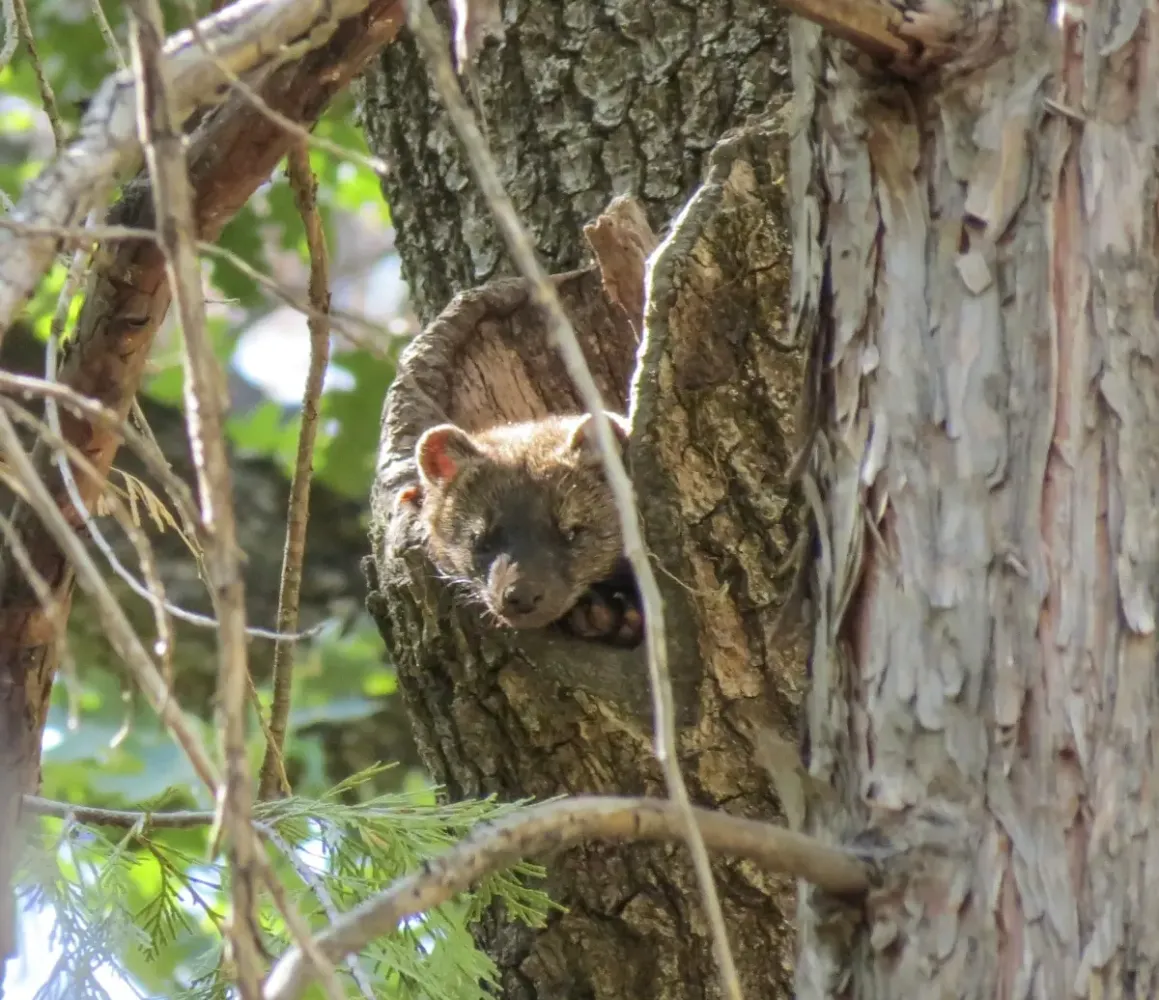
A fisher resting in a tree cavity. Photo: USDA Forest Service, via U.S. Fish and Wildlife Service, Public Domain. Original photograph and licensing details.
Despite the name "fisher cat," fishers are not closely related to domestic cats.
They belong to the family Mustelidae, which also contains weasels, martens, otters and wolverines.
For a more complete description of their anatomy, size, diet and distribution, read What Is a Fisher Cat? Facts, Size, Diet and Range.
Do Fisher Cats Scream Before Killing Their Prey?
No reliable evidence supports the popular claim that fishers routinely scream immediately before attacking prey.
Fishers are predators that depend heavily on stealth.
Announcing their presence with a loud cry would often make it easier for prey to escape.
Fishers hunt various small mammals and birds. They are especially well known for their ability to capture porcupines, an unusual prey choice among North American mammals.
They are also opportunistic feeders that may eat carrion, insects and plant foods.
A nighttime scream near a forest does not establish that a fisher has attacked or killed another animal.
To identify a predation event, researchers would need more direct evidence, such as confirmed visual observations or other reliable field signs.
Do Fisher Cats Attack Domestic Cats and Dogs?
Fishers are capable predators, but their reputation for routinely killing household pets is exaggerated.
Massachusetts wildlife officials report that among more than 1,000 fisher stomachs examined in one analysis, only one contained cat hair.
This finding suggests domestic cats were uncommon in that particular dietary sample. It does not prove that attacks never happen or establish the precise risk to pets everywhere.
Fishers generally avoid direct encounters with people. However, very small pets, backyard poultry and unattended domestic animals can face risks from a variety of wildlife predators.
The practical response is to follow ordinary wildlife safety precautions:
Keep cats indoors, particularly overnight.
Supervise very small pets outdoors.
Use secure enclosures for chickens and rabbits.
Remove outdoor pet food and accessible food waste.
Do not encourage wild predators to approach the house.
These precautions can also reduce conflicts with foxes, coyotes and other predators.
Are Fisher Cats Dangerous to Humans?
Fishers are wild carnivores and should not be handled or approached.
However, they are typically shy, solitary animals that prefer to avoid human contact.
A healthy fisher generally has no reason to approach a person deliberately.
If you encounter one, give it room to move away and keep pets under control.
Never attempt to corner, feed or capture it.
If an animal appears severely injured, unusually aggressive or unable to move normally, contact the appropriate local wildlife authority for guidance.
Do Fishers Come Out Only at Night?
No. Fishers can be active during both the day and night.
Research and wildlife agency observations indicate that they are often active around dawn and dusk, although their activity patterns vary with season, habitat and individual behavior.
A fisher seen in daylight is not automatically sick or behaving abnormally.
Likewise, a loud noise heard at night does not become more likely to be a fisher simply because fishers sometimes move after dark.
Why Is the Fisher Cat Scream Myth So Persistent?
The story combines several things that make wildlife myths easy to spread:
Fishers are relatively difficult to observe directly.
They have a reputation as strong predators.
Red fox calls can sound surprisingly human-like.
Many nighttime recordings are shared without identifying the animal visibly.
Repeated online claims can make an unsupported explanation seem familiar and believable.
This makes the fisher a useful example of why careful wildlife identification matters.
An animal's reputation is not the same as its scientifically documented behavior.
When researchers can compare actual recordings and confirmed observations, the story often becomes much less frightening and more interesting.
Frequently Asked Questions
Do fisher cats really scream?
Fishers can make vocalizations, and rare scream-like sounds under unusual stress have been reported. However, the famous loud nighttime fisher scream is not typical of their normal wild behavior.
What does a fisher cat sound like?
More typical sounds include low growls, quiet chatter and chuckle-like grunts. Fishers are generally much quieter than their popular reputation suggests.
What animal sounds like a woman screaming at night?
A red fox is a common possibility. Some owl and bobcat calls may also sound startling. Without additional evidence, the animal cannot be identified from a vague description alone.
Do fisher cats scream when mating?
Wildlife authorities do not recognize prolonged screaming as a routine fisher mating call. Scent-based communication plays an important role in their reproduction.
Do fisher cats scream before attacking?
No. There is no reliable evidence that fishers habitually scream before killing prey. This is a widely repeated myth.
Are fisher cats actually cats?
No. Fishers belong to the weasel family, Mustelidae. They are more closely related to martens and otters than to domestic cats.
Can you hear fisher cat sounds in the UK?
Wild fishers are not native to the United Kingdom. A screaming sound there is much more likely to come from a locally occurring animal, such as a red fox.
How can I verify a fisher cat recording?
Compare it with recordings from wildlife agencies, look for clear visual confirmation and consider the geographic range of the animal. An audio clip labeled "fisher scream" is not reliable evidence by itself.
The Bottom Line
The famous screaming fisher cat is mostly a case of mistaken identity.
Real fishers are secretive forest mammals that generally make quiet growls, chatter and other short vocalizations. The dramatic screams often blamed on them are commonly associated with red foxes.
The next time you hear a strange noise in the woods, remember that a sound alone rarely tells the whole story.
Checking the animal's actual range, behavior and verified calls is far more useful than relying on a frightening legend.
Scientific and Official Sources
Massachusetts Division of Fisheries and Wildlife — Fishers: Fact vs. Fiction
New York State Department of Environmental Conservation — Fisher
Mass Audubon — Fishers: Identification and Behavior
U.S. Fish and Wildlife Service — Pacific Fisher Photograph