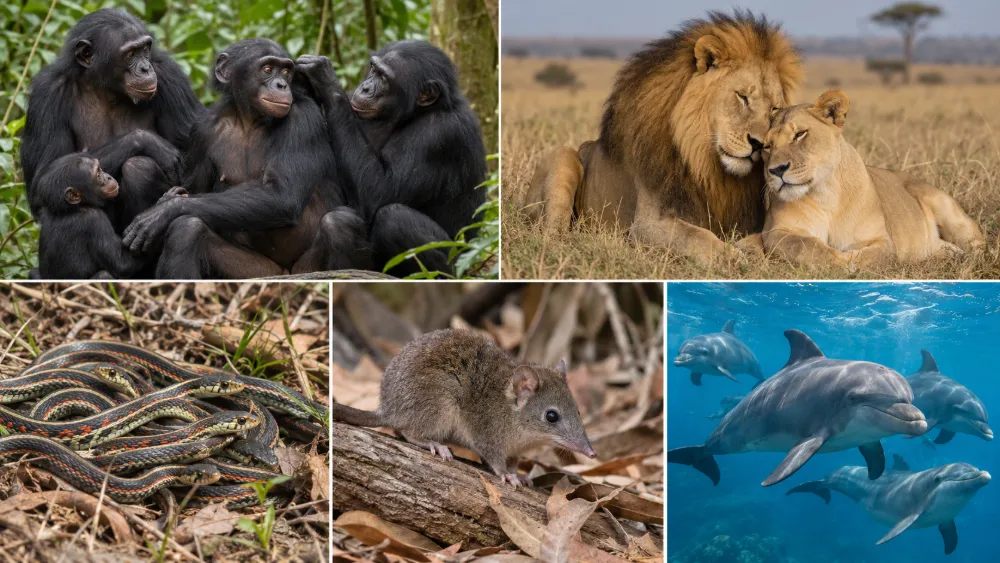
What Is a Matriarchal Animal Society?
A matriarchal society is a social system in which females occupy the dominant leadership role. This does not necessarily mean males have no importance, but females often control reproduction, group movement, food access, territory, or social hierarchy.
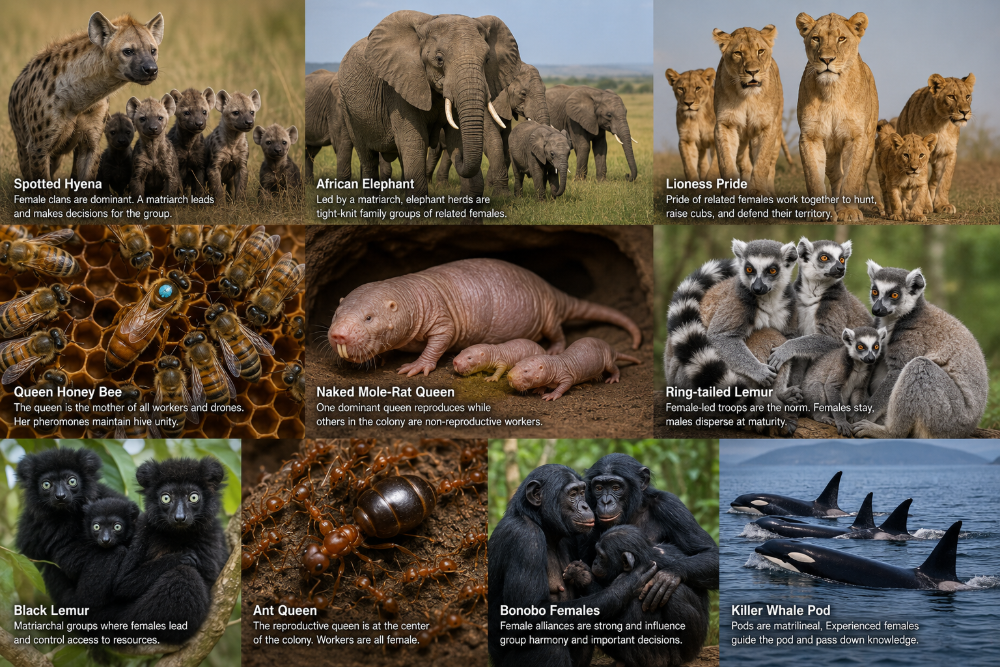
Matriarchal systems have evolved independently in many groups of mammals and insects, showing that female leadership can be highly successful under certain ecological conditions.
Top 10 Matriarchal Animals
| Rank | Animal | Female Leadership |
|---|---|---|
| 1 | Spotted Hyena | Females dominate males and inherit social rank. |
| 2 | Elephant | The oldest female leads family groups. |
| 3 | Lion | Lionesses maintain pride structure and hunting success. |
| 4 | Honey Bee | The queen is the reproductive center of the colony. |
| 5 | Naked Mole-Rat | A single breeding queen controls the colony. |
| 6 | Black Lemur | Females usually dominate social interactions. |
| 7 | Ring-Tailed Lemur | Females outrank males in feeding and social order. |
| 8 | Ant | Queens establish colonies while workers are female. |
| 9 | Bonobo | Female alliances influence group leadership. |
| 10 | Killer Whale (Orca) | Older females guide pods using lifelong experience. |

1. Spotted Hyena
Spotted hyenas possess one of the strongest female-dominated societies known among mammals. Adult females are larger, stronger, and more aggressive than males. Every daughter inherits a social position close to her mother's rank, allowing powerful female family lines to persist across generations.
Female hyenas control access to food, breeding opportunities, and group interactions. Even the highest-ranking males generally remain below adult females in status.
2. African Elephant
Elephant families are classic examples of matriarchal organization. Each herd is led by an experienced older female known as the matriarch.
She remembers migration routes, water sources, safe habitats, and responses to predators. Her knowledge, accumulated over decades, greatly improves the survival of younger family members during droughts or environmental changes.
3. Lion
Although male lions are famous for their manes, lionesses form the stable core of every pride. Related females usually remain together throughout life while males come and go.
Lionesses cooperate to hunt, defend cubs, establish territories, and raise young together. Their teamwork is the foundation of the pride's long-term success.
4. Honey Bee
A honey bee colony revolves around one fertile queen. She is the mother of nearly every worker and drone in the hive.
The workers, which are also female, perform almost every essential task including collecting nectar, caring for larvae, building combs, regulating hive temperature, and defending the colony.
5. Naked Mole-Rat
Naked mole-rats are one of the few mammals that display eusocial behavior similar to ants and bees.
Only one dominant queen usually reproduces while other colony members specialize in digging tunnels, defending the nest, or caring for offspring. The queen actively suppresses reproduction by subordinate females.
6. Black Lemur
Black lemurs often display female social dominance. Females typically receive priority access to food resources and may win most aggressive encounters with males.
This dominance is believed to help females secure enough energy for pregnancy and raising offspring.
7. Ring-Tailed Lemur
Ring-tailed lemurs are among the best-known examples of female dominance in primates. Females control feeding order, resting locations, and social interactions.
Males usually yield during conflicts, while daughters inherit social relationships through maternal family lines.
8. Ant
Ant colonies function around reproductive queens. After founding a colony, the queen becomes responsible for laying thousands or even millions of eggs during her lifetime.
Nearly all workers and soldiers are female, creating one of the largest female-based social systems on Earth.
9. Bonobo
Bonobos differ greatly from their close relatives, chimpanzees. Female bonobos build strong social alliances that reduce male aggression and influence group decisions.
Rather than relying primarily on physical strength, bonobo societies often maintain social harmony through cooperation and close female relationships.
10. Killer Whale (Orca)
Resident killer whale pods are frequently centered around older females. Post-reproductive mothers and grandmothers continue leading family groups for decades.
Research suggests these experienced females improve hunting success and guide younger whales to seasonal food sources, especially during times of scarcity.
Why Do Some Animal Societies Become Matriarchal?
Female leadership evolves for different reasons depending on the species.
Experienced mothers possess valuable ecological knowledge.
Stable maternal family groups improve cooperation.
Females invest heavily in raising offspring and therefore benefit from controlling resources.
Cooperative breeding favors long-term female leadership.
In social insects, reproductive specialization creates queen-centered colonies.
These adaptations increase the survival of both individuals and entire populations.

Conclusion
Matriarchal animal societies demonstrate that leadership in nature takes many forms. Whether it is an elephant matriarch guiding her family across the savanna, a spotted hyena maintaining a powerful clan, or a queen bee sustaining an entire colony, female leadership has evolved repeatedly because it offers real survival advantages. These remarkable species remind us that strength in nature is measured not only by physical power but also by experience, cooperation, and social organization.
FAQs
Which animal has the strongest female-dominated society?
The spotted hyena is widely regarded as having one of the strongest female-dominated societies among mammals, with females outranking all adult males.
Why do elephants follow older females?
Older female elephants remember migration routes, water sources, and dangers, making them highly effective leaders.
Are lions led by females?
Yes. Although male lions defend prides, lionesses form the permanent social core and perform most hunting and cub-rearing.
Do insects have matriarchal societies?
Yes. Honey bees and ants are classic examples where queens reproduce while female workers maintain the colony.
Are bonobos ruled by females?
Bonobo females often gain influence through cooperation and social alliances rather than physical dominance, creating one of the most peaceful primate societies.