Cuvier’s beaked whale (Ziphius cavirostris) is one of the world’s most widespread—and most elusive—beaked whales. It is strongly associated with deep water along continental slopes and submarine canyons, where it spends much of its life far below the surface. Famous as a “deep-diving specialist,” this species can make exceptionally long, deep foraging dives to hunt mainly squid and deep-water fish, then return briefly to breathe before disappearing again.
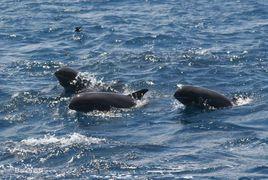
At the surface, Cuvier’s beaked whales usually show only a low profile: a section of back and a small, rear-set dorsal fin. Adult males often carry bold linear scars on the head and back, most likely from interactions and competition with other males. Because they surface for short periods and rarely perform dramatic aerial displays, they can be difficult to spot even in areas where they are present.
Taxonomy and naming
This species is a toothed whale (Order Cetacea, Suborder Odontoceti) in the family Ziphiidae (beaked whales) and the genus Ziphius. Beaked whales are generally characterized by a distinct beak, secretive behaviour and a strong preference for offshore and deep-slope habitats. The common name reflects the historical naming tradition and is widely used in marine mammal field guides and research literature.
Physical characteristics
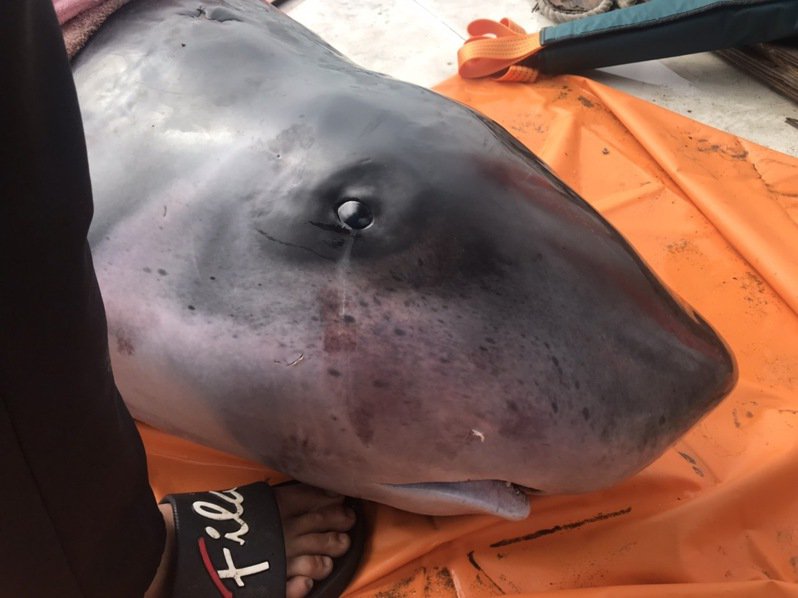
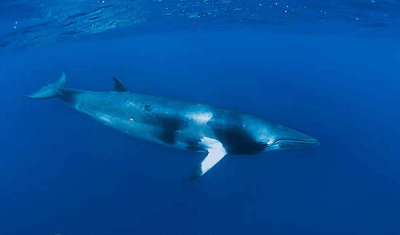
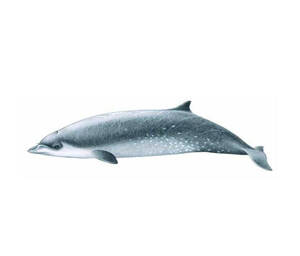
Cuvier’s beaked whales have a robust, torpedo-shaped body and a relatively short, sturdy beak. Adults are commonly around 5–7 m long and can weigh several tonnes; females are often slightly larger than males. Colouration varies greatly among individuals, typically ranging from dark grey to brownish-grey with a paler underside. Many animals show extensive light scarring and mottling.
The dorsal fin is small and positioned well back on the body, reducing drag during deep dives. Adult males typically have a pair of visible teeth near the tip of the lower jaw—used mainly in social interactions rather than feeding. Scar patterns are often most pronounced in adult males, reflecting competition and contact.
Distribution and habitat
Cuvier’s beaked whales occur in temperate and tropical oceans worldwide and are considered among the most broadly distributed of all beaked whales. They strongly prefer deep-water environments, particularly the outer shelf edge, continental slope, submarine canyons and seamount regions where prey can be concentrated by oceanography and seafloor structure.
Because their foraging depends on deep-sea food webs, habitat use can be shaped by currents, water-mass structure and the seasonal availability of squid and deep-water fish. Some areas may function as relatively consistent “hotspots,” but much of their movement remains difficult to map with surface observations alone.
Behaviour and lifestyle
This species is a quiet surface animal but an active deep-sea hunter. Individuals typically take a series of breaths and then begin a long dive, using echolocation clicks at depth to search for prey. Group sizes are usually small—single animals, mother–calf pairs or small groups—though larger aggregations can occur.
Social structure is not fully understood. Adult males may compete for access to females, and scar patterns suggest frequent contact. Because time at the surface is short, many aspects of behaviour are studied using passive acoustics, satellite tags and information from strandings.
Diet
Cuvier’s beaked whales feed primarily on deep-water squid and also take deep-sea fish and other midwater organisms. Foraging often occurs at hundreds to well over a thousand metres depth. They use echolocation to locate prey in darkness and tend to capture soft-bodied cephalopods by suction rather than by biting and tearing.
Prey distribution is influenced by currents, topography and daily vertical migrations of midwater life, which helps explain why these whales concentrate around canyons, slopes and other productive deep-water features.
Reproduction and life cycle
Beaked whales generally reproduce slowly, and Cuvier’s beaked whale is thought to follow a “low birth rate, long care” strategy. Females usually produce a single calf. Breeding seasonality and gestation can vary by region, but calves are typically dependent on the mother for an extended period while learning diving and foraging skills.
Longevity is measured in decades (often suggested to be around 40 years or more), and sexual maturity takes several years. Because reproduction is slow, local populations may recover gradually after sustained pressure.
Relationship with humans
Because they live offshore and surface briefly, Cuvier’s beaked whales are not a typical “easy” whale-watching species. In a few places where deep water occurs close to shore, they can be observed and photographed, providing valuable research opportunities. Physiologically, they are important model animals for understanding extreme diving adaptations in mammals.
Beaked whales are also frequently discussed in relation to intense human-generated underwater sound. In several regions, beaked whale strandings have been investigated in connection with strong acoustic disturbance, highlighting the importance of careful assessment and management of noise in sensitive habitats.
Conservation status and threats
Cuvier’s beaked whale is often assessed as Least Concern (LC) at a global scale, but that does not mean all regions are free from risk. Potential threats include intense underwater noise that may disrupt behaviour and increase stranding risk, bycatch and entanglement in some fisheries, ingestion of marine plastics (especially soft plastics) and the accumulation of chemical contaminants.
Conservation priorities commonly include improved stranding response and monitoring, evaluating and managing underwater noise in key areas, reducing bycatch risk where it occurs and building long-term datasets (acoustics, photo-ID and tagging) to track regional population trends.