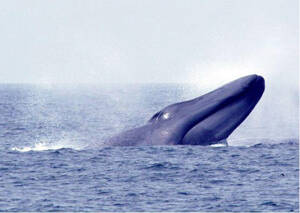
Hector’s beaked whale (Mesoplodon hectori) is one of the least-known whales on Earth. It is a deep‑diving beaked whale from the cool temperate waters of the Southern Hemisphere, spending much of its life far offshore along continental slopes and deep‑ocean features. Because it surfaces briefly and can remain submerged for long periods, confirmed sightings at sea are extremely rare. Most scientific knowledge comes from strandings and occasional records from research or fisheries observations.
Among beaked whales, Hector’s is considered relatively small: adults are typically around 4 m long, with a maximum recorded length of about 4.2–4.3 m. Body mass is often estimated at roughly a tonne. The species lacks the bold, easily recognized traits of more familiar whales and is seldom seen breaching, which further contributes to its “invisible” status. As a result, key ecological details—population size, movements, calving season and many aspects of behaviour—remain poorly understood.
Taxonomy and naming
Hector’s beaked whale is a mammal in the family Ziphiidae (beaked whales) and the genus Mesoplodon. It was first described from New Zealand material and has had a complex taxonomic history, but it is now widely accepted as a valid, distinct species. Alternative common names sometimes used in the literature include “New Zealand beaked whale” and “skew‑beaked whale.”
Appearance
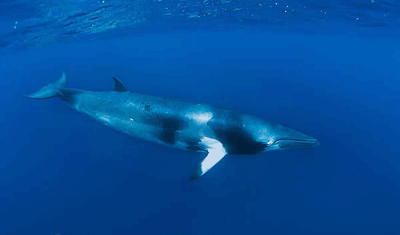
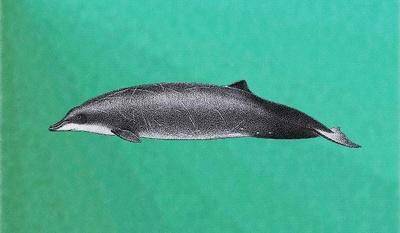
This species has a streamlined body, a modest forehead, and a relatively short, well-defined beak. Colouration is generally dark grey to brownish-grey above with paler underparts, though individuals can vary noticeably. Some adult males may show a paler or whitish beak and light areas on the front of the head.
Like many beaked whales, adults—especially males—can carry prominent scars. Linear scars may result from intraspecific interactions, while oval or circular white marks can be caused by cookiecutter sharks. The dorsal fin is small and set well back on the body, giving the whale a low-profile silhouette at the surface.
Distribution and habitat
Hector’s beaked whale is thought to have a broadly circumpolar, cool‑temperate Southern Hemisphere distribution, roughly between 35°S and 55°S. Records are most frequent from waters around New Zealand, with additional reports from Australia, southern Africa and parts of South America. Because records are sparse, mapped “ranges” are best interpreted as known points rather than the true limits of occurrence.
Habitat is inferred to be similar to other Mesoplodon species: deep offshore waters associated with the continental slope, seamounts and canyon systems where deep‑water prey is available. Nearshore occurrences are uncommon and often involve stranded or compromised animals.
Behaviour and lifestyle
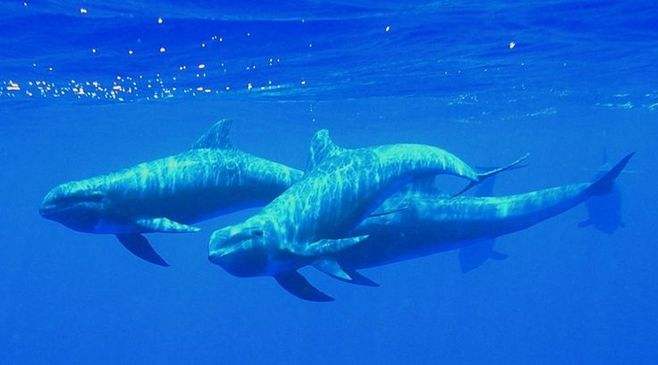
Direct behavioural data are limited, but the species is expected to share typical beaked‑whale traits: small group sizes (often 1–5 animals), short surface intervals, and long, deep foraging dives. These whales are generally difficult to approach and can be hard to detect even in dedicated surveys.
Beaked whales as a group are often considered sensitive to intense underwater noise, especially mid‑frequency naval sonar, and some mass‑stranding events elsewhere have highlighted this risk. Specific evidence for Hector’s beaked whale is scarce, but precautionary management commonly treats it as potentially vulnerable to disturbance in key offshore habitats.
Diet
The diet is poorly documented, but available evidence and strong inference suggest a focus on deep‑water cephalopods (mainly squid), with possible supplementation by deep‑sea fish and other invertebrates. Foraging likely relies on echolocation during deep dives.
Reproduction and life history
Very little is known about reproduction. As with most medium-sized toothed whales, females likely give birth to a single calf; newborn length is around 1.9–2.0 m. Gestation in beaked whales is commonly around 11–12 months, but this has not been firmly confirmed for Hector’s beaked whale. Longevity, age at maturity and calving interval remain uncertain due to limited sample sizes.
Relationship with humans
Hector’s beaked whale is not a target for whale-watching and rarely comes into contact with people. Human pressures are mostly indirect and offshore: potential bycatch or entanglement, marine pollution (including plastics and contaminants), vessel and sonar noise, and climate-driven changes to deep‑ocean food webs.
Conservation status and threats
Because basic information is lacking, Hector’s beaked whale is generally listed as Data Deficient (DD) by the IUCN. Data Deficient does not mean “safe”—it means there is not enough evidence to assess risk reliably. In practice, conservation efforts emphasize reducing avoidable threats while improving knowledge through offshore surveys and robust stranding response, including genetic identification and standardized sampling of stranded individuals.