“Minke whale” is a widely used common name for the smallest and most widespread rorquals in the family Balaenopteridae. In many everyday contexts it refers to the common (or northern) minke whale (Balaenoptera acutorostrata), while in the Southern Ocean it often refers to a closely related, distinct species—the Antarctic minke whale (Balaenoptera bonaerensis). Because the two species look similar and play comparable ecological roles, they are often described together under the umbrella name “minke whales”.
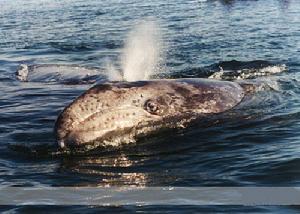
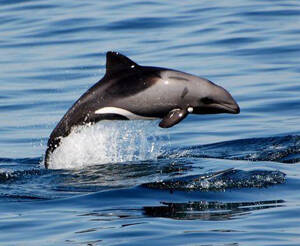
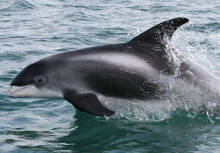
Minke whales are fast and agile, usually surfacing briefly and producing a short, crisp blow. They feed mainly on krill and small schooling fish and face pressures such as entanglement in fishing gear, vessel strikes, underwater noise and climate‑driven changes to prey and habitat.
Taxonomy and naming
Minke whales are baleen whales (order Cetacea) in the family Balaenopteridae and the genus Balaenoptera. The two best‑known species are the common minke whale (B. acutorostrata) and the Antarctic minke whale (B. bonaerensis). In the Northern Hemisphere, “minke whale” usually means B. acutorostrata; in high‑latitude Southern Ocean waters, B. bonaerensis is the typical species.
Appearance
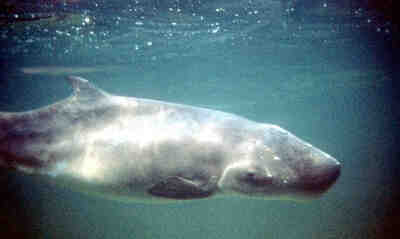
They have a streamlined body, a pointed head and a sickle‑shaped dorsal fin set well back. Common minkes (especially Northern Hemisphere animals) often show a distinctive white band on the flippers—one of the most useful field marks. Both species have throat grooves (ventral pleats) that expand during lunge feeding, and many individuals carry scratches and circular scars, including cookiecutter shark bites.
Range and habitat
The common minke whale is broadly distributed in the North Atlantic and North Pacific and can occur from coastal shelf waters to offshore areas. The Antarctic minke whale is strongly associated with the Southern Ocean and can forage near the ice edge and within pack ice in summer, where krill is abundant. Taken together, “minke whales” occupy a wide range of marine habitats from nearshore to pelagic environments.
Behaviour
Most sightings involve single animals or small groups, although loose feeding aggregations can form where prey is concentrated. Many populations undertake seasonal movements between higher‑latitude feeding grounds and lower‑latitude breeding areas, but timing and routes vary by region and stock.
Diet
Minke whales eat krill and small schooling fish such as herring, anchovy and sardine‑type fishes, depending on region. They use baleen plates to filter prey after taking in large mouthfuls of water during lunge feeding.
Reproduction and life history
Females typically produce a single calf. Life‑history parameters vary by species and region, but authoritative summaries commonly report that minke whales can live for decades, with an upper lifespan around 50 years.
Conservation status and threats
The IUCN Red List assesses the common minke whale as Least Concern (LC) and the Antarctic minke whale as Near Threatened (NT). Key threats discussed in management contexts include entanglement/bycatch, vessel strikes, underwater noise, and climate‑related impacts on prey and (for Antarctic minkes) sea‑ice habitats.