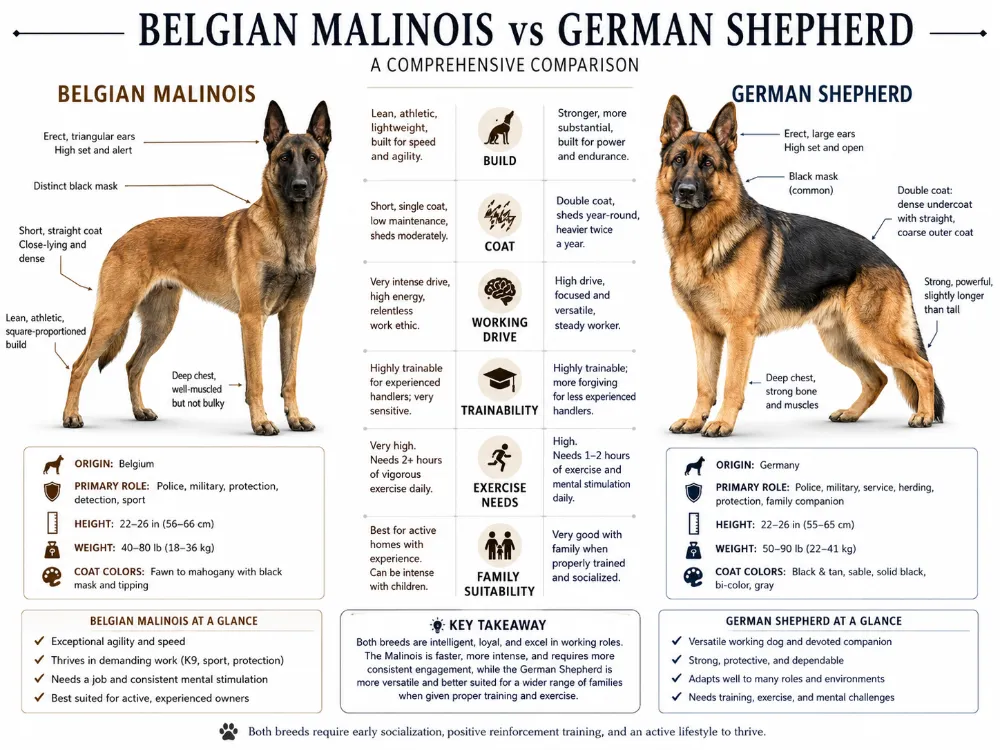
The main difference between a Belgian Malinois and a German Shepherd is that the Malinois is usually lighter, leaner, faster, and even more intensely high-drive, while the German Shepherd is usually larger, heavier-boned, and more versatile in family and working roles. Both are highly intelligent working dogs, but the Malinois often demands more nonstop activity and precision handling, while the German Shepherd usually brings a little more size, stability, and flexibility in everyday life.
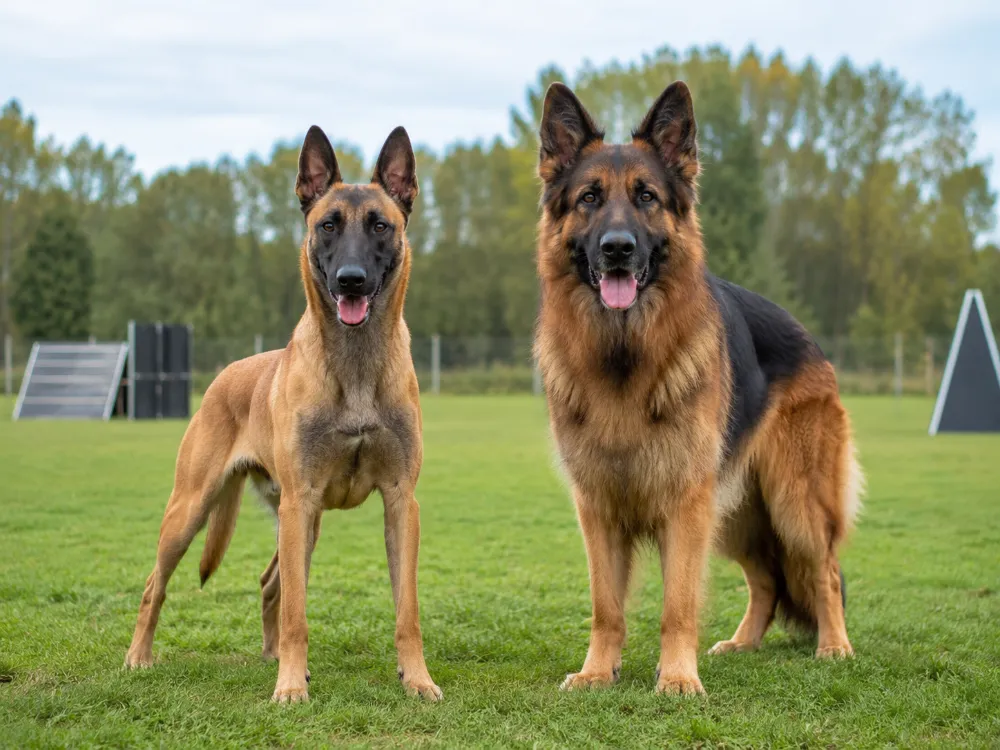
People compare these two breeds all the time because both are famous working dogs used in protection, police work, military service, sport, and advanced training. At a glance, they can even look similar, especially to people who are not used to working-dog breeds.
In this guide, you will learn how Belgian Malinois and German Shepherds differ in appearance, temperament, energy level, trainability, family fit, and working style, plus which type of owner each breed usually suits best.
Quick comparison table
| Feature | Belgian Malinois | German Shepherd |
|---|---|---|
| Overall build | Lighter, leaner, more athletic | Larger, heavier, more substantial |
| Coat | Shorter, tighter, lower-maintenance overall | Usually thicker, denser, often sheds more |
| Energy level | Extremely high | High, but often more moderate than a Malinois |
| Working style | Fast, intense, reactive, high-drive | Powerful, steady, versatile, more balanced in many lines |
| Trainability | Excellent, but demands skilled handling | Excellent, often slightly easier for a wider range of committed owners |
| Family suitability | Can be good, but usually best with very experienced active homes | Often more adaptable as a family working dog |
| Protection and sport work | Exceptional for high-level sport and tactical work | Excellent for protection, service, and broad working roles |
| Best quick clue | Finer-boned, sharper, lighter, more intense look | Bigger frame, heavier head, fuller coat, more substantial build |
They are different breeds, not coat variations of the same dog
The Belgian Malinois and the German Shepherd are separate breeds with different breeding histories. They were both developed as working dogs, but they did not come from the same breed line. That matters because their structure, movement, and temperament were shaped by somewhat different goals over time.
The Belgian Malinois is one of the Belgian shepherd varieties and is especially known for speed, intensity, and working drive. The German Shepherd was developed as a highly versatile herding and utility dog and later became famous worldwide for service, police, military, and family roles.
So even though they can look similar from a distance, they are not interchangeable versions of one dog type.
German Shepherds are usually bigger and heavier
One of the easiest differences to notice is body mass. German Shepherds are usually larger, deeper-bodied, and heavier-boned than Belgian Malinois. They often have a broader chest, thicker neck, and more substantial overall frame.
Belgian Malinois are usually lighter and more streamlined. Even a well-muscled Malinois often looks narrower and more agile than a German Shepherd. The breed is built more like a fast, spring-loaded athlete than a heavy all-purpose utility dog.
If the dog looks tall, strong, and heavily built, German Shepherd becomes more likely. If it looks finer, sharper, and more lightweight, Malinois becomes more likely.
The Malinois usually looks leaner and more athletic
The Belgian Malinois often gives a very athletic impression. The body is typically tight, efficient, and ready for fast movement. Many Malinois look like they could instantly switch from stillness to explosive action.
German Shepherds can also be athletic, but many have a more powerful and grounded appearance. They often look like a larger, more substantial working dog designed for both endurance and strength.
This difference is not just visual. It reflects how the breeds often move and work under pressure.
Coat and shedding are often different
The Belgian Malinois usually has a shorter, tighter coat. This often makes the breed look cleaner-lined and a little easier to maintain in day-to-day grooming, though Malinois still shed.
German Shepherds usually have a denser, fuller coat, especially in the common double-coated form. They are famous for shedding heavily, especially during seasonal coat changes. Their thicker coat can also make them look larger and fluffier than they really are underneath.
If grooming load matters to the owner, this difference is worth taking seriously. A German Shepherd often brings more coat management than a Malinois.
The head shape and expression are not quite the same
Belgian Malinois usually have a finer, drier-looking head with a more alert, intense expression. The face often looks sharper and more focused, with a narrower overall outline.
German Shepherds usually have a broader head and a more substantial muzzle. Their expression can still be intensely attentive, but it often feels a little calmer or more serious rather than razor-sharp.
This is a subtle clue, but once you know the breeds well, the difference in expression becomes easy to notice.
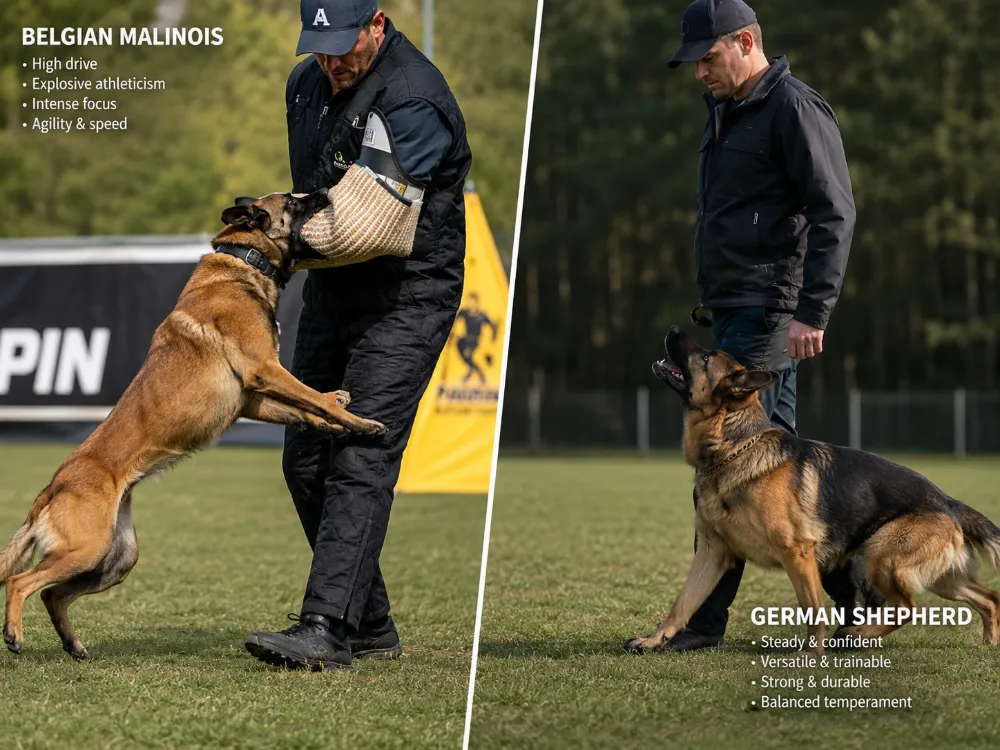
Belgian Malinois usually have higher drive
This is one of the biggest real-world differences. Belgian Malinois are often described as extremely high-drive dogs. They tend to have intense energy, fast reactions, strong work motivation, and a very powerful need for engagement.
German Shepherds are also high-drive working dogs, but many lines are a little more moderate and more adaptable than the average Malinois. A strong German Shepherd is still a serious dog, but a Malinois often takes intensity to another level.
This is why many experienced trainers warn that a Malinois is not just a “small German Shepherd.” The working mindset often feels more relentless.
German Shepherds are often more versatile for general owners
German Shepherds are still demanding dogs, but they are often easier for a wider range of committed owners to live with successfully. Many can function as family companions, guardians, service dogs, and working dogs all at once when bred and trained well.
Belgian Malinois can also live in families, but they are much more likely to overwhelm inexperienced owners with motion, arousal, mouthiness, and nonstop need for work. A bored Malinois often creates its own job, and that job is rarely convenient for the household.
So while neither breed is low-maintenance, the German Shepherd is often the more realistic choice for people who want a serious dog without maximum working intensity.
Trainability is excellent in both breeds
Both breeds are highly trainable. They are intelligent, responsive, and capable of learning advanced obedience, protection routines, scent work, herding tasks, and complex service behaviors. This is one reason both breeds are so respected in the working-dog world.
The difference is not whether they can learn. It is how that learning feels in practice. Malinois often learn very quickly and work with explosive enthusiasm, but they can also become overstimulated, frantic, or reactive if training is sloppy. German Shepherds often bring a little more steadiness and tolerance for imperfect handling, depending on the bloodline.
So both are brilliant, but the Malinois often demands cleaner technique from the handler.
Their exercise needs are not equal
Both breeds need serious exercise and mental stimulation. Neither should be treated as a casual backyard dog. However, the Belgian Malinois usually needs even more structured activity, more intensity, and more purposeful engagement than the average German Shepherd.
A long walk is not enough for most healthy adult Malinois. They often need advanced training, sport work, tracking, bite work, agility, scent games, or other demanding outlets. German Shepherds also benefit from real jobs and training, but many can settle a little more easily between work periods.
This makes the Malinois especially risky in inactive homes, even homes that think they are active enough.
Belgian Malinois often mature into very intense working dogs
A Malinois often seems switched on almost all the time. Many individuals show extreme alertness, fast environmental scanning, instant response to motion, and very strong engagement with handlers or targets. In the right working home, this is a gift. In the wrong home, it can be exhausting.
German Shepherds can also be intense, especially strong working lines, but many have a slightly more measured rhythm. They may still be highly protective, highly active, and highly trainable, yet not as constantly electric as a Malinois.
This difference in daily intensity is one of the biggest lifestyle factors between the two breeds.
German Shepherds are often more common in family and service roles
German Shepherds have long been used in military, police, and protection work, but they are also more commonly seen as family guardians, mobility-support dogs, guide-related service dogs, and broad-purpose working companions. Their combination of intelligence, size, loyalty, and trainability makes them versatile.
Belgian Malinois are increasingly famous in tactical and high-performance working roles, especially where speed, agility, and precision matter. They are often favored in environments that demand an athletic, ultra-responsive dog.
This does not mean one is better overall. It means the German Shepherd more often bridges the gap between hard work and family life.
Protection work feels different in each breed
In protection and sport settings, Belgian Malinois often look faster, sharper, and more explosive. They may hit decoys with remarkable speed and show intense prey and defense drive. Their style can be very flashy and athletic.
German Shepherds often bring more mass, deeper power, and a strong impression of controlled force. A good working German Shepherd can be extremely serious, but the breed often feels slightly more grounded and less frenetic in the work.
Both can excel. The difference is often style: Malinois for speed and intensity, German Shepherd for power and broader versatility.
Both breeds need careful breeding and socialization
Neither breed should be judged only by internet stereotypes. Lines vary. Some German Shepherds are calm and stable, while others are nervy or physically unsound. Some Malinois are brilliant workers with clear heads, while others are too sharp, too hectic, or poorly matched to normal homes.
Good breeding, proper socialization, and thoughtful training matter tremendously. A badly bred or poorly raised dog from either breed can be difficult, anxious, reactive, or unsafe.
So the real question is not only breed, but also line quality, early development, and owner skill.
Which one is better for beginners?
Neither breed is ideal for a casual first-time dog owner. Both are working breeds that require serious commitment. However, if a highly dedicated beginner were choosing between the two with strong mentoring and realistic expectations, the German Shepherd is often the more manageable option.
The Belgian Malinois is usually less forgiving of mistakes. Poor boundaries, insufficient exercise, sloppy stimulation, and inconsistent training often show up faster and harder in a Malinois than in a German Shepherd.
So if the question is which breed is more likely to overwhelm a novice, the Belgian Malinois usually wins that comparison.
Which one is better for families?
Both breeds can live with families, but the German Shepherd is often the more practical family dog when well bred and properly trained. Many German Shepherds bond deeply with their household and can balance protectiveness with a steadier home life.
Belgian Malinois can be affectionate and loyal too, but their intensity often makes them harder in homes with young children, chaotic schedules, or owners who underestimate daily management. They usually do best in very experienced, structured, active households.
So for most family homes, the German Shepherd is usually the more realistic choice.
Why people confuse them so often
People confuse Belgian Malinois and German Shepherds because both often have upright ears, dark masks, athletic bodies, and a serious working-dog look. A short-coated German Shepherd can look especially similar to a Malinois to inexperienced eyes.
The confusion increases because both are used in police and protection settings. Many people simply see “military dog” or “police dog” and assume the breed is the same.
Once you learn the differences in body mass, coat, head shape, and overall intensity, the two breeds become easier to separate.
How to tell them apart quickly
If you need a fast identification guide, use these clues together:
Belgian Malinois: leaner frame, shorter coat, finer head, lighter build, sharper and more intense overall impression
German Shepherd: larger frame, heavier bone, fuller coat, broader head, more substantial and powerful overall look
No single clue is perfect in every individual, but this combination usually works very well.
Which breed is better?
There is no universal winner. The better breed depends on the owner and the purpose. If the goal is extreme athleticism, high-level sport, and tactical working drive, the Belgian Malinois often stands out. If the goal is a versatile working dog with a somewhat broader family fit and a more substantial all-around profile, the German Shepherd often makes more sense.
The real problem is not choosing the “wrong” breed on paper. It is choosing a dog whose intensity does not match the household.
In that sense, the right breed is the one your lifestyle can actually support every day.
Final takeaway
The main difference between a Belgian Malinois and a German Shepherd is that the Malinois is usually lighter, faster, sharper, and even more intensely high-drive, while the German Shepherd is usually larger, heavier, more substantial, and often more adaptable across working and family roles. Both are brilliant working dogs, but the Malinois is usually the more demanding specialist, while the German Shepherd is usually the more broadly versatile companion-worker. They may look similar at first glance, but in daily life they often feel very different.
FAQs
Is a Belgian Malinois the same as a German Shepherd?
No. They are different breeds with different structure, coat, and working style.
Which is more intense, a Belgian Malinois or a German Shepherd?
The Belgian Malinois is usually more intensely high-drive and demanding in day-to-day management.
Which is better for families, Belgian Malinois or German Shepherd?
For most family homes, the German Shepherd is usually the more realistic choice, though both require training and commitment.
How can I tell a Belgian Malinois from a German Shepherd fast?
Look at build and coat. A Malinois is usually leaner, lighter, and shorter-coated, while a German Shepherd is usually bigger, heavier, and fuller-coated.