The short answer is that a bunny is usually just a rabbit. In everyday English, bunny is an informal, affectionate word often used for a rabbit, especially a small or cute one. Rabbit is the correct standard and scientific word for the animal. So the real difference is mostly about language and tone, not about two different species. A bunny is not a separate animal in zoology.
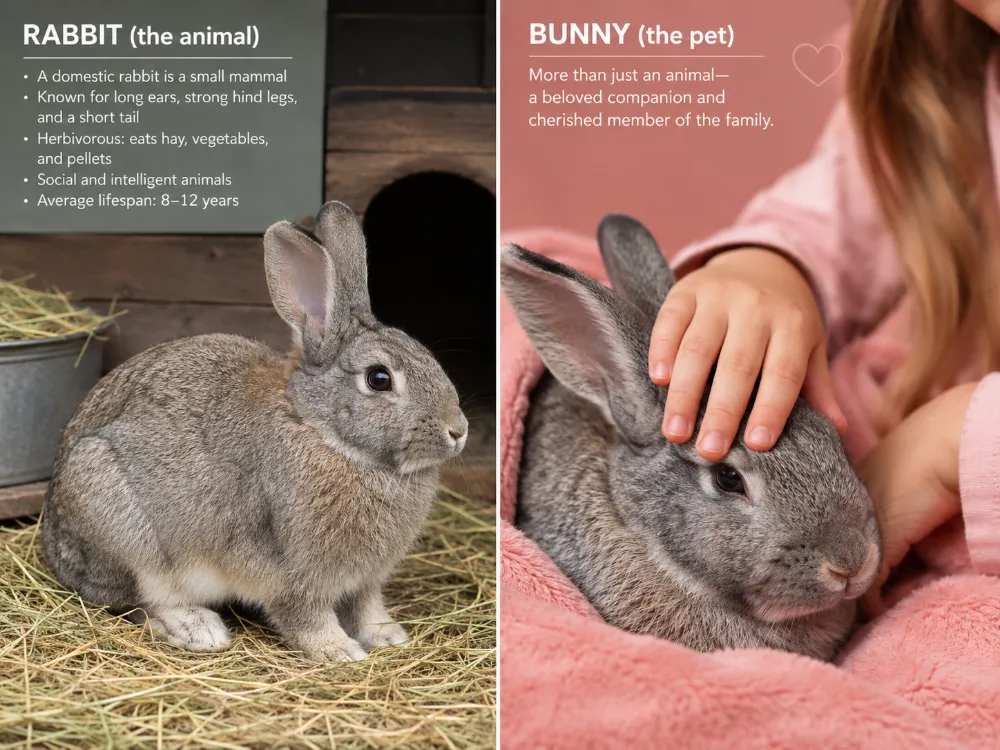
People often assume bunny and rabbit must describe different kinds of animals because the words feel different. One sounds playful and child-friendly, while the other sounds more neutral and accurate. That difference in tone is real, but biologically they usually point to the same animal.
In this guide, you will learn what bunny and rabbit really mean, when each word is used, whether bunny means a baby rabbit, and why the distinction is mainly linguistic rather than scientific.
Quick comparison table
| Term | Meaning | Type of word | Common use |
|---|---|---|---|
| Rabbit | The standard word for the animal | Formal or neutral | Science, wildlife writing, pet care, education |
| Bunny | An informal, affectionate word for a rabbit | Casual or playful | Children’s language, pet nicknames, everyday speech |
| Baby rabbit | A young rabbit | Life stage | Can be called a baby rabbit, young rabbit, or sometimes bunny in casual speech |
| Scientific difference | No separate animal called a bunny | Biological point | Rabbit is the correct zoological term |
What is a rabbit?
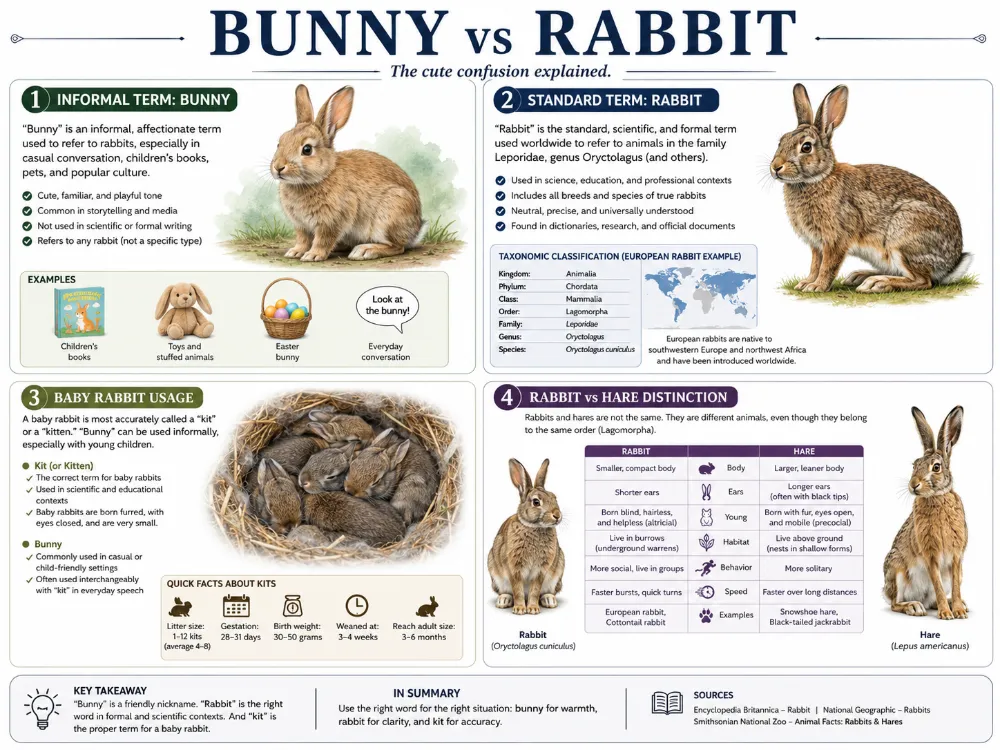
A rabbit is a small mammal in the family Leporidae. Rabbits are known for their long ears, strong hind legs, short tails, and rapid breeding. They may be wild or domestic, depending on the species and the context.
The word rabbit is the standard term used in biology, veterinary medicine, wildlife guides, and pet-care writing. If you are describing the animal accurately in a factual or scientific way, rabbit is the better word.
This is the word you would expect to see in an encyclopedia, field guide, research-based article, or animal care handbook.
What is a bunny?
A bunny is usually just a rabbit described in a softer, cuter, or more affectionate way. The word is especially common in children’s books, family conversation, holiday imagery, and casual speech.
People often call a pet rabbit a bunny because it sounds warm and friendly. The word also creates a stronger emotional image than rabbit does. It suggests smallness, gentleness, and charm.
So bunny is mainly a style choice in language, not a separate biological category.
Is a bunny always a baby rabbit?
No. This is one of the most common misunderstandings. Many people think bunny means only a baby rabbit, but that is not strictly true. Adults are often called bunnies too, especially in homes, stories, and casual conversation.
That said, the word bunny often suggests youth or cuteness, which is why people naturally use it for young rabbits more often than for fully grown wild animals in formal writing.
So a bunny can be a baby rabbit, but it can also simply be any rabbit spoken about informally.
Why rabbit is the more accurate word
Rabbit is more accurate because it directly names the animal itself. If you are writing about anatomy, behavior, habitat, diet, reproduction, health, or species identification, rabbit is the proper choice.
For example, a scientific article would discuss rabbit digestion, rabbit breeding, or rabbit behavior. It would not normally use bunny in those places because bunny sounds too informal for technical writing.
This is why rabbit is the preferred term in educational and professional contexts.
Why people say bunny so often
Language is not only about accuracy. It is also about feeling. The word bunny sounds softer, friendlier, and more playful than rabbit, so it naturally appears in situations where emotion matters more than precision.
It is very common in phrases used with children, pets, greeting cards, cartoons, and social media. People do not usually choose bunny because it is more correct. They choose it because it creates a certain mood.
In that sense, bunny works more like a nickname than a scientific label.
Does bunny mean the same thing everywhere?
In most everyday English, bunny is understood as an informal word for rabbit. However, the tone may vary by region, age group, and situation. In some places it sounds very childlike. In others it sounds perfectly normal for pet talk or seasonal language.
What stays the same is the basic relationship: bunny is the informal word, rabbit is the standard one.
So even when usage changes slightly, the core difference remains linguistic, not biological.
Do wild rabbits get called bunnies?
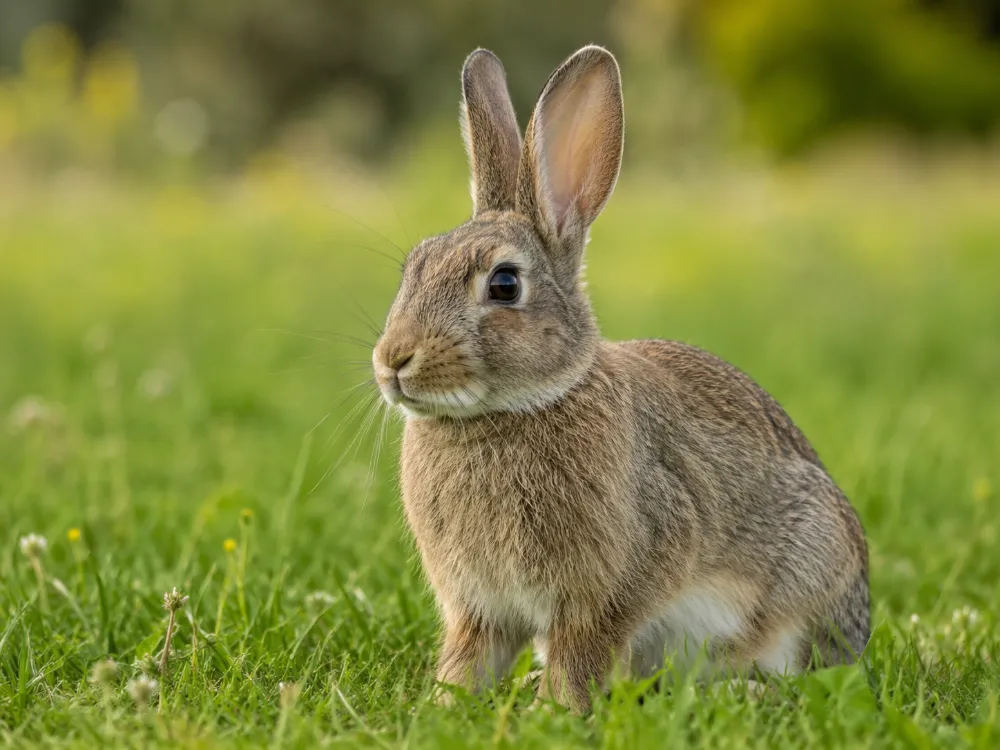
Yes, especially in casual speech. Someone might see a small rabbit in a yard and say, “There’s a bunny in the garden.” That sounds natural in everyday conversation.
But in wildlife writing, wild rabbit is the more accurate term. Calling a wild animal a bunny makes the tone feel softer and less formal, which may not fit an educational article.
So both words can apply in speech, but rabbit is usually better for factual description.
Do pet rabbits get called bunnies more often?
Very often, yes. Pet owners commonly use bunny as a term of affection. A person may say, “My bunny loves hay,” even though rabbit would also be correct.
This is especially common with small breeds, young pets, or rabbits treated like close companions. In pet communities, both words appear often, but bunny usually sounds warmer and more personal.
That does not make it more scientifically correct. It just makes it more emotionally expressive.
Is there any biological difference between a bunny and a rabbit?
No. There is no separate animal group called a bunny in zoology. If the animal is a rabbit species or a domestic rabbit, it is a rabbit whether someone uses the nickname bunny or not.
This is the key point. Bunny is not a scientific opposite of rabbit, and it is not a distinct mammal in the way that rabbit and hare are distinct categories.
The real difference is vocabulary, not taxonomy.
Bunny vs rabbit vs hare
This is where confusion often grows. A hare is a genuinely different kind of animal from a rabbit. Hares are usually larger, longer-legged, and born more developed than rabbits. That is a real biological distinction.
A bunny, by contrast, is usually just a casual word for a rabbit. So the important scientific comparison is rabbit vs hare, not bunny vs rabbit.
In simple terms, bunny and rabbit are usually two ways of talking about the same animal, while hare is a different animal type.
How the word changes the tone
The word you choose changes how the reader imagines the animal. Rabbit sounds neutral, factual, and informative. Bunny sounds soft, playful, and emotionally warm.
This matters in publishing. A science article, pet guide, or wildlife page will usually prefer rabbit. A children’s story, Easter-themed post, or affectionate social caption may prefer bunny.
So even when the animal is the same, the word changes the style of the writing.
When to use rabbit
Use rabbit when writing about biology, care, anatomy, habitat, species, health, behavior, or any educational topic. It is the clearer and more professional choice.
Rabbit is also better for search-focused animal content because readers looking for information usually expect the standard term first. It sounds more direct and trustworthy in factual articles.
For most publishable wildlife or pet-care content, rabbit should lead.
When bunny makes sense
Bunny makes sense when the tone is personal, playful, child-friendly, or seasonal. It fits naturally in pet nicknames, family conversation, cartoons, greeting cards, and soft lifestyle writing.
It is also common in phrases such as Easter Bunny, where the cultural meaning is much stronger than any scientific concern.
So bunny is not wrong in casual use. It simply belongs to a different tone of language.
Why the confusion continues
The confusion continues because both words are common and people often hear them in different settings from an early age. Children may hear bunny first, while schoolbooks and documentaries use rabbit.
That makes it easy to imagine that bunny must mean a special kind of rabbit or only a baby rabbit. In reality, the difference is much simpler: rabbit is the standard animal name, and bunny is the informal nickname-like version.
Once that is clear, the topic becomes much easier to understand.
Final takeaway
The difference between a bunny and a rabbit is mostly about language, not biology. Rabbit is the correct standard word for the animal, while bunny is usually an informal, affectionate, or child-friendly word for the same animal. A bunny can be a baby rabbit, but it can also be an adult rabbit described casually. For scientific and educational writing, rabbit is the better term. For warm everyday speech, bunny is often the natural choice.
FAQs
Is a bunny a rabbit?
Yes. In most cases, bunny is simply an informal word for a rabbit.
Does bunny mean baby rabbit?
Not always. Bunny can refer to a young rabbit, but people also use it for adult rabbits in casual speech.
Which word is more correct, bunny or rabbit?
Rabbit is the more accurate and scientific word. Bunny is more informal and affectionate.
Is a bunny different from a hare?
No. Bunny usually means rabbit, while a hare is a genuinely different animal from a rabbit.