Caimans and alligators are closely related reptiles, and at first glance they can look very similar. Both belong to the alligator family, both live around freshwater, and both have broad bodies, strong tails, and armored skin.
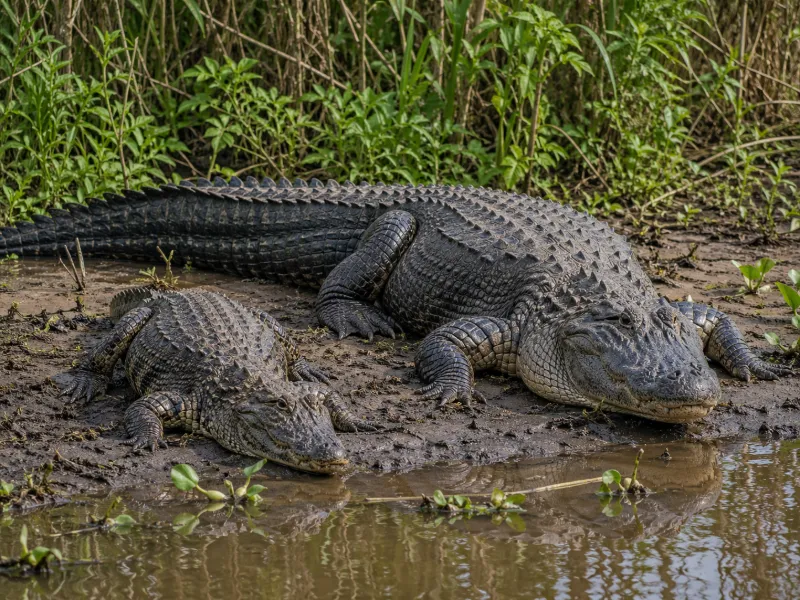
Even so, a caiman is not the same thing as an alligator. They differ in range, size, head shape, body armor, and overall appearance. In simple terms, alligators are limited to the United States and China, while caimans live in Central and South America and often look smaller, rougher, and more heavily armored.
This guide explains the main differences between caimans and alligators, how to tell them apart, and which one is usually bigger.
Quick comparison table
| Feature | Caiman | Alligator |
|---|---|---|
| Family | Alligatoridae | Alligatoridae |
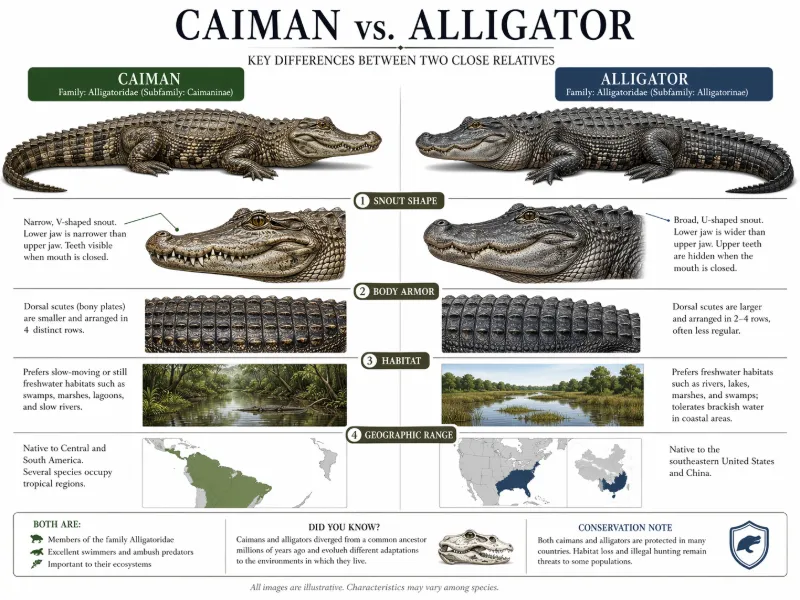
| Main range | Central and South America | Southeastern United States and eastern China |
| Typical size | Usually smaller, depending on species | Often larger overall, especially the American alligator |
| Snout shape | Often shorter or narrower, varies by species | Usually broader and more rounded |
| Body armor | Often especially heavy and bony | Tough skin, but usually less rugged-looking |
| Habitat | Mainly tropical freshwater wetlands and rivers | Mainly freshwater swamps, rivers, lakes, and marshes |
| Examples | Spectacled caiman, black caiman, yacare caiman | American alligator, Chinese alligator |
They are related, but they are not the same animal
The first thing to know is that caimans and alligators belong to the same family, Alligatoridae. That means they are close relatives.
However, they are different branches within that family. Alligators belong to the alligator branch, while caimans belong to the caiman branch. So a caiman is not a small alligator, and an alligator is not just a bigger caiman.
This close relationship explains why they share many features. Both usually prefer freshwater, both often have broader snouts than crocodiles, and both tend to look darker and heavier than many true crocodiles.
Range is one of the biggest differences
Location is often the easiest clue.
Alligators are naturally found in only two parts of the world today. The American alligator lives mainly in the southeastern United States, while the Chinese alligator survives in a much smaller range in eastern China.
Caimans live in Central and South America. Different species occur in countries such as Brazil, Colombia, Venezuela, Peru, Bolivia, and other tropical areas.
So if you see one in Florida, Louisiana, or other parts of the southeastern United States, it is almost certainly an alligator. If you see one in the Amazon, the Pantanal, or other tropical American wetlands, it is much more likely to be a caiman.
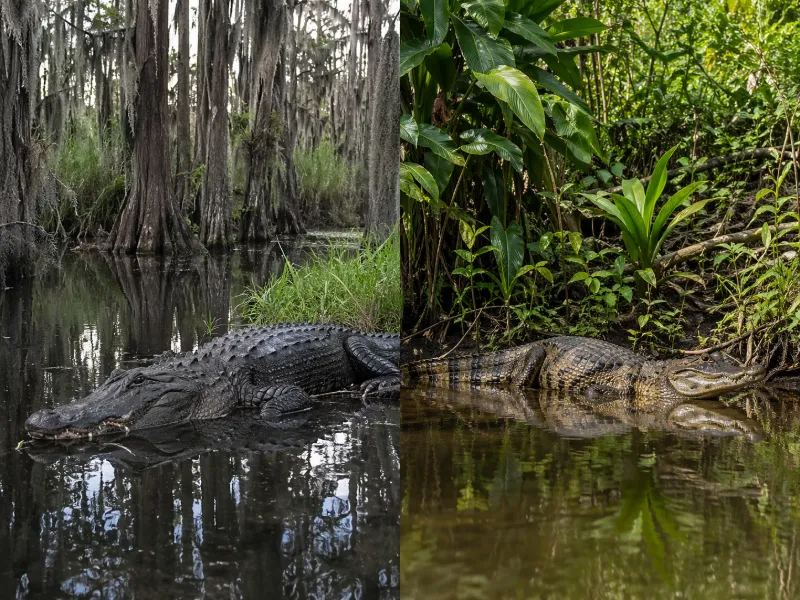
Alligators are usually larger overall
In general, alligators are often larger than most caimans. The American alligator can grow very large, and big males are among the heaviest freshwater reptiles in North America.
Many caiman species are smaller or medium-sized by comparison. That said, there is an important exception: the black caiman can become very large and is one of the top predators in South American wetlands.
Even with that exception, alligators, especially the American alligator, are usually larger and bulkier overall than the caiman species most people are likely to encounter.
Snout shape can help with identification
Both caimans and alligators often have broader snouts than crocodiles, but there are still differences between them.
Alligators usually have a broad, rounded snout that looks wide and solid. Their head often appears heavy and smooth in outline, especially in large adults.
Caimans often have a slightly narrower, shorter, or more compact head, depending on the species. Some can look more angular than a classic American alligator. The difference is not always dramatic, so this clue works best when combined with range and overall appearance.
In simple terms, a very broad, rounded, heavy-looking head often suggests an alligator, while a smaller tropical relative with a somewhat narrower or more compact face may be a caiman.
Caimans often look more heavily armored
One of the most noticeable differences is skin texture and body armor.
Caimans often have especially strong bony plates called osteoderms in the skin. This can make them look rougher, harder, and more heavily armored than alligators. In some species, the armor is especially obvious on the back and even underneath parts of the body.
Alligators also have tough, armored skin, but they often look smoother and less rugged than many caimans. Their bodies can appear heavier and broader rather than sharply armored.
This is one reason caimans are often described as looking more rugged or more heavily plated than alligators.
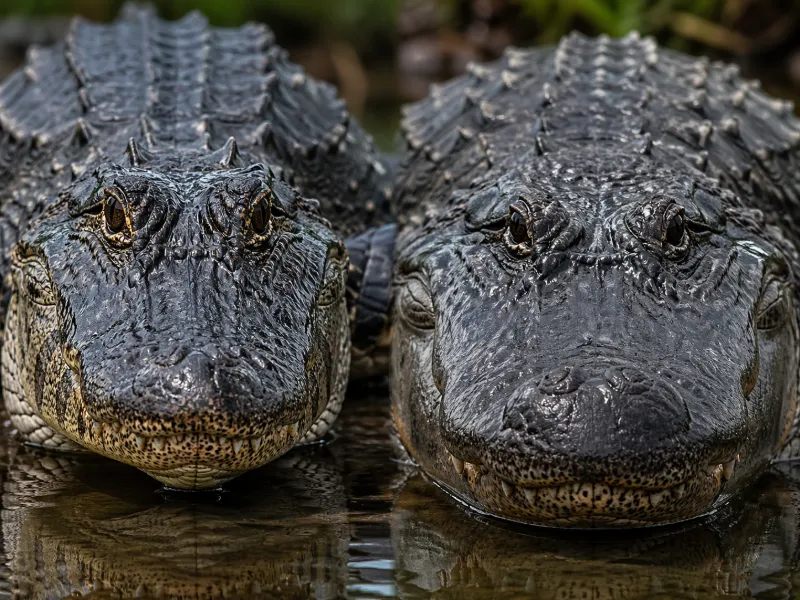
The head and face can look different
Some caimans have facial details that make them stand out. For example, the spectacled caiman is known for a bony ridge between the eyes, which gives it a “spectacled” appearance.
Alligators do not have that same look. Their heads usually appear cleaner and broader, with a smoother transition across the top of the skull.
These details are small, but they can help if you are comparing photos or watching animals at close range in a zoo or wildlife documentary.
Both prefer freshwater, but they live in different kinds of wetlands
Both caimans and alligators are mainly freshwater reptiles. Neither is as strongly associated with salty coastal habitats as many crocodiles are.
Alligators are common in swamps, marshes, rivers, lakes, and ponds. The American alligator is strongly linked to warm freshwater habitats in the southeastern United States.
Caimans live in tropical rivers, flooded forests, marshes, wetlands, and seasonally flooded plains. In places such as the Amazon basin and the Pantanal, they are important predators in rich wetland ecosystems.
So while both are freshwater animals, the alligator is strongly associated with North American and Chinese wetlands, while caimans are part of tropical Latin American ecosystems.
Color and build can also give clues
Alligators are often very dark gray, charcoal, or nearly black. Their bodies usually look wide and powerful, and their heads often appear thick and heavy.
Caimans are also often dark olive, brown, or gray, but many species have a more rugged look and sometimes a leaner body profile. Depending on the species, they may appear slightly smaller-headed or more sharply textured.
Color alone is not enough for confident identification, but when combined with armor, size, and location, it can help.
Which one is more dangerous?
Both should be treated as dangerous wild animals.
American alligators are powerful predators and can injure or kill large prey, including humans in rare cases. They should never be approached, fed, or treated as harmless.
Caimans also vary by species. Smaller species may appear less intimidating than a large alligator, but they are still wild predators. Large species such as the black caiman are formidable animals capable of taking large prey.
In general, a large alligator is likely to be more dangerous than a small caiman, but a large caiman is still a serious predator. Size, species, and situation matter more than the group name alone.
How to tell a caiman from an alligator quickly
If you need a simple identification guide, use these clues together:
Location: United States or China usually means alligator; Central or South America usually means caiman
Size: very large and bulky often suggests alligator, though black caimans can also be big
Head shape: broader and rounder often suggests alligator; more compact or slightly narrower can suggest caiman
Armor: rougher, harder, more heavily plated appearance often suggests caiman
Face details: a ridge between the eyes in some species may suggest a caiman, especially a spectacled caiman
Why people confuse them so easily
People confuse caimans and alligators because they are close relatives and share the same general crocodilian body plan. From a distance, both look low, long, armored, and powerful.
Many people also use the word “alligator” loosely for any broad-snouted crocodilian, especially in photos and videos online. Without location or species information, that can lead to confusion.
Once you know the key clues, especially range and body armor, the difference becomes much easier to spot.
Final takeaway
The main difference between a caiman and an alligator is that they are different branches of the same family. Alligators are usually larger, broader-headed, and limited mainly to the southeastern United States and eastern China. Caimans live in Central and South America and often look smaller, rougher, and more heavily armored.
They are close relatives, but they are not the same animal.
FAQs
Is a caiman an alligator?
No. A caiman and an alligator belong to the same family, but they are different groups within that family.
Which is bigger, a caiman or an alligator?
Alligators are usually bigger overall, especially the American alligator, although black caimans can also grow very large.
Do caimans live in the United States?
Not naturally. Caimans are native to Central and South America.
Are caimans more aggressive than alligators?
It depends on the species, size, and situation. Both can be dangerous, and neither should be approached in the wild.