Gnats and fruit flies are both tiny flying insects, but they are not the same. Fruit flies are small tan or brown flies with rounded bodies and often red eyes, usually found around ripe fruit, drains, wine, vinegar, and fermenting food. “Gnat” is a broader name, but indoor gnats are often fungus gnats: dark, mosquito-like flies that hover around houseplants and lay eggs in moist soil.
Gnat vs Fruit Fly Quick Answer
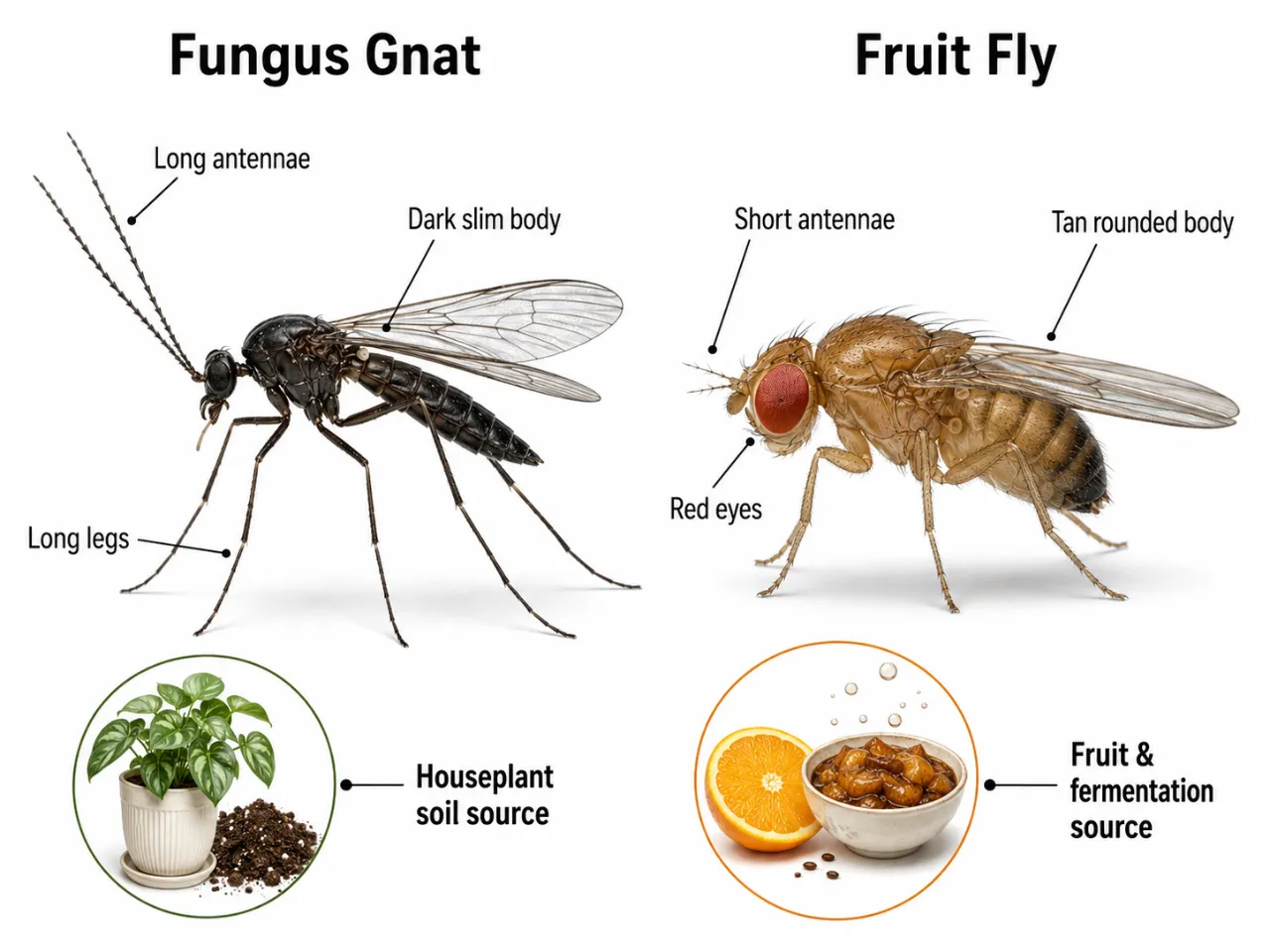
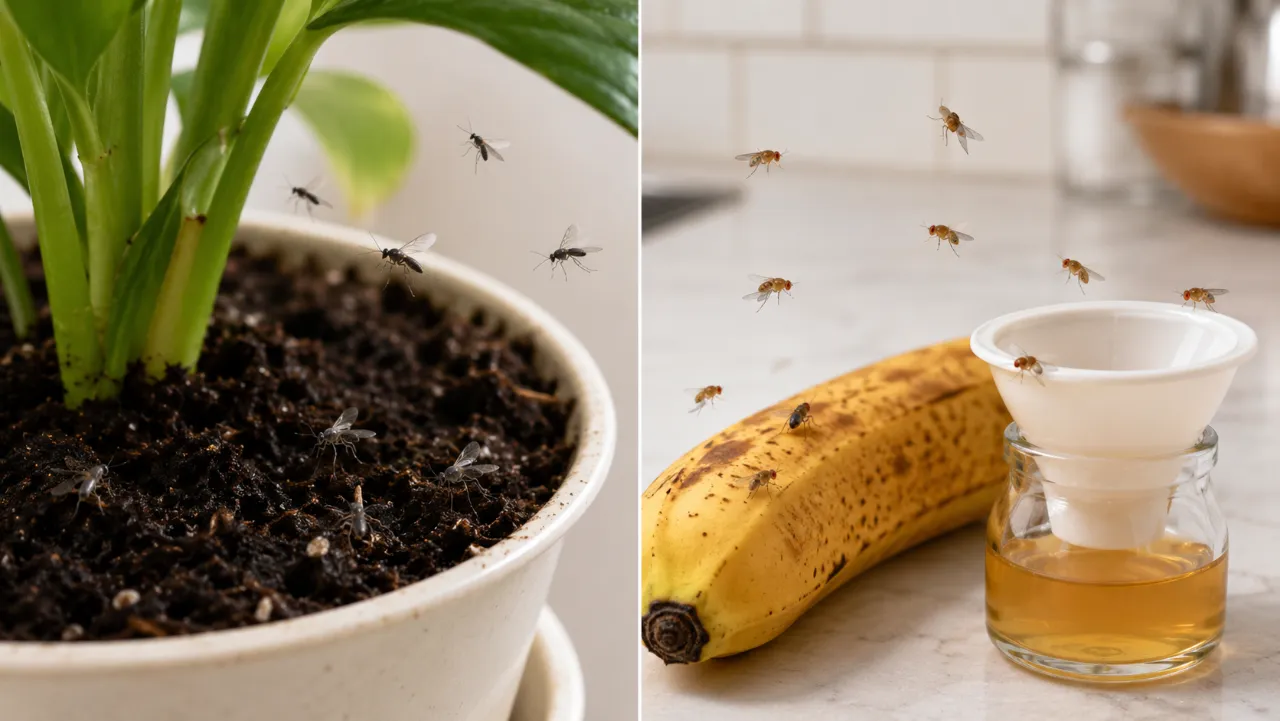
The easiest way to tell a gnat from a fruit fly is to check where it is coming from. If tiny flies are hovering around bananas, fruit bowls, trash cans, beer, wine, vinegar, or sticky kitchen residue, they are probably fruit flies. If they are flying around houseplants, windows, or damp potting soil, they are more likely fungus gnats. Fruit flies are usually rounder and tan; fungus gnats are darker, slimmer, and more mosquito-like.
Gnat vs Fruit Fly Summary Table
| Feature | Gnat | Fruit Fly |
|---|---|---|
| Basic meaning | A broad informal name for many tiny flying insects | A specific group of small flies, often in the family Drosophilidae |
| Most common indoor type | Fungus gnat | Common fruit fly |
| Body shape | Slender, delicate, mosquito-like | Rounder, compact, small fly-like body |
| Color | Usually dark gray or black | Usually tan, brown, yellowish, or light brown |
| Eyes | Usually dark and less obvious | Often red or reddish, especially in common fruit flies |
| Legs | Longer, thinner legs | Shorter legs compared with fungus gnats |
| Wings | Clear or smoky wings, often held over a slim body | Clear wings over a rounder body |
| Main indoor source | Moist houseplant soil, organic potting mix, damp areas | Overripe fruit, fermenting liquids, drains, trash, food residue |
| Larval food | Fungi, algae, decaying organic matter, sometimes delicate plant roots | Yeasts and microbes on fermenting fruit or organic material |
| Flight style | Weak, fluttery, often near plants or windows | Quick, darting flight around food and kitchen areas |
| Biggest clue | Seen around houseplants and damp soil | Seen around fruit, vinegar, wine, beer, trash, or drains |
What Is a Gnat?
“Gnat” is not one precise scientific group. It is a common name used for many tiny flying insects, including fungus gnats, biting midges, eye gnats, black flies, and other small flies. Because the word is broad, two people may use “gnat” for different insects.
In homes, the word gnat usually refers to fungus gnats. Fungus gnats are small, dark, delicate flies often seen around houseplants. Adults are mostly a nuisance, but their larvae live in moist soil and feed on fungi, algae, decaying organic matter, and sometimes tender plant roots. They are especially common when indoor plants are overwatered or grown in organic, constantly damp potting mix.
What Is a Fruit Fly?
A fruit fly is a small fly commonly associated with ripe, rotting, or fermenting fruit. The best-known fruit flies belong to the family Drosophilidae. They are attracted to yeasts and fermentation, which is why they often appear around bananas, peaches, tomatoes, trash cans, beer bottles, wine glasses, vinegar, compost containers, and sticky kitchen spills.
Fruit flies reproduce quickly when food is available. They lay eggs on or near fermenting organic material, and the larvae feed on the yeasts and microbes growing there. This is why a small number of fruit flies can become a noticeable kitchen problem in just a few days.
Quick Visual Difference
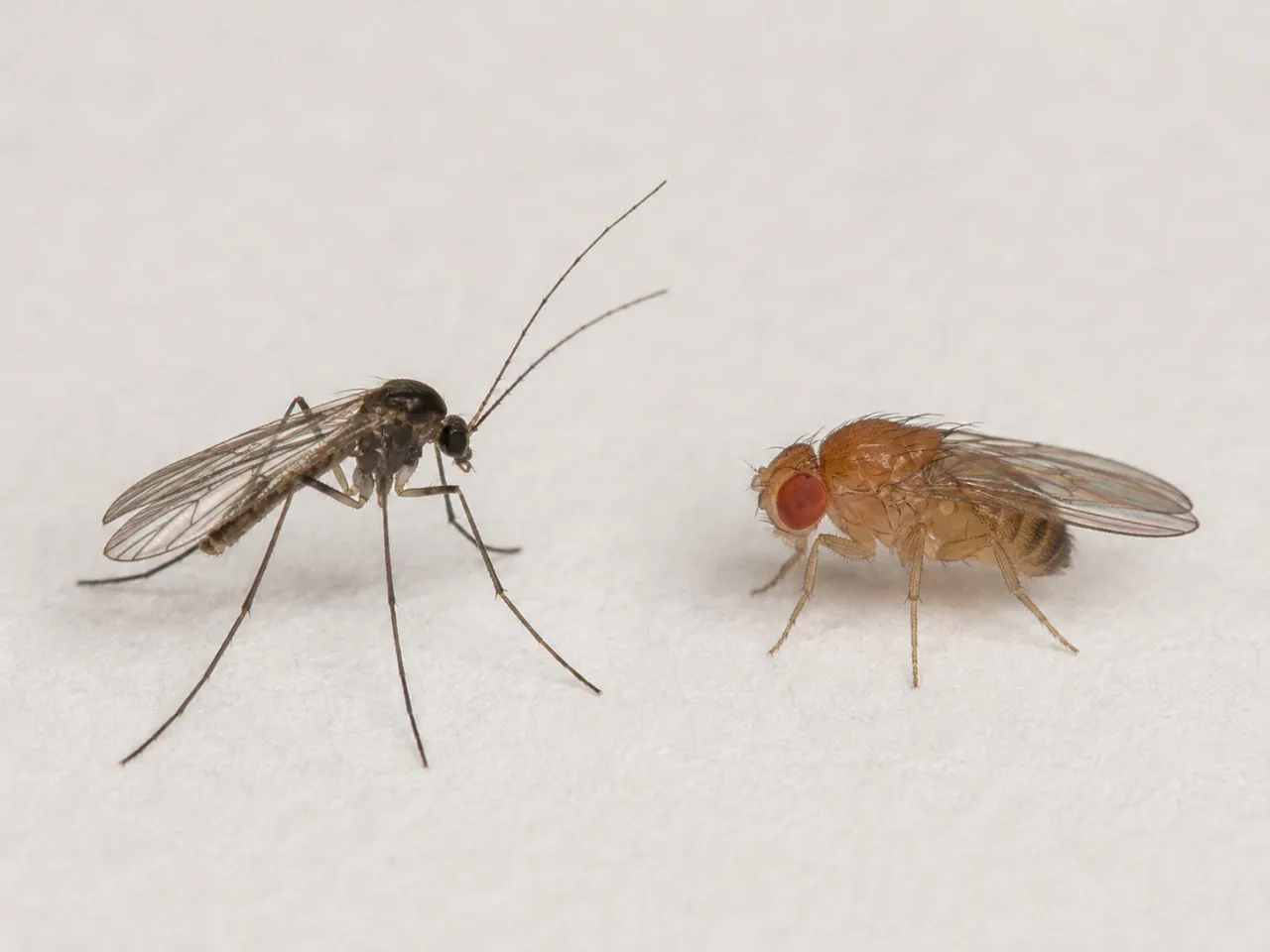
If you can get a close look, fruit flies and fungus gnats have different body shapes. A fruit fly usually looks like a tiny version of a regular house fly, with a rounded body and often reddish eyes. A fungus gnat looks more like a tiny mosquito, with a slender body, long legs, and darker color.
Fruit fly: tan or brown body, rounded shape, often red eyes, found near fruit or fermenting food.
Fungus gnat: dark gray or black body, long legs, delicate wings, found near houseplants.
Fruit fly: usually gathers in kitchens, trash areas, drains, and fruit bowls.
Fungus gnat: usually hovers around potting soil, plant saucers, and windows near plants.
Body Shape and Size
Both insects are small, but their silhouettes are different. Fruit flies are compact and rounded. Their bodies are short, their wings are clear, and their eyes may appear red or reddish-brown. They look like tiny tan flies.
Fungus gnats are more delicate. They have slim bodies, long legs, and long antennae. Their bodies are usually dark, and their flight looks weak and fluttery. Many people mistake them for tiny mosquitoes, but fungus gnats do not behave like mosquitoes and usually do not bite people.
A useful rule is: if it looks like a tiny house fly, think fruit fly. If it looks like a tiny mosquito near a plant, think fungus gnat.
Color and Eye Differences
Fruit flies are often tan, yellowish-brown, or light brown. Many common fruit flies have red eyes, which can be a helpful clue when viewed closely. However, eye color is not always easy to see without a close-up photo or magnification.
Fungus gnats are usually darker. They may look black, dark gray, or smoky brown. Their eyes do not usually stand out as bright red in the way fruit fly eyes often do.
Color alone is not perfect, especially in poor lighting, but it becomes useful when combined with habitat. A tan fly on a banana is probably a fruit fly. A dark fly crawling over potting soil is probably a fungus gnat.
Where They Come From
The source is the most important clue. Fruit flies usually come from fermenting organic material. That may include overripe fruit, vegetable scraps, juice residue, wine, beer, vinegar, soda, garbage, compost, dirty recycling bins, or organic buildup in drains.
Fungus gnats usually come from damp soil or moist organic material. Houseplants are the classic source. Overwatered plants, poorly draining pots, wet saucers, seed-starting trays, and rich potting mixes can all support fungus gnat larvae.
If you remove the food source but the flies continue around plants, they are probably gnats. If you dry out the plant soil but flies continue around fruit or drains, they are probably fruit flies.
Habitat: Kitchen vs Houseplants
Fruit flies are kitchen specialists in many homes. They are attracted to sugary, fermenting, and decaying food. They may gather near fruit bowls, trash cans, sink drains, dishcloths, compost buckets, empty bottles, mop buckets, or sticky spills under appliances.
Fungus gnats are plant-area insects. They often fly up when a plant pot is moved or watered. Adults may rest on the soil surface, crawl around the rim of the pot, or drift toward nearby windows. They are especially common in homes with many indoor plants.
Location gives a strong answer: kitchen and fruit bowl means fruit fly; houseplant and damp soil means fungus gnat.
Life Cycle and Eggs
Fruit flies lay eggs on or near fermenting food. The larvae hatch and feed in the soft, microbe-rich material. Because their development can be fast under warm conditions, fruit fly numbers may increase quickly if food sources are not removed.
Fungus gnats lay eggs in moist soil or organic growing media. Their larvae are tiny, pale, worm-like organisms with dark heads. They feed mostly on fungi and decomposing organic matter. In heavy infestations, larvae may damage delicate roots, especially in seedlings or stressed houseplants.
The difference is simple: fruit fly babies develop in fermenting food; fungus gnat babies develop in damp soil.
Flight Behavior
Fruit flies tend to fly in short, quick bursts. They may dart around your face when you stand near a fruit bowl, trash can, or glass of wine. They are strongly attracted to fermentation odors.
Fungus gnats have weaker, slower, more fluttering flight. They often hover close to plant pots or drift lazily near windows. They may not seem as strongly focused on fruit or drinks.
If the flies are quick and food-focused, suspect fruit flies. If they are weak fliers near plants, suspect fungus gnats.
Do Gnats Bite?
Some insects called gnats can bite, but common indoor fungus gnats usually do not bite people. Their adults are mostly annoying, and their larvae live in soil. They may bother plant owners, but they are not usually a direct human health problem.
However, the word “gnat” can also refer to biting midges or other outdoor insects that do bite. This is why identification matters. A tiny fly biting outdoors near water is not the same problem as a fungus gnat hovering around a houseplant.
Do Fruit Flies Bite?
Fruit flies do not bite people. They do not have the kind of mouthparts needed to pierce skin. Their main concern is nuisance and contamination. Because they visit rotting food, trash, drains, and kitchen surfaces, most people do not want them around food-preparation areas.
Fruit flies are not dangerous like mosquitoes, but a large infestation is still a sanitation issue. The best solution is to remove breeding material, clean hidden residue, and trap remaining adults.
Are They Harmful to Plants?
Fruit flies usually do not harm houseplants. They are interested in fermenting fruit and organic food waste, not living plant roots. If tiny flies are coming from plant soil, they are probably not fruit flies.
Fungus gnats can be harmful to plants in some situations. Adult fungus gnats are mostly harmless, but larvae in soil may feed on fungi and decaying matter. In large numbers, they may injure fine roots, especially in seedlings, cuttings, or already stressed plants. Mature healthy plants are often less affected, but persistent fungus gnats still indicate overly moist growing conditions.
Why Fruit Flies Appear Suddenly
Fruit flies often seem to appear out of nowhere because they are small, fast-breeding, and strongly attracted to fermentation. A single overripe banana, tomato, melon rind, wine glass, or trash bag can support a population. They may also enter from outdoors through windows or come in on produce.
Once inside, they find hidden food sources easily. A sticky spill under a cabinet, residue in a drain, or fruit juice in a recycling bin can keep them going even after visible fruit is removed.
Why Gnats Appear Around Plants
Fungus gnats usually appear when soil stays moist for too long. Overwatering is the most common cause. Organic potting mixes, poor drainage, decorative pots without drain holes, constantly wet saucers, and high indoor humidity can all create good conditions for larvae.
New houseplants can also bring fungus gnat eggs or larvae into a home. Seed-starting trays are another common source because they are kept moist for germination.
If gnats rise from the soil when you water or move a plant, the breeding site is probably in the pot.
How to Identify One in a Photo
When looking at a photo, use a combination of insect shape and background clues:
Check the body: round, tan, compact body suggests fruit fly.
Check the eyes: red or reddish eyes often suggest fruit fly.
Check the legs: long, thin legs suggest fungus gnat.
Check the color: dark gray or black suggests fungus gnat.
Check the setting: fruit, wine, trash, or drain suggests fruit fly.
Check the plant area: potting soil, plant saucer, or seed tray suggests fungus gnat.
Simple Home Test
You can often identify the insect by using two simple observations. First, place a small vinegar trap near the kitchen. Fruit flies are strongly attracted to apple cider vinegar, wine, or fermenting liquid. Second, place yellow sticky cards near houseplants. Fungus gnats are commonly caught around plant pots.
If most insects collect in the vinegar trap, you likely have fruit flies. If most collect on sticky cards near soil, you likely have fungus gnats. Sometimes a home can have both, especially if there are overripe fruits and overwatered plants at the same time.
How to Get Rid of Fruit Flies
Fruit fly control depends on removing breeding sources. Traps can catch adults, but they will not solve the problem if larvae continue developing in hidden food residue.
Throw away or refrigerate overripe fruit.
Empty trash and compost containers frequently.
Rinse bottles, cans, and recycling bins.
Clean sticky spills under appliances, counters, and cabinets.
Scrub sink drains and garbage disposal areas where organic film may collect.
Use a small vinegar trap to catch remaining adults.
Keep fruit covered or refrigerated during warm weather.
A common trap uses a small amount of apple cider vinegar or wine in a cup with a drop of dish soap. The odor attracts fruit flies, and the soap reduces surface tension. This helps capture adults while you remove the source.
How to Get Rid of Fungus Gnats
Fungus gnat control starts with soil moisture. If the top layer of soil is always wet, larvae can keep developing. Letting the soil dry appropriately between waterings can greatly reduce the problem, but plant needs vary, so avoid drying moisture-loving plants too severely.
Let the top layer of soil dry between waterings when appropriate for the plant.
Use pots with drainage holes.
Empty water from saucers after watering.
Remove dead leaves and organic debris from the soil surface.
Use yellow sticky cards to monitor and catch adults.
Consider repotting plants with heavily infested, soggy soil.
Avoid constantly damp seed trays unless necessary.
For serious plant infestations, some owners use biological controls designed for fungus gnat larvae. Always follow product labels and choose methods that are safe for the specific plant, household, pets, and local regulations.
Common Misidentifications
The most common mistake is calling every tiny indoor fly a “gnat.” Fruit flies, fungus gnats, drain flies, phorid flies, and tiny midges can all be confused at first glance. Correct identification matters because each insect breeds in a different place.
Drain flies, for example, have fuzzy moth-like wings and often come from slimy drain buildup. Phorid flies may run in a jerky way across surfaces and can breed in decaying organic material. If traps and cleaning do not solve the problem, the insect may not be a fruit fly or fungus gnat at all.
Gnat vs Fruit Fly vs Drain Fly
| Insect | Common Look | Main Source | Best Clue |
|---|---|---|---|
| Fungus gnat | Dark, slim, mosquito-like | Moist houseplant soil | Flying around plants |
| Fruit fly | Tan, round-bodied, often red-eyed | Overripe fruit and fermenting food | Flying around fruit, vinegar, wine, or trash |
| Drain fly | Fuzzy, moth-like, broad wings | Organic film in drains | Resting near sinks, tubs, or floor drains |
Which One Is Worse?
Fruit flies are usually more of a kitchen sanitation nuisance because they are associated with fermenting food, trash, and drains. They can multiply quickly and become frustrating if hidden breeding sites remain.
Fungus gnats are usually more of a plant-care problem. They are annoying indoors and may stress young plants or seedlings, but they are often controlled by improving watering habits and soil conditions.
Neither is usually dangerous to people, but both should be addressed because their presence points to a food, moisture, or sanitation source that needs correction.
Prevention Tips
The best prevention strategy depends on the insect. For fruit flies, reduce fermenting food sources. For fungus gnats, reduce overly wet soil. In many homes, both problems can be prevented with simple habits.
Refrigerate ripe fruit or use it quickly.
Clean kitchen drains, trash cans, and recycling bins regularly.
Do not leave wine, beer, juice, or soda residue uncovered.
Water houseplants according to their needs, not on a fixed habit.
Use well-draining potting mix and pots with drainage holes.
Inspect new plants before bringing them indoors.
Remove dead leaves from plant pots.
Final Comparison
Gnats and fruit flies are easy to confuse because both are tiny and annoying indoors. The key is to look at body shape and breeding source. Fruit flies are tan, rounded, often red-eyed flies associated with fruit, fermentation, and kitchen waste. Fungus gnats are dark, slender, mosquito-like flies associated with moist houseplant soil.
If the flies gather around bananas, vinegar, wine, or trash, think fruit fly. If they rise from plant soil or collect near houseplants, think fungus gnat. Correct identification leads to the right solution: clean fermenting food sources for fruit flies, and manage soil moisture for fungus gnats.
Related Insect Comparisons
Fruit Fly vs Fungus Gnat
Drain Fly vs Fruit Fly
Gnat vs Mosquito
Phorid Fly vs Fruit Fly
House Fly vs Fruit Fly
Asian Beetles vs Ladybugs
FAQs About Gnat vs Fruit Fly
Are gnats and fruit flies the same thing?
No. “Gnat” is a broad common name for many tiny flying insects. Fruit flies are a more specific type of small fly. Indoors, gnats are often fungus gnats that breed in moist houseplant soil.
How do I know if I have gnats or fruit flies?
Check the source. Flies around fruit, vinegar, wine, trash, or drains are likely fruit flies. Flies around houseplants, potting soil, or plant saucers are likely fungus gnats.
Do fruit flies come from houseplants?
Usually no. Fruit flies are more interested in fermenting fruit, food residue, and organic waste. Tiny flies coming from houseplant soil are more likely fungus gnats.
Do fungus gnats bite people?
Common indoor fungus gnats usually do not bite people. They are mostly a nuisance, though their larvae can sometimes affect seedlings or stressed plants.
Do fruit flies bite people?
No. Fruit flies do not bite. They are attracted to fermenting food and liquids, not human blood.
Why do I have fruit flies if I have no fruit?
Fruit flies can breed in hidden organic residue, drains, trash cans, recycling bins, empty bottles, compost containers, or sticky spills. They do not need a visible fruit bowl to survive.
Why do gnats keep coming from my plants?
Fungus gnats often breed in soil that stays too wet. Overwatering, poor drainage, wet saucers, and rich organic potting mix can all support their larvae.
Can I have both gnats and fruit flies at the same time?
Yes. A home with overripe fruit and overwatered houseplants can have both fruit flies and fungus gnats. Use location, appearance, and traps to identify which problem is present.