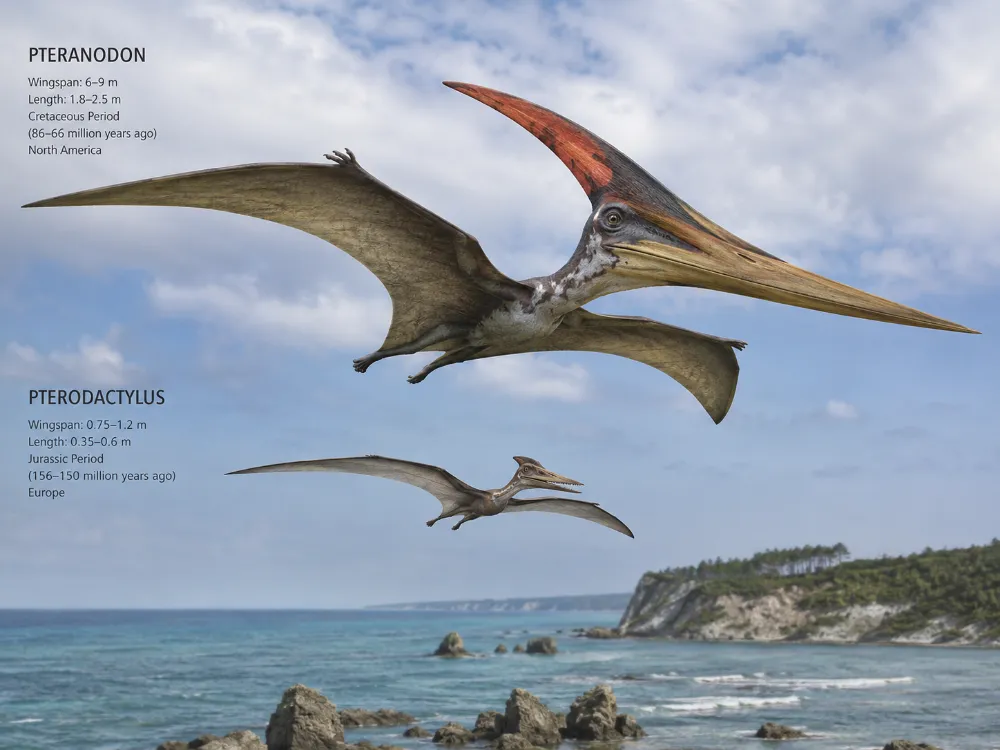
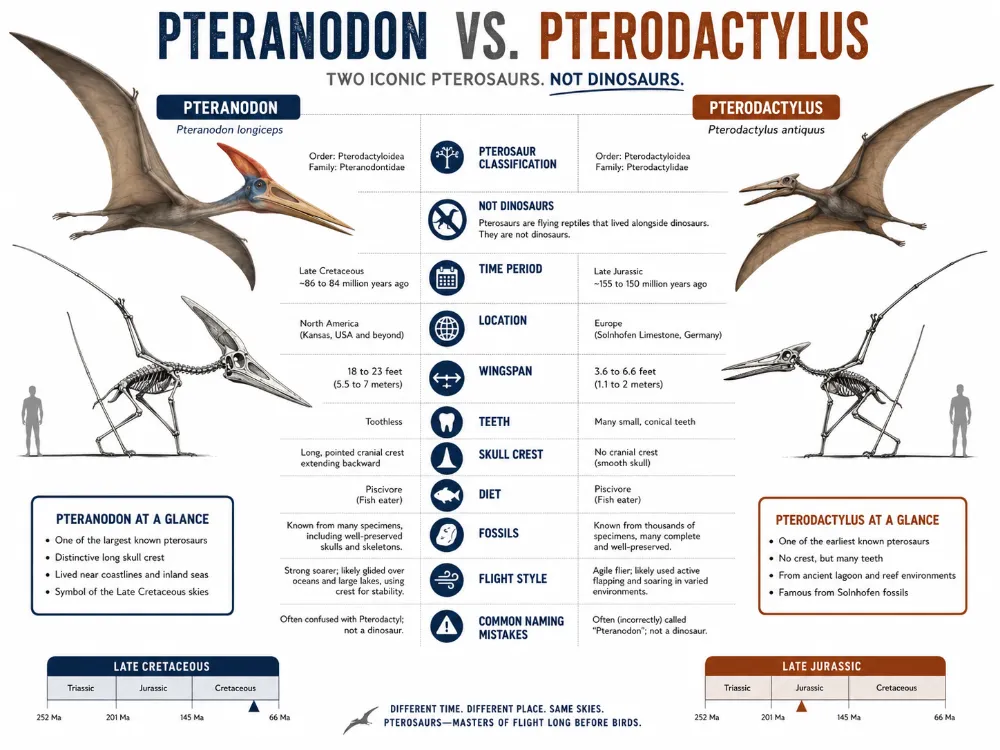
Pteranodon and pterodactyl are often confused, but they are not the same animal. Pteranodon was a large, toothless pterosaur from Late Cretaceous North America with a long skull crest and huge wings. “Pterodactyl” is a casual word often used for many pterosaurs, but the real genus Pterodactylus was a much smaller toothed pterosaur from Late Jurassic Europe.
| Feature | Pteranodon | Pterodactyl / Pterodactylus | Key Difference |
|---|---|---|---|
| Scientific status | A real genus: Pteranodon | “Pterodactyl” is a common nickname; Pterodactylus is the real genus | Pteranodon is specific; pterodactyl is often used loosely. |
| Animal group | Pterosaur | Pterosaur | Both were flying reptiles, not dinosaurs. |
| Time period | Late Cretaceous | Late Jurassic | Pterodactylus lived much earlier. |
| Location | North America, especially around the Western Interior Seaway | Europe, especially the Solnhofen limestone region of Germany | They lived in different places. |
| Wingspan | Large adults could reach about 6–7 m or more | Usually around 1 m or less for many known individuals | Pteranodon was far larger. |
| Teeth | No teeth | Had small teeth | This is one of the clearest differences. |
| Skull crest | Large backward or upright crest depending on species and sex | Small crest or less dramatic crest in some individuals | Pteranodon is famous for its large head crest. |
| Body build | Large, long-winged, ocean-soaring pterosaur | Small, lightweight, more compact pterosaur | Pteranodon was built for large-scale soaring. |
| Likely diet | Mainly fish and marine animals | Likely small fish, invertebrates, and other small prey | Both were likely coastal hunters, but at different body scales. |
| Popular confusion | Often called a “pterodactyl” in movies and casual speech | Often used as a general name for all pterosaurs | “Pterodactyl” is commonly misused. |
Are Pteranodon and Pterodactyl the Same?
No. Pteranodon and pterodactyl are not the same thing. Pteranodon is a specific genus of large toothless pterosaur from the Late Cretaceous of North America. “Pterodactyl” is usually a casual word that people use for almost any flying reptile, but scientifically it is not a good general term.
The real animal behind the word “pterodactyl” is Pterodactylus, a small pterosaur from the Late Jurassic of Europe. It was not a giant like Pteranodon. It had teeth, a smaller body, and lived tens of millions of years earlier.
The simplest answer is:
Pteranodon: a large toothless pterosaur with a famous head crest.
Pterodactylus: a smaller toothed pterosaur from Jurassic Europe.
Pterodactyl: a popular but often inaccurate nickname for pterosaurs.
What Was Pteranodon?
Pteranodon was one of the most famous pterosaurs. It lived during the Late Cretaceous Period and soared over the shallow seas of what is now North America. Its fossils are especially associated with marine deposits that once formed part of the Western Interior Seaway, a broad inland sea that split North America during part of the Cretaceous.
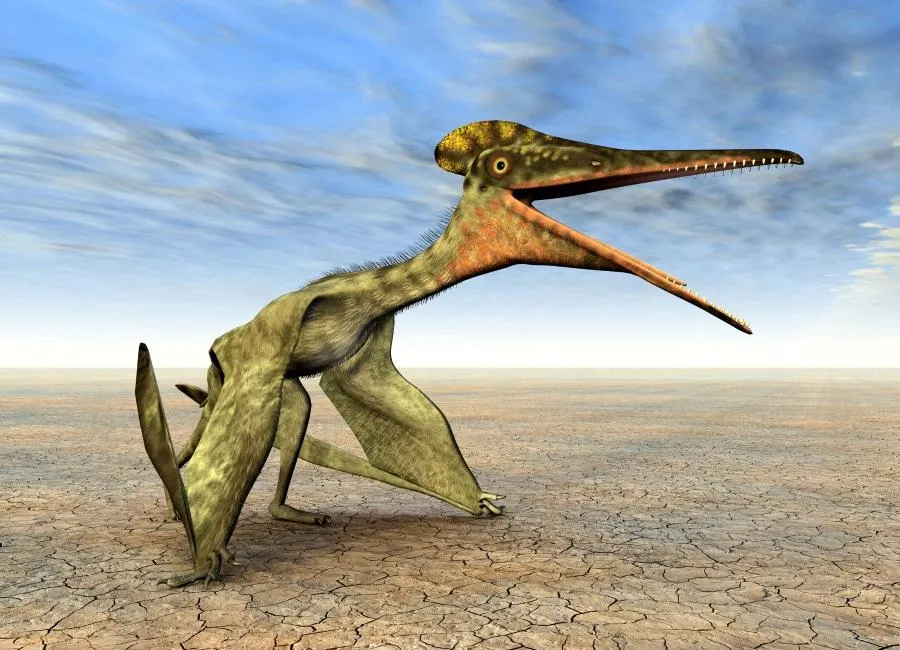
Pteranodon had long wings, a lightweight skeleton, a long toothless beak, and a distinctive skull crest. Some individuals had very large crests, while others had smaller crests. Much of this difference may be related to sex, age, and species.
Important Pteranodon traits include:
Large wingspan
Toothless jaws
Long pointed beak
Large skull crest
Lightweight hollow bones
Likely fish-based diet
Strong association with marine environments
What Was Pterodactylus?
Pterodactylus was a much smaller pterosaur from the Late Jurassic Period. It is one of the earliest pterosaurs ever studied scientifically, which is why the word “pterodactyl” became so famous.
Pterodactylus lived in what is now Europe, especially the limestone lagoon environments preserved in the Solnhofen region of Germany. These rocks also preserved famous fossils such as Archaeopteryx and many small marine and coastal animals.
Important Pterodactylus traits include:
Small body size
Relatively narrow wings
Long skull and jaws
Small teeth
Lightweight skeleton
Likely coastal or lagoon habitat
Much earlier age than Pteranodon
Why “Pterodactyl” Is Often Misleading
The word “pterodactyl” is one of the most common mistakes in prehistoric animal writing. Many people use it to mean any flying reptile from the age of dinosaurs. That is understandable, because the word is old, memorable, and popular in movies and children’s books.
Scientifically, however, “pterodactyl” is not the best word for the whole group. The correct broad term is pterosaur. Pterosaurs were the flying reptiles that included Pterodactylus, Pteranodon, Quetzalcoatlus, Rhamphorhynchus, Dimorphodon, and many other genera.
In accurate science writing:
Use pterosaur for the whole group.
Use Pterodactylus for the real genus.
Use Pteranodon only for the toothless crested North American genus.
Avoid using “pterodactyl” as a catch-all term when precision matters.
Were Pteranodon and Pterodactyl Dinosaurs?
No. Pteranodon and Pterodactylus were not dinosaurs. They were pterosaurs, a separate group of flying reptiles. Pterosaurs lived during the Mesozoic Era alongside dinosaurs, but they belonged to a different branch of reptile evolution.
This is similar to how dolphins and sharks both live in the ocean but are not the same kind of animal. Pterosaurs and dinosaurs shared ancient reptile ancestors, but pterosaurs were not dinosaurs.
Birds are living dinosaurs because they evolved from small feathered theropod dinosaurs. Pterosaurs were not bird ancestors. They were their own spectacular flying reptile group, and they went extinct at the end of the Cretaceous Period.
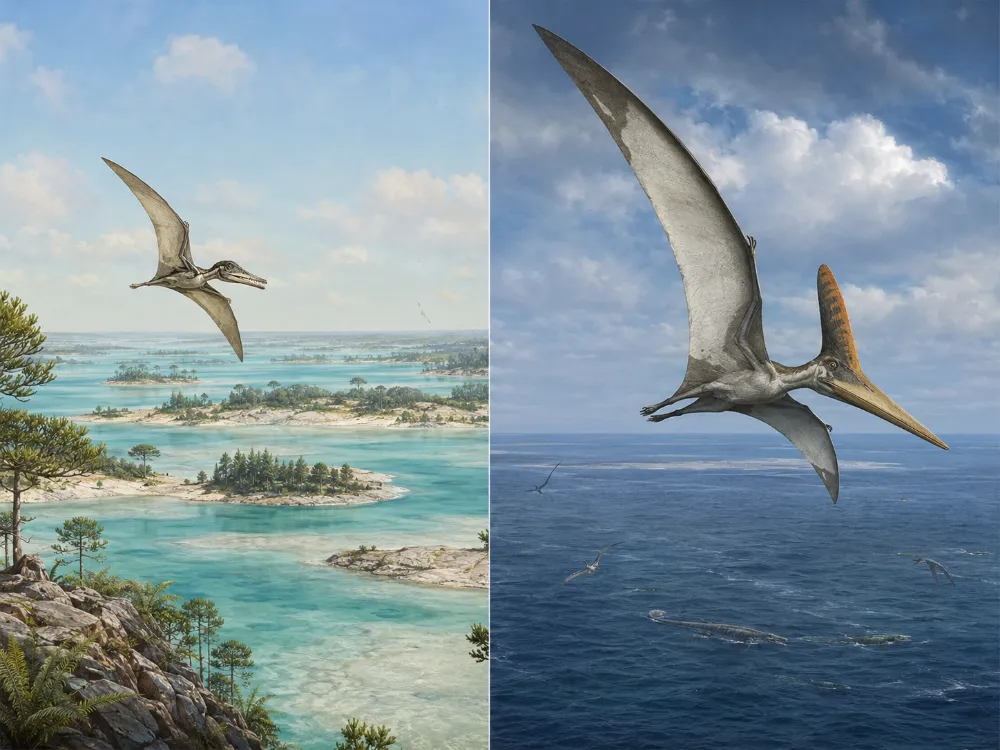
Scientific Classification
| Classification | Pteranodon | Pterodactylus |
|---|---|---|
| Kingdom | Animalia | Animalia |
| Phylum | Chordata | Chordata |
| Reptile group | Pterosauria | Pterosauria |
| General type | Pterodactyloid pterosaur | Pterodactyloid pterosaur |
| Genus | Pteranodon | Pterodactylus |
| Commonly known species | Pteranodon longiceps | Pterodactylus antiquus |
Both animals were pterodactyloid pterosaurs, meaning they belonged to a more advanced pterosaur group with shorter tails and longer wing bones compared with earlier long-tailed forms such as Rhamphorhynchus.
Time Period Differences
Pterodactylus lived during the Late Jurassic Period. Pteranodon lived much later, during the Late Cretaceous Period. This means Pterodactylus had already been gone for a very long time before Pteranodon appeared.
| Time Feature | Pterodactylus | Pteranodon |
|---|---|---|
| Geologic period | Late Jurassic | Late Cretaceous |
| Approximate age | Around 150 million years ago | Roughly 90–100 million years ago, depending on species and fossil deposits |
| Evolutionary context | Early famous pterodactyloid pterosaur | Large later pterodactyloid pterosaur |
| Did they meet? | No | No |
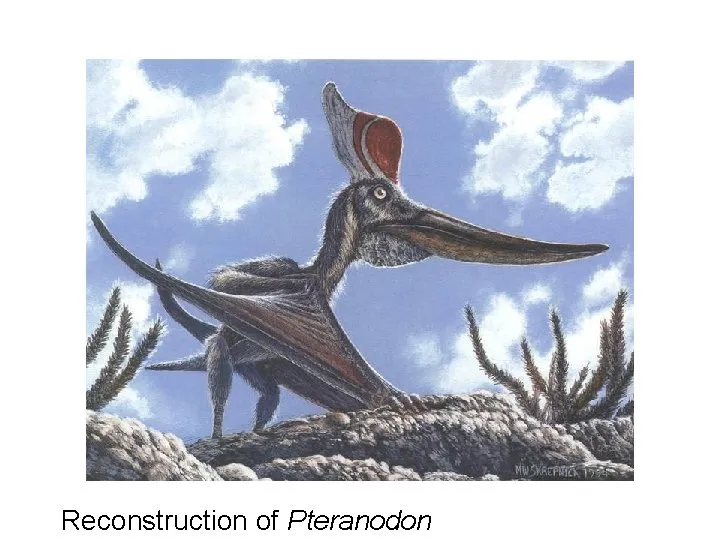
They did not live at the same time, and they did not live in the same ecosystem. Any image showing Pteranodon and Pterodactylus together is an educational comparison or fantasy scene, not a real prehistoric moment.
Location and Habitat
Pteranodon lived in North America, especially around marine environments connected to the Western Interior Seaway. This ancient sea covered large parts of the continent and supported fish, marine reptiles, sharks, ammonites, and many other animals.
Pterodactylus lived in Europe, especially the lagoon environments preserved in the Solnhofen limestone of Germany. These ancient islands, lagoons, and coastal waters created exceptional fossil-preservation conditions.
| Habitat Feature | Pteranodon | Pterodactylus |
|---|---|---|
| Known region | North America | Europe |
| Famous fossil setting | Western Interior Seaway deposits | Solnhofen limestone lagoon deposits |
| Likely environment | Open coastal and marine skies | Coastal lagoons, islands, and shallow marine habitats |
| Likely food source | Fish and marine animals | Small fish, invertebrates, and coastal prey |
Size Comparison
Size is one of the biggest differences. Pteranodon was a giant compared with Pterodactylus. Large adult Pteranodon individuals had wingspans comparable to small aircraft. Pterodactylus was much smaller and lighter.
Pteranodon was not heavy like a modern mammal of the same wingspan. Like other pterosaurs, it had hollow bones and a lightweight body. Its enormous wings made it look huge, but its body mass was relatively low for its wingspan.
| Size Feature | Pteranodon | Pterodactylus |
|---|---|---|
| Wingspan | Large adults around 6–7 m or more | Often around 1 m or less in many known individuals |
| Body size | Large but lightweight | Small and lightweight |
| Head | Long skull with major crest | Small long-snouted skull with teeth |
| Overall impression | Huge ocean-soaring pterosaur | Small coastal pterosaur |
Which Was Bigger?
Pteranodon was much bigger than Pterodactylus. This is one reason popular culture often uses Pteranodon when people say “pterodactyl.” The large crested flying reptile seen in movies, posters, and toys is usually closer to Pteranodon than to true Pterodactylus.
Pterodactylus was not a giant sky monster. It was a small, delicate flying reptile. Many known fossils are juveniles, and even adults were far smaller than Pteranodon.
So the correct comparison is simple: Pteranodon was the giant; Pterodactylus was the small early-famous pterosaur.
Teeth: Toothless vs Toothed
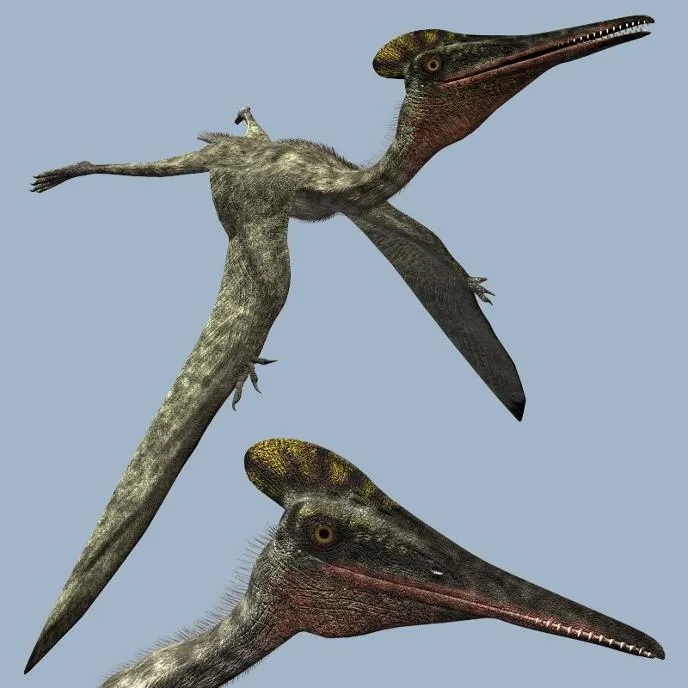
The name Pteranodon means “wing without tooth,” and that name describes one of its most important features. Pteranodon had no teeth. Its jaws were long, pointed, and beak-like.
Pterodactylus did have teeth. Its jaws contained small teeth that likely helped it catch or hold slippery prey such as small fish or aquatic animals.
| Jaw Feature | Pteranodon | Pterodactylus |
|---|---|---|
| Teeth | Absent | Present |
| Beak shape | Long, pointed, toothless | Long, narrow, toothed |
| Likely feeding use | Snatching or scooping marine prey | Gripping small prey |
| Identification clue | Toothless jaws | Small teeth visible in jaws |
Skull Crest Differences
Pteranodon is famous for its large skull crest. In some species and individuals, the crest swept backward from the skull. In others, it was more upright. The crest may have helped with display, species recognition, sexual signaling, or possibly balance and aerodynamics, although its exact function is still discussed.
Pterodactylus had a much less dramatic head profile. Some reconstructions show small soft-tissue or bony crest features, but it did not have the enormous backward-pointing crest that makes Pteranodon instantly recognizable.
In visual identification:
Huge backward crest and toothless beak: Pteranodon.
Small toothed pterosaur with less dramatic crest: Pterodactylus.
Flight Style
Both animals could fly, but they likely used their wings differently because of size and habitat. Pteranodon had long, narrow wings suited for soaring over marine environments. It may have used wind, thermals, and air currents to travel efficiently over water.
Pterodactylus was much smaller. Its flight may have been more agile at a smaller scale, useful around lagoons, islands, and coastal habitats. It probably flew actively, but it would not have had the same enormous soaring presence as Pteranodon.
Pterosaur wings were unlike bird wings. A long fourth finger supported the main wing membrane. The wing stretched from the hand and arm along the body, creating a strong but flexible flying surface.
Were They Good Flyers?
Yes. Pterosaurs were the first vertebrates known to evolve powered flight. They were not clumsy gliders. Their bones, wings, muscles, and body proportions show strong flight adaptations.
Pteranodon was likely an efficient long-distance flyer. Its huge wings made it well suited to soaring over open water, much like modern seabirds that use wind to travel long distances.
Pterodactylus was smaller but still capable of powered flight. Fossils of very young pterosaurs suggest that some pterosaurs may have been able to fly early in life, although flight ability and growth varied across species.
Diet and Feeding
Pteranodon likely ate fish and other marine animals. Its fossils are found in marine deposits, and its long beak fits a fish-catching lifestyle. It may have snatched prey from near the water surface or picked up dead or weak marine animals when available.
Pterodactylus likely ate small fish, aquatic invertebrates, and other small prey in lagoon and coastal habitats. Its teeth would have helped grip prey that might otherwise slip away.
| Diet Feature | Pteranodon | Pterodactylus |
|---|---|---|
| Main prey | Likely fish and marine prey | Likely small fish and invertebrates |
| Feeding style | Toothless beak used to catch or pick up prey | Toothed jaws used to grip smaller prey |
| Habitat link | Open seaway and marine coastlines | Lagoons and coastal environments |
Did Pteranodon Skim the Water Like a Skimmer Bird?
Older illustrations sometimes show Pteranodon skimming the water with its lower jaw like a modern skimmer bird. This idea is now treated cautiously. The mechanics of large pterosaur flight and jaw structure may not support constant skimming in the same way modern skimmers do.
A more cautious interpretation is that Pteranodon caught fish from near the surface, scavenged, or picked up prey in ways that did not require continuous jaw-dragging through water.
It was almost certainly connected to marine food webs, but the exact details of its feeding behavior remain debated.
Walking and Launching on Land
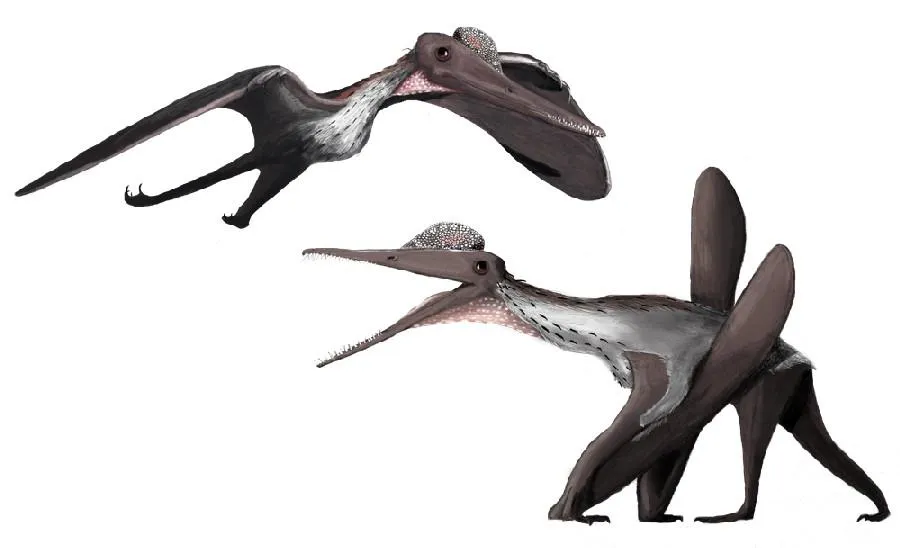
Pterosaurs were not helpless on the ground. Fossil trackways and anatomy show that many pterosaurs walked on all four limbs. Their wings folded, and they used their forelimbs and hind limbs in a quadrupedal posture.
Large pterosaurs such as Pteranodon likely launched using powerful forelimbs, a method sometimes called quadrupedal launch. Instead of taking off like a bird using only the hind legs, pterosaurs may have used the strength of the folded wing arms to vault into the air.
Pterodactylus, being much smaller, would have had an easier time moving and launching than a giant pterosaur. Both were specialized flying animals, not awkward monsters dragging useless wings.
Body Covering
Pterosaurs were not scaly dragons in the old movie sense. Many pterosaurs had hair-like fibers called pycnofibers. These structures likely helped with insulation and may have given some pterosaurs a fuzzy appearance.
Pteranodon and Pterodactylus are often shown with smooth reptilian skin in older art, but modern reconstructions usually include some soft-tissue covering, especially on the body. Wing membranes were complex structures with muscles, fibers, blood vessels, and skin.
This makes pterosaurs more biologically interesting than simple “flying lizards.” They were active, specialized reptiles with advanced flight anatomy.
Fossil Evidence
Pteranodon is known from many fossils, especially from North American marine rocks. Skulls, wing bones, and partial skeletons have helped paleontologists understand its size, crest variation, sexual dimorphism, and flight anatomy.
Pterodactylus is famous partly because it was one of the first pterosaurs recognized by science. Its fossils from the Solnhofen limestone are often beautifully preserved in fine-grained rock, sometimes showing delicate bones and impressions.
| Fossil Feature | Pteranodon | Pterodactylus |
|---|---|---|
| Famous region | North American Cretaceous marine deposits | Solnhofen limestone of Germany |
| Preservation | Many skulls and skeletal parts | Fine limestone slabs preserving delicate skeletons |
| Scientific importance | Shows giant toothless marine pterosaur anatomy | Historically important in early pterosaur research |
Sexual Dimorphism in Pteranodon
Pteranodon is famous for showing major differences between individuals. Some had larger crests and bigger bodies, while others were smaller with smaller crests and wider pelvic anatomy. Many paleontologists interpret these differences as sexual dimorphism, meaning males and females differed in size and shape.
Large-crested individuals are often interpreted as males. Smaller individuals with different pelvic structure are often interpreted as females. The crest may have played a role in display, mate recognition, or social signaling.
This means not every Pteranodon looked identical. A male and female Pteranodon may have looked different enough that early researchers thought they were different species.
Why Pteranodon Is More Famous
Pteranodon is more famous in popular culture because it looks dramatic. It was large, had a huge wingspan, and carried an impressive skull crest. These features make it visually memorable in movies, museums, toys, and illustrations.
When people imagine a “pterodactyl,” they often actually imagine a Pteranodon: a giant crested flying reptile with long wings and a toothless beak.
True Pterodactylus is scientifically important, but it is less visually dramatic because it was much smaller and lacked the huge Pteranodon-style crest.
Pteranodon vs Pterodactyl vs Quetzalcoatlus
Quetzalcoatlus is another famous pterosaur that is often confused with Pteranodon and pterodactyls. It was a giant azhdarchid pterosaur from the Late Cretaceous and may have been even larger in wingspan than Pteranodon.
| Pterosaur | Main Trait | Time Period | Common Confusion |
|---|---|---|---|
| Pterodactylus | Small toothed Jurassic pterosaur | Late Jurassic | Often turned into the loose word “pterodactyl” |
| Pteranodon | Large toothless crested marine pterosaur | Late Cretaceous | Often wrongly called a pterodactyl |
| Quetzalcoatlus | Gigantic long-necked azhdarchid pterosaur | Late Cretaceous | Often imagined as a super-sized Pteranodon, though it was different |
Common Myths About Pteranodon and Pterodactyl
Myth: Pteranodon was a dinosaur.
Fact: Pteranodon was a pterosaur, not a dinosaur.Myth: Pterodactyl is the correct name for all flying reptiles.
Fact: The correct broad term is pterosaur.Myth: Pteranodon and Pterodactylus lived together.
Fact: Pterodactylus lived in the Late Jurassic, while Pteranodon lived much later in the Late Cretaceous.Myth: Pteranodon had teeth.
Fact: Pteranodon was toothless.Myth: Pterodactylus was as large as Pteranodon.
Fact: Pterodactylus was much smaller.Myth: Pterosaurs were clumsy gliders.
Fact: Pterosaurs were powered flyers with highly specialized wings.
How to Identify Them Quickly
If you are looking at an illustration, fossil display, or toy, use a few simple clues.
Quick Pteranodon clues:
Very large wingspan
Long toothless beak
Large head crest
Marine setting
Late Cretaceous North America
Quick Pterodactylus clues:
Small body size
Small teeth in the jaws
Less dramatic crest
Late Jurassic European fossil setting
Often shown as a smaller coastal pterosaur
Which One Would Win in a Fight?
This is a popular question, but it is not a real biological scenario. Pteranodon and Pterodactylus lived in different time periods and places, so they never fought. They were also not built as land-combat predators.
If someone imagined a fictional encounter, Pteranodon would have a huge size advantage. It was much larger, with a much greater wingspan and body scale. However, comparing them as fighters misses the point. These were flying animals adapted to feeding, soaring, breeding, and surviving in their own ecosystems.
The better question is not “who would win?” but “how did two different pterosaurs evolve for different sizes, diets, and habitats?”
Final Takeaway
Pteranodon and Pterodactylus were both pterosaurs, but they were very different animals. Pteranodon was a large, toothless, crested pterosaur from Late Cretaceous North America. Pterodactylus was a much smaller, toothed pterosaur from Late Jurassic Europe.
The word “pterodactyl” is often used casually for all flying reptiles, but the correct broad term is pterosaur. Pteranodon was not a pterodactyl in the strict scientific sense, and neither animal was a dinosaur.
The easiest rule is this: if it is huge, toothless, and has a dramatic backward crest, it is probably Pteranodon. If it is small, toothed, and from Jurassic Europe, it is closer to true Pterodactylus.
FAQs About Pteranodon vs Pterodactyl
What is the main difference between Pteranodon and pterodactyl?
Pteranodon was a large toothless pterosaur with a skull crest. “Pterodactyl” is a casual term often used for many pterosaurs, but the real genus Pterodactylus was a much smaller toothed pterosaur.
Is Pteranodon a pterodactyl?
In casual speech, people may call Pteranodon a pterodactyl, but scientifically that is imprecise. Pteranodon and Pterodactylus are different genera of pterosaurs.
Is pterodactyl a real animal?
The word “pterodactyl” is a common nickname. The real genus is Pterodactylus, a small Late Jurassic pterosaur from Europe.
Were Pteranodon and Pterodactylus dinosaurs?
No. Both were pterosaurs, not dinosaurs. Pterosaurs were flying reptiles that lived alongside dinosaurs but belonged to a different evolutionary group.
Which was bigger, Pteranodon or Pterodactylus?
Pteranodon was much bigger. Large adults had wingspans of several meters, while Pterodactylus was a small pterosaur, often around a meter or less in wingspan for many known individuals.
Did Pteranodon have teeth?
No. Pteranodon was toothless. Its name means “wing without tooth.”
Did Pterodactylus have teeth?
Yes. Pterodactylus had small teeth in its jaws, which likely helped it grip small prey.
Did Pteranodon and Pterodactylus live at the same time?
No. Pterodactylus lived in the Late Jurassic, while Pteranodon lived much later in the Late Cretaceous.
Where did Pteranodon live?
Pteranodon lived in North America, especially around marine environments connected to the Western Interior Seaway.
Where did Pterodactylus live?
Pterodactylus lived in Europe, especially in the lagoon environments preserved in the Solnhofen limestone of Germany.
What did Pteranodon eat?
Pteranodon likely ate fish and other marine animals. It was strongly associated with coastal and seaway environments.
What did Pterodactylus eat?
Pterodactylus likely ate small fish, aquatic invertebrates, and other small coastal prey.
Could Pteranodon fly?
Yes. Pteranodon was a highly specialized flying reptile with long wings and lightweight bones. It was likely an efficient soarer over marine environments.
Could Pterodactylus fly?
Yes. Pterodactylus was capable of powered flight. Its smaller body made it very different from giant pterosaurs such as Pteranodon and Quetzalcoatlus.
What is the correct word for flying reptiles like Pteranodon?
The correct broad word is pterosaur. Pteranodon, Pterodactylus, Quetzalcoatlus, and many others were all pterosaurs.