A sheep is the general name for the animal species, especially an adult domesticated sheep. A lamb is a young sheep, usually less than one year old. Lambs are smaller, more playful, still growing, and may still depend on their mother’s milk early in life. Adult sheep are larger, more developed, and may be called ewes, rams, or wethers depending on sex and reproductive status.
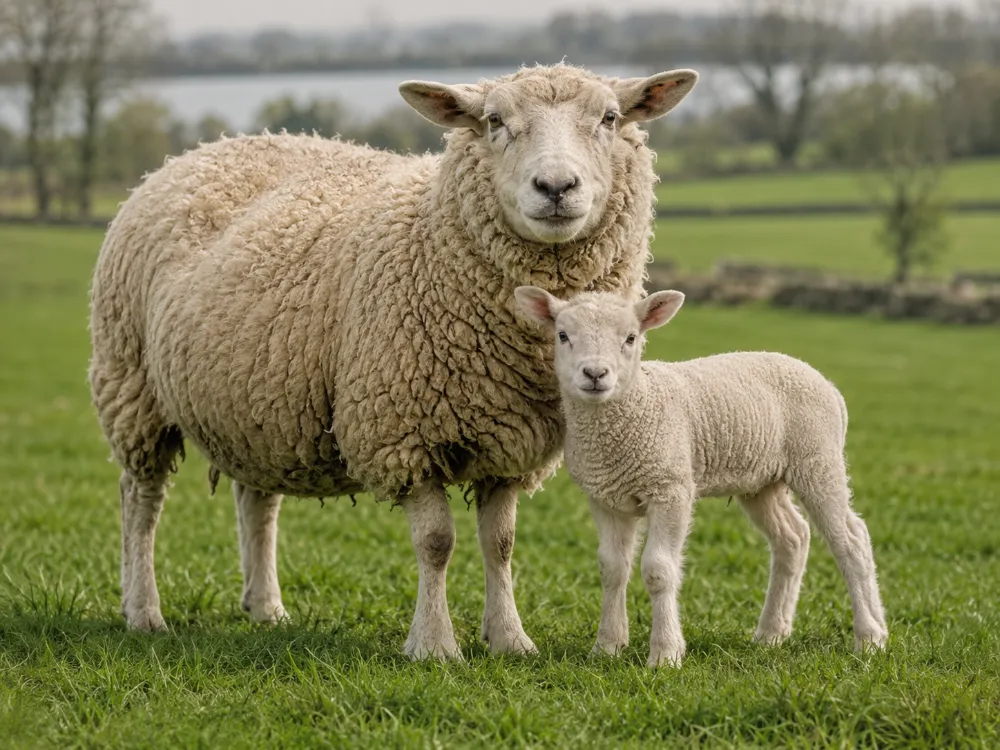
Sheep vs Lamb Summary Table
| Feature | Sheep | Lamb |
|---|---|---|
| Basic meaning | General name for the animal; often means an adult sheep | A young sheep |
| Age | Usually older than one year | Usually less than one year old |
| Scientific species | Ovis aries for domestic sheep | Young Ovis aries |
| Body size | Larger, heavier, fully developed | Smaller, lighter, still growing |
| Sex-specific names | Ewe, ram, or wether | Male lamb or female lamb; sometimes ewe lamb or ram lamb |
| Diet | Mainly grass, hay, forage, and feed | Starts with milk, then gradually eats grass, hay, and feed |
| Behavior | More settled, flock-oriented, and mature | More playful, curious, and dependent on the mother |
| Wool | Thicker, more developed fleece in wool breeds | Softer, finer early fleece in many breeds |
| Reproduction | Adults can breed when mature | Too young or not yet fully mature |
| Meat term | Adult sheep meat is often called mutton | Young sheep meat is called lamb |
| Common sound | Bleats, often deeper in adults | Higher-pitched bleats, especially when calling the mother |
| Best quick clue | Full-sized woolly flock animal | Small young sheep near its mother |
What Is a Sheep?
A sheep is a domesticated hoofed mammal in the species Ovis aries. Sheep are ruminants, meaning they have a specialized digestive system that allows them to process grasses and other fibrous plants. They are closely related to goats, but sheep are usually more flock-oriented, have different horn shapes, and often produce thicker woolly coats.
In everyday language, “sheep” can refer to the species as a whole or to an adult animal. A flock may include adult females, adult males, castrated males, and young lambs, but people often use “sheep” to describe the mature animals in general.
Sheep have been domesticated for thousands of years and are raised for wool, meat, milk, leather, land management, and breeding. Their behavior, coat type, body size, and horn shape vary greatly by breed.
What Is a Lamb?
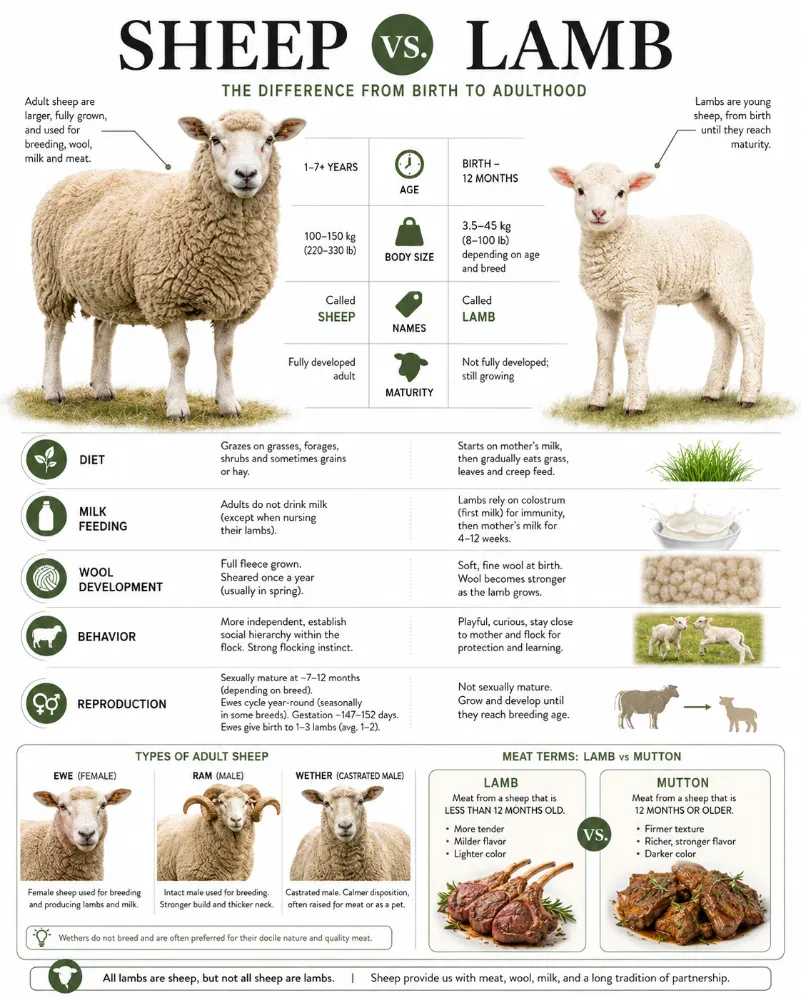
A lamb is a young sheep. In most farming and animal-care contexts, a lamb is less than one year old. Newborn lambs are small, soft, and highly dependent on their mothers. They usually stand and nurse soon after birth, but they still need warmth, protection, milk, and careful maternal care.
As lambs grow, they begin nibbling grass, hay, and feed while still nursing. Over time, they are weaned from milk and gradually become more independent. Their bodies grow quickly, their fleece develops, and their behavior changes from playful juvenile movement to more adult flock behavior.
The word “lamb” can also refer to meat from a young sheep. This is one reason the term appears in both animal science and food contexts.
Is a Lamb a Sheep?
Yes. A lamb is a sheep, but it is a young sheep. The difference is mainly age. This is similar to the difference between a calf and a cow, a foal and a horse, or a puppy and a dog.
All lambs are sheep, but not all sheep are lambs. Once a lamb grows past the young stage, it is usually described as a sheep, ewe, ram, or wether depending on sex and maturity.
If you are talking about the animal species, “sheep” is the broad word. If you are talking about a baby or young sheep, “lamb” is the correct word.
Age Differences
Age is the most important difference between sheep and lambs. A lamb is usually under one year old. A sheep is often considered adult after its first year, although exact terminology can vary by region, breed, and farming system.
Young lambs are in a rapid growth stage. They develop muscle, bone, fleece, rumen function, social behavior, and grazing skills. Adult sheep are physically mature and more stable in size and behavior.
In farming language, animals may also be described by more specific age terms such as weaned lamb, yearling, ewe lamb, ram lamb, hogget, or yearling sheep depending on local usage.
Size Differences
Adult sheep are larger and heavier than lambs. Their final size depends strongly on breed. Some sheep breeds are small and hardy, while others are large meat or wool breeds. Rams are often larger and more muscular than ewes.
Lambs are smaller, lighter, and softer-bodied. A newborn lamb may be light enough to carry easily, while a mature sheep can be much heavier and stronger. As lambs grow, their legs lengthen, their body fills out, and their fleece becomes more developed.
The fastest visual clue is simple: a lamb looks like a smaller, younger version of a sheep, often staying close to its mother.
Male and Female Names
Adult sheep have different names depending on sex and reproductive status. An adult female sheep is called a ewe. An adult male sheep is called a ram. A castrated male sheep is called a wether.
A young sheep is called a lamb. More specific terms may also be used. A young female lamb may be called a ewe lamb. A young male lamb may be called a ram lamb. If a male lamb is castrated, it may later be called a wether.
These names are useful because “sheep” is a broad word, while ewe, ram, wether, and lamb give more precise information.
Body Shape and Appearance
Adult sheep usually have a more developed body, deeper chest, stronger legs, and a thicker fleece in wool breeds. Their face shape, ears, horns, and coat vary by breed. Some sheep are horned, some are naturally hornless, and some have short hair rather than heavy wool.
Lambs have smaller faces, softer features, thinner legs, and a more juvenile body shape. Their early fleece may look soft, curly, or fluffy. They often appear springy and energetic when moving.
In a flock, lambs are usually easy to spot because they are smaller, more playful, and often remain close to ewes.
Wool and Fleece Differences
Adult sheep of wool breeds grow a mature fleece that may be sheared once or more per year depending on breed and climate. The quality of wool depends on breed, age, nutrition, health, fiber diameter, staple length, and management.
Lamb fleece is often softer and finer than adult fleece, especially in certain breeds. The first shearing from a young sheep may be valued for softness. However, fleece quality varies greatly, and not all sheep breeds are raised primarily for wool.
Some sheep are hair sheep rather than wool sheep. These breeds shed naturally and are often raised more for meat or hardiness than for wool production.
Diet Differences
Adult sheep are grazing animals. They mainly eat grass, hay, pasture plants, legumes, silage, and formulated feed when needed. Their rumen allows them to break down fibrous plant material with the help of microbes.
Lambs begin life on milk. The first milk, called colostrum, is especially important because it provides energy and immune protection. As lambs grow, they begin eating solid food and developing rumen function.
A healthy lamb gradually transitions from milk to grass, hay, and feed. This shift is one of the major biological changes between lambhood and adult sheep life.
Behavior Differences
Adult sheep are strongly flock-oriented. They feel safer in groups and may become stressed if isolated. Their behavior is shaped by grazing, resting, social spacing, predator awareness, and flock movement.
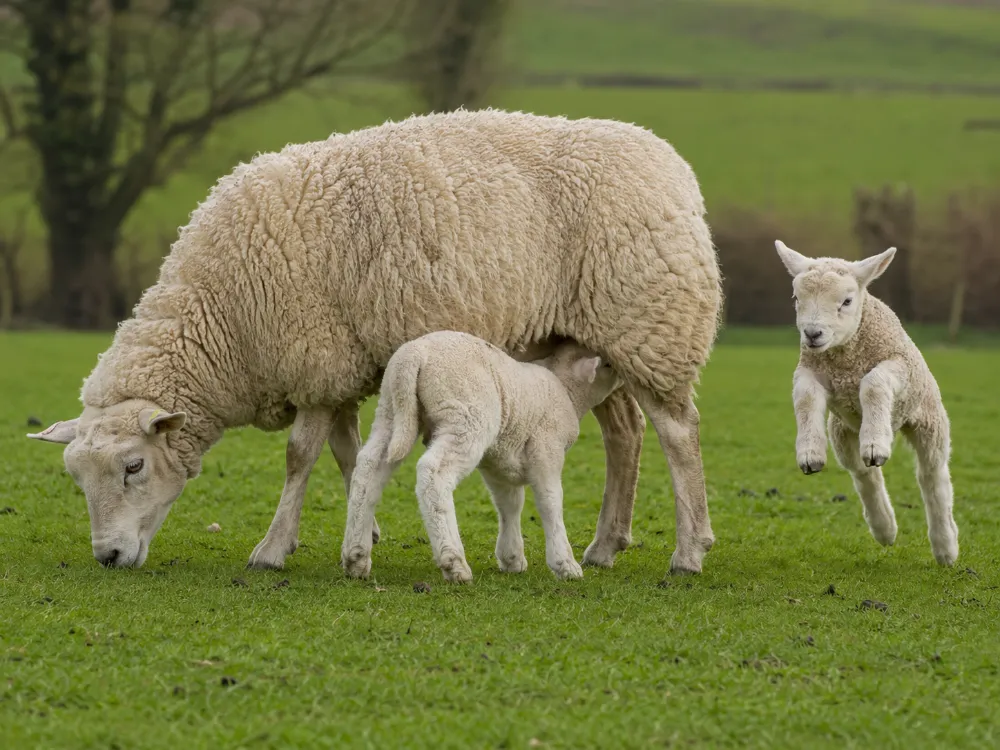
Lambs are more playful and curious. They may jump, run, kick, climb small objects, and chase each other. This playful behavior helps develop muscles, coordination, social skills, and confidence.
Lambs also call frequently to their mothers. Ewes and lambs recognize each other through voice, smell, and close contact.
Mother and Lamb Bond
The bond between a ewe and her lamb is extremely important. Soon after birth, the ewe licks the lamb, helps clean it, and encourages it to stand and nurse. The lamb learns its mother’s smell and voice, while the ewe learns to recognize her own lamb.
This bond helps prevent confusion in a flock where many lambs may be born around the same time. A ewe usually allows her own lamb to nurse but may reject unrelated lambs.
Strong mothering behavior is essential for lamb survival, especially in cold, wet, or predator-rich environments.
Sounds and Communication
Both sheep and lambs bleat. Adult sheep may bleat to communicate with flock members, call lambs, express stress, or respond to feeding routines. Rams may also make lower, deeper sounds.
Lambs often have higher-pitched bleats. They call when hungry, separated from their mother, cold, confused, or searching for the ewe. Ewes respond with their own calls, helping the pair stay connected.
In a lambing field, the sound of ewes and lambs calling back and forth is one of the most obvious signs of maternal bonding.
Reproduction and Maturity
Adult sheep may be used for breeding when physically mature and healthy. Female sheep, or ewes, give birth after a pregnancy of about five months. Depending on breed and management, a ewe may give birth to one lamb, twins, or sometimes more.
Lambs are not considered fully mature at birth. They must grow, develop, and reach suitable body condition before any breeding should be considered. Responsible sheep management avoids breeding young animals too early.
Biologically, the difference between a lamb and an adult sheep includes both physical growth and reproductive maturity.
Lambing Season
Lambing season is the period when ewes give birth. In many regions, lambing is associated with spring, when fresh grass becomes available and weather conditions are better for newborn survival. However, farm systems vary, and some flocks lamb at different times of year.
Newborn lambs need warmth, colostrum, protection from predators, and careful monitoring. Difficult births, weak lambs, cold stress, poor milk intake, or mother-lamb rejection can create problems.
Good lambing management is one of the most important parts of sheep farming.
Sheep Meat vs Lamb Meat
In food terminology, lamb means meat from a young sheep. Mutton means meat from an older sheep. In some regions, the term hogget is used for meat from a sheep older than lamb but younger than full mutton age.
Lamb meat is usually lighter in flavor, more tender, and milder than mutton. Mutton has a stronger, more developed flavor because it comes from older animals. The exact taste also depends on breed, diet, age, fat content, and cooking method.
This food meaning can confuse readers because “lamb” may refer to either a living young sheep or the meat from a young sheep.
Why Is Lamb Meat More Tender?
Lamb meat is often more tender because it comes from a young animal. Younger muscles have had less time to develop toughness from age, movement, and connective tissue changes. This is why lamb is often preferred for quick-cooking cuts.
Adult sheep meat can still be delicious, but it may require slower cooking methods to become tender. Mutton is often used in stews, curries, roasts, braises, and traditional dishes where stronger flavor is valued.
The difference is not that one is “better” in every case. Lamb and mutton simply have different textures, flavors, and culinary uses.
Sheep Milk vs Lamb Nutrition
Adult ewes can produce milk after giving birth. Sheep milk is rich and is used in many cheeses, yogurts, and dairy products around the world. Famous sheep milk cheeses include feta, Roquefort, Manchego, and Pecorino.
Lambs rely on milk early in life. They need colostrum soon after birth and continue nursing until they gradually shift to solid food. A lamb’s early growth depends heavily on milk quality, maternal care, and access to clean, safe surroundings.
For lambs, milk is survival. For humans, sheep milk is an agricultural product in dairy sheep systems.
Sheep vs Lamb in Farming
In farming, sheep and lambs are managed differently. Adult sheep need good pasture, hoof care, parasite control, shearing or coat management, mineral balance, breeding management, and protection from predators and disease.
Lambs need extra monitoring because they are more vulnerable. Farmers watch for nursing problems, cold stress, diarrhea, parasites, injury, and poor growth. Weaning must be managed carefully so lambs continue eating and gaining weight.
A healthy flock depends on both adult sheep care and lamb care.
Sheep vs Lamb in the Wild
Domestic sheep are different from wild sheep such as bighorn sheep, Dall sheep, mouflon, and argali. However, the word lamb still applies to young wild sheep. A baby bighorn sheep, for example, is also called a lamb.
Wild lambs must stand, follow their mothers, and avoid predators soon after birth. Mountain sheep lambs may climb steep terrain at a young age, using cliffs and rocky slopes as protection.
Whether domestic or wild, a lamb is simply the young stage of a sheep species.
Sheep vs Goat vs Lamb
Sheep and goats are related but different animals. Sheep usually have a more flocking nature, often thicker wool or hair coats, and different grazing behavior. Goats are often more browser-like, meaning they feed heavily on shrubs, leaves, and woody plants.
A lamb is not a baby goat. A baby goat is called a kid. A lamb is a baby sheep. This is a common source of confusion because both lambs and kids can be small, playful, and farm-dwelling.
Simple rule: baby sheep are lambs; baby goats are kids.
Common Sheep Terms
Sheep: general name for the animal species or an adult animal.
Lamb: young sheep, usually under one year old.
Ewe: adult female sheep.
Ram: adult male sheep.
Wether: castrated male sheep.
Flock: a group of sheep.
Fleece: the woolly coat of a sheep.
Lambing: the process or season of giving birth to lambs.
Common Misunderstandings
One common misunderstanding is that lamb and sheep are different species. They are not. A lamb is a young sheep.
Another misunderstanding is that lamb only means meat. In animal biology, lamb first means a young sheep. In cooking, lamb also means meat from a young sheep.
A third misunderstanding is that all sheep produce thick wool. Some breeds are wool sheep, but others are hair sheep and may shed naturally. Sheep breeds vary widely in coat type, size, horns, and purpose.
How to Tell a Sheep from a Lamb Quickly
Look at size: lambs are smaller; adult sheep are larger and heavier.
Look at behavior: lambs are more playful and often stay near their mothers.
Look at body development: adult sheep have fuller bodies and more developed fleece.
Listen to the voice: lambs often have higher-pitched bleats.
Check age: a lamb is usually under one year old.
Use precise names: adult females are ewes, adult males are rams, and young sheep are lambs.
Sheep vs Lamb: Final Comparison
The difference between sheep and lamb is mainly age. Sheep is the broad term for the animal, especially an adult. Lamb means a young sheep, usually less than one year old. Lambs are smaller, more playful, and dependent on milk early in life, while adult sheep are larger, mature, and more settled in flock behavior.
In farming and food language, the distinction also matters. Adult females are ewes, adult males are rams, and castrated males are wethers. Meat from young sheep is called lamb, while meat from older sheep is often called mutton. The simplest answer is: a lamb is a young sheep, and a sheep is the general or adult form.
FAQs About Sheep vs Lamb
Is a lamb a sheep?
Yes. A lamb is a young sheep. All lambs are sheep, but not all sheep are lambs.
What is the main difference between sheep and lamb?
The main difference is age. A lamb is a young sheep, usually under one year old. A sheep is the general term for the animal and often refers to an adult.
At what age does a lamb become a sheep?
In many contexts, a lamb is considered a sheep after about one year of age. However, exact terminology can vary by country, farm system, and market use.
What is a baby sheep called?
A baby sheep is called a lamb.
What is a female sheep called?
An adult female sheep is called a ewe.
What is a male sheep called?
An adult male sheep is called a ram. A castrated male sheep is called a wether.
What is a young female sheep called?
A young female sheep may be called a ewe lamb.
What is a young male sheep called?
A young male sheep may be called a ram lamb. If castrated, it may later be called a wether.
Is lamb meat the same as sheep meat?
Lamb meat comes from young sheep. Meat from older sheep is often called mutton. Lamb is usually milder and more tender, while mutton has a stronger flavor.
Why is lamb more tender than mutton?
Lamb is more tender because it comes from a younger animal. Older sheep have more developed muscle and connective tissue, which can make the meat firmer and stronger in flavor.
Do lambs drink milk?
Yes. Lambs drink milk from their mothers after birth. The first milk, called colostrum, is especially important for energy and immune protection.
When do lambs start eating grass?
Lambs may begin nibbling grass, hay, or feed within the first few weeks of life, but they still depend on milk early on. They gradually eat more solid food as their rumen develops.
Do lambs have wool?
Many lambs have soft early fleece, especially wool breeds. As they grow, their fleece becomes thicker and more developed. Hair sheep may have less woolly coats.
Are sheep and goats the same?
No. Sheep and goats are different animals. A lamb is a baby sheep, while a kid is a baby goat.
What is a group of sheep called?
A group of sheep is called a flock.