Belgian Malinois and German Shepherds are both highly intelligent working dogs, but they are not the same breed. Belgian Malinois are usually lighter, faster, more intense, and extremely driven. German Shepherds are usually larger, heavier, more versatile, and often easier for experienced family homes. Both breeds need serious training, daily exercise, structure, and mental work. Neither is a casual pet for an inactive household.
Belgian Malinois vs German Shepherd Quick Answer
The Belgian Malinois is usually the better choice for professional handlers, sport trainers, military or police-style work, and owners who want a very high-drive dog. The German Shepherd is often a better fit for experienced families who want a loyal, trainable, protective, and versatile companion. However, both breeds can become difficult if they are under-exercised, poorly trained, or chosen only because they look powerful.
Belgian Malinois vs German Shepherd Summary Table
| Feature | Belgian Malinois | German Shepherd |
|---|---|---|
| Breed group | Herding and working dog | Herding and working dog |
| Origin | Belgium | Germany |
| Typical size | Medium to large, lean and athletic | Large, heavier and more substantial |
| Typical weight | Usually about 40–80 lb | Usually about 50–90 lb |
| Body shape | Light, square, fast, agile | Longer-bodied, more powerful, heavier-boned |
| Energy level | Extremely high | High |
| Drive | Very high prey, toy, and work drive in many lines | High working drive, but often more variable by line |
| Temperament | Intense, alert, fast-reacting, handler-focused | Loyal, confident, protective, versatile, often more settled |
| Trainability | Extremely trainable but demanding | Highly trainable and often more forgiving |
| Coat | Short, straight double coat, usually fawn to mahogany with black mask | Medium double coat, many colors, often black and tan or sable |
| Common work | Police, military, protection sport, detection, agility, high-level obedience | Police, military, service work, search and rescue, protection, herding, family companion |
| Family suitability | Best for very experienced active owners | Often better for experienced family homes |
| Best fit | Working handlers, sport homes, high-activity lifestyles | Experienced owners wanting a versatile working companion |
| Quick identification clue | Leaner body, short fawn coat, black mask, very sharp athletic look | Larger body, longer coat, heavier frame, classic shepherd outline |
What Is a Belgian Malinois?
The Belgian Malinois is one of the Belgian shepherd breeds, developed as a herding and working dog in Belgium. It is famous today for police, military, detection, protection sport, and high-performance training work. The breed is fast, athletic, intelligent, and intensely responsive to movement, reward, and handler direction.
A Belgian Malinois usually has a short fawn, red, or mahogany coat with a black mask and black ears. Compared with a German Shepherd, the Malinois often looks lighter, tighter, and more square in body. It moves quickly, reacts quickly, and often has a very high desire to chase, bite toys, solve tasks, and keep working.
This breed can be outstanding in the right hands, but it is not easy. A poorly managed Malinois may become destructive, reactive, mouthy, obsessive, or difficult to live with. It needs training, structure, outlets, and an owner who understands high-drive working dogs.
What Is a German Shepherd?
The German Shepherd is a large working dog developed in Germany for herding, guarding, and versatile service work. Over time, it became one of the world’s most famous police, military, search-and-rescue, service, protection, and companion breeds. German Shepherds are known for loyalty, intelligence, courage, and strong bonding with their families.
German Shepherds usually have a longer body, heavier bone, and thicker coat than Belgian Malinois. Common colors include black and tan, sable, black, bi-color, and other accepted patterns depending on registry and line. Their expression is often confident, watchful, and serious.
A well-bred German Shepherd can be an excellent family guardian and working companion. However, the breed still needs daily exercise, socialization, obedience training, and responsible ownership. A German Shepherd is easier than a Malinois for many homes, but it is still not a low-effort dog.
Quick Visual Difference
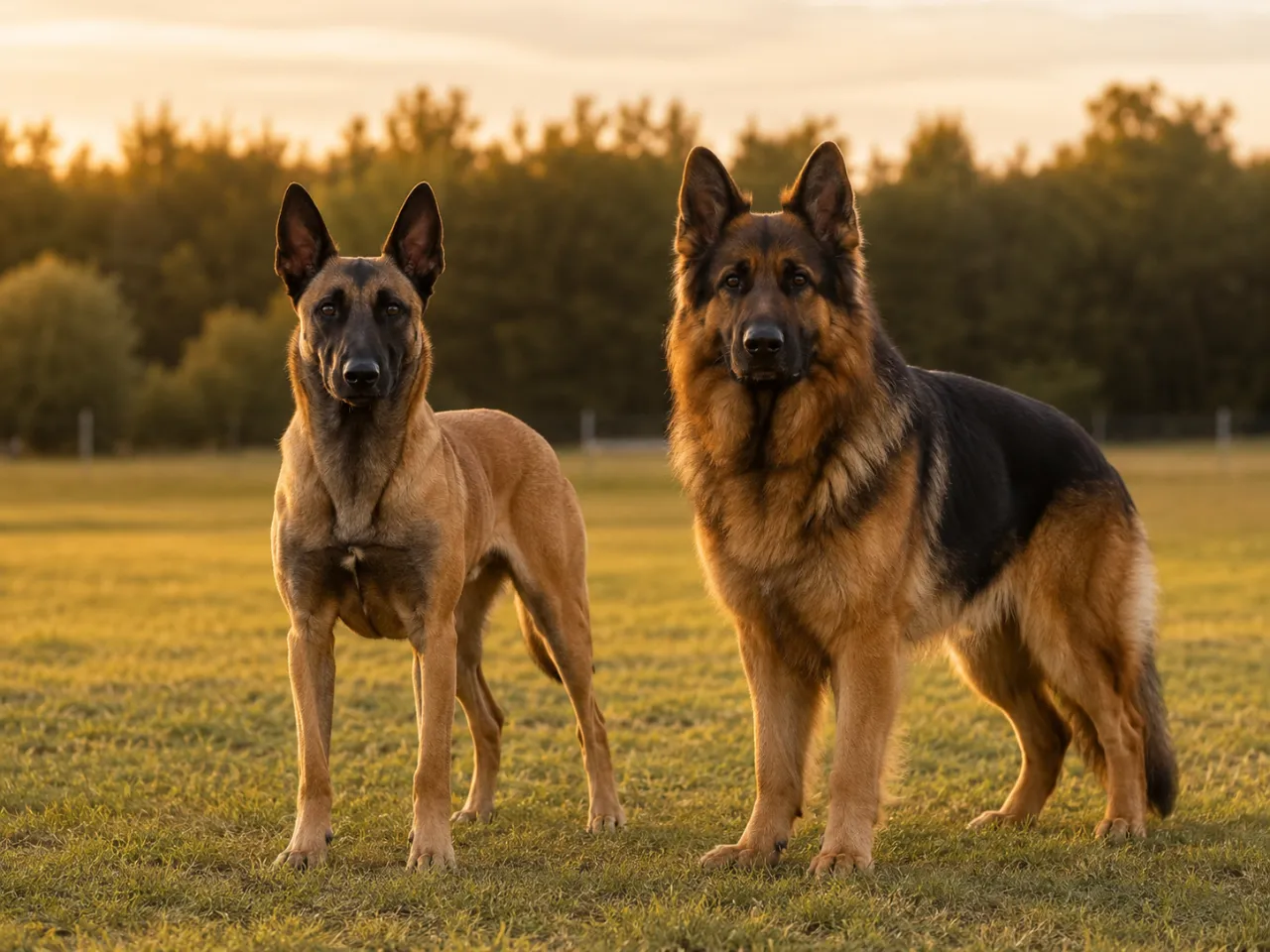
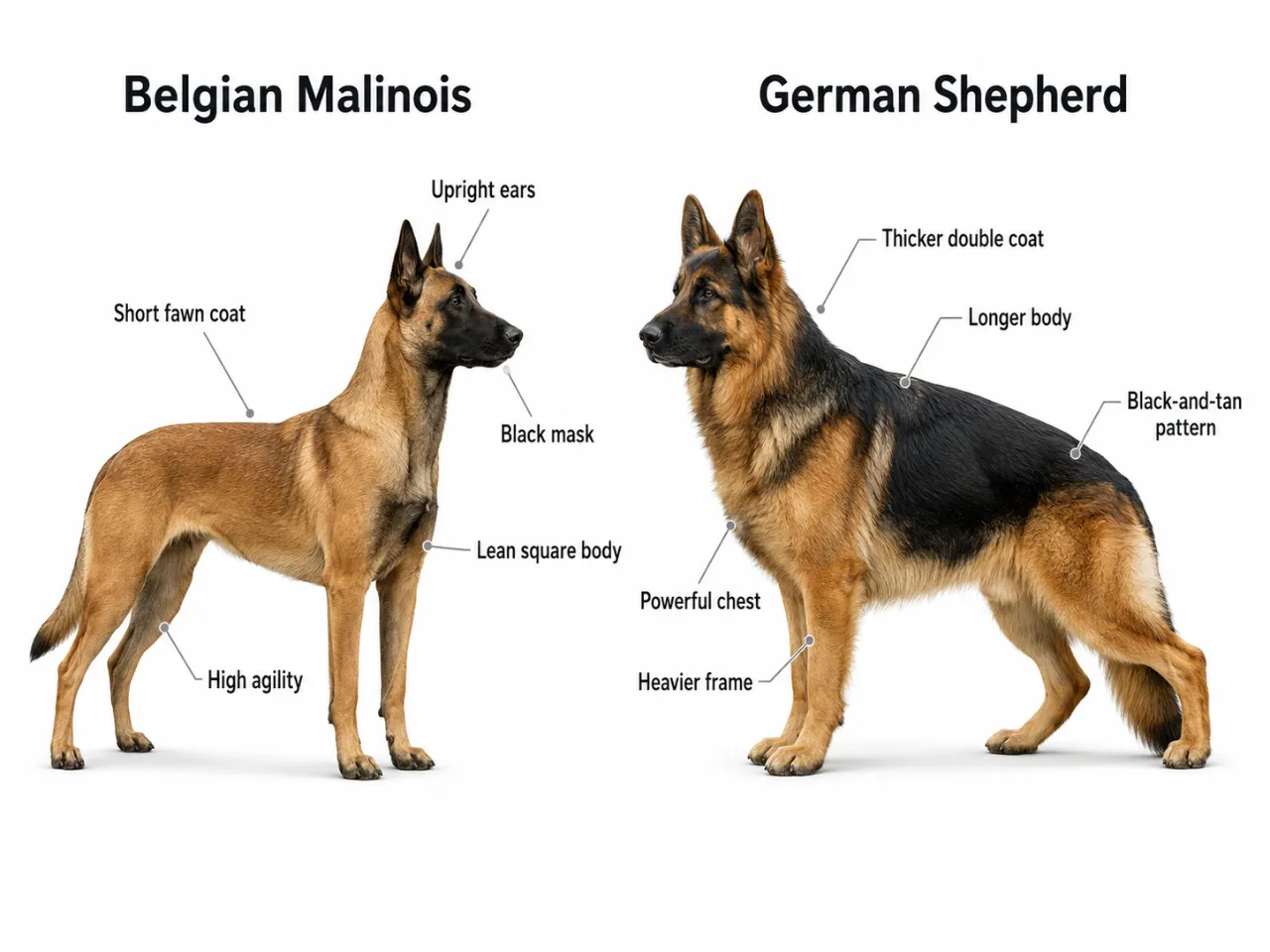
The fastest way to tell the breeds apart is to look at body build, coat length, and color pattern. A Belgian Malinois usually looks leaner, shorter-coated, and more square. A German Shepherd usually looks larger, longer-coated, and more stretched in body.
Belgian Malinois: lean body, short fawn-to-mahogany coat, black mask, black ears, very athletic outline.
German Shepherd: heavier body, thicker coat, longer outline, often black-and-tan or sable pattern.
Belgian Malinois: often looks like a high-speed athlete.
German Shepherd: often looks like a powerful, substantial working dog.
Origin and Breed History
The Belgian Malinois was developed in Belgium as a herding dog. It belongs to the Belgian shepherd group, which also includes the Tervuren, Groenendael, and Laekenois. The Malinois variety became especially valued for its short coat, speed, trainability, and intense working ability.
The German Shepherd was developed in Germany in the late 19th and early 20th centuries as a highly capable herding and utility dog. The goal was to create a strong, intelligent, trainable dog that could work sheep but also serve in protection, military, police, and service roles.
Both breeds began with herding roots, but both became famous for modern working roles. The Malinois is now especially associated with high-intensity police and military work, while the German Shepherd is known for broader versatility, including family protection, service work, search and rescue, and companionship.
Size and Body Build
German Shepherds are usually larger and heavier than Belgian Malinois. A German Shepherd often has a deeper chest, heavier bone, longer body, and more substantial frame. This can make the breed look more powerful and imposing.
Belgian Malinois are usually lighter and more agile. Their bodies are often square, dry, and athletic, with less bulk and more speed. This build helps them jump, turn, accelerate, and work for long periods without carrying unnecessary weight.
A simple comparison is this: the German Shepherd is usually the heavier utility worker, while the Belgian Malinois is the lighter high-speed performance dog.
Coat and Color
Belgian Malinois have a short, straight double coat. Their color is usually fawn, red, or mahogany with black overlay, a black mask, and dark ears. The coat is practical and relatively easy to maintain, though the breed still sheds.
German Shepherds have a double coat that is usually medium length, though coat length varies. Some have plush or long coats. Common colors include black and tan, black and red, sable, solid black, and bi-color. German Shepherds generally shed heavily, especially during seasonal coat changes.
If you want easier coat maintenance, the Malinois may have the advantage. If you like the classic thick shepherd look, the German Shepherd is more recognizable.
Temperament and Personality
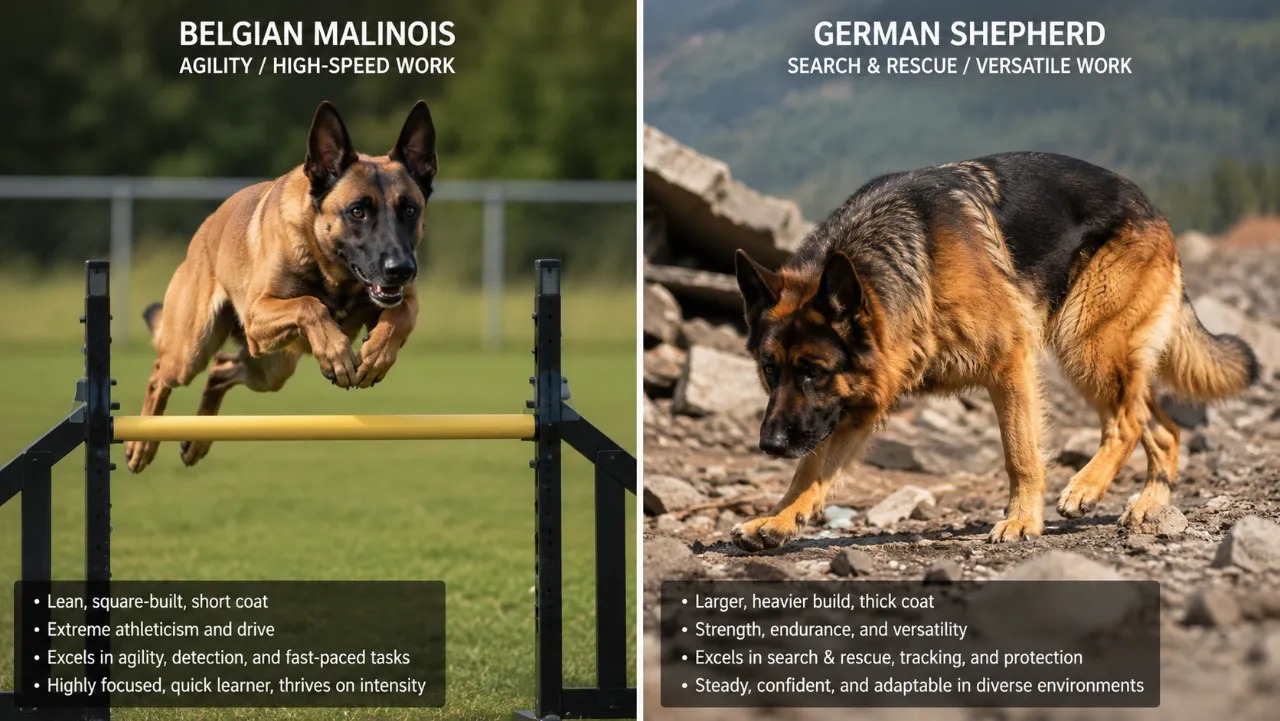
Belgian Malinois are often intense, fast-reacting, alert, and highly driven. They may bond closely with their handler and work with remarkable focus. However, that same intensity can be overwhelming in a normal household. Many Malinois are not satisfied with casual walks and simple play. They want tasks, training, movement, and challenge.
German Shepherds are also intelligent and protective, but many are more settled and adaptable than Belgian Malinois, especially in family-oriented lines. They can be serious, loyal, affectionate, and watchful. A good German Shepherd often balances working ability with a stronger “family dog” presence.
In general, the Malinois is sharper and more intense. The German Shepherd is often more balanced and easier to live with for experienced owners.
Energy Level and Exercise Needs
The Belgian Malinois has extremely high exercise and mental stimulation needs. This breed often requires structured training, running, tug games, obedience work, scent work, agility, protection sport, or other serious outlets. Without enough activity, a Malinois may become restless, destructive, or difficult to control.
The German Shepherd also needs daily exercise and training, but many individuals are easier to satisfy than a high-drive Malinois. A German Shepherd may do well with long walks, obedience sessions, tracking games, fetch, hiking, and structured play. Working-line German Shepherds can be very intense, but many family-line German Shepherds are more manageable.
Both breeds need active owners. The difference is that the Malinois often needs a lifestyle built around training, while the German Shepherd may fit more easily into a structured active family routine.
Training and Handler Experience
Both breeds are highly trainable, but the Belgian Malinois is less forgiving of mistakes. It learns quickly, reacts quickly, and can develop bad habits quickly if the handler is inconsistent. Harsh handling can create conflict, while weak handling can create chaos. The breed responds best to clear structure, reward-based motivation, impulse control, and skilled training.
The German Shepherd is also intelligent and responsive, but many individuals are more forgiving for experienced pet owners. They still need consistent socialization, obedience, and leadership, but they may not be as explosive or sensitive as a Malinois.
For first-time owners, neither breed is ideal. For experienced owners, the German Shepherd is usually the more realistic choice. The Malinois is best for people who actively enjoy advanced training and working-dog management.
Working Ability
Belgian Malinois are widely used in police, military, detection, protection sport, and tactical work because they are fast, light, intense, and highly motivated. Their athleticism allows them to climb, jump, sprint, and work with great speed. They are often chosen when extreme performance and drive are desired.
German Shepherds have a long history in police, military, service, guide dog, search-and-rescue, herding, protection, and family guardian roles. They are powerful, intelligent, loyal, and versatile. In some roles, their heavier build and steadier temperament can be an advantage.
The Malinois is often the sharper specialist for high-intensity working roles. The German Shepherd is often the broader all-around working dog.
Protection Instinct
Both breeds can be protective, but protection instinct must be handled responsibly. A Belgian Malinois may react quickly to movement, pressure, or perceived threat. Without proper socialization and training, this can become reactivity or inappropriate aggression.
A German Shepherd is also naturally watchful and protective. Many German Shepherds are deeply bonded to their family and cautious around strangers. With good breeding and training, this can make them excellent guardians. Without guidance, it can become fearfulness, overprotectiveness, or territorial behavior.
Protection work should never be treated casually. If an owner wants a protection-trained dog, they should work with ethical professional trainers and choose the dog carefully.
Family Life and Children
German Shepherds are generally more common as family dogs than Belgian Malinois. A well-socialized German Shepherd can be loving, patient, loyal, and protective with children. However, supervision is still important because the breed is large, strong, and energetic.
Belgian Malinois can live with families, but they are usually more demanding. Their intensity, speed, mouthiness, and high drive can be difficult around young children, especially if the dog lacks training or outlets. Some Malinois may chase running children, nip during play, or become overstimulated in chaotic homes.
For most active family homes, a carefully bred and well-trained German Shepherd is often more suitable. A Malinois should usually be chosen only by experienced working-dog owners.
Which Breed Is Better for First-Time Owners?
The German Shepherd is usually a better choice than the Belgian Malinois for a first-time owner, but even a German Shepherd can be too much for someone unprepared. German Shepherds need training, socialization, grooming, exercise, and management. They are not “easy” dogs.
The Belgian Malinois is generally not recommended for first-time owners. Many people are attracted to the breed because of police or military videos, but those videos usually show dogs handled by professionals. A Malinois without a job can become a serious household challenge.
If someone wants a first dog, both breeds should be considered carefully. Meeting adult dogs, talking with responsible breeders or rescue groups, and honestly evaluating lifestyle are essential.
Apartment Living
A German Shepherd can live in an apartment if the owner provides enough outdoor exercise, training, and mental enrichment. However, barking, shedding, size, and protective behavior can create challenges in dense housing.
A Belgian Malinois is generally harder to keep in an apartment. The breed’s high energy, alertness, and need for structured work can make apartment living difficult unless the owner is extremely active and experienced. A Malinois that hears hallway noises all day may become frustrated or reactive.
For both breeds, space alone does not solve behavior problems. A large yard is not a substitute for training, exercise, and engagement.
Grooming and Shedding
Belgian Malinois are easier to groom than German Shepherds because their coat is shorter. Regular brushing, nail trimming, ear checks, dental care, and occasional bathing are usually enough. However, they still shed, especially during seasonal coat changes.
German Shepherds shed heavily. Their double coat requires regular brushing, and seasonal shedding can be intense. Long-coated German Shepherds need extra attention to prevent tangles and remove loose undercoat.
If grooming and shedding are major concerns, the Belgian Malinois has the easier coat. If you choose a German Shepherd, expect hair in the house.
Health Considerations
Both breeds can suffer from inherited and structural health issues, so responsible breeding matters. Belgian Malinois may be associated with hip and elbow dysplasia, eye problems, epilepsy, and certain orthopedic injuries, especially in hard-working dogs.
German Shepherds may be associated with hip and elbow dysplasia, degenerative myelopathy, digestive sensitivity, allergies, spinal issues, and other breed-related concerns. Poor breeding, extreme body shape, and lack of health testing can increase risk.
For either breed, choose breeders who perform health testing, select for stable temperament, and avoid exaggerations. Working ability and appearance should never be prioritized over health and sound temperament.
Behavior Problems When Under-Stimulated
Both breeds can develop behavior problems when bored, isolated, or under-trained. A Belgian Malinois may become destructive, mouthy, obsessive, reactive, or difficult to settle. It may chase shadows, spin, bark, bite objects, or constantly demand activity.
A German Shepherd may become anxious, territorial, noisy, destructive, or overprotective. It may bark at strangers, guard spaces, chew furniture, dig, or become difficult on leash.
These problems are not signs that the breeds are “bad.” They are signs that powerful working dogs need appropriate outlets, early training, socialization, and responsible management.
Belgian Malinois vs German Shepherd in Police and Military Work
Both breeds are used in police and military roles, but Belgian Malinois have become especially popular in many high-intensity units. Their lighter body, speed, agility, and strong working drive make them excellent for detection, patrol, apprehension, and tactical tasks.
German Shepherds remain highly respected working dogs. They are powerful, versatile, loyal, and capable of many roles. Some handlers prefer the German Shepherd’s steadier temperament and stronger physical presence. Others prefer the Malinois for speed and intensity.
The better working dog depends on the job, handler, training program, and individual dog. Breed alone does not determine success.
Belgian Malinois vs German Shepherd as Service Dogs
German Shepherds have a stronger history as guide dogs, mobility support dogs, and service dogs. Their size, loyalty, trainability, and ability to bond closely with a handler can be valuable. However, not every German Shepherd has the calm temperament required for service work.
Belgian Malinois are less commonly used as general service dogs because their intensity and drive can make them harder to settle in public environments. Some individuals may succeed in specialized roles, but the breed is usually better known for detection, patrol, and sport work than calm public-access service work.
For service work, temperament matters more than breed reputation. Calmness, stability, health, and trainability are essential.
Which Breed Is More Affectionate?
German Shepherds are often more openly affectionate in family homes. Many enjoy staying close to their people, following them from room to room, and forming deep bonds. They may be serious with strangers but soft with trusted family members.
Belgian Malinois can also be affectionate and deeply bonded, but their affection may be mixed with intense drive. Some Malinois prefer working, playing tug, or training with their handler rather than relaxing quietly. They may show love through engagement and action rather than calm cuddling.
Individual dogs vary greatly. A calm Malinois may be more affectionate than a high-drive German Shepherd, and a social German Shepherd may be more people-focused than a serious Malinois.
Which Breed Barks More?
Both breeds can bark. Belgian Malinois may bark from excitement, frustration, alertness, or drive. They can be very vocal when under-stimulated or when they want action.
German Shepherds are also known for barking, especially when guarding, alerting, or reacting to people outside the home. Without training, they may become nuisance barkers.
Both breeds need early training to teach quiet behavior, impulse control, and appropriate responses to visitors, sounds, and outdoor movement.
Common Misidentifications
People sometimes mistake a Belgian Malinois for a German Shepherd because both are shepherd-type working dogs with upright ears, intelligent expressions, and protective reputations. However, the Malinois is usually shorter-coated, lighter, and more square, with a fawn coat and black mask.
German Shepherds are usually larger, heavier, and longer in body, with a thicker coat and more color variety. Their head and body outline often look more substantial. Mixed-breed dogs can make identification harder, especially if they have shepherd ancestry from more than one breed.
How to Identify One in a Photo
When looking at a photo, use several clues together:
Check the coat: short fawn coat with black mask usually suggests Belgian Malinois.
Check the body: lean, square, and athletic suggests Malinois; longer and heavier suggests German Shepherd.
Check the color: classic black-and-tan or sable often suggests German Shepherd.
Check the coat length: thicker double coat or long coat suggests German Shepherd.
Check the posture: explosive, sharp, high-drive working posture often suggests Malinois.
Check the head: German Shepherds often have a broader, more substantial shepherd head, while Malinois look lighter and more fox-like.
Which Breed Is Better for You?
Choose a Belgian Malinois only if you are ready for a very high-drive dog that needs daily structured training, serious exercise, and mental work. This breed is best for experienced handlers, sport homes, working homes, and people who enjoy building their daily life around training.
Choose a German Shepherd if you want a loyal, intelligent, protective, and versatile working companion and you have time for training, exercise, grooming, and socialization. A German Shepherd is often more realistic for an active family than a Malinois, especially if the dog comes from stable companion or balanced working lines.
Do not choose either breed only for protection, appearance, or online videos. These are powerful dogs that need responsible ownership.
Final Comparison
Belgian Malinois and German Shepherds are both exceptional working dogs, but they suit different types of owners. The Belgian Malinois is usually faster, lighter, sharper, and more intense. It is a high-performance dog for people who understand working-dog drive. The German Shepherd is usually larger, more substantial, more versatile, and often easier to integrate into an experienced family home.
If you want a professional-level sport or working dog and have the skills to manage one, the Belgian Malinois may be ideal. If you want a loyal, trainable, protective companion with strong working ability and better family adaptability, the German Shepherd is often the better choice.
Related Dog Comparisons
German Shepherd vs Dutch Shepherd
Belgian Malinois vs Dutch Shepherd
German Shepherd vs Doberman
German Shepherd vs Rottweiler
Border Collie vs German Shepherd
Belgian Malinois vs Belgian Tervuren
FAQs About Belgian Malinois vs German Shepherd
Is a Belgian Malinois the same as a German Shepherd?
No. They are different breeds from different countries. The Belgian Malinois comes from Belgium and is usually lighter, faster, and shorter-coated. The German Shepherd comes from Germany and is usually larger, heavier, and thicker-coated.
Which is better, Belgian Malinois or German Shepherd?
It depends on the owner. A Belgian Malinois is often better for professional work, advanced sport training, and very experienced handlers. A German Shepherd is often better for experienced families who want a loyal, protective, and versatile companion.
Which breed is more aggressive?
Neither breed should be judged as automatically aggressive. Both can be stable and well-behaved with good breeding, training, and socialization. However, both are powerful working breeds, and poor handling can lead to serious behavior problems.
Which is easier to train?
Both are highly trainable. The Belgian Malinois learns extremely fast but is more demanding and less forgiving of mistakes. The German Shepherd is also very trainable and may be easier for experienced pet owners.
Which breed needs more exercise?
The Belgian Malinois usually needs more intense daily exercise and mental work. German Shepherds also need plenty of activity, but many are easier to satisfy than high-drive Malinois.
Is a Belgian Malinois good for families?
A Belgian Malinois can live with a family, but it is usually best for experienced working-dog owners. Its intensity, mouthiness, and high drive can be difficult in homes with small children or inactive routines.
Is a German Shepherd good for families?
Yes, a well-bred and well-trained German Shepherd can be an excellent family dog. It still needs socialization, obedience training, grooming, exercise, and responsible supervision around children.
Which breed sheds more?
German Shepherds usually shed more because they have a thicker double coat. Belgian Malinois also shed, but their shorter coat is generally easier to maintain.