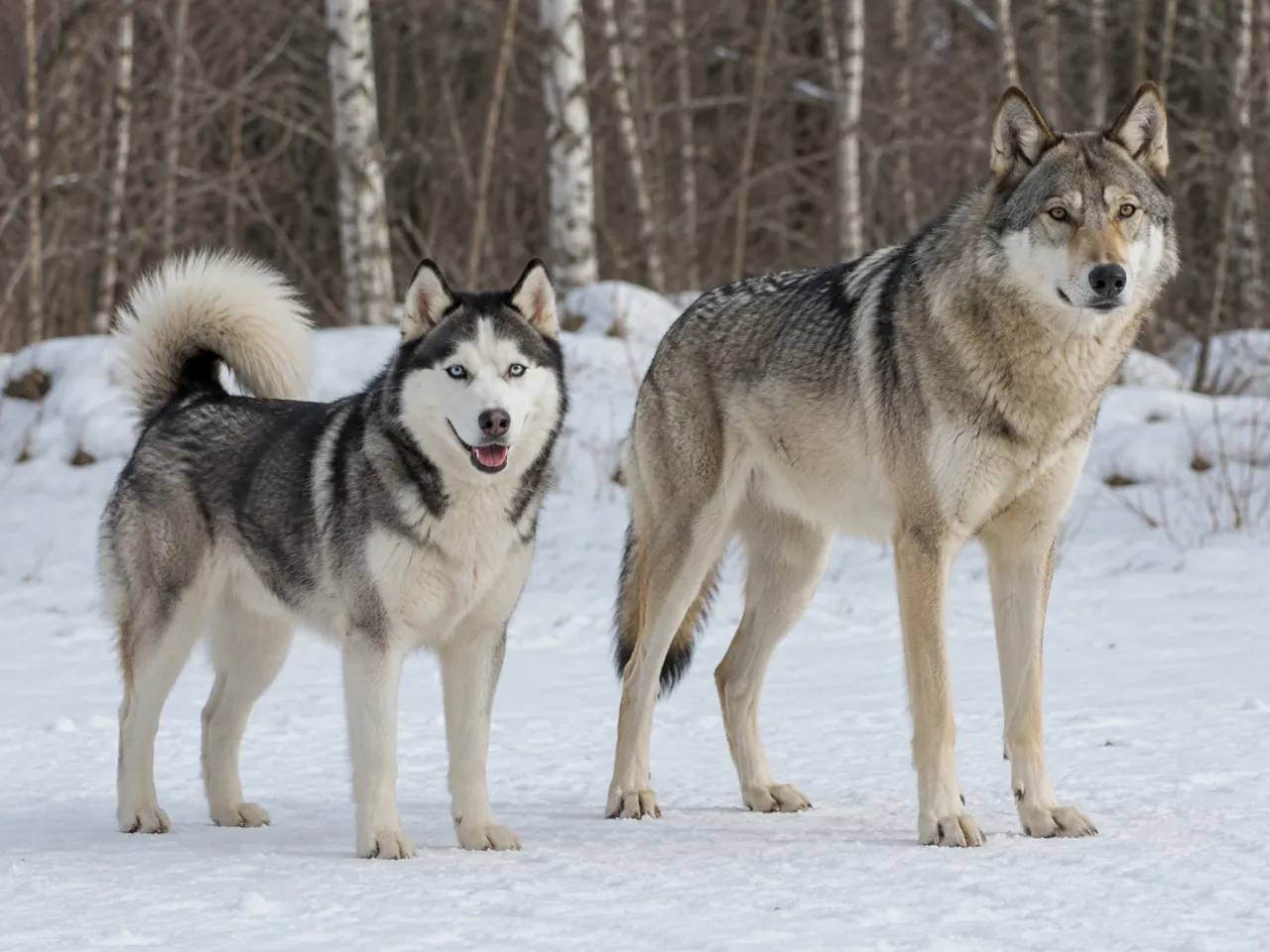
Huskies and wolf dogs can look similar, but they are very different animals. A Siberian Husky is a fully domesticated dog breed developed for sled work and companionship. A wolf dog, or wolfdog, is a domestic dog with recent wolf ancestry. Huskies are usually more predictable, trainable, and suitable for experienced pet homes. Wolf dogs are more demanding, less predictable, and often restricted or illegal in some areas.
Husky vs Wolf Dog Quick Answer
The main difference is genetics and domestication. A Husky is a domestic dog breed with a long history of living and working with humans. A wolf dog is a hybrid with both dog and wolf ancestry. Wolf dogs may show stronger wild instincts, higher escape drive, more intense prey behavior, stronger fear responses, and more complex social needs. A Husky is challenging, but a wolf dog is usually much harder to keep responsibly.
Husky vs Wolf Dog Summary Table
| Feature | Siberian Husky | Wolf Dog |
|---|---|---|
| Basic identity | Recognized domestic dog breed | Domestic dog with recent wolf ancestry |
| Domestication | Fully domesticated | Partly domestic, partly wild ancestry |
| Predictability | More predictable by breed standards | Highly variable depending on wolf content and individual genetics |
| Typical temperament | Friendly, energetic, vocal, independent, social | Shy, intense, cautious, independent, highly variable |
| Trainability | Trainable but stubborn and independent | Often much harder to train reliably |
| Containment needs | High; known escape artists | Very high; may require specialized enclosures |
| Exercise needs | High | Very high, plus complex enrichment needs |
| Family suitability | Can be good for active, experienced homes | Usually not suitable for typical family homes |
| Legal status | Generally legal as a dog breed | Restricted or illegal in many regions; rules vary |
| Social behavior | Usually social with people and dogs when well raised | May be bonded to a few people but fearful or reactive with strangers |
| Prey drive | Often high | Often very high and harder to manage |
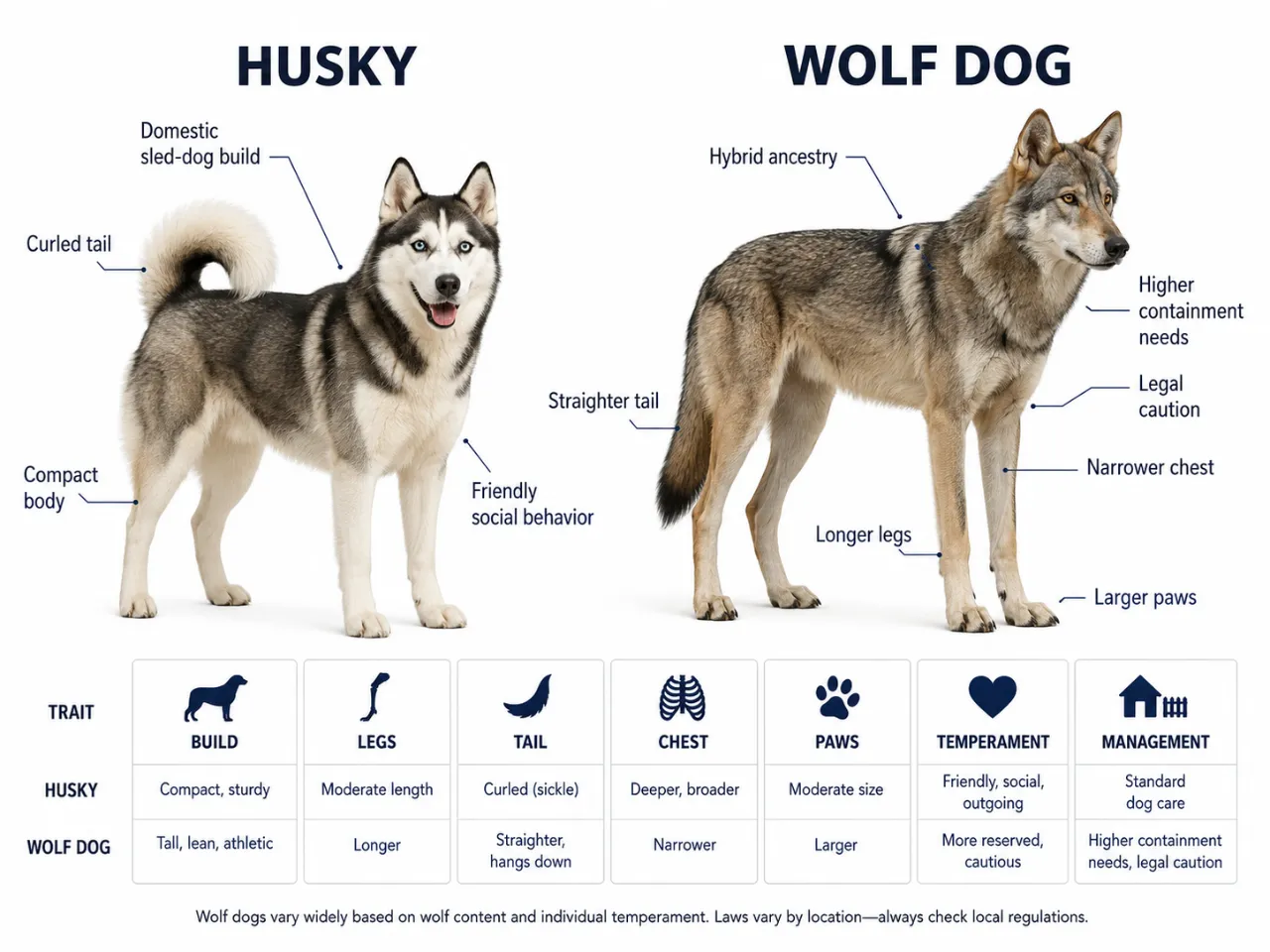
| Quick identification clue | Dog-like face, curled or sickle tail, compact sled-dog build | Longer legs, narrower chest, larger paws, straighter tail, more wolf-like movement |
What Is a Husky?
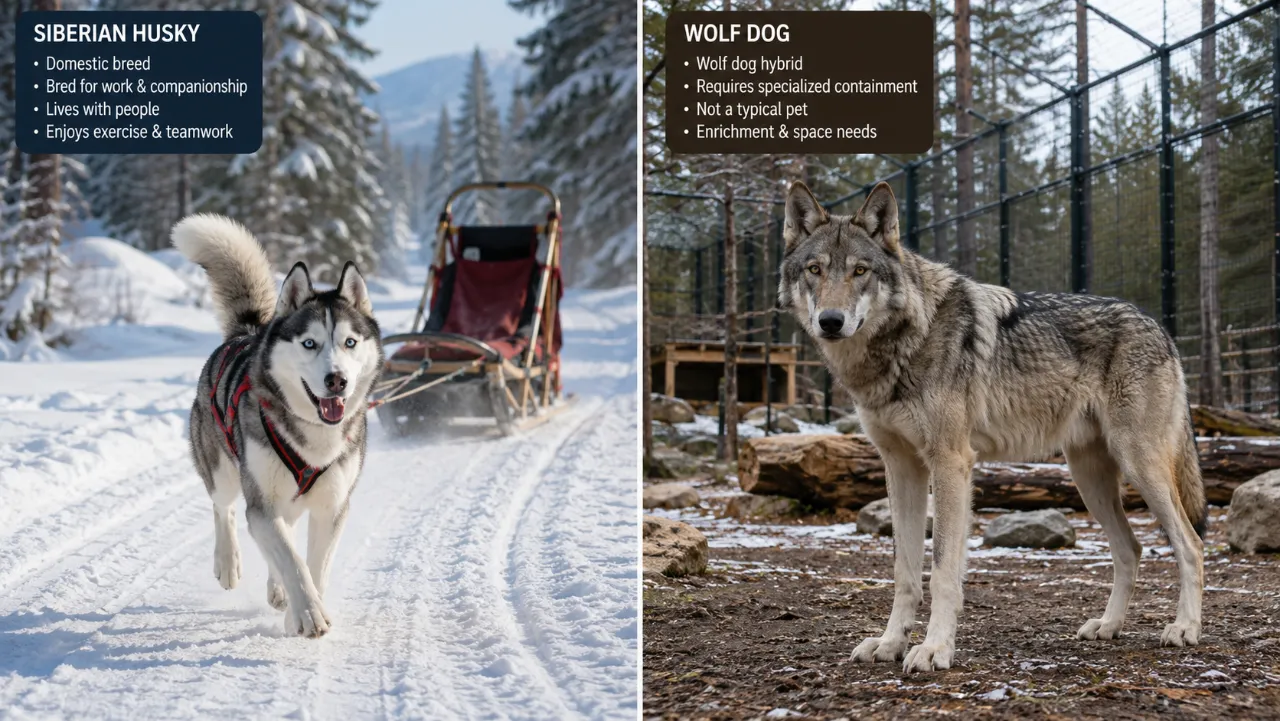
A Husky usually means the Siberian Husky, a medium-sized sled dog breed developed by the Chukchi people of northeastern Asia. Huskies were bred to pull light loads over long distances in cold climates. They are known for endurance, thick double coats, almond-shaped eyes, upright ears, and strong pack-oriented behavior.
Huskies are fully domesticated dogs. They are energetic, intelligent, social, vocal, and often mischievous. Many are friendly with people and enjoy being part of an active household. However, they are not easy dogs for everyone. Huskies need exercise, secure fencing, mental stimulation, and patient training. They are famous for running, digging, howling, pulling, and escaping if bored.
What Is a Wolf Dog?
A wolf dog, also called a wolfdog, is an animal with both domestic dog and wolf ancestry. Wolf dogs can vary greatly. Some have low wolf content and may behave more like difficult northern-breed dogs. Others have mid or high wolf content and may show much stronger wolf-like traits, including fear of strangers, seasonal behavior changes, strong prey drive, intense escape behavior, and low tolerance for ordinary pet routines.
Wolf dogs are not a single breed. Their behavior depends on ancestry, wolf content, dog breeds involved, early socialization, handling, environment, and individual temperament. Because wolf content is often exaggerated or misreported, visual identification alone is unreliable.
Quick Visual Difference
Huskies and wolf dogs can look similar because many wolf dogs are crossed with northern breeds such as Huskies, Malamutes, or German Shepherds. Still, some clues can help.
Husky: compact sled-dog body, curled or sickle tail, shorter muzzle, more dog-like expression.
Wolf dog: longer legs, narrower chest, larger feet, straighter tail, longer muzzle, more cautious expression.
Husky: often has bold facial masks, blue eyes, and strong domestic-dog features.
Wolf dog: may have amber eyes, blended coat colors, longer body proportions, and smoother wolf-like movement.
However, appearance is not proof. Some Huskies look very wolf-like, and some wolf dogs look surprisingly dog-like.
Genetics and Domestication
The Husky is a domestic dog. Like all dogs, it descends from ancient wolves, but it has been shaped by thousands of years of domestication and selective breeding. Huskies were selected to cooperate with humans, work in teams, pull sleds, and live around people.
A wolf dog has recent wolf ancestry. This matters because domestication changes behavior. Dogs are generally more tolerant of human environments, more responsive to training, and more adaptable to household life. Wolves are intelligent and social, but their instincts are shaped for survival in the wild, not for obedience, pet handling, or suburban living.
A wolf dog may inherit traits from both sides, but the result is not predictable. It may look like a dog but behave partly like a wild canid.
Size and Body Build
Siberian Huskies are medium-sized dogs. They are athletic but not giant. They have compact bodies, thick coats, erect ears, and tails often carried in a sickle curve. They are built for endurance rather than brute strength.
Wolf dogs vary widely in size depending on their wolf content and dog ancestry. Some may be similar in size to Huskies, while others may be larger, taller, and longer-legged. Higher-content wolf dogs often have a more narrow chest, longer legs, larger feet, a straighter back, and a tail that hangs more naturally rather than curling tightly over the back.
A common mistake is assuming that bigger always means more wolf. Some domestic dogs are huge, and some wolf dogs are not unusually large.
Face, Eyes, Ears, and Tail
Huskies often have expressive dog-like faces, shorter muzzles, and clear facial masks. Blue eyes are common in Huskies, although brown, amber, and mixed eyes also occur. Their ears are upright and triangular, and the tail is often carried in a curved or sickle shape.
Wolf dogs may have a longer muzzle, narrower face, more slanted eyes, smaller-looking ears relative to head size, and a tail that hangs lower or straighter. Their eyes are often amber, yellowish, or light brown, though eye color alone is not reliable.
The tail is useful but not perfect. A tightly curled tail usually suggests domestic dog ancestry, while a straighter tail may suggest wolf-like structure. But many mixed dogs blur these clues.
Coat and Color
Huskies come in many colors, including black and white, gray and white, red and white, sable, agouti, and all-white. Their markings may be bold and high-contrast, especially on the face.
Wolf dogs often have more blended, natural-looking colors such as gray, cream, tan, black, sable, agouti, or mixed earth tones. Higher-content wolf dogs may show less dramatic facial masking than many Huskies, with more gradual color transitions.
Both animals shed heavily. A Husky’s seasonal coat blow can be dramatic. Wolf dogs may also shed intensely, especially if they inherit thick northern or wolf-like coats.
Temperament and Personality
Huskies are usually friendly, outgoing, playful, vocal, and social. They can be independent and stubborn, but they are still domestic dogs. Many enjoy people, other dogs, and active family life. They may be poor guard dogs because they are often friendly with strangers.
Wolf dogs are much less predictable. Some are affectionate with their primary caregivers but shy or fearful around strangers. Others may be highly independent, avoidant, destructive, or difficult to handle. High-content wolf dogs often do not behave like normal pet dogs. They may dislike confinement, resist obedience training, and respond poorly to pressure or punishment.
A Husky may be difficult because it is energetic and independent. A wolf dog may be difficult because its instincts are not fully domestic.
Training Differences
Huskies can be trained, but they often require patience. They are intelligent and can learn quickly, yet they may choose not to obey if they see no reason. Recall training can be especially difficult because many Huskies have strong running instincts and high prey drive.
Wolf dogs are usually much harder to train reliably. They may not respond to commands like a domestic dog, especially under stress or distraction. Food rewards, trust-building, early socialization, and low-pressure handling are important, but even with good training, many wolf dogs cannot safely live like ordinary pets.
For both, harsh training is a mistake. With wolf dogs, harsh handling can be especially damaging because it may create fear, avoidance, or defensive behavior.
Exercise and Enrichment Needs
Huskies need a lot of exercise. They benefit from running, hiking, sled sports, canicross, skijoring, long walks, puzzle feeders, digging areas, and structured play. A bored Husky may howl, chew, dig, escape, or destroy furniture.
Wolf dogs need not only exercise but also complex environmental enrichment. They may require large secure outdoor enclosures, digging spaces, scent enrichment, hidden food, climbing structures, shade, den areas, and safe social companionship. A simple backyard or daily walk is usually not enough.
A Husky needs an active owner. A wolf dog often needs a specialized lifestyle.
Containment and Escape Behavior
Huskies are famous escape artists. They may dig under fences, climb, squeeze through gaps, or run through open doors. Secure fencing is essential.
Wolf dogs can be even more difficult to contain. Many need tall fencing, dig guards, roofed sections, double-gated entry systems, and strong materials. A wolf dog that escapes may be at risk of being hit by a car, shot, impounded, or legally confiscated. It may also threaten livestock, pets, or wildlife.
Containment is not optional. It is one of the biggest responsibilities of wolf dog ownership.
Prey Drive and Small Animals
Huskies often have high prey drive. Many cannot be trusted around cats, rabbits, chickens, guinea pigs, or small wildlife unless carefully raised and managed. Even then, supervision is important.
Wolf dogs often have even stronger prey drive and less domestic inhibition. They may chase, stalk, grab, or kill small animals. This behavior is not “bad” from a biological perspective; it is normal predator behavior. But it can be dangerous in a home environment.
Neither Huskies nor wolf dogs should be assumed safe around small animals without careful evaluation and management.
Social Behavior with People
Huskies are usually social dogs. Many enjoy guests, children, and other dogs, though they can be rough, jumpy, or mouthy when young. They often love attention but may be too energetic for very small children or inactive households.
Wolf dogs may bond deeply with one or a few people but remain suspicious of strangers. Early socialization can help, but it does not erase genetics. Some wolf dogs become more fearful or defensive as they mature, especially during adolescence or breeding season-related hormonal changes.
A Husky is usually a social domestic dog. A wolf dog may be socially selective and difficult for visitors, veterinarians, groomers, or pet sitters to handle.
Family Life and Children
A well-trained Husky can be a good family dog for active households. However, Huskies need supervision with children because they can be excitable, strong, and mouthy. They may knock over small children during play.
Wolf dogs are usually not recommended for families with young children. Their behavior can be less predictable, and they may not tolerate normal child noise, running, grabbing, or sudden movement. Even a bonded wolf dog may react defensively if frightened or cornered.
For most families, a Husky is a challenging but realistic pet. A wolf dog is usually not a suitable family companion.
Legal Status and Ownership Rules
Siberian Huskies are generally treated as domestic dogs. Owners still need to follow local dog laws, leash rules, vaccination requirements, and licensing rules.
Wolf dogs are different. Their legal status varies widely by country, state, province, county, and city. Some places ban them. Some require permits. Some regulate them based on wolf content. Some classify them as exotic or dangerous animals. Insurance, housing, veterinary access, and transport can also be difficult.
Before anyone considers a wolf dog, they must check local laws and understand that rules can change. Legal trouble can result in the animal being seized or euthanized, even if the owner had good intentions.
Veterinary Care Challenges
Huskies usually receive normal dog veterinary care. They can be vaccinated, examined, neutered, microchipped, and treated like other domestic dogs.
Wolf dogs can be more complicated. Some veterinarians may not treat them because of legal, safety, or liability concerns. Handling may require special facilities or sedation. Rabies vaccination laws can also be complicated in some regions because regulations may not recognize wolf dogs the same way they recognize domestic dogs.
This is one of the practical reasons wolf dog ownership is difficult. Access to proper veterinary care must be confirmed before ownership, not after a problem happens.
Health and Lifespan
Huskies are generally hardy dogs, but they can be prone to conditions such as hip issues, eye disorders, skin problems, and certain inherited diseases. Responsible breeding and regular veterinary care matter.
Wolf dog health varies with ancestry and breeding quality. Some may be physically robust, while others inherit health problems from domestic dog lines. Poor breeding, inbreeding, bad nutrition, and improper housing can cause serious welfare problems.
For both Huskies and wolf dogs, good care includes proper diet, parasite prevention, dental care, exercise, weight control, safe containment, and veterinary support.
Husky vs Wolf Dog vs Wolf
A Husky is a dog. A wolf is a wild canid. A wolf dog is a hybrid with both dog and wolf ancestry. These are three different categories.
| Animal | What It Is | Typical Human Suitability |
|---|---|---|
| Husky | Domestic sled dog breed | Suitable for active, experienced dog homes |
| Wolf Dog | Dog-wolf hybrid | Usually suitable only for specialists, if legal |
| Wolf | Wild animal | Not a pet |
A wolf should never be treated as a pet. A wolf dog should not be treated as a normal dog. A Husky may look wolf-like, but it is still a domestic dog.
Common Misidentifications
Many people mistake Huskies, Malamutes, German Shepherd mixes, and northern-breed mixes for wolf dogs. A dog with blue eyes, a gray coat, or a thick ruff is not automatically part wolf. In fact, many claimed wolf dogs have little or no wolf ancestry.
Visual identification is unreliable because domestic dogs can look wolf-like. DNA testing may help, but even tests have limitations depending on the method and reference database. Behavior, ancestry records, breeder honesty, and expert evaluation are often needed.
The safest assumption is not to call a dog a wolf dog unless there is reliable evidence.
How to Identify One in a Photo
Photo identification is difficult, but these clues may help:
Check the tail: a tightly curled tail suggests Husky or domestic dog ancestry.
Check the legs: very long legs and large feet may suggest wolf-like structure.
Check the chest: wolves and higher-content wolf dogs often have narrower chests than many dogs.
Check the head: a long muzzle and smooth forehead transition may suggest wolf-like ancestry.
Check the eyes: blue eyes are common in Huskies but uncommon in wolves.
Check the behavior: extreme shyness, avoidance, and high escape drive may suggest wolf dog traits, but behavior alone is not proof.
Never rely on one feature. Many domestic dogs have wolf-like traits, and many wolf dogs have dog-like traits.
Which Is More Dangerous?
A Husky can be dangerous if poorly managed, especially around small animals or if it escapes into traffic or livestock areas. However, Huskies are domestic dogs and are generally more predictable than wolf dogs.
A wolf dog can be more dangerous because its behavior may be less predictable, especially around strangers, children, livestock, or small pets. Fearfulness, prey drive, territorial behavior, and escape behavior can create serious risks.
The issue is not that wolf dogs are “evil.” The issue is that they often have needs and instincts that ordinary pet homes cannot meet.
Which Is Better as a Pet?
For almost everyone, a Husky is a much better pet choice than a wolf dog. Huskies are difficult dogs, but their needs are still within the range of responsible dog ownership. They need exercise, training, grooming, secure fencing, and companionship.
Wolf dogs are usually not appropriate pets for typical households. They may require specialized containment, legal permits, expert handling, raw or carefully managed diets, species-specific enrichment, and lifelong commitment. Many end up surrendered to sanctuaries because owners underestimate their needs.
If someone loves the wolf-like look, a Husky, Alaskan Malamute, or northern-breed mix from a responsible rescue is usually a safer and more ethical choice.
Ethical Concerns About Wolf Dogs
Wolf dog breeding raises serious ethical questions. Many buyers are attracted by appearance but are unprepared for the animal’s behavior and containment needs. When wolf dogs become unmanageable, they may be abandoned, euthanized, or placed in overcrowded sanctuaries.
Responsible ownership requires honesty. A wolf dog is not a status symbol. It is a complex animal with needs that most homes cannot meet. Anyone considering one should first volunteer at a wolf dog sanctuary, learn local laws, speak with experts, and understand the lifelong responsibility.
Which One Should You Choose?
Choose a Husky if you want an energetic, vocal, social, athletic dog and you are ready for daily exercise, heavy shedding, secure fencing, and independent behavior. A Husky is best for active owners who enjoy outdoor activities and training challenges.
A wolf dog should only be considered by specialists in places where ownership is legal and where proper containment, veterinary care, enrichment, and lifetime planning are already in place. For most people, the responsible answer is not to get a wolf dog.
Final Comparison
Huskies and wolf dogs may share a wild-looking appearance, but they are not the same. The Husky is a domesticated sled dog: energetic, social, vocal, and challenging but suitable for the right active home. The wolf dog is a hybrid animal with recent wolf ancestry and much more complex behavior, legal, containment, and welfare needs.
If you want a loyal northern-breed companion, choose a well-bred or responsibly rescued Husky. If you are considering a wolf dog, understand that appearance is the easy part. The real challenge is providing a safe, legal, ethical, and lifelong environment for an animal that may never behave like a normal pet dog.
Related Dog Comparisons
Husky vs Malamute
Husky vs German Shepherd
Wolf Dog vs Wolf
Alaskan Malamute vs Wolf Dog
Siberian Husky vs Alaskan Husky
German Shepherd vs Wolf
FAQs About Husky vs Wolf Dog
Is a Husky a wolf dog?
No. A Husky is a fully domesticated dog breed. It may look wolf-like, but it is not a wolf dog unless it has recent wolf ancestry.
What is the main difference between a Husky and a wolf dog?
The main difference is ancestry. A Husky is a domestic dog bred for sled work. A wolf dog is a hybrid with both domestic dog and wolf ancestry, which can make behavior less predictable and ownership more difficult.
Can you tell a wolf dog from a Husky by appearance?
Sometimes there are clues, but appearance is not reliable. Huskies, Malamutes, and other northern dogs can look very wolf-like. Reliable ancestry records or genetic testing are better than guessing from photos.
Are wolf dogs legal?
It depends on the location. Some areas ban wolf dogs, some require permits, and some regulate them based on wolf content. Always check local laws before considering ownership.
Are wolf dogs good pets?
Wolf dogs are usually not good pets for typical homes. They often require specialized containment, experienced handling, legal compliance, careful socialization, and complex enrichment.
Are Huskies good family dogs?
Huskies can be good family dogs for active homes, but they need exercise, training, secure fencing, and supervision around small children and small animals.
Do Huskies have wolf DNA?
Like all domestic dogs, Huskies descend from ancient wolves. However, that does not mean a modern Husky is a wolf dog. A wolf dog has recent wolf ancestry.
Which is easier to train, a Husky or a wolf dog?
A Husky is usually much easier to train than a wolf dog, although Huskies can still be independent and stubborn. Wolf dogs often do not respond to training like normal domestic dogs.
Can wolf dogs live indoors?
Some low-content wolf dogs may spend time indoors, but many wolf dogs are difficult to keep as house pets. They may be destructive, anxious, hard to contain, and unsafe around small animals or strangers.
What dog looks like a wolf but is safer than a wolf dog?
Siberian Huskies, Alaskan Malamutes, Tamaskan-type dogs, Northern Inuit-type dogs, and some shepherd or northern-breed mixes can have a wolf-like appearance while being domestic dogs. Temperament still varies, so choose carefully.