No, hippos do not literally sweat blood. Hippopotamuses produce a special skin secretion that is initially nearly colorless but turns reddish-orange and eventually brown. Its appearance comes from two natural pigments, hipposudoric acid and norhipposudoric acid, rather than blood. Research has shown that these pigments absorb ultraviolet light and can inhibit the growth of certain bacteria. The secretion also helps keep the animal's skin moist. Although it is often called "blood sweat," the fluid is different from the ordinary watery sweat humans produce primarily for cooling.
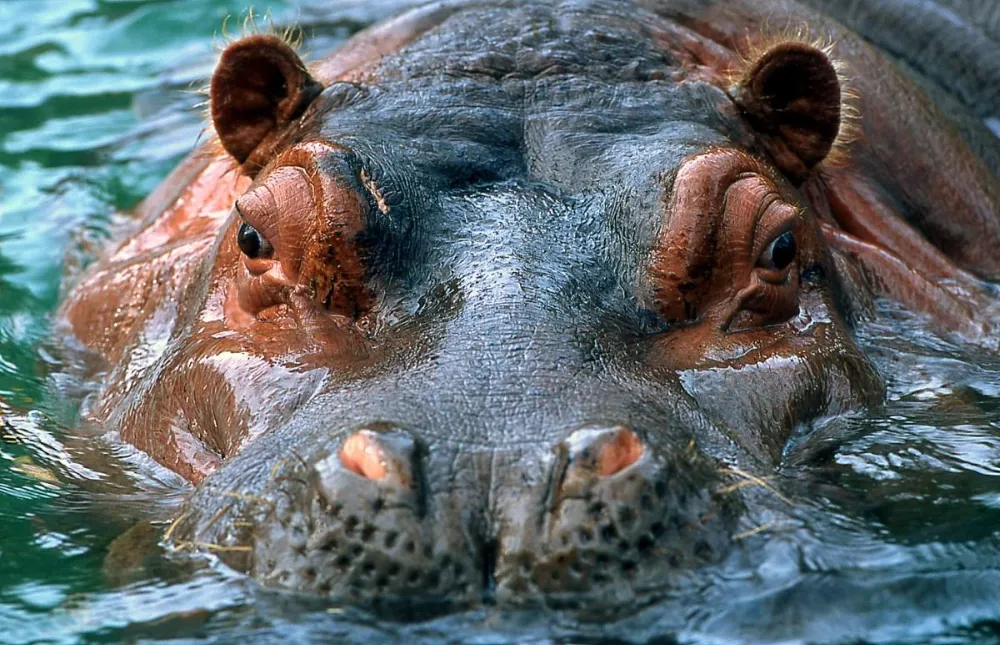
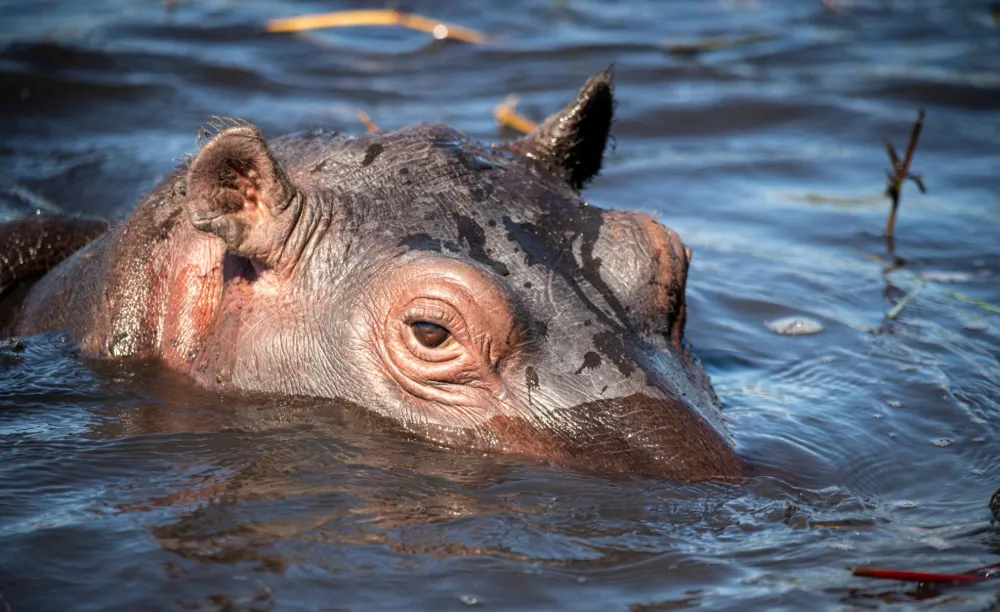
The reddish appearance of a hippopotamus's skin is often caused by natural pigments in a protective secretion, not by bleeding.
Do Hippos Really Sweat Blood?
Hippos do not normally release blood through their skin as a way of cooling themselves or protecting their bodies.
The expression "blood sweat" is a nickname for a pigmented secretion that emerges from specialized skin glands.
When the fluid first reaches the surface, it is usually colorless or nearly colorless. Chemical reactions involving its pigments then produce shades of orange, pink, and red.
As the secretion changes over time, it may take on a brownish appearance.
The color makes the fluid look like diluted blood, but it is not blood circulating outside the animal's vessels.
In 2004, scientists isolated the compounds responsible for this unusual appearance and explained important protective properties of the secretion.
Why Do Hippos Sweat Red?
Hippos appear to sweat red because their skin produces a fluid containing distinctive pigments.
Two important compounds have been identified: hipposudoric acid, which is associated with red coloration, and norhipposudoric acid, which is orange.
These molecules are chemically different from the hemoglobin that gives vertebrate blood its red color.
They undergo changes after the secretion emerges, contributing to the gradual development of its characteristic rusty appearance.
However, the intensity and visibility of the color vary with the amount of secretion, time since release, lighting, and the condition of the skin.
What Is Hippo Blood Sweat?
"Blood sweat" is a popular term for the skin secretion produced by hippos.
It is a viscous fluid containing water, protective substances, and distinctive pigments.
The secretion forms a coating over the skin and helps the animal cope with conditions outside the water.
However, the nickname is scientifically misleading in two ways.
First, the red color does not come from blood. Second, the fluid should not be confused with ordinary human sweat, whose major cooling function depends on evaporation.
What Is Hipposudoric Acid?
Hipposudoric acid is a red pigment found in hippopotamus skin secretions.
Scientists isolated and characterized it in research published in Nature in 2004.
The compound is an unusual acidic pigment with a highly conjugated molecular structure.
Laboratory measurements showed that it absorbs ultraviolet and visible light.
The original investigators also found that the pigment inhibited the growth of some tested bacteria.
However, its behavior within a living animal's skin secretion is more complex than the properties of the isolated compound alone.
What Is Norhipposudoric Acid?
Norhipposudoric acid is an orange pigment found alongside hipposudoric acid in the secretion.
It was also identified in the 2004 research.
The two compounds share important chemical features but differ in their molecular structures and some measured properties.
Both contribute to the protective chemistry associated with the secretion.
However, the red pigment showed stronger antibacterial effects against some tested bacteria in follow-up laboratory research.
Hipposudoric Acid vs. Norhipposudoric Acid
| Feature | Hipposudoric Acid | Norhipposudoric Acid |
|---|---|---|
| Associated color | Red | Orange |
| Found in | Hippo skin secretion | Hippo skin secretion |
| Absorbs ultraviolet light | Yes | Yes |
| Antibacterial activity | Documented against selected tested bacteria | Documented, with weaker effects in some tests |
| Stability after isolation | Relatively unstable | Relatively unstable |
| Identified in the original study | 2004 | 2004 |
These laboratory findings do not mean that either pigment can automatically be used as a safe or effective medical treatment for humans.
Why Does Hippo Sweat Change Color?
The secretion changes color because the pigments undergo chemical reactions after reaching the skin surface.
Fresh fluid may initially appear almost clear.
Within minutes, colored compounds contribute orange and red tones.
As the pigments undergo additional reactions, including polymerization, the material can become brown.
A 2006 chemical review described this progression and explained the instability of the isolated pigments.
However, the process depends on chemical conditions and should not be described as a simple switch that occurs at exactly the same speed in every hippo.
Does Sunlight Make Hippo Sweat Red?
Sunlight can make the red coloration easier to notice, particularly when the animal's wet skin reflects light.
However, the chemical changes responsible for the pigmentation are not adequately explained by sunlight alone.
Researchers have documented changes in the secretion as its unstable pigments react and form larger molecular structures.
Therefore, the statement that direct sunlight is always required for the secretion to become red is an oversimplification.
Does Hippo Sweat Turn Brown?
Yes. The secretion can become brown after initially developing reddish-orange coloration.
The pigments are chemically reactive and can undergo polymerization.
These reactions change the appearance of the material over time.
However, the final color also depends on the condition of the skin and the presence of environmental material such as mud or water.
A brown patch on a hippo is not necessarily composed entirely of aged secretion.
What Did Scientists Discover in 2004?
In May 2004, researchers led by Yoko Saikawa published The Red Sweat of the Hippopotamus in Nature.
They investigated the secretion of the common hippopotamus, Hippopotamus amphibius.
The team isolated two pigments responsible for its reddish and orange coloration.
Using chemical analyses, they characterized the compounds and examined their properties.
The pigments absorbed ultraviolet light and showed antimicrobial activity in laboratory testing.
The study provided a chemical explanation for the animal's unusual skin coating and its potential protective functions.
How Did Researchers Collect Hippo Skin Secretions?
Studying a large and potentially dangerous animal requires specialized facilities and careful collection methods.
The 2004 researchers collected secretion samples from a hippopotamus at a zoological facility.
They then analyzed the material using laboratory separation and chemical identification techniques.
The pigments were difficult to study because of their instability.
Researchers subsequently developed chemical methods to synthesize the pigments and study their structures in greater detail.
Such work demonstrates how field observations and chemistry can be combined to explain an unusual animal adaptation.
How Does Hippo Sweat Work as Sunscreen?
The pigments in hippo secretion absorb ultraviolet light, including wavelengths that can damage biological tissues.
This property suggests that the material helps reduce the amount of harmful radiation reaching vulnerable skin.
The 2004 Nature research demonstrated ultraviolet absorption by the isolated compounds.
A 2007 study further discussed their absorption across important ultraviolet wavelengths.
However, this is not the same as establishing a specific sunscreen protection factor for a living hippopotamus.
The thickness, distribution, stability, and composition of the secretion can affect protection in natural conditions.
Do Hippos Have Natural Sunscreen?
Yes, the term natural sunscreen is a useful description of one function of their skin secretion.
The pigment-containing material can absorb harmful ultraviolet radiation.
This is particularly valuable for an animal with relatively little body hair that sometimes spends time exposed to intense tropical sunlight.
However, the secretion is not equivalent to a commercial sunscreen formulation.
The precise degree of protection it provides under every natural condition has not been measured in the same way that human sunscreen products are tested.
Can Hippos Get Sunburned?
Hippos can be vulnerable to skin damage from sunlight and prolonged exposure to dry conditions.
Despite their large size and thick overall skin, their exposed outer tissues have specialized properties and require protection.
Hippos spend much of the day in water, which helps moderate heat exposure and prevent the skin from drying.
Their protective secretion provides an additional defense.
However, neither water exposure nor the secretion makes the animals completely immune to sun-related skin problems.
Does Hippo Sweat Kill Bacteria?
Laboratory research has shown that pigments isolated from hippo secretions can inhibit certain bacteria.
A 2007 paper in Pure and Applied Chemistry reported inhibitory activity against organisms including Pseudomonas aeruginosa and Klebsiella pneumoniae.
The red pigment generally showed stronger effects than the orange pigment under some tested conditions.
However, antibacterial activity in a controlled experiment does not prove that every microorganism on a hippo's body is killed.
It also does not establish that the secretion prevents all infections in the wild.
Does Hippo Sweat Prevent Infections?
The secretion may contribute to protection against some microbial infections.
Its pigments can inhibit the growth of particular bacteria in laboratory tests.
This could be useful for hippos, which frequently occupy water and muddy environments containing microorganisms.
However, hippos can still develop infections and other diseases.
Observed antibacterial activity is one part of the evidence for the protective role of their skin secretions, not proof of complete immunity to infection.
Why Do Hippos Need Antibacterial Skin Protection?
Hippos spend much of their lives in rivers, lakes, and muddy pools.
They also interact physically with other hippos and may receive scratches or wounds during aggressive encounters.
Damaged skin can provide an opportunity for microorganisms to enter the body.
Therefore, a secretion with antimicrobial properties may be beneficial.
However, researchers have not demonstrated that the red pigments alone explain every instance of successful wound healing in hippos.
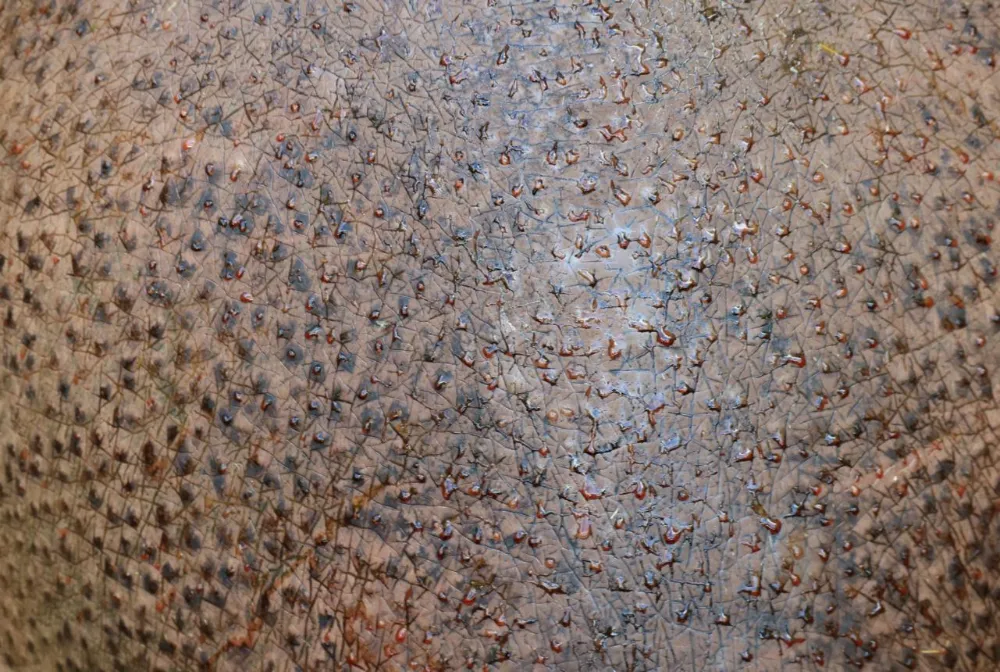
The red-orange secretion forms a visible protective coating on hippo skin. The colored droplets are not blood from an injury.
Does the Red Secretion Keep Hippo Skin Moist?
Yes. The secretion helps coat the skin and maintain moisture.
San Diego Zoo describes the fluid as a mucus-like substance that protects exposed skin.
This is important because hippos are adapted to a semiaquatic lifestyle and can suffer when their skin becomes excessively dry.
However, the fluid is not a substitute for the animal's regular access to water.
Hippos rely on their aquatic habitat to help maintain suitable body and skin conditions.
Do Hippos Have Sweat Glands?
The answer depends partly on how the term sweat gland is being used.
Many zoo and general animal references distinguish the hippo's unusual secretion from the ordinary cooling sweat produced by humans.
However, detailed anatomical research has identified specialized secretory glands in hippo skin. Some histological studies describe these structures as sweat glands.
A 2021 paper in Current Biology reported prominent glandular structures in multiple body regions of hippopotamids.
Therefore, it is more accurate to explain the unusual structure and function of hippo glands than to make an absolute statement that they have no sweat-producing glands of any kind.
Is Hippo Sweat the Same as Human Sweat?
No. Human eccrine sweat is largely a watery secretion that helps cool the body through evaporation.
Hippo skin secretion is comparatively viscous and contains unusual pigments associated with protective functions.
It helps protect the skin from ultraviolet radiation and maintain surface moisture, and its pigments exhibit antibacterial activity.
However, the anatomy and terminology of hippo glands are more complicated than a simple comparison of presence or absence.
Both types of secretion involve specialized skin structures, but their biological roles and chemical composition differ.
Hippo Red Secretion vs. Blood vs. Human Sweat
| Feature | Hippo Skin Secretion | Blood | Typical Human Sweat |
|---|---|---|---|
| Main visible color | Initially clear, then orange-red or brown | Red | Usually clear |
| Origin | Specialized skin glands | Circulatory system | Sweat glands |
| Contains red blood cells | Not normally | Yes | Not normally |
| Main reason for red color | Hipposudoric acid and related pigment chemistry | Hemoglobin | Not applicable |
| Major function | Skin protection and moisture maintenance | Transport and other physiological functions | Evaporative cooling |
Why Don't Hippos Cool Themselves Like Humans?
Hippos are large semiaquatic mammals with a lifestyle very different from that of humans.
They spend extended periods in water, where heat transfer can help regulate body temperature.
Their specialized skin secretion performs important protective functions but should not be treated as an ordinary evaporative cooling mechanism.
However, hippos still exchange heat with the environment through several physical pathways.
The relationship between water, shade, activity, and skin condition is central to their thermal ecology.
Why Do Hippos Spend So Much Time in Water?
Common hippos typically spend much of the daytime resting in rivers, lakes, or other suitable water bodies.
The water provides opportunities to reduce heat stress and keep the skin moist.
Hippos often leave the water around dusk to graze on land.
However, daily behavior varies with weather, habitat, population, and individual circumstances.
The protective secretion helps the skin cope with periods of exposure but does not eliminate the ecological importance of water.
Do Hippos Sweat Underwater?
Hippos possess skin glands that produce protective secretions.
However, it is difficult to define their activity underwater using the same assumptions applied to humans sweating in hot air.
Water can dilute or redistribute substances present on the skin surface.
The secretion's protective roles and the animal's aquatic cooling strategy are connected but distinct aspects of hippo physiology.
It would be inaccurate to claim that the red secretion functions exactly the same way under every condition above and below the water surface.
Why Is Hippo Skin Pink Around the Eyes and Ears?
The natural skin coloration of hippos is often gray, brownish, or purplish, with pinker areas around the eyes, ears, and certain skin folds.
Protective secretions can make these regions look more reddish.
Moisture, blood vessels beneath the skin, and lighting may also influence the appearance.
However, ordinary pink coloration is not proof that the animal has an injury.
Nor should every pink area be attributed entirely to one chemical pigment.
Why Are Hippos Almost Hairless?
Hippos have relatively sparse body hair compared with many land mammals.
However, they are not completely hairless. They possess hairs around the muzzle and other parts of the body.
Comparative research indicates that reduced body hair is one of several adaptations associated with their semiaquatic evolutionary history.
In 2021, researchers compared the skin anatomy and genes of hippos and cetaceans to investigate changes associated with life in water.
The study provided evidence that some important skin modifications arose independently in the two lineages.
What Did the 2021 Hippo Skin Study Find?
A 2021 study in Current Biology, titled Genomic and Anatomical Comparisons of Skin Support Independent Adaptation to Life in Water by Cetaceans and Hippos, combined tissue examination and genomic analyses.
The researchers studied the skin of hippos and compared it with that of whales and dolphins.
They described specialized glandular structures, differences in the organization of the epidermis and dermis, and the distribution of hair follicles.
They also investigated evolutionary changes in genes associated with skin structures.
The findings help explain why hippo skin differs from that of both ordinary terrestrial mammals and fully aquatic cetaceans.
However, the study did not establish that the red secretion alone explains every aquatic adaptation of the hippopotamus.
Are Hippos Related to Whales?
Yes. Hippopotamuses and cetaceans, the group containing whales and dolphins, are each other's closest living relatives.
However, hippos are not descended from modern whales, and whales are not descended from modern hippos.
Both groups evolved from an earlier common ancestor.
Their skin and aquatic adaptations followed different evolutionary pathways.
The 2021 comparative study found evidence that several skin-associated changes arose independently in the two lineages.
Do Pygmy Hippos Produce Red Sweat?
Yes. Pygmy hippos also produce a protective pinkish or reddish skin secretion.
San Diego Zoo and Edinburgh Zoo describe this coating as an important adaptation for maintaining skin condition.
However, the common hippopotamus and pygmy hippopotamus differ in body size, habitat use, and behavior.
The chemistry and biological role of the secretion should not be assumed identical in every detail without species-specific evidence.
Common Hippo vs. Pygmy Hippo
| Feature | Common Hippo | Pygmy Hippo |
|---|---|---|
| Scientific name | Hippopotamus amphibius | Choeropsis liberiensis |
| General body size | Much larger | Smaller |
| Main habitat association | Rivers, lakes and adjacent grasslands | West African forests and wet habitats |
| Protective pink-red secretion | Yes | Yes |
| Typical social behavior | Often forms groups | Generally more solitary |
| Dependence on aquatic environments | Very strong | Strong, but spends more time on land |
Do Hippos Have Pink Milk?
No. The claim that hippopotamus milk is naturally bright pink is a widely repeated internet myth.
The red pigment comes from skin secretions rather than the mammary glands.
Hippo milk is generally white or cream-colored, like the milk of many other mammals.
However, a calf nursing against a mother's skin might encounter the colored coating on that skin.
This does not mean the milk itself contains the red pigment as a normal defining feature.
Can Hippo Sweat Mix With Milk?
Skin secretions may be present around the body of a nursing female hippo.
In principle, material from the skin surface can contact other substances.
However, that possibility does not establish that hippos naturally produce pink milk.
Experts in hippopotamus biology have rejected the common claim that the milk itself is pink.
The scientifically important distinction is between a skin secretion and a fluid produced by the mammary glands.
Does Pink Hippo Skin Mean the Animal Is Bleeding?
Not necessarily. A hippo can display pink or red-looking skin because of natural pigmentation and protective secretions.
However, hippos can also suffer real injuries and bleed.
A fresh wound, obvious tissue damage, or unusual discharge should not automatically be dismissed as normal protective secretion.
Wild animals should not be approached to determine the cause of a visible mark.
In managed care, trained veterinary personnel are responsible for assessing possible injuries.
Can the Red Secretion Heal Wounds?
The secretion's antimicrobial properties may help protect damaged skin from certain microorganisms.
However, laboratory antibacterial activity does not demonstrate that the fluid can close wounds or regenerate complex tissues.
Normal wound healing involves immune responses, tissue repair, and other biological processes.
The secretion may contribute to protection, but it should not be described as a miraculous treatment capable of healing every injury.
Could Hippo Sweat Be Used as Human Sunscreen?
The pigments have attracted scientific interest because of their ultraviolet absorption.
However, the compounds are chemically unstable when isolated.
Researchers have studied their structures and synthesized related molecules to better understand their properties.
These results do not mean that collecting hippo secretion would provide a safe, practical human sunscreen.
Any product intended for human skin would require separate testing of stability, safety, effectiveness, and formulation.
Could Hippo Pigments Inspire New Medicines?
The antibacterial properties of hipposudoric acid have attracted interest in natural-products chemistry.
Scientists can investigate whether its structure inspires other molecules with useful properties.
However, preventing bacterial growth in a laboratory experiment is only an early stage of possible medical research.
It does not establish therapeutic effectiveness, safety, appropriate dosage, or clinical benefit in humans.
At present, the primary scientific importance of these pigments is their role in the animal's unusual skin biology and natural chemical defenses.
Why Do Hippos Graze at Night?
Common hippos often rest in water during the day and leave to feed after dusk.
This behavior helps them avoid prolonged exposure to high daytime temperatures while obtaining vegetation on land.
They primarily eat grasses and other suitable plant material.
However, their feeding routes and activity patterns vary with environmental conditions.
The combination of water use, nocturnal activity, and protective skin secretions helps them cope with the demands of a semiaquatic lifestyle.
Why Is Hippo Skin Chemistry Important to Science?
The unusual red secretion offers a valuable example of natural chemical protection.
Studies have identified pigments with ultraviolet-absorbing and antibacterial properties.
Comparative skin research has also shown how the anatomy of hippopotamuses differs from that of whales, dolphins, and more terrestrial mammals.
However, scientists must distinguish between properties measured in isolated chemicals and functions demonstrated in living animals.
Combining chemistry, anatomy, ecology, and evolutionary biology provides a more complete explanation than simply repeating that hippos sweat blood.
Common Hippo Sweat Myths vs. Facts
| Claim | Scientific Answer |
|---|---|
| Hippos literally sweat blood | False |
| Hippo skin produces a red-orange protective secretion | True |
| The secretion is initially nearly colorless | True |
| Hipposudoric acid is associated with the red pigment | True |
| Norhipposudoric acid contributes orange coloration | True |
| The pigments absorb ultraviolet light | Demonstrated experimentally |
| The pigments prevent every type of infection | Not established |
| Hippos have no specialized skin glands of any kind | False |
| Hippos naturally produce bright pink milk | False |
| Pygmy hippos also produce pinkish protective secretions | True |
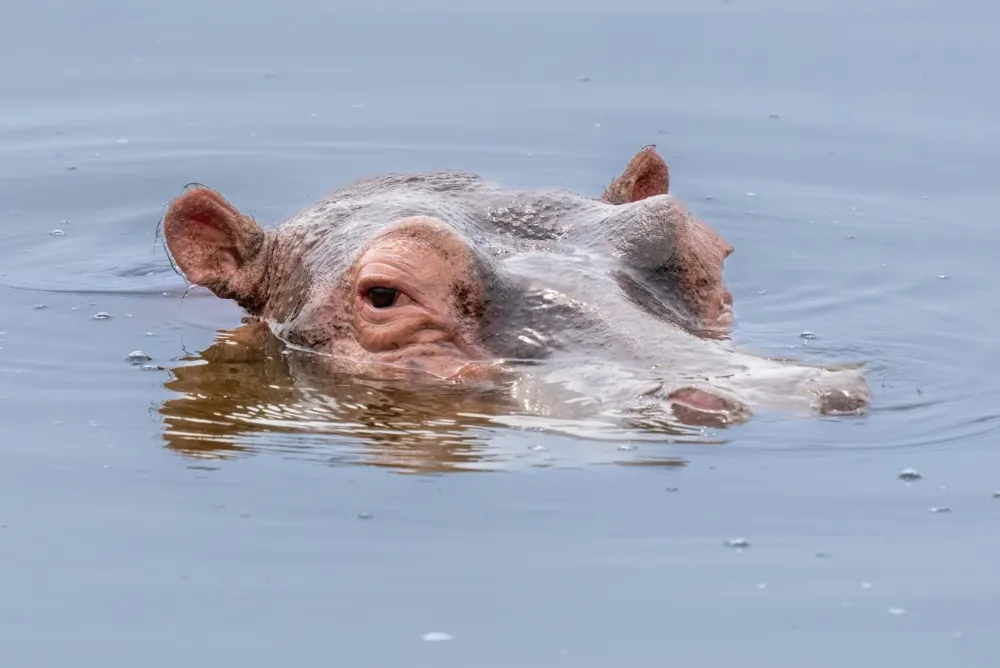
Spending much of the day in water helps common hippos manage heat exposure and keep their specialized skin moist.
Frequently Asked Questions
Do hippos sweat blood?
No. They produce a natural skin secretion containing pigments that can make the fluid look reddish, but it is not blood.
Why do hippos sweat red?
The color comes mainly from hipposudoric acid and norhipposudoric acid, two pigments found in their protective skin secretion.
What is hippo blood sweat?
It is a nickname for a viscous, pigmented secretion released through specialized glands in the skin.
Is hippo sweat actually red when it comes out?
Fresh secretion is generally nearly colorless and changes to orange-red over time as chemical reactions occur.
Why does hippo sweat turn brown?
The pigments are chemically reactive and can undergo polymerization, causing the secretion to become brownish over time.
What is hipposudoric acid?
It is a red pigment found in hippopotamus skin secretions that absorbs ultraviolet light and has shown antibacterial activity in laboratory experiments.
What is norhipposudoric acid?
It is an orange pigment found alongside hipposudoric acid and contributes to the secretion's color and protective chemistry.
Does hippo sweat work like sunscreen?
Its pigments absorb ultraviolet radiation, supporting a natural sunscreen-like role. However, an exact protection factor for living hippos has not been established.
Does hippo sweat kill bacteria?
The isolated pigments can inhibit certain bacteria in laboratory experiments, but they do not guarantee protection against every infection.
Do hippos have sweat glands?
Hippos have specialized skin secretory glands. Modern anatomical studies describe some as sweat glands, although the secretion differs from ordinary human cooling sweat.
Why do hippos need red skin secretions?
The coating helps maintain skin moisture and contains compounds with ultraviolet-absorbing and antimicrobial properties.
Can hippos get sunburned?
Their skin can be vulnerable to sun-related damage and drying. Water exposure and protective secretion help reduce these risks.
Why are hippos pink around the eyes?
Natural skin pigmentation, visible secretions, moisture, and lighting can all contribute to pink or reddish coloration in these areas.
Do pygmy hippos sweat red?
Yes. Pygmy hippos also produce protective pinkish-red skin secretions.
Is hippopotamus milk pink?
No. Hippo milk is generally white or cream-colored. The pink secretion comes from the skin rather than the mammary glands.
Does red skin mean a hippo is injured?
Not necessarily. Natural secretions can cause a red appearance, although real injuries and bleeding can also occur.
Are hippos related to whales?
Yes. Hippopotamuses and whales share a relatively recent common evolutionary ancestor and are each other's closest living relatives.
Why do hippos spend the day in water?
Water helps moderate heat exposure and maintain skin moisture. Common hippos often leave the water at dusk to graze.
Can people use hippo sweat as sunscreen?
The pigments have interesting ultraviolet-absorbing properties, but the natural secretion is not an established or tested human sunscreen product.
The Bottom Line
Hippos do not literally sweat blood. They produce a specialized skin secretion that changes from nearly colorless to orange-red and sometimes brown.
Two pigments, hipposudoric acid and norhipposudoric acid, are responsible for the unusual coloration.
Laboratory research has shown that these compounds absorb ultraviolet radiation and inhibit the growth of certain bacteria.
The secretion also helps maintain moisture on a hippo's sensitive skin.
However, its protective properties should not be exaggerated into complete immunity from sunlight, infection, or injury.
The red skin of the hippopotamus provides a striking example of how animal physiology and natural chemistry combine to support life in a challenging environment.
Sources & Further Reading
Saikawa et al. (2004) — The Red Sweat of the Hippopotamus. Nature. Original chemical identification of the red and orange pigments and their protective properties.
PubMed — Pigment Chemistry: The Red Sweat of the Hippopotamus. Bibliographic record and abstract of the 2004 study.
Hashimoto, Saikawa and Nakata (2007) — Studies on the Red Sweat of the Hippopotamus amphibius. Pure and Applied Chemistry. Chemical characterization, ultraviolet absorption, and antibacterial testing.
Hashimoto, Saikawa and Nakata (2006) — Chemical Studies on the Red Sweat of the Hippopotamus. Review of the pigments' chemistry and color changes.
Springer et al. (2021) — Genomic and Anatomical Comparisons of Skin Support Independent Adaptation to Life in Water by Cetaceans and Hippos. Current Biology. Comparative skin anatomy and specialized secretory glands.
San Diego Zoo Wildlife Alliance — Hippo. General hippo biology, protective skin secretion, and semiaquatic adaptations.
San Diego Zoo Wildlife Alliance — Pygmy Hippopotamus. Pygmy hippo skin protection and ecology.
Edinburgh Zoo — Pygmy Hippo. Description of protective skin secretions and the distinction from actual bleeding.
Animal Diversity Web — Hippopotamus amphibius. Species anatomy, skin characteristics, and ecology.
Live Science (2024) — Is Hippo Milk Really Pink? Explanation of the common pink-milk misconception, including comments from a hippopotamus specialist.