Why do bears get so fat before winter? Bears build up large fat reserves because they may spend months in their winter dens without eating. During late summer and fall, many bears enter a period of intense feeding called hyperphagia. They consume as much energy-rich food as they can find and store the surplus energy as body fat.
This is not simply a bear eating too much. It is a seasonal survival strategy. The extra fat helps a bear endure months when food is scarce, powers its reduced metabolism during hibernation, and can support a mother raising newborn cubs in her den.
Alaska's famous Fat Bear Week celebrates this transformation. But the biology behind those enormous autumn bears is even more remarkable than their appearance.
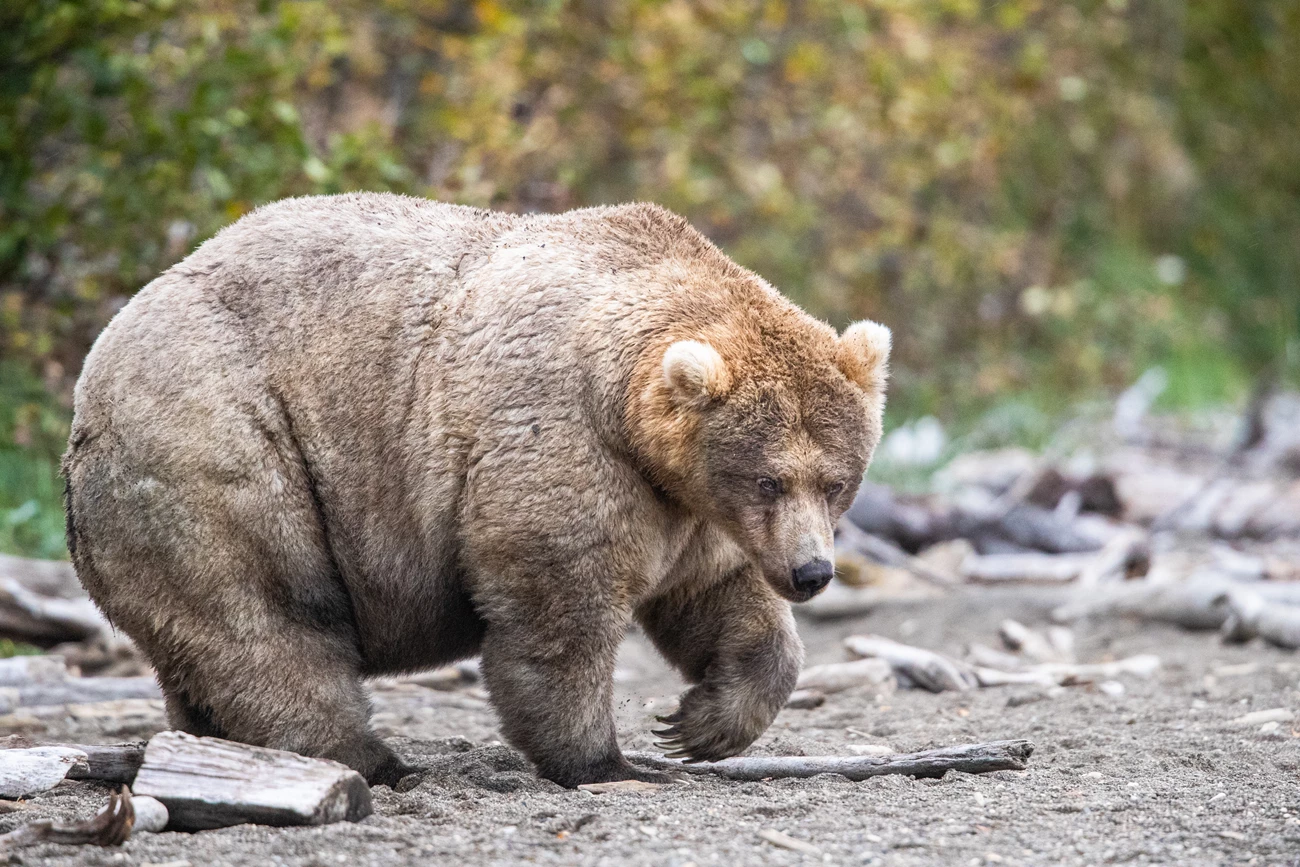
Bears like 854 Divot, 2022 Fat Bear contestant pictured here, spend all spring and summer fueling up for their long hibernation.
Photo courtesy of K. Moore
What Is Hyperphagia in Bears?
Hyperphagia means a period of unusually intense feeding. In bears, it occurs as they prepare for the coming winter.
As summer progresses toward autumn, bears in seasonal climates may spend much more of their time searching for food. When abundant food is available, they can eat repeatedly throughout the day and accumulate substantial fat reserves.
This seasonal response is linked to the bear's biological preparation for winter, the availability of food and environmental conditions.
At Katmai National Park in Alaska, brown bears benefit from large seasonal salmon runs. In other regions, bears may rely heavily on berries, nuts, acorns, roots, insects or other available foods.
Important distinction: Hyperphagia is a feeding phase, not a form of hibernation. Bears remain active while building their winter energy reserves.
Why Do Bears Need So Much Body Fat?
Body fat provides a concentrated energy reserve that can be used when a bear is no longer feeding regularly.
During winter denning, many bears dramatically reduce their activity and metabolic demands. Their heart rate and breathing slow, and they draw on stored fat rather than daily meals.
Fat also helps with insulation and may be particularly important for pregnant females that give birth and nurse cubs while in their dens.
A Bear's Seasonal Energy Cycle
| Season | Typical Activity | Why It Matters |
|---|---|---|
| Spring | Emerges from the den and resumes feeding | Replenishes energy after winter |
| Summer | Feeds on available seasonal foods | Supports growth and increasing fat reserves |
| Late summer and fall | Intensive feeding or hyperphagia | Builds large energy stores |
| Winter | Denning and greatly reduced activity in many populations | Conserves energy and uses stored fat |
The timing differs by species, climate, location, reproductive condition and food availability. Not every bear follows exactly the same calendar.
How Much Weight Can a Bear Gain Before Winter?
The amount varies enormously. A bear's age, sex, access to food, species and habitat all affect its seasonal weight gain.
According to the U.S. National Park Service, large brown bears around Katmai can accumulate hundreds of pounds of additional fat before entering their dens.
Some of the most dramatic changes occur in bears that have access to abundant salmon during summer and early fall.
However, there is no single amount of weight that every bear must gain. A young bear, a large adult male and a female caring for cubs have different energy requirements and opportunities to feed.
Why this matters: A photograph of a very large bear does not tell us its exact weight, health or probability of surviving winter. Observed condition must be interpreted in context.
What Do Bears Eat to Get Fat?
Brown bears and American black bears are omnivores. Their diets can include both plant and animal foods, although the balance changes substantially between locations and seasons.
| Food | Where It Can Be Important | Role in Fall Feeding |
|---|---|---|
| Salmon | Coastal Alaska and salmon-bearing rivers | Energy-rich seasonal food |
| Acorns and other nuts | Forests where mast crops occur | Concentrated energy source |
| Berries | Forests, mountains and tundra | Seasonal carbohydrate source |
| Roots and other plant foods | Many inland habitats | Supplement the seasonal diet |
| Insects and animal foods | Varies by region | Additional energy and nutrients |
Not all bears catch salmon. For example, black bears in many forest ecosystems depend heavily on seasonal plant foods, including nuts and berries.
The most successful feeding strategy is often the one that makes the best use of abundant, accessible food in the bear's habitat.
What Happens to Bear Fat During Hibernation?
During hibernation, bears greatly reduce their metabolism and rely heavily on stored fat for energy.
Their hearts beat more slowly, breathing becomes less frequent, and the body conserves resources that would otherwise be needed for normal activity.
Unlike many small hibernating mammals, bears do not generally lower their body temperatures to near-freezing levels. Their body temperature falls much less dramatically, yet they still achieve substantial energy savings.
Yellowstone National Park explains that hibernating bears can greatly suppress metabolic activity and may spend months without eating, drinking or normally eliminating waste.
Bears also possess unusual physiological adaptations that help them conserve muscle and recycle nitrogen during this period.
That makes bear hibernation biologically different from simply sleeping for a very long time.
Do Bears Really Hibernate?
Yes. Bears are commonly classified as hibernating mammals, although their form of hibernation differs from the deep torpor experienced by some small rodents.
Because bears remain comparatively warm and can respond to disturbances, older descriptions sometimes excluded them from the category of true hibernators.
Modern explanations recognize that hibernation includes different physiological strategies. Bears conserve substantial energy while maintaining a higher body temperature than many smaller hibernators.
Not every bear spends winter in a den. Denning behavior also depends on species and local conditions. Most polar bears, for example, remain active through winter, while pregnant females typically use maternity dens.
For a broader look at different forms of animal dormancy, read our guide to animals that hibernate the longest.
What Is Fat Bear Week?
Fat Bear Week is an annual public event organized around the brown bears of Katmai National Park and Preserve in Alaska.
The event showcases how dramatically bears can change between early summer and fall as they build reserves for winter.
People compare the bears' seasonal appearances and participate in public voting. The event also teaches audiences about salmon ecosystems, wildlife conservation and the biological importance of seasonal fat storage.
The 2026 event took place from September 22 to September 29, but the ecological lesson remains relevant every year.
According to the National Park Service, this seasonal transformation depends heavily on the abundance of salmon in Katmai's rivers.
A fat bear is therefore more than an amusing photograph. It can illustrate the connection between food availability, ecosystem productivity and winter survival.
Does Being Very Fat Mean a Bear Is Unhealthy?
Not necessarily. Seasonal fat accumulation is a normal and often essential part of life for many wild bears.
In people, excessive body fat may be associated with health problems. It would be misleading to apply that comparison directly to a wild bear preparing for months of winter fasting.
Bear physiology is adapted to these substantial seasonal changes in energy storage and use.
However, body size alone cannot establish whether an individual bear is healthy. Disease, injury, age, food scarcity and reproductive condition can all influence its appearance and condition.
What Happens if a Bear Cannot Find Enough Food?
Insufficient fall food can leave bears with smaller energy reserves for winter and the following spring.
The consequences vary. A bear may emerge from its den in poorer condition, and females may face additional reproductive costs when nursing cubs.
Food shortages can also influence how long bears remain active, where they search for food and how they interact with human environments.
This is one reason healthy salmon runs, productive forests and natural feeding habitats matter for bear conservation.
Wildlife safety: Never feed bears or leave food available to them. Human food can encourage dangerous interactions and undermine natural bear behavior. Follow local park guidance on food storage and bear encounters.
Frequently Asked Questions
Why do bears eat so much in the fall?
Many bears enter hyperphagia, a seasonal period of intense feeding that helps them build fat reserves for winter when food is limited.
Do bears lose weight while hibernating?
Yes. They use stored fat to power their reduced metabolism. At Katmai, the National Park Service notes that bears may lose up to about one-third of their body weight during winter.
Do all bears get fat before winter?
No. Seasonal weight gain varies among bear species and populations. Climate, food availability and denning behavior all influence the pattern.
Can bears wake up during winter?
Yes. Bears can respond to disturbances and may occasionally emerge from their dens. Hibernation is not the same as uninterrupted ordinary sleep.
Why are Alaska's Fat Bear Week bears so big?
Katmai's brown bears can take advantage of abundant seasonal salmon. The resulting energy intake allows some individuals to build remarkable fat reserves before winter.
The Bottom Line
Bears become fat before winter because stored energy helps them survive seasonal food shortages. Their intense autumn feeding, called hyperphagia, is part of a remarkable cycle of eating, fat storage, metabolic suppression and spring recovery.
Fat Bear Week makes that cycle visible, but the underlying story is about a wild animal's dependence on healthy habitats and reliable food sources.
Scientific Sources and Further Reading
U.S. National Park Service — When Bears Prepare for Winter
Katmai National Park — Fat Bear Week: Past and Present