Most hibernating bears do not poop during their long winter stay in a den. They can also go for months with little or no eating, drinking or urinating. But this does not mean their bodies stop producing waste. In black bears, a small amount of material accumulates in the intestine and may form a dry mass called a fecal plug. The full answer is more interesting—and less absolute—than the familiar claim that bears never use the bathroom all winter.
Do Bears Poop During Hibernation? The Short Answer
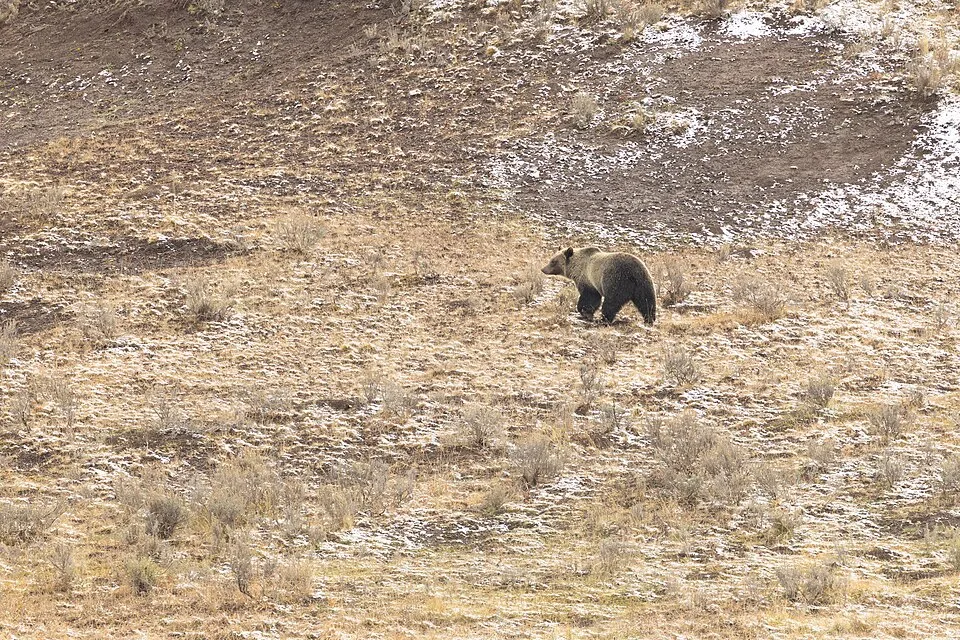
Usually, no. Many grizzly bears and American black bears spend their main denning period without defecating. Their energy needs fall dramatically, and they are not processing normal meals. The National Park Service describes prolonged periods without eating, drinking, urinating or defecating in denning brown bears.
There are exceptions. Field observations of free-living black bears have documented occasional urination or defecation in or near dens, particularly when bears are active for short periods. A cub nursing in a den also has different needs from its fasting mother. So “most adult bears usually do not poop during hibernation” is more accurate than “no bear ever poops in winter.”
What Is a Bear's Fecal Plug?
A fecal plug is a relatively dry, compact mass of waste that may accumulate in a bear's lower intestine during prolonged winter fasting. It is best documented in American black bears. Because the material remains in the colon for so long, the intestinal wall has time to absorb more water, leaving the mass unusually firm.
It can contain shed intestinal cells, mucus, dead bacteria, hair swallowed during grooming, small amounts of den bedding and other residues. Researchers have observed plugs expelled in late winter or spring, sometimes close to the den entrance.
Despite its name, a fecal plug is not a deliberate stopper that the bear builds before winter. An old story claims bears intentionally eat leaves or rough vegetation to block their intestines. Research from the North American Bear Center and studies of wild black bears do not support that simple explanation. The plug develops largely from ordinary intestinal processes during a long period without food.
How Can Bears Make Feces If They Are Not Eating?
Feces are not made entirely of undigested food. Even when an animal stops eating, cells continue to be shed from the digestive tract, and intestinal secretions and microorganisms contribute material. In a resting bear, this material accumulates much more slowly than it would during regular feeding.
A 2020 study of behavior inside free-living American black bear dens reviewed observations of fecal plugs. Its authors noted that the material may resemble waste made during prolonged fasting, rather than evidence of a purposeful diet of bark and plant fiber. That difference matters: a bear can still produce a little fecal material without having a normal bowel movement.
Do Bears Pee During Hibernation?
Most denning grizzlies and black bears also avoid ordinary urination for long periods. Their bodies reduce water loss and manage nitrogen waste in unusual ways. When proteins are used or renewed, nitrogen-containing compounds must be handled safely; in hibernating bears, nitrogen can be conserved and reused rather than simply lost in urine.
This does not mean that urine is magically turned directly into muscle. It is a complicated process involving kidney function, nitrogen recycling and protein metabolism. Some wild bears have been observed urinating occasionally, so the zero-urine rule is a useful generalization rather than a universal law.
How Do Bears Survive Without Drinking Water?
Before winter, bears store substantial body fat. Breaking down that fat releases energy and produces metabolic water as a by-product. At the same time, a resting bear breathes more slowly, uses less energy and conserves water.
Those adaptations help many bears remain in their dens without regular access to streams or snowmelt. A bear disturbed from its den or living through an unusually warm winter may behave differently; researchers have recorded occasional drinking, snow eating and movement during winter.
What Changes Inside a Hibernating Bear?
Compared with its active-season physiology, a grizzly bear's body operates in an energy-saving mode. In Yellowstone research summaries, heart rate commonly decreases from around 40–50 beats per minute in summer to approximately 8–19 beats per minute during hibernation. Breathing slows as well, although the bear's body temperature does not fall nearly as much as that of a deeply torpid ground squirrel.
| Body function | Active season | Winter denning |
|---|---|---|
| Food | Regular feeding; heavy fall feeding | Most adults fast for extended periods |
| Drinking | Water from food and outside sources | Metabolic water and conservation become especially important |
| Heart rate (Yellowstone grizzlies) | About 40–50 beats/minute | About 8–19 beats/minute |
| Urination | Normal elimination of water and nitrogen waste | Usually absent for long stretches; occasional exceptions |
| Defecation | Regular bowel movements | Usually absent; a fecal plug may accumulate |
Values refer to Yellowstone grizzly bears where specified; the duration and physiology of denning vary by species, region and individual.
Why Do Bears Eat So Much Before Winter?
In late summer and autumn, many bears enter hyperphagia, an intense feeding period that allows them to build fat reserves. This extra energy is essential because they may have to maintain body temperature, protect tissues and—in the case of pregnant females—give birth and nurse young without obtaining normal meals.
Bear diets vary by habitat. Some brown bears consume fish where salmon are available, while others rely heavily on berries, roots, nuts, insects or animal foods. Those stored calories matter much more for winter survival than any supposed last-minute meal designed to block the intestine.
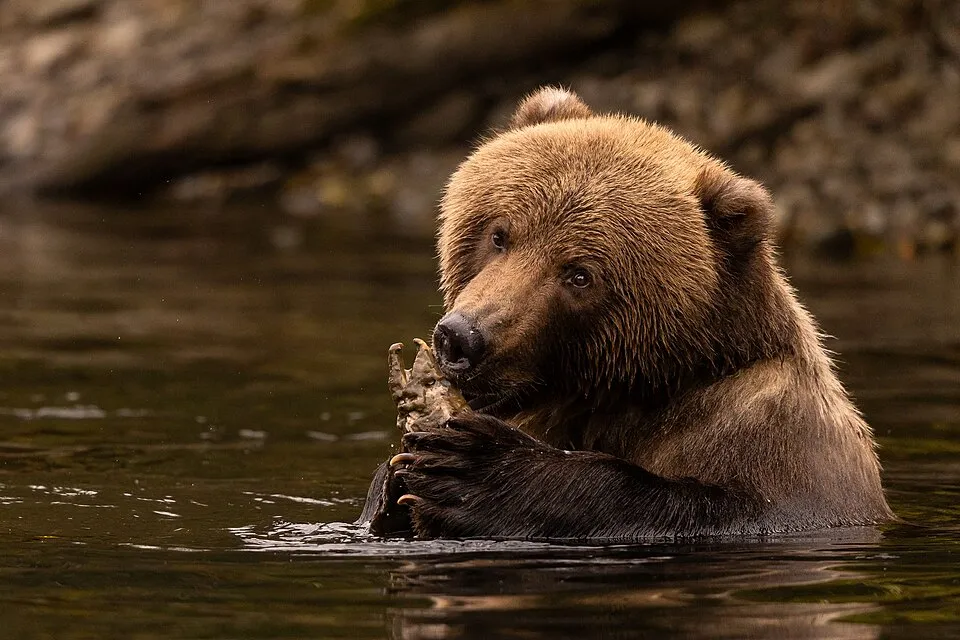
Photo: A Kodiak brown bear feeding on salmon before the winter denning season. Lisa Hupp / U.S. Fish and Wildlife Service; public domain. Original photo and usage information. The photo shows autumn feeding, not a hibernating bear.
Do Bears Wake Up During Hibernation?
Yes. A denning bear is not unconscious for months. Bears may shift position, briefly rouse, or react to disturbances. Some leave a den during the winter and later return or select another shelter. Their relatively high winter body temperature allows them to respond more rapidly than many tiny hibernators.
That is one reason wildlife agencies discourage approaching bear dens: disturbing a bear can be dangerous for people and can waste energy the animal needs to survive winter. A hibernating bear should never be approached or deliberately awakened.
Do Mother Bears and Cubs Have the Same Bathroom Habits?
No. A mother bear may give birth during winter denning, and nursing cubs are not simply miniature fasting adults. Cubs consume milk, produce bodily waste and require care. Researchers watching wild American black bear dens have documented mothers cleaning cubs and ingesting some of their waste. A statement about an adult bear's long fasting period therefore should not be applied without qualification to every animal in the den.
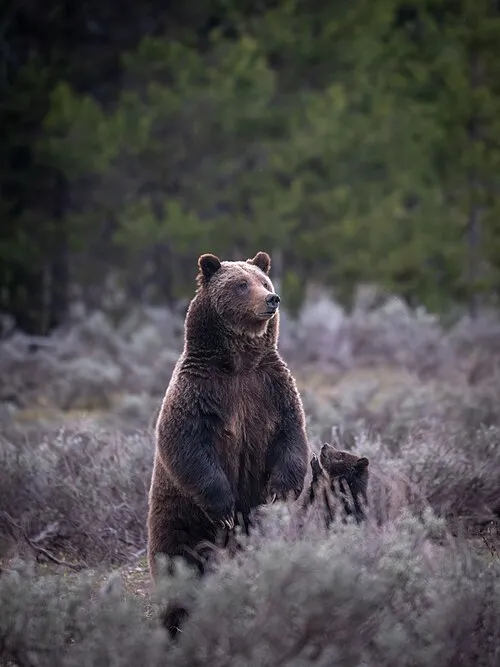
Photo: Grizzly bear 399 with her cub after spring emergence, photographed on May 16, 2023. NPS / C. Adams, Grand Teton National Park; public domain. Original photo and usage information. This is an emergence photograph, not an image taken inside a den.
Do All Bears Hibernate the Same Way?
No. Hibernation patterns depend on the species, climate, reproductive status and available food. North American black bears and grizzlies are particularly well known for long winter denning, but denning time varies widely. In milder habitats, some bears remain active for more of the winter.
Polar bears are an important exception to blanket claims about “all bears.” Many adult polar bears stay active and hunt seals through the winter; pregnant females, however, use maternity dens for birth and early cub care. For a closer look at how the two species differ, read our polar bear vs. grizzly bear comparison.
Is Bear Hibernation Real Hibernation?
Biologists sometimes use different definitions. Small mammals such as ground squirrels often lower their body temperatures to near freezing, while bears maintain relatively warm bodies and show a different pattern of metabolic suppression. Some educational sources call this winter dormancy or torpor; many researchers regard bear hibernation as a genuine and highly specialized form of mammalian hibernation.
For everyday readers, the important point is that winter denning is not ordinary sleep. It involves profound physiological changes that allow bears to survive without their normal food and water supply. Our overview of which animals hibernate explains how other species approach winter differently.
Frequently Asked Questions
How long can a bear go without pooping?
Some bears go for several months during winter denning without a bowel movement. The length depends on the bear and the environment, and a few individuals defecate during the denning season.
What comes out when a bear finally poops after hibernation?
In black bears, it may be a dry, compact fecal plug made from waste that accumulated during the fasting period. It can contain intestinal secretions, shed cells and small amounts of hair or bedding.
Do grizzly bears poop in their dens?
Most grizzlies generally do not defecate during their main hibernation period, although occasional exceptions and winter movements are possible.
Do black bears pee in winter?
Many do not urinate for long stretches while hibernating, but observations of free-living bears show that occasional urination can occur.
Do bears eat anything during hibernation?
Most hibernating adults depend mainly on stored fat instead of normal meals. Some may eat snow or briefly leave the den, and regional differences are important.
Do baby bears poop during hibernation?
Yes, nursing cubs produce waste. Mother bears can remove or consume that waste while caring for cubs in the den.
Can a hibernating bear wake up quickly?
Yes. Bears are capable of rousing and reacting to disturbances. They should never be approached or awakened deliberately.
Do polar bears hibernate like grizzly bears?
Not usually. Many polar bears hunt throughout winter, while pregnant females spend an extended period in maternity dens.
The Bottom Line
A winter den is not a magical bathroom-free zone. It is a remarkable energy-saving environment. Most adult bears usually do not poop during their main hibernation period, but their bodies still make small amounts of waste; in black bears, some of it forms a fecal plug. At the same time, fat metabolism, water conservation and nitrogen recycling help them survive until spring. The surprising part is how many systems continue working even when the bear is not eating.
If you enjoy unusual winter survival adaptations, explore 25 winter animals and their cold-weather survival strategies.