Yes, lobsters can regrow lost claws. After a claw is detached, the animal seals the wound and begins developing replacement tissues. The new claw grows as a regenerating limb bud and becomes externally visible during a later molt, when the lobster sheds its old exoskeleton. The replacement is often smaller than the original and may need several additional molts to approach normal size. Recovery depends on the lobster's age, health, nutrition, and molting schedule. Lobster regeneration is remarkable, but it does not mean that losing a claw is harmless.
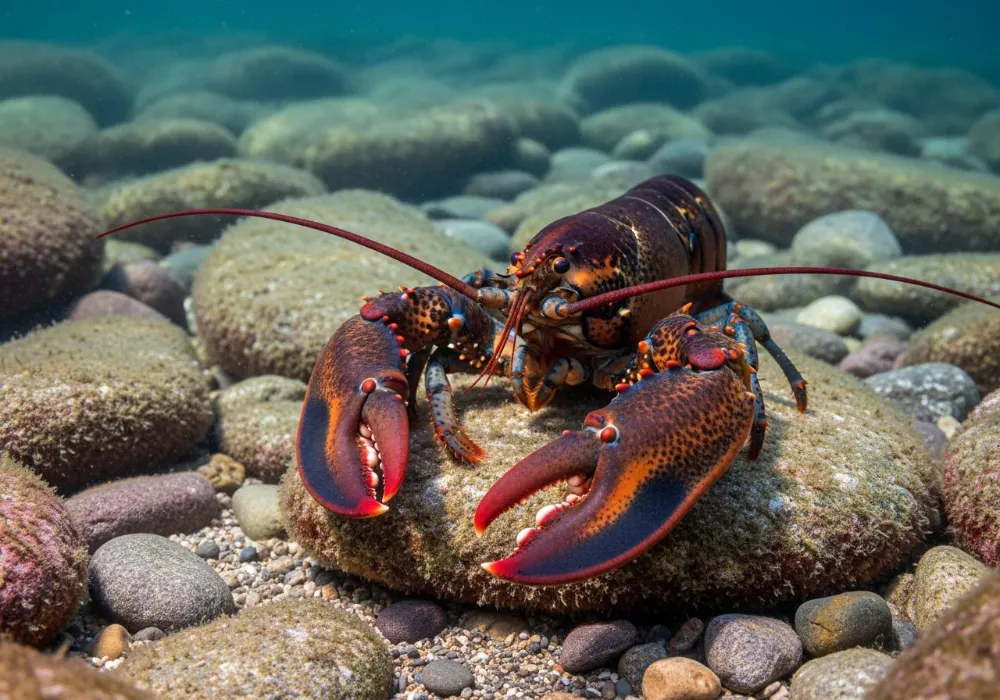
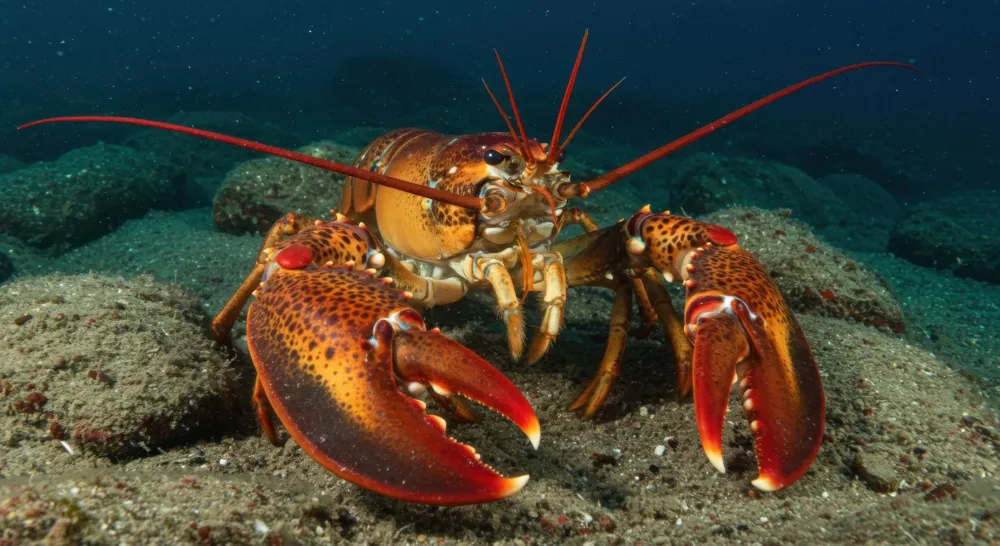
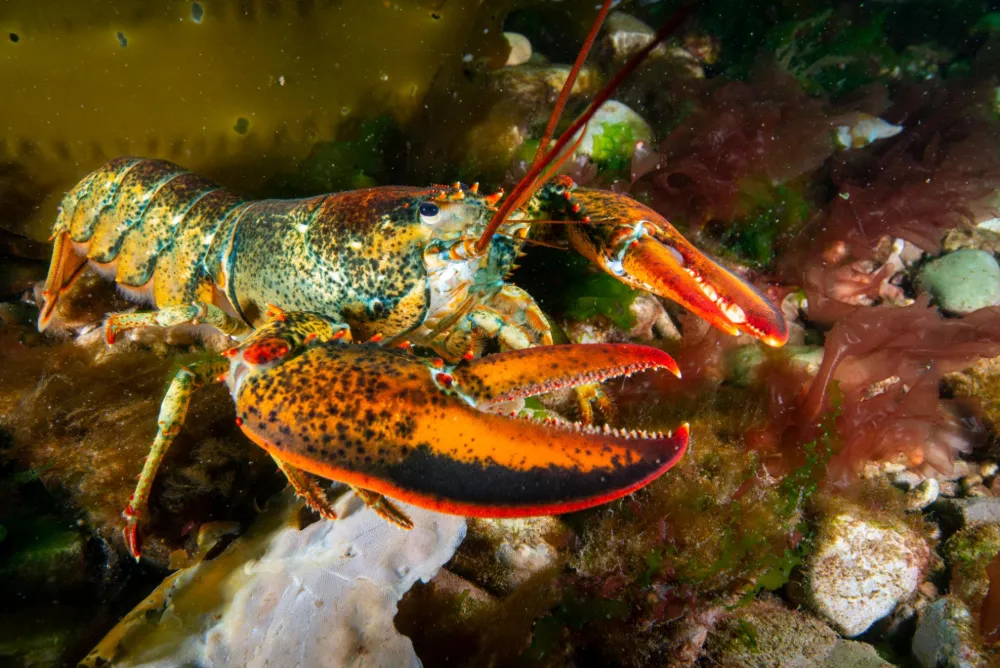
American lobsters normally have two specialized front claws. If one is lost, the lobster may gradually replace it through regeneration and molting.
Can Lobsters Regrow Their Claws?
Lobsters are capable of replacing lost claws, walking legs, and certain other appendages. This ability is part of a broader pattern of limb regeneration found among decapod crustaceans, a group that includes lobsters, crabs, shrimp, and crayfish.
When an American lobster loses a claw, the remaining tissues can initiate a regenerative response. Cells at the injury site help form a new developing appendage, including tissues that will become the claw's muscles, nerves, joints, and outer covering.
However, the new structure cannot simply expand through the lobster's existing rigid shell. Its appearance and subsequent growth are closely linked to molting, the process by which a lobster sheds its exoskeleton.
This is why an injured lobster may have one fully developed claw and one much smaller claw after a molt.
Why Do Lobsters Lose Their Claws?
Lobsters may lose claws during encounters with predators, territorial conflicts, trapping, accidents, or other injuries. Their front claws are large and powerful, making them important tools for feeding and defense but also exposed structures during physical confrontations.
Some claw losses occur through a controlled biological process called autotomy. Others result from injuries that damage or break the appendage.
Although losing a claw can help a lobster escape danger, it also creates a biological disadvantage. The animal must survive with reduced feeding or defensive ability while using resources to regenerate the missing structure.
What Is Autotomy?
Autotomy is the controlled detachment of a body part, often as a response to danger. The term comes from roots meaning self-cutting.
In lobsters, a claw or leg can separate at a specialized region near its base. This provides a more controlled way to lose an appendage than an unpredictable break through the middle of its tissues.
Research on decapod crustaceans describes predetermined separation regions, protective tissue responses, and mechanisms that limit the loss of hemolymph, the circulating fluid found in crustaceans.
However, autotomy should not be viewed as a painless or consequence-free action. It represents a trade-off between losing a valuable appendage and potentially escaping a more serious threat.
Can a Lobster Drop Its Claw on Purpose?
A lobster can shed a claw through a reflexive autotomy response under particular conditions.
For example, an appendage caught by a predator may separate at a specialized fracture plane, allowing the animal to escape. This process is controlled by the nervous system and associated structures.
However, calling the behavior a conscious decision can be misleading. Autotomy is a physiological defense mechanism, not evidence that the animal deliberately plans to sacrifice a claw.
The presence of a natural release mechanism is also no justification for intentionally pulling or twisting a lobster's claws.
How Does a Lobster Avoid Losing Too Much Fluid?
Unlike humans, lobsters have an open circulatory system containing hemolymph. Their circulatory fluid is not organized within blood vessels in exactly the same way as human blood.
After a claw separates through autotomy, specialized tissues at the stump help limit fluid loss.
Studies of decapod regeneration describe a sealing membrane and wound responses that protect the exposed tissues. Hemolymph coagulation also contributes to wound repair.
However, a controlled autotomy site is different from a severe irregular injury. Damage outside the normal separation region can create additional complications.
How Do Lobsters Regrow a Lost Claw?
Claw regeneration involves several overlapping biological stages. The wound first becomes protected, and cells near the damaged area begin responding to signals associated with tissue repair.
A group of regenerative cells develops beneath the external covering. This structure is commonly called a blastema.
As the blastema grows, its cells contribute to the formation of new appendage segments, muscles, nerves, and other structures.
The developing claw remains constrained by the animal's existing external skeleton. A later molt allows the replacement appendage to emerge.
Additional molts can then permit the claw to increase in size and become more functionally developed.
What Are the Stages of Lobster Claw Regeneration?
| Stage | What Happens | Why It Matters |
|---|---|---|
| 1. Claw loss | The appendage detaches or is damaged | Creates the injury that initiates repair |
| 2. Wound sealing | Protective tissues and clotting responses limit fluid loss | Helps the lobster survive the injury |
| 3. Blastema formation | Regenerative cells gather and proliferate | Establishes the developing replacement limb |
| 4. Tissue organization | New appendage structures differentiate beneath the covering | Rebuilds the basic anatomy of the claw |
| 5. Regenerative molt | The old exoskeleton is shed and the replacement becomes visible | Allows the external appendage to emerge |
| 6. Later growth | Further molts allow growth and maturation | Helps restore the claw's size and function |
This is a simplified sequence based on decapod regeneration research. The exact timing and cellular behavior depend on species, developmental stage, and the location of the injury.
What Is a Blastema in a Lobster?
A blastema is a developing collection of cells involved in replacing missing tissues.
In crustacean limb regeneration, cells at and near the injury site become activated, proliferate, and help form the replacement appendage.
Some cells may change their state, while other regenerative populations contribute to specific tissues. Their interactions are regulated by local signals and the animal's hormonal environment.
A 2015 review in Integrative and Comparative Biology described blastema formation, cell proliferation, dedifferentiation, and differentiation as major features of limb regeneration in pancrustaceans.
However, a lobster blastema should not be assumed to operate identically to the blastema of a salamander or axolotl.
Why Is Molting Necessary for Claw Regeneration?
Lobsters have an external skeleton, or exoskeleton, that provides protection and supports movement. However, a hardened exoskeleton cannot expand indefinitely as the animal grows.
To increase in size, the lobster periodically forms a new covering beneath the old one and sheds the outer shell.
The developing replacement claw is linked to this same process. Although the internal regeneration program can begin between molts, an important stage of external appendage development occurs when the old covering is shed.
That makes regeneration in lobsters fundamentally different from the continuous outward growth people commonly imagine when thinking about a regenerating vertebrate limb.
What Is Molting?
Molting is the process by which a lobster periodically replaces its exoskeleton.
Before molting, the animal prepares a new soft covering beneath the old shell. It then escapes from the older exoskeleton through a process called ecdysis.
After emerging, the lobster absorbs water and expands before its new shell becomes fully hardened.
The University of Maine Lobster Institute explains that young lobsters undergo many molts while growing, whereas adults typically molt less frequently.
Molting allows overall body growth and provides opportunities for regenerated appendages to increase in size.
What Happens During a Lobster's Molt?
During preparation for molting, the lobster undergoes substantial physiological changes. Its old shell separates from the developing new cuticle beneath it.
The animal eventually emerges from the old exoskeleton, leaving behind a structure that can resemble an almost complete lobster.
Immediately after the molt, the lobster's new exterior is comparatively soft. Its muscles and other tissues must function while the protective covering gradually hardens.
The lobster is especially vulnerable during this period and often seeks shelter.
It may also consume parts of its shed shell to recover minerals such as calcium that are useful for hardening the new exoskeleton.
Does a Lobster Regrow Its Claw in One Molt?
A replacement claw can become visible after a regenerative molt, but that does not mean it immediately reaches the size or strength of the original.
The newly emerged claw is often smaller. Its tissues and external proportions may continue developing during later growth cycles.
Several molts may be required before it approaches the dimensions of the surviving claw.
However, the number of molts differs depending on the lobster's condition, developmental stage, and injury.
The important distinction is between the first appearance of a replacement claw and restoration of a mature, normally functioning appendage.
How Long Does It Take a Lobster to Regrow a Claw?
There is no single recovery time that applies to every lobster. The process is strongly influenced by the molting cycle.
Young lobsters may molt several times within a relatively short period and can therefore progress through regenerative growth more rapidly.
Adult lobsters molt less frequently. The University of Maine Lobster Institute reports that adult males commonly molt about once a year and females about once every two years, although actual schedules vary.
Consequently, an adult lobster may require several years to regain a claw approaching its former size if multiple molts are necessary.
However, this should be interpreted as a possible consequence of the molting schedule, not a guaranteed recovery period for every adult.
Why Do Young Lobsters Regrow Claws Faster?
Young lobsters generally undergo frequent molts as they grow.
Each molt creates an opportunity for a regenerating appendage to become more developed.
The University of Maine Lobster Institute reports that lobsters may molt roughly 20 to 25 times before reaching reproductive maturity and common legal harvest size.
This means that younger animals typically have more opportunities for appendage growth within a given period than older lobsters.
However, regeneration still depends on nutrition, health, environmental conditions, and the severity of the injury.
Do Adult Lobsters Regrow Claws?
Yes. Adult lobsters retain the capacity to regenerate appendages.
However, the process can be slower because mature animals generally molt less frequently than juveniles.
Adults also face the energetic demands of maintaining a large body, obtaining food, reproducing, and surviving environmental challenges.
Therefore, the presence of regenerative ability does not guarantee rapid or complete restoration after every injury.
Can a Regrown Lobster Claw Be Smaller?
Yes. A lobster's newly regenerated claw is often visibly smaller than the original.
This is especially noticeable when the opposite claw has survived and continued growing normally.
Over successive molts, the replacement can increase in size and may approach the proportions of a normal claw.
However, size is not the only important feature. The regenerated appendage must also develop appropriate muscles, joints, nerve connections, and specialized structures for feeding and defense.
Why Do Some Lobsters Have Unequal Claws?
American lobsters naturally possess two different types of large front claw.
One is a broad crusher claw, adapted for producing force against hard-shelled prey. The other is a narrower cutter or ripper claw, adapted for gripping and tearing.
This natural specialization already makes the claws unequal in appearance.
Claw loss and regeneration can produce an additional size difference, particularly when one replacement is younger and smaller than the surviving appendage.
Therefore, unequal claws are not automatically evidence of a recent injury.
What Is the Difference Between Crusher and Cutter Claws?
| Feature | Crusher Claw | Cutter Claw |
|---|---|---|
| Typical shape | Broad and robust | Narrower and more slender |
| Teeth | Large crushing surfaces | Finer cutting or gripping edges |
| Main function | Breaking hard-shelled prey | Gripping and tearing food |
| Muscle specialization | Adapted for strong, sustained force | Adapted for faster closing movements |
| Can be regenerated | Yes | Yes |
NOAA Fisheries identifies both claw types in the American lobster. However, not all animals commonly called lobsters have the same large-clawed anatomy.
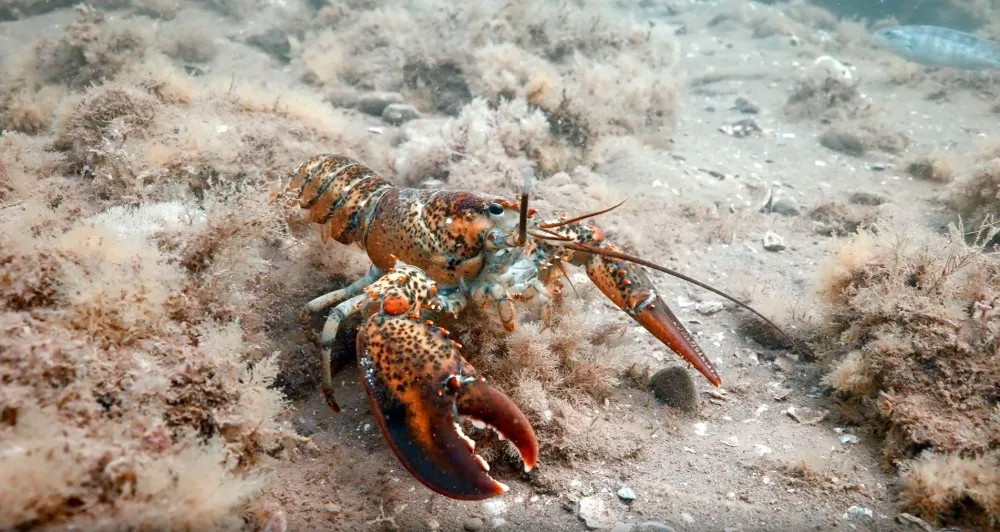
A recently regenerated lobster claw may be much smaller than the original, with additional growth occurring during later molts.
How Do Lobsters Develop Their Crusher and Cutter Claws?
Young American lobsters initially have claw structures that are more similar to one another.
As juveniles grow, the claws develop different muscle properties and external shapes.
A 1986 study published in Science found that patterns of activity in the juvenile claws influence which side develops into the crusher and which becomes the cutter.
The work showed that sensory feedback and the nervous system contribute to the development of claw asymmetry.
However, claw specialization involves a developmental process rather than a simple one-time choice made by the animal.
Can a Lobster's Regrown Crusher Claw Become a Cutter?
In established American lobsters, a lost crusher claw commonly regenerates on its original side and retains the developmental identity associated with that side.
However, the development of claw identity is more flexible during early juvenile stages.
Research on claw asymmetry has shown that claw loss, activity, and timing during development can affect which side becomes specialized.
Therefore, a regenerated claw should not automatically be assumed to have exactly the same form or muscle development in every experimental condition.
This is one reason researchers study regeneration alongside the developmental biology of crustacean claws.
Can Lobsters Regrow Both Claws?
Lobsters can regenerate more than one missing appendage, including both front claws under suitable conditions.
However, losing both claws is a serious disadvantage because the animal temporarily lacks two important structures used for food handling and defense.
Regenerating multiple large appendages also requires substantial biological resources.
Research on young lobsters has shown that the loss and replacement of both claws can influence aspects of claw development.
Successful regeneration therefore depends on more than the simple capacity to produce new tissue.
Can Lobsters Survive With One Claw?
Yes. Lobsters are sometimes found alive with only one large front claw.
They may continue feeding and moving using the surviving claw, walking legs, mouthparts, and other body structures.
However, the absence of one claw can reduce the animal's ability to process certain prey or defend itself during confrontations.
Its survival depends on environmental conditions, access to food, body condition, and exposure to predators.
The ability to survive with one claw does not mean the injury has no ecological cost.
Can Lobsters Survive Without Both Claws?
Some lobsters can survive the loss of both claws, particularly if other structures remain functional and suitable food is available.
However, losing both major feeding and defensive appendages is a substantial injury.
The lobster may become less effective at handling food and protecting itself.
Captive experiments demonstrating regeneration after the loss of both claws do not establish that the same animals would have identical survival rates in the wild.
Outcome depends on the circumstances and the animal's ability to reach subsequent molts.
Can Lobsters Regrow Their Walking Legs?
Yes. Many decapod crustaceans can replace walking legs as well as claws.
The underlying process shares important features with claw regeneration: wound protection, blastema formation, tissue development, and molting.
However, appendages differ in size, anatomy, and function, which can affect regeneration.
Replacing a relatively small walking leg is not necessarily equivalent in energy cost or growth pattern to rebuilding a large crusher claw.
Can Lobsters Regrow Their Antennae?
Decapod crustaceans can regenerate some sensory appendages, including antennae, under suitable conditions.
However, this does not mean every damaged sensory organ regenerates perfectly.
Different tissues have different developmental requirements and regenerative capacities.
A lobster's antennae are important for environmental sensing, and their recovery can influence how the animal interacts with its surroundings.
Can Lobsters Regrow Their Eyes?
Eye regeneration is different from claw and leg regeneration.
A 2022 review of decapod stem and progenitor cells describes the ability to replace claws, walking legs, and antennae while noting important limitations involving eyestalks.
Some historical experimental studies have reported unusual replacement structures after particular injuries to eyestalk regions.
However, these observations should not be interpreted as evidence that lobsters routinely regenerate a complete, fully functional eye.
It is important to distinguish normal appendage regeneration from abnormal tissue replacement observed experimentally.
Can Lobsters Regrow Their Tails?
A lobster's tail is a complex body region rather than one detachable claw-like appendage.
Although some small external appendages associated with the abdomen may have regenerative capacity, this does not establish that a lobster can regrow an entirely missing tail and all of its internal organs.
Therefore, it would be misleading to generalize claw regeneration to every body part.
The best-documented regenerative structures are particular appendages that participate in the crustacean molt cycle.
Does Regeneration Cost a Lobster Energy?
Yes. Rebuilding a lost claw requires the production of new cells, tissues, and protective structures.
These processes depend on energy and nutrients obtained through feeding and stored resources.
At the same time, the lobster must maintain other essential functions, including movement, digestion, and physiological regulation.
Research reviews identify nutrition and environmental conditions as important influences on decapod limb regeneration.
However, the exact energetic cost of replacing a particular claw varies with the size and condition of the animal.
What Hormones Control Lobster Molting and Regeneration?
Crustacean growth and molting are regulated by a complex endocrine system.
Important structures include the Y-organs, which produce molting hormones called ecdysteroids, and neuroendocrine tissues associated with the eyestalks.
Molt-inhibiting hormone is one of the signaling molecules involved in regulating the timing of molting.
Research also connects ecdysteroid signaling with the proliferation and development of regenerative tissues.
However, no single hormone operates as an independent switch that automatically restores a lost claw.
What Did the 2025 Decapod Regeneration Review Find?
In 2025, researchers published a review titled An Overview of Recent Progress in the Molecular Mechanisms and Key Biological Macromolecules Involved in Limb Regeneration of Decapods.
The review examined the biological processes involved in limb regeneration across decapod crustaceans, including crabs, shrimp, crayfish, and lobsters.
It discussed wound repair, blastema formation, growth, differentiation, and the interactions of several signaling pathways.
These included Wnt, Hedgehog, Notch, TGF-beta, and ecdysteroid-related signaling.
However, the review brought together findings from several decapod species. Not every proposed molecular mechanism has been experimentally confirmed in the American lobster itself.
Does Regeneration Change the Timing of Molting?
The interaction between limb loss and molting can be complex.
Decapod research shows that the loss of appendages may influence endocrine signaling associated with the molt cycle.
In certain experimental species, multiple limb losses can affect the timing of molting.
However, the response depends on developmental and physiological state.
It is inaccurate to claim that losing a single claw always forces every lobster to molt immediately.
What Is the Difference Between Molting and Regeneration?
Molting and regeneration are related but distinct processes.
Molting replaces the animal's existing exoskeleton as part of normal growth.
Regeneration rebuilds a structure that has been lost or damaged.
A healthy lobster can molt without losing a claw. A lobster with a missing claw can begin the regenerative process between molts, but further development and external emergence of the replacement are linked to molting.
Understanding the difference helps explain why losing a claw does not mean the entire body must be rebuilt.
Do Lobsters Lose Their Claws Every Time They Molt?
No. A normal molt involves shedding the external covering of intact claws, not deliberately discarding the entire living claw.
The lobster emerges from its old shell with its major appendages still attached, although their new coverings are initially soft.
Claw loss through autotomy is a separate event.
This distinction is important because an empty claw-shaped part in a shed exoskeleton does not necessarily indicate that the lobster lost the living claw.
Can You Find a Lobster Claw in a Shed Shell?
Yes. The shed exoskeleton may include the hardened outer covering of a claw.
During molting, the lobster withdraws its body and appendages from the old cuticle.
The resulting shell can retain a recognizable claw-like shape.
However, this does not mean the animal left behind its entire living claw and grew a completely new one in a few moments.
The normal molt replaces the outer shell, while regeneration replaces lost living structures.
Are Lobsters Immortal Because They Can Regenerate?
No. Lobsters are not biologically immortal.
They can survive for many years, grow through repeated molts, and regenerate certain lost appendages.
However, they remain vulnerable to disease, injury, predation, environmental stress, and complications associated with molting.
The ability to replace a claw does not mean the lobster can recover from unlimited damage or avoid death indefinitely.
Claims about biological immortality should not be inferred from regeneration or longevity alone.
How Is Lobster Regeneration Different From Starfish Regeneration?
Both lobsters and sea stars can replace missing appendages, but their anatomy and growth processes differ substantially.
Lobsters are arthropods with jointed limbs and an external skeleton. Their appendage regeneration is closely integrated with molting.
Sea stars are echinoderms with a different internal skeletal organization.
They do not regenerate arms through a crustacean-style exoskeleton molt.
Some sea star species can even regenerate a new central body from a detached arm, whereas a separated lobster claw cannot develop into a new lobster.
How Is Lobster Regeneration Different From Axolotl Regeneration?
Axolotls are vertebrate amphibians capable of regenerating complex limbs.
Lobsters are invertebrate crustaceans whose growing appendages must be coordinated with the periodic replacement of the exoskeleton.
Both can form blastema-like regenerative tissues and use molecular signaling pathways involved in development.
However, their cellular origins, skeletal structures, and growth mechanisms differ significantly.
Scientists study these animals comparatively to understand why regeneration has evolved in different forms across the animal kingdom.
Lobster vs. Axolotl vs. Starfish Regeneration
| Feature | Lobster | Axolotl | Sea Star |
|---|---|---|---|
| Animal group | Crustacean arthropod | Amphibian vertebrate | Echinoderm |
| Typical regenerated structure | Claw or leg | Leg or tail | Arm |
| Blastema involved | Yes | Yes | Blastema-like structures documented in some species |
| Regrowth linked to exoskeleton molting | Yes | No | No |
| Whole animal from detached appendage | No | No | Possible in certain exceptional species |
| Regeneration always succeeds | No | No | No |
Do All Lobsters Have Large Claws?
No. The familiar American lobster has two conspicuous front claws, but some other animals called lobsters have very different anatomy.
Spiny lobsters, for example, do not possess the same pair of large crusher and cutter claws.
Instead, they are characterized by long antennae, armored bodies, and other specialized appendages.
Therefore, questions about regrowing a large crushing claw apply most directly to clawed lobsters such as the American lobster.
The term lobster describes several related crustacean groups rather than one identical body plan.
Can Crabs and Crayfish Regrow Claws Too?
Yes. Many crabs and crayfish can regenerate claws and walking legs after injury or autotomy.
Like lobsters, they have external skeletons and undergo molting.
However, the details of claw replacement, natural autotomy, and functional recovery vary among species.
For example, studies of some crabs show differences in how the larger and smaller claws develop after injury.
Therefore, findings about claw regeneration in one crustacean cannot automatically be applied to every other species.
Why Is Lobster Claw Regeneration Important to Science?
Lobster regeneration provides an opportunity to study how complex appendages are rebuilt in animals with external skeletons.
It also helps scientists investigate how developmental signals interact with hormonal control of molting.
Research on claw identity has revealed that sensory feedback and nervous-system activity influence the specialization of the two large front claws.
More recent reviews examine molecular pathways involved in wound healing, blastema formation, and tissue development across decapod crustaceans.
However, advances in understanding crustacean regeneration should not be interpreted as proof that the same methods can already restore missing human limbs.
Can Lobster Regeneration Help Aquaculture?
Loss of claws and walking legs can reduce the commercial condition and survival prospects of farmed or captured crustaceans.
Understanding how regeneration depends on molting, nutrition, and the environment could help improve crustacean welfare and management.
The 2025 decapod regeneration review discusses potential applications in aquaculture.
However, improving regeneration in managed populations requires species-specific research and appropriate animal-care practices.
The existence of regeneration is not a reason to deliberately injure animals or remove appendages without a compelling, ethically reviewed scientific purpose.
A lobster recovering from injury still depends on shelter, food, and successful molting to survive and grow.
Frequently Asked Questions
Can lobsters regrow their claws?
Yes. Lobsters can regenerate lost claws, with the replacement becoming visible during a later molt and growing through additional molts.
How do lobsters regrow claws?
They seal the wound, form regenerative tissues, develop a replacement appendage, and reveal it during molting.
How long does it take a lobster to regrow a claw?
There is no fixed time. It depends on the lobster's molting schedule, age, health, and whether the goal is a visible small replacement or a nearly full-sized claw.
Can a lobster regrow a claw in one molt?
A small replacement can appear after a regenerative molt, but full growth often requires additional molts.
Why is a regrown lobster claw smaller?
The new appendage initially develops at a smaller size and can increase in size during later molts.
Do lobsters lose their claws when they molt?
They normally shed the outer shell covering their claws, not the entire living claw. Claw autotomy is a separate process.
What is lobster autotomy?
It is a controlled reflexive separation of an appendage at a specialized region, often in response to danger or injury.
Can a lobster drop a claw to escape?
Yes. Some lobsters can release a claw through autotomy, although losing it has biological costs.
Can lobsters survive with one claw?
Yes, some can survive and continue feeding, although losing a claw can reduce their defensive and food-handling abilities.
Can lobsters regrow both claws?
Yes, regeneration of both claws is biologically possible under suitable conditions, but it requires substantial resources.
Can lobsters regrow their walking legs?
Yes. Many decapod crustaceans regenerate lost walking legs as well as claws.
Can lobsters regrow their antennae?
Some antennal structures can regenerate, although recovery varies with the type and extent of damage.
Can lobsters regrow their eyes?
Normal replacement of complete functional eyes is not established in the same way as claw and leg regeneration.
Why do lobsters have one big claw and one smaller claw?
American lobsters naturally develop a crusher claw for forceful crushing and a narrower cutter claw for gripping and tearing.
Can a regenerated crusher claw remain a crusher?
Usually, established claw identity is retained, but claw development can be more flexible during juvenile stages.
Do adult lobsters regenerate claws?
Yes. Adults retain regenerative ability, although their less frequent molts can make recovery slower.
Can crabs and crayfish regenerate claws?
Yes. Many related decapod crustaceans can also regenerate lost claws through processes associated with molting.
Are lobsters immortal because they regenerate?
No. Lobsters remain vulnerable to aging-related changes, injury, disease, predation, and failed molts.
Can a detached lobster claw become a new lobster?
No. A separated claw cannot grow into an entire new lobster.
The Bottom Line
Lobsters can regrow lost claws, but the process is more complicated than simply producing a new claw overnight.
After injury or autotomy, the wound becomes sealed and regenerative cells begin forming replacement structures.
Because lobsters have rigid external skeletons, visible regeneration and further appendage growth depend strongly on molting.
A new claw may initially be much smaller than the original and require several additional molts to approach normal size.
Young lobsters often recover faster because they molt more frequently, while adults typically have longer intervals between molts.
Claw regeneration is therefore an impressive survival adaptation, but it does not eliminate the risks or biological costs of losing an appendage.
Sources & Further Reading
NOAA Fisheries — American Lobster: Resources. Official background on crusher and cutter claws, molting, and lobster biology.
University of Maine Lobster Institute — Educational Resources. Detailed information about juvenile and adult molting schedules.
Morphological, Molecular, and Hormonal Basis of Limb Regeneration across Pancrustacea (2015). Integrative and Comparative Biology. Scientific review of blastema formation, molting, and regeneration.
Vogt (2022) — Cytology, Function and Dynamics of Stem and Progenitor Cells in Decapod Crustaceans. Biological Reviews. Review of autotomy, sealing mechanisms, blastema formation, and tissue reconstruction.
Farhadi et al. (2025) — An Overview of Recent Progress in the Molecular Mechanisms and Key Biological Macromolecules Involved in Limb Regeneration of Decapods. International Journal of Biological Macromolecules. Recent review of regenerative signaling pathways.
Govind and Pearce (1986) — Differential Reflex Activity Determines Claw and Closer Muscle Asymmetry in Developing Lobsters. Science. Original study explaining the development of crusher and cutter claw specialization.
Govind, Gee and Pearce (1991) — Retarded and Mosaic Phenotype in Regenerated Claw Closer Muscles of Juvenile Lobsters. Biological Bulletin. Experimental evidence that repeated or early claw loss can affect muscle regeneration.
Mykles and Chang (2020) — Hormonal Control of the Crustacean Molting Gland: Insights from Transcriptomics and Proteomics. General and Comparative Endocrinology. Review of hormones controlling the decapod molt cycle.
Govind (2004) — Claw Asymmetry in Lobsters: Case Study in Developmental Neuroethology. Detailed review of lobster claw specialization and regeneration.