You’ve decided you’re ready for a dog or cat – now comes the big question:
“Should I adopt from a shelter or rescue, or buy from a breeder or pet shop?”
In the US and across Europe, this decision affects not only your future pet, but also:
Animal shelters and rescue organisations
Ethical breeders vs irresponsible “backyard” breeders
Puppy mills and commercial breeding farms
This guide will walk you through:
The key differences between adopting and buying
Pros and cons of each option
How to recognise ethical breeders vs puppy mills
Questions to ask yourself before you bring any pet home
Note: Laws and regulations vary between countries, states and regions. Always check local rules on breeding, microchipping, registration and transport before getting a pet.
1. What Does “Adopt” Actually Mean?
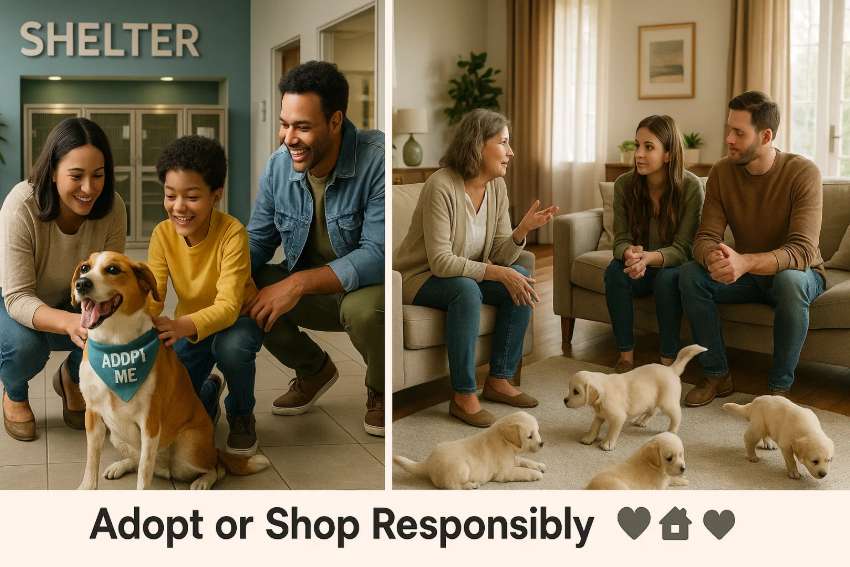
When people say “adopt, don’t shop”, they’re usually talking about getting a pet from:
Municipal shelters
Non-profit rescue organisations
Breed-specific rescues (for example, retriever rescues, greyhound rescues)
These organisations take in animals that:
Were abandoned or surrendered by owners
Were found as strays
Come from hoarding cases or puppy mill closures
1.1 What adoption typically includes
Adoption fees in the US and Europe often cover:
Initial health check
Core vaccinations (age-dependent)
Microchipping
Spay/neuter (if old enough), or a contract to do so later
You don’t “own” the pet in the same way you’d own an object. Instead, you agree to:
Provide proper care and veterinary treatment
Follow the rescue’s adoption contract
Return the animal to the shelter/rescue if you can no longer keep them
2. What Does “Shop” Mean? Pet Shops vs Breeders
“Shopping” for a pet can mean two very different things:
2.1 Pet shops (pet stores)
Some shops sell puppies, kittens and other animals on-site.
In parts of the US and Europe, laws now restrict or ban the sale of cats and dogs in retail shops, especially from unknown breeders.
Pet shops that sell puppies and kittens often get them from commercial breeding facilities, not from small, ethical breeders.
2.2 Breeders
Ethical hobby or show breeders:
Focus on health, temperament and breed standards.
Health-test parents, limit the number of litters, and keep dogs or cats as family members, not breeding machines.
Irresponsible breeders / puppy mills:
Breed for profit with little regard for health or welfare.
Overbreed females, keep animals in poor conditions and sell via internet ads or pet shops.
So “shop” can mean buying from a careful, ethical breeder – or supporting commercial systems that cause suffering. The difference lies in how you choose where to buy.
3. Pros and Cons of Adopting a Pet
3.1 Advantages of adoption
You give a homeless animal a second chance.
Your adoption fee supports rescue work for other animals too.
Many adult pets already have basic training.
Some are house-trained or litter-trained.
Staff often know their personalities and can match them to your lifestyle.
Lower upfront medical costs (usually).
Vaccinations, microchip and spay/neuter are often included in the fee.
Wide range of ages and types.
Puppies/kittens, adults and seniors.
Purebred and mixed-breed animals.
3.2 Challenges of adoption
Unknown history.
Some shelter pets have unclear backgrounds or trauma.
Behaviours like fear, separation anxiety or reactivity may appear after adoption.
Application process.
Rescues may ask many questions, require references or home checks.
Not every applicant is approved – they must prioritise the animal’s welfare.
Less predictability in size and traits (for mixes).
With mixed-breed puppies, adult size and temperament can be harder to predict.
For many families, especially those without very specific breed needs, adoption is a highly rewarding route that supports animal welfare and can save lives.
4. Pros and Cons of Buying from a Breeder
4.1 Advantages of ethical breeders
Predictable size, coat and traits.
Useful if you have allergies, specific housing constraints or activity levels.
Health testing and genetic screening.
Good breeders test for inherited diseases common in their breed.
Early socialisation and support.
Puppies and kittens raised in a home environment, not in cages.
Breeder often becomes a long-term contact for advice and backup.
4.2 Risks and downsides
Puppy mills and irresponsible breeders.
Finding a truly ethical breeder takes effort and research.
Higher upfront cost.
Well-bred purebred puppies or kittens can be expensive.
Contributing to overpopulation if not careful.
If demand for bred puppies is high while shelters are full, more animals may be left without homes.
Buying from an ethical breeder is a valid choice when you:
Have specific needs or breed preferences
Are willing to wait, travel and go through screening
Want the support of someone deeply knowledgeable about that breed
5. How to Recognise an Ethical Breeder vs a Puppy Mill
5.1 Signs of an ethical breeder
They breed only one or a few breeds and know them in detail.
They health-test breeding dogs/cats and show you the results.
Puppies/kittens are raised in a home environment, not in crowded kennels.
They don’t always have puppies “ready now”.
You may join a waiting list.
They ask you many questions about your lifestyle, experience and expectations.
They provide a contract, health records and require you to return the pet to them if you ever can’t keep it.
5.2 Red flags for puppy mills and irresponsible sellers
Multiple litters and breeds always available.
Reluctance to let you see where the animals live.
No health testing, vague answers about medical care.
Pressure to pay quickly or meet in a car park or public place instead of at their home.
Puppies or kittens ready to go too young (before 8 weeks in most cases).
No interest in your home, experience or what will happen to the animal long term.
If something feels “off”, trust your instincts. Walking away protects both you and future animals.
6. When Adoption Might Be the Better Choice
Adoption often makes the most sense if you:
Are open to mixed breeds or different looks.
Prefer an adult animal rather than a young puppy or kitten.
Want to support shelters and reduce the number of animals euthanised or stuck in kennels.
Live in an area where many good animals are waiting in rescue, including purebreds.
Adoption is especially appealing for:
First-time owners willing to work with a trainer if needed.
Families happy to meet several animals and find the right personality match.
People who feel strongly about giving a second chance to a pet in need.
7. When Buying from a Breeder Might Be the Better Choice
Ethical breeders can be a better fit when you:
Have very specific needs, such as:
A hypoallergenic coat type (for some allergy sufferers)
A dog for a particular sport or job
Want a predictable adult size for apartment living or weight restrictions.
Are prepared for puppy or kitten training from the very beginning.
Have researched a breed thoroughly and are committed to its typical energy level and behaviour.
Even in these cases, it’s still worth checking:
Breed-specific rescues (for example, collie rescues, spaniel rescues)
Shelters that sometimes get purebreds and young animals
8. Questions to Ask Yourself Before You Adopt or Shop
Before you choose any route, ask:
Budget: Can I afford not only the adoption/purchase fee, but also:
Food, insurance
Routine vet care and emergencies
Training, grooming and pet sitting when I travel?
Time: How many hours per day can I realistically spend on walking, training and company?
Housing:
Are pets allowed in my home or rental?
Is there enough space for the type of pet I want?
Flexibility: What happens if my job changes, I move, or my family situation shifts?
Motivation: Do I want this pet because I love and understand the species, or because of a trend or social media?
Honest answers can push you towards adoption, an ethical breeder, or waiting until a better time altogether.
9. “Adopt vs Shop” Doesn’t Have to Be a War
Online debates often turn “adopt vs shop” into a fight between two extremes. In reality:
You can support shelters and support ethical breeders.
You can adopt one pet and later buy from a responsible breeder, or vice versa.
The real “enemy” is:
Puppy mills and irresponsible breeding
Neglect, abandonment and impulse buying
Whether you adopt or shop, the goal is the same: a healthy animal in a stable, loving home for life.
10. Summary: Choosing the Right Path for You and the Animal
There is no single answer that fits every American or European family. Instead:
Adopt if you want to give a second chance to an animal in need and are flexible about breed and age.
Buy from an ethical breeder if you have specific requirements, are willing to wait and research, and never support puppy mills or careless sellers.
The most important thing is not where your pet comes from, but how you treat them once they’re part of your life. A well-cared-for shelter dog and a well-bred puppy both deserve the same thing: kindness, commitment and respect for their needs, for every year of their lives.