Colourful geckos, friendly-looking bearded dragons, calm corn snakes – reptiles are becoming more popular as family pets in the US and Europe. Children are often fascinated by them and many parents wonder:
“Are reptiles good pets for kids, or are they too risky and complicated?”
The honest answer is: it depends. Some reptiles can work well in homes with responsible adults and older children, but they are never “easy starter pets”. They have special needs (heat, light, humidity, diet) and important health considerations like Salmonella.
This guide will help you understand:
The pros and cons of reptiles as family pets
Which species are relatively more suitable for households with kids
What Salmonella risk really means, and how to reduce it
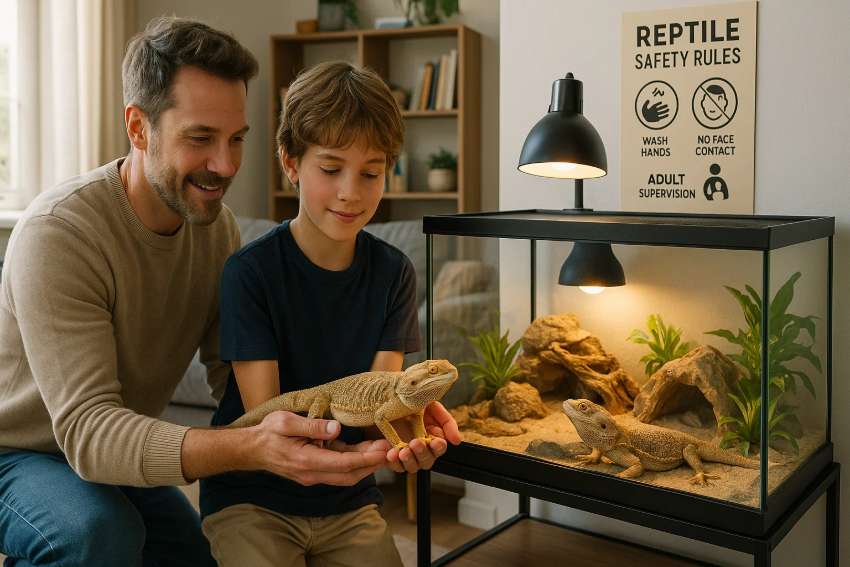
Age and safety guidelines for children handling reptiles
Note: This article is general information only. Always research species-specific care and check local laws and veterinary advice before getting any reptile.
1. The Short Answer: Reptiles Are Adult Pets First
Reptiles should always be considered adult-owned pets that children are allowed to enjoy, not “pets bought for the child to take care of alone”. Unlike many mammals, reptiles:
Need precise temperatures and UV lighting to stay healthy.
Hide signs of illness for a long time – by the time they look sick, it may be serious.
Often dislike constant handling and prefer calm, predictable environments.
If adults are ready to take primary responsibility and children are taught good hygiene and gentle handling, some reptile species can be rewarding family pets. Without that, reptiles can suffer silently in poor conditions – and humans can face avoidable health risks.
2. Why Reptiles Appeal to Kids (and Parents)
2.1 What kids like about reptiles
They look exotic and interesting, very different from cats or dogs.
They move slowly and calmly (in many cases), which can feel less chaotic than a puppy.
They have fascinating behaviours: tongue-flicking, climbing, shedding, basking.
2.2 What parents may like
No fur – helpful in families with allergies to dogs or cats.
No barking or meowing to bother neighbours.
Smell is usually minimal if enclosures are well maintained.
Enclosures can be beautiful, natural-looking displays in the home.
However, the same things that make reptiles appealing also make them specialist pets. They are not “low effort” just because they are quiet and small.
3. Main Challenges of Reptiles in Families with Children
3.1 Complex housing and equipment
Most reptiles need:
Heat lamps or heat mats, often on a thermostat
UVB lighting for proper bone and immune health
Specific humidity ranges
Hides, climbing branches, appropriate substrate
Equipment failure (for example, a broken bulb) can be serious if not noticed quickly.
3.2 Diet and feeding
Many reptiles eat live or frozen-thawed insects (crickets, roaches, worms) or rodents (mice, rats).
Some children (and adults) are uncomfortable with feeder insects or frozen rodents in the freezer.
Feeding schedules differ by species and age – babies often eat more frequently than adults.
3.3 Handling and personality
Some reptiles tolerate gentle handling; others become stressed or defensive.
Fast, nervous or fragile species are not suitable for young children’s hands.
Bites or scratches are usually more about fear than aggression – but they can still hurt or scare a child.
3.4 Long lifespans
Many reptiles live much longer than people expect:
Leopard geckos: often 10–15+ years
Bearded dragons: commonly 8–12 years
Some tortoises: several decades
This means a reptile bought for a primary school child may still be alive when they go to university – adults must be ready to commit.
4. Salmonella and Reptiles: What Parents Need to Know
The most famous health concern with reptiles is Salmonella, a type of bacteria that can cause food poisoning-like illness in humans. Many healthy reptiles can carry Salmonella in their digestive system without showing any signs of illness.
4.1 How Salmonella spreads
Through contact with reptile faeces (poop) or surfaces contaminated by it.
From touching the animal, their enclosure, water bowls, decor or cleaning tools and then touching your mouth or food.
4.2 Who is at higher risk?
Children under 5 years old
Elderly people
Pregnant individuals
Anyone with a weakened immune system
In many countries, health authorities advise that households with children under 5 or immunocompromised members should not keep reptiles or amphibians at all because of this risk.
4.3 Hygiene rules to reduce risk
If your household is not in a high-risk group and you decide to keep reptiles, strict hygiene is essential:
Always wash hands thoroughly with soap and warm water after:
Handling the reptile
Touching the enclosure or anything inside it
Cleaning bowls, hides or decor
Never clean reptile equipment in the kitchen sink or where you prepare food.
Do not let reptiles roam on kitchen surfaces, dining tables or beds.
Teach children:
“Touch the lizard, then wash hands – every time.”
“No fingers in mouth or snacks until hands are washed.”
Good hygiene dramatically reduces risk, but it never completely removes it. That’s why adult supervision matters every single time reptiles and children interact.
5. Which Reptiles Are Relatively More Suitable Around Kids?
No reptile is truly “child-proof”, but some species are generally considered more forgiving for beginner adults in family homes. Always research deeply before choosing any animal, but as a starting point:
5.1 Often recommended (for responsible adults, older kids)
Leopard gecko
Ground-dwelling, generally calm and slow-moving.
Doesn’t require strong UV (though some keepers still provide low-level UVB).
Eats insects; enclosure size is manageable.
Bearded dragon
Diurnal (awake in the day), often tolerant of gentle handling.
Needs proper basking light and UVB.
Diet of insects and vegetables; enclosure is larger than many expect.
Corn snake or similar small colubrid snakes (for families comfortable with snakes)
Generally calm, manageable size.
Eats appropriately sized rodents (frozen-thawed).
Requires a secure, escape-proof enclosure and controlled temperatures.
5.2 Often not recommended for kids or beginners
Iguanas and large lizards
Grow very large, need huge enclosures and specialist care.
Can inflict serious scratches or bites if stressed.
Very small, fragile species
Tiny geckos, some chameleons and hatchlings that can be injured easily by clumsy handling.
Turtles and tortoises
Frequent Salmonella concerns, especially with small turtles.
Many need large outdoor areas, strong UV and decades of commitment.
Venomous or large constrictor snakes
Never appropriate for households with children.
Always cross-check species with local laws – some reptiles are restricted or require permits in certain US states or European countries.
6. Age Guidelines: Which Kids Can Safely Interact with Reptiles?
These are general guidelines; always consider your specific child and pet.
6.1 Children under 5 years old
High risk group for Salmonella and more likely to put fingers in mouths.
Best to avoid keeping reptiles in households where young children live or visit frequently.
If reptiles are present, children should mainly observe, not touch, and handwashing must be enforced.
6.2 Children 6–10 years old
Can help with supervised handling:
Sitting on the floor with a reptile on their lap or hands.
Moving slowly and calmly, no sudden grabs.
Can help with simple tasks:
Refilling water bowls (cleaned by adults).
Handing insects or food dishes to the adult for feeding.
Must always wash hands immediately afterwards.
6.3 Children 11+ years and teens
Can take on more responsibility, such as:
Helping monitor temperatures and lighting schedules.
Assisting with enclosure cleaning under adult guidance.
Still need adult backup for:
Health checks
Vet visits
Ensuring consistent long-term care
7. Safety Rules for Kids Handling Reptiles
If you decide a reptile fits your family, teach these clear rules from day one:
Only handle the reptile when an adult says it’s okay.
Sit on the floor or a secure surface while holding them (to prevent falls).
Use two hands and support the body fully.
Move slowly and quietly – no shouting, running or waving toys around.
If the reptile tries to move away, let it go (within a safe area) instead of grabbing tighter.
Always wash hands after touching the reptile or anything in its tank.
No kissing, hugging or holding the reptile near the face.
No eating or drinking during or immediately after handling.
8. Cost, Time and Veterinary Care
Reptiles can be more expensive and time-consuming than many families expect.
Setup costs: enclosure, heating, UV lights, thermostat, hides, substrate, decorations.
Ongoing costs: electricity for heating and lighting, food (insects, rodents, greens), replacement bulbs and equipment.
Vet care:
Reptile-savvy vets may be less common and more expensive than general dog/cat vets.
Many health problems are linked to poor husbandry – vet visits may involve correcting diet, lighting and temperatures.
Pets sold cheaply in shops often require far more money in equipment and care than the purchase price suggests. Adults should budget realistically before saying yes to a reptile.
9. Decision Checklist: Is a Reptile Right for Your Family?
Before bringing home a reptile, ask yourself:
Do we have any high-risk family members for Salmonella (young children, elderly, immunocompromised)?
Are the adults prepared to:
Learn species-specific care in detail?
Check temperatures and lights daily?
Handle all enclosure deep-cleaning and health monitoring?
Is my child genuinely interested in observing and gently interacting with the reptile, rather than hugging or dressing it up like a toy?
Can we afford the startup costs and ongoing expenses?
Are we ready for a long-term commitment that may last 10+ years?
If the answer to several of these is “no” or “I’m not sure”, it may be better to wait, or to choose a different type of pet. You can still encourage your child’s interest in reptiles through:
Books and documentaries
Visits to zoos, reptile centres or wildlife parks
Adopting a wild reptile “symbolically” through conservation charities
10. Final Thoughts: Respect, Safety and Realistic Expectations
Reptiles can be amazing, educational pets when adults are committed and children are taught to be gentle, patient and hygienic. They are not plush toys or simple starter animals – they are wild-leaning creatures with very specific needs.
The key questions are not “Will my child enjoy a lizard or snake?” but:
“Can our family provide safe, stable, long-term care?”
“Are we willing to follow hygiene rules every single time?”
“Will we still care for this animal when the initial excitement fades?”
If you can honestly answer “yes”, and you choose a suitable species, a reptile can become a fascinating part of your family’s life and a powerful way for your child to learn about biology, responsibility and respect for less typical animals.