Adopting a dog from a shelter or rescue in the US or UK is one of the most rewarding decisions many people make. You give a homeless animal a second chance – and you gain a loyal family member. But the adoption process is often very different from “just buying a dog”.
If you’ve never adopted before, you might be wondering:
How does the process work?
What will shelters and rescues ask me?
What will my new dog be like the first days and weeks at home?
This guide walks you step-by-step through what to expect when adopting a dog in the US or UK, from your first search to the first few months at home.
1. Step One: Decide What Kind of Dog Fits Your Life (Not Just Your Heart)
Before you even contact a shelter or rescue, take an honest look at your lifestyle:
Energy level: Do you want a running buddy or a couch companion?
Size: Can your home, car and budget comfortably handle a large dog, or is a small/medium dog better?
Experience: Are you a first-time dog owner or experienced with training?
Household: Do you have children, other pets, flatmates, frequent visitors?
Schedule: How many hours per day will the dog be alone?
Write down your “must-haves” and “nice-to-haves”:
Must-have: okay with children, can live in an apartment, low shedding, etc.
Nice-to-have: certain colour, age, or breed type.
Shelters and rescues can use this information to match you with the right dog instead of just the cutest face.
2. Where to Look: Shelters, Rescues and Breed-Specific Groups
2.1 Municipal or council shelters
Run by cities, councils or local governments.
Often have a mix of strays, surrendered dogs and sometimes dogs from legal cases.
May have shorter opening hours and a wide variety of dog types.
2.2 Non-profit rescues
Charities focused on rehoming dogs (sometimes also cats and small animals).
Dogs often live in foster homes, so the rescue may know their behaviour in a real home environment.
Usually have an application process and may specialise in certain types of dogs.
2.3 Breed-specific rescues
Focus on one breed or a group of similar breeds (for example, collie rescues, greyhound rescues).
Great if you love a particular breed but still want to adopt rather than buy.
Many organisations list their dogs online with profiles, photos and behaviour notes. Take your time reading these – don’t just scroll based on looks.
3. The Application: Why They Ask So Many Questions
In both the US and UK, shelters and rescues usually require an application form. It can feel intense, but remember: they’re trying to protect the dog and set you up for success.
3.1 Typical questions you’ll see
Where do you live? (House/flat, rented/owned, garden/yard or not)
How many people live in your home, and what ages?
Do you have other pets? Are they neutered and vaccinated?
How many hours will the dog be left alone on a typical day?
Have you had dogs before? What happened to them?
What kind of dog are you looking for (size, age, personality)?
3.2 Home checks and reference calls
Some rescues do a home visit or virtual video tour to:
Check fencing and escape risks
See where the dog will sleep and spend time
They may also call your vet (if you have one) or ask for personal references.
This is not about “judging” your furniture or décor – it’s about making sure the environment is safe and stable for the dog.
4. Meeting Dogs: What Happens at the Shelter or with a Foster Family
4.1 First impressions
Dogs in kennels can seem:
Overexcited (barking, jumping)
Shy or shut down (quiet, hiding at the back)
Remember: kennel behaviour is not the full story. Stress can make even gentle dogs look “too much” or “too quiet”.
4.2 Meet-and-greets
Staff will usually:
Bring the dog to a quiet room, garden or exercise area.
Explain what they know about the dog’s history and temperament.
Watch how you and the dog interact.
Take your time:
Let the dog approach you rather than reaching over their head immediately.
Use gentle voices and slow movements.
4.3 Bringing your family or other pets
Many rescues require:
All household members to meet the dog.
A controlled introduction with existing dogs.
They may suggest multiple visits for nervous or complex dogs.
If something doesn’t feel like a good match (for example, your resident dog is very unhappy), it’s okay to say so. Choosing the wrong dog “because you feel guilty” can lead to bigger problems later.
5. Adoption Fees, Paperwork and What’s Included
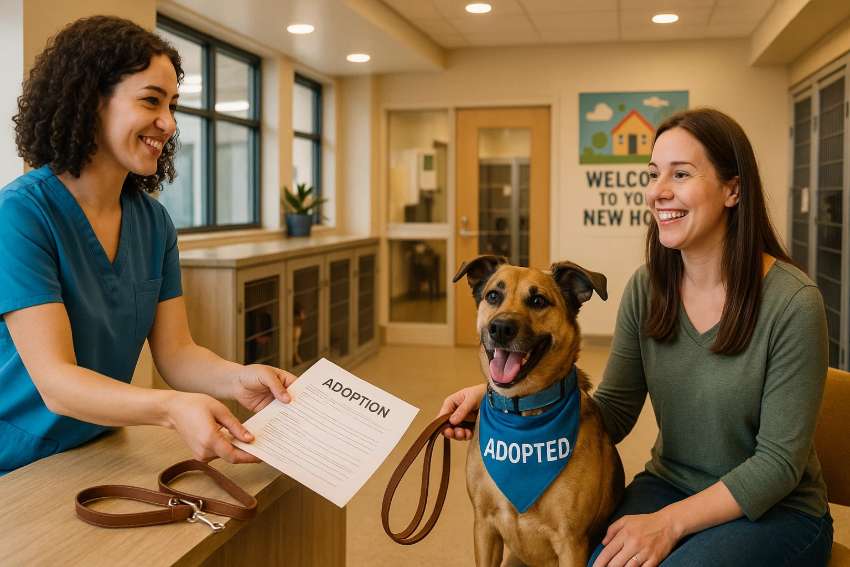
When you decide to adopt, you’ll usually:
Sign an adoption contract.
Pay an adoption fee.
5.1 What adoption fees usually cover
Initial vet exam
Core vaccinations (age-dependent)
Microchip registration
Spay/neuter surgery (or a voucher/contract if not yet done)
Any known medical treatments the dog has already needed (for example, parasite treatment)
Adoption fees may feel high at first, but they are usually lower than paying for all of these services privately for a new puppy.
5.2 The contract
Often states:
You will provide food, water, shelter and vet care.
You will not use the dog for breeding or fighting.
You will return the dog to the rescue if you can no longer keep them.
Read the contract carefully and ask questions if anything is unclear.
6. Bringing Your New Dog Home: The First 3–3–3 Rule
Many behaviour professionals talk about the “3–3–3 rule” as a rough guide to adjustment after adoption:
First 3 days: Overwhelmed, shut down or overly excited.
First 3 weeks: Starting to relax, show true personality and behaviour patterns.
First 3 months: Settled into routine, feeling like part of the family.
These are guidelines, not hard rules – every dog is different – but they can help you manage expectations.
6.1 First few days: keep things calm and simple
Have the basics ready:
Crate or bed
Bowls, food, treats
Collar, harness and ID tag
Keep the house quiet – limit visitors and big outings.
Use a consistent toilet routine (same door, same area, same times).
Let the dog explore at their own pace; don’t force cuddles or introductions.
6.2 First weeks: building trust and routine
Introduce:
Regular walk times
Set feeding schedule
Short training sessions with rewards
Teach basic rules kindly:
Where the dog is allowed (sofas/bed or not)
How to greet people politely
Watch for signs of anxiety: destructiveness, vocalising when left alone, reactivity on walks. These are common and can be improved with training and patience.
6.3 First months: training and bonding
Consider a positive reinforcement training class or working with a reward-based trainer.
Slowly expose your dog to different environments: parks, quiet cafés, car rides.
Keep communication open with the rescue – many are happy to offer advice after adoption.
7. Common Challenges After Adopting (and How to Handle Them)
7.1 House-training accidents
Even if a dog was house-trained before, new environments can cause confusion.
Go back to basics:
Frequent toilet breaks
Praise and treat for going outside
Supervise indoors; limit free roaming at first
7.2 Separation anxiety or clinginess
Many shelter dogs are afraid of being left again.
Start leaving them alone for very short periods and build up slowly.
Give safe chew toys, food puzzles and a comfy space when you leave.
If they panic, contact a vet or behaviourist – don’t punish or ignore severe anxiety.
7.3 Reactivity on walks
Some adopted dogs bark or lunge at other dogs, people or traffic.
Use distance – move further away from triggers.
Reward calm behaviour and consider working with a professional trainer who uses positive methods.
Remember: a “perfect” dog on day one is rare. Most adopted dogs need time, structure and patience – but the bond that grows from this work is often incredibly strong.
8. When Things Don’t Work Out Right Away
Sometimes, despite everyone’s best efforts, a particular dog and household are not a good match. This can be very emotional, but it doesn’t mean you failed.
Contact the shelter or rescue as early as possible if serious issues appear.
Ask for help, training resources or a behaviour assessment.
If rehoming is necessary, follow the terms of your contract and return the dog to the organisation.
It’s much better for the dog to go back to people who know how to find the right next home than to be passed around privately without support.
9. The Emotional Side of Adoption: Be Ready for Big Feelings
Adopting a dog can bring:
Joy and excitement
Guilt about leaving other dogs behind at the shelter
Stress and overwhelm during the adjustment period
Deep love and pride when your dog finally relaxes and trusts you
All of these feelings are normal. It can help to:
Talk to other adopters (online support groups or local dog communities).
Celebrate small victories:
The first time your dog sleeps soundly in your home
The first relaxed walk
The first time they play with a toy or wag their tail when they see you
10. Final Thoughts: Adoption Is a Journey, Not Just a One-Day Event
When you adopt a dog in the US or UK, the “gotcha day” is just the beginning. You’re not just saving a life – you’re committing to:
Learning who this dog really is over time
Helping them heal from whatever came before
Building routines, trust and communication, step by step
If you go into adoption with realistic expectations – understanding the process, the paperwork and the adjustment period – you’re far more likely to end up with what matters most: a strong, loving bond with a dog who finally has the safe, forever home they deserve.