Urban foxes are now a normal part of life in many European cities. They’re smart, adaptable, and incredibly persistent when food is available. For most households, foxes are not a day-to-day danger to adult dogs, but they can be a serious threat to chickens, rabbits, guinea pigs, and other small pets—especially if those animals live outdoors or in backyard runs.
This guide explains how foxes behave in urban areas, what makes small animals vulnerable, and a practical, step-by-step protection plan for backyard chickens and small pets—without turning your garden into a fortress that’s impossible to live with.
1. Why Foxes Show Up in Cities (And Why They’re Hard to “Scare Off”)
Foxes thrive in cities for the same reason raccoons do: easy food, shelter, and fewer large predators.
Food sources: trash bins, compost, fallen fruit, pet food, rodents, and sometimes poultry.
Shelter: sheds, under decks, dense hedges, abandoned areas, rail corridors.
Routine: foxes often follow predictable routes and return if they’ve found easy meals.
Key mindset: Don’t rely on “one-time” deterrents. Real protection comes from removing attractants and hardening enclosures.
2. What Foxes Can Do: Realistic Risk for Chickens, Rabbits, and Small Pets
Foxes are efficient hunters. In a backyard setting, a fox will exploit any weakness—loose wire, a gap under a fence, a poorly latched door, or animals left outside at dusk.
Chickens: high risk. Foxes can wipe out a flock quickly if they get into a run or coop.
Rabbits/guinea pigs outdoors: high risk. Foxes can dig under hutches or pull at weak mesh.
Small indoor pets: low direct risk, but open windows/doors and outdoor playtime increase exposure.
Important: Even if a fox can’t reach your pet, the stress of repeated attempts (scratching, biting mesh) can cause injury or shock in rabbits and guinea pigs.
3. Fox Behavior Patterns That Matter for Protection
Most active: dusk, night, and early morning—exactly when people stop supervising gardens.
They dig: especially under fences and under the edge of coops/runs.
They climb and squeeze: they can scale rough surfaces and fit through surprisingly small gaps.
They test repeatedly: if a setup is weak, they come back.
4. Step-by-Step Protection Plan for Backyard Chickens
If you keep chickens in a European city, assume foxes are a routine predator and build accordingly.
4.1 Upgrade Your Run Wire (The Most Common Failure Point)
Use strong welded mesh: avoid lightweight “chicken wire” as your main barrier (it’s mainly for keeping chickens in, not predators out).
Choose smaller openings: smaller gaps reduce the risk of a fox biting and pulling.
Secure all edges: mesh should be firmly stapled/screwed with washers to framing.
4.2 Secure the Roof (Yes, You Need One)
Covered runs protect against climbing attempts and prevent foxes from entering from above.
A roof also protects from other urban hazards (weather and aerial predators in some areas).
4.3 Stop Digging: The “Apron” or Buried Barrier Method
Foxes commonly dig at the edge of coops and runs.
Wire apron: lay welded mesh flat on the ground extending outward from the run perimeter, then cover with soil, gravel, or paving slabs.
Buried mesh: bury mesh down along the perimeter to reduce tunneling.
Hard edging: paving slabs or concrete strips can prevent digging at the most common access points.
4.4 Doors and Latches: Assume Foxes Can “Figure It Out”
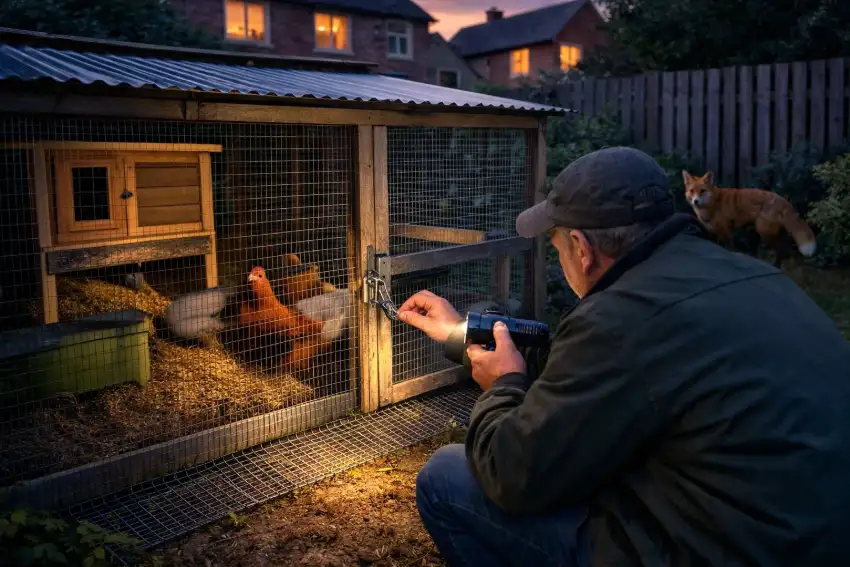
Use two-step latches or carabiners on run doors.
Check for gaps at hinges and corners.
Make sure doors close flush (no warping).
4.5 Night Lock-Up Routine (Non-Negotiable)
Lock chickens into a secure coop before dusk.
Do a quick perimeter check: latches, roof, and ground edges.
Remove food scraps and secure feed bins (food attracts foxes and rodents).
5. Protection Plan for Rabbits, Guinea Pigs, and Other Small Outdoor Pets
Small prey animals need both physical protection and stress reduction.
5.1 Safer Housing Rules
Bring them indoors at night: this is the single best protection step.
Use predator-proof mesh: strong welded mesh, not thin wire that can be bent or chewed.
Double-layer weak sides: if the hutch is old, add a second barrier layer.
Elevate if possible: hutches raised off the ground reduce digging access, but still need secure sides and a protected underside.
5.2 Protect Against Stress and Injury
Add hiding boxes/tunnels so rabbits can retreat if startled
Place the hutch/run away from fence lines and dense hedges (fox “approach routes”)
Use privacy panels on one or two sides to reduce visual stress
5.3 Outdoor Playpens: Supervision Only
Never leave rabbits/guinea pigs unattended in open-top pens
Use a roofed, reinforced run if you need outdoor time
Keep sessions during daylight when you can supervise closely
6. Protecting Small Pets in Gardens (Cats, Small Dogs, and Indoor Pets)
Most foxes avoid healthy adult dogs, but small dogs and outdoor cats can get into conflict, especially near food or dens.
Small dogs: leash in the garden at night; use a light and avoid chasing wildlife.
Cats: consider keeping cats indoors at dusk/night if fox activity is high in your area.
Indoor pets: keep windows/doors screened if pets roam near exits.
7. Remove Attractants: Make Your Garden Less Interesting
This step reduces visits, but it won’t replace enclosure security.
Secure bins with tight lids
Don’t leave pet food outdoors
Cover compost and avoid meat scraps
Pick up fallen fruit
Clean up spilled birdseed
Store chicken feed in sealed containers
8. Deterrents: What Helps vs What Usually Doesn’t
8.1 What Can Help (As a Supporting Layer)
Motion-activated lights: can reduce surprise visits in some gardens.
Motion sprinklers: can be effective when positioned properly.
Human presence and routine checks: foxes avoid confrontation, but only if they learn your garden is “busy.”
8.2 What Usually Doesn’t Work Long-Term
Sound-only deterrents: foxes often habituate quickly.
Random “repellent” sprays: inconsistent, and rain reduces effectiveness.
Leaving a radio on: sometimes helps briefly, rarely a permanent fix.
9. If a Fox Attempts an Attack: What to Do
Do not approach closely: keep your distance and focus on securing your pets.
Bring pets indoors: especially small pets and cats.
Check enclosures: look for bite marks, bent mesh, digging points, and latch failure.
Inspect animals for injuries: even minor wounds can become infected.
Important: A “near miss” is a warning. Foxes often return once they’ve identified a weak point.
10. When to Call a Vet or Professional Help
Seek veterinary care promptly if:
Your rabbit/guinea pig seems shocked: not moving, rapid breathing, refusing food
Any bite, scratch, or bleeding occurred
Your chicken has wounds, limps, or appears lethargic
Your dog or cat had direct contact with wildlife
If fox visits are frequent and you suspect a den on your property, consider contacting local wildlife authorities or animal control for guidance based on your city’s rules.
Final Thoughts: Secure Housing Beats Scare Tactics
Urban foxes are clever and persistent. The most reliable protection for chickens, rabbits, and small pets is physical security: strong welded mesh, roofed runs, dig-proof edges, and locked coops at dusk. Deterrents can help reduce visits, but they don’t replace a predator-proof setup. If you focus on strong enclosures and a consistent night routine, you can keep small animals safe even in areas with regular fox activity.
Your action step: today, inspect your coop/hutch like a fox would—check every corner, latch, and ground edge. Fix one weak point at a time, starting with doors and digging access.