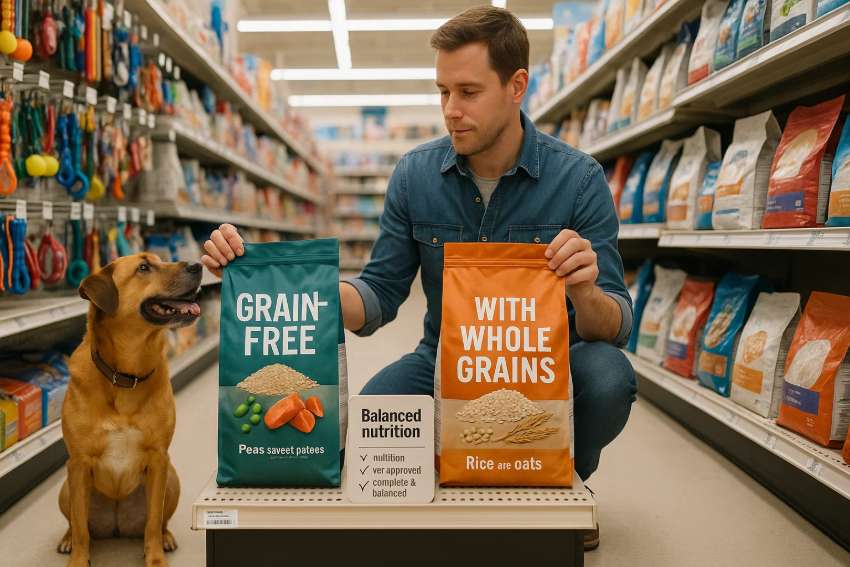
Walk down any pet food aisle in the US or Europe and you’ll see it everywhere: big “grain-free” labels, bags covered in peas and sweet potatoes, and other bags proudly showing “with wholesome whole grains”. It’s confusing – especially when you hear different opinions from friends, breeders and social media.
Is grain-free automatically healthier? Are grains bad for dogs? And why are some vets suddenly more cautious about grain-free diets?
In this guide, we’ll break down:
What “grain-free” and “grain-inclusive” really mean
Why grain-free diets became popular
What vets actually worry about (it’s not just the word “grain”)
When grain-inclusive food is usually a good choice
When grain-free food might make sense
How to choose the best food for your dog and switch safely
Important: This is general information, not medical advice. Always talk to your vet about your own dog’s diet, especially if they have health problems.
1. What Do “Grain-Free” and “Grain-Inclusive” Actually Mean?
1.1 Grain-inclusive dog food
Grain-inclusive foods contain one or more grains, such as:
Rice
Oats
Barley
Corn (maize)
Wheat
In a balanced formula, grains mainly provide:
Carbohydrates (energy)
Some protein and fiber
Certain vitamins and minerals
1.2 Grain-free dog food
Grain-free foods do not use the common grains listed above. Instead, they often use:
Potato or sweet potato
Peas, lentils, chickpeas, other legumes
Tapioca or other starch sources
Grain-free doesn’t mean “carb-free”. It just means the carbohydrates come from non-grain sources.
2. Why Did Grain-Free Dog Food Become So Popular?
Grain-free diets really took off for a few reasons:
Human diet trends: As gluten-free and grain-free diets became popular for people, many owners assumed the same must be better for dogs.
Marketing: “Grain-free” sounds premium and “clean” even if the overall nutrition isn’t any better.
Allergy concerns: Some dogs do have food sensitivities, and grains are often blamed (sometimes correctly, sometimes not).
The key point: grain-free was marketed as automatically “healthier” – but nutrition is more complicated than one ingredient group.
3. Are Grains Bad for Dogs?
For most healthy dogs, no.
Dogs are not wolves – they’ve adapted over thousands of years to digest starch from human food scraps.
Cooked, well-chosen grains (like rice or oats) are often very digestible for dogs.
True grain allergies exist, but they are much less common than allergies to animal proteins.
What really matters is:
Overall nutrient balance
Ingredient quality
How your individual dog responds
4. Food Allergies: It’s Usually the Protein, Not the Grain
Many owners switch to grain-free food because they think their dog is “allergic to grains”. Sometimes that’s true, but often:
The real trigger is a protein source (like beef, chicken, dairy or egg).
Other times it’s an environmental allergy (pollen, dust mites) that just happens to show up as skin or ear problems.
Vets often handle suspected food allergies with:
A limited ingredient diet (few, carefully chosen ingredients)
Or a novel protein diet (using a protein the dog has never eaten before, like duck or venison)
Sometimes a hydrolyzed protein prescription diet
These diets can be grain-free or grain-inclusive. The important part is: simple, controlled ingredients, not just “no grains”.
5. The Heart Disease Question: Why Some Vets Are Cautious About Grain-Free
Over the last few years, vets have reported cases of a heart condition called dilated cardiomyopathy (DCM) in some dogs eating certain grain-free diets, especially foods heavy in peas, lentils or other legumes.
Research is still ongoing, and there is no simple rule like “all grain-free food causes DCM” or “all grain-inclusive foods are safe”. But many veterinary cardiologists and nutritionists are cautious about:
“Boutique” or very small brands using unusual ingredients
Formulas that rely heavily on peas, lentils, chickpeas or potatoes as major ingredients
Diets that haven’t been properly tested or formulated by experienced nutritionists
Because of this, many vets now recommend:
Choosing brands with strong nutritional research behind them
Avoiding unnecessary grain-free diets in dogs with no grain issues
Being especially careful with grain-free diets that are legume-heavy
If your dog is on a grain-free diet and has low energy, coughing, heavy breathing or exercise intolerance, it’s important to talk to your vet immediately.
6. When Grain-Inclusive Food Is Usually a Great Choice
For many dogs, a well-formulated grain-inclusive diet is:
Nutritionally complete: easy to balance with the right vitamins and minerals
Digestible: especially when using cooked rice, oats or barley
More affordable: grain-inclusive foods are often cheaper than fancy grain-free options
Grain-inclusive food may be a good default choice if:
Your dog is generally healthy.
They don’t have known grain allergies or inflammatory bowel disease linked to grains.
Your vet hasn’t recommended a grain-free or speciality diet.
7. When Grain-Free Food Might Make Sense
Grain-free is not “bad” by default. It can be helpful in certain situations:
Your dog has a confirmed grain allergy or intolerance diagnosed by your vet.
Your dog does dramatically better (stools, skin, energy) on a specific grain-free formula than on well-chosen grain-inclusive foods.
A veterinary nutritionist has recommended a grain-free or legume-specific diet for a medical reason.
In these cases, focus on:
Brands with experienced nutritionists on staff
Clear evidence the food meets a recognized nutrition standard for your region
Formulas where legumes and potatoes are not the only major ingredients
8. What Vets Really Care About (Beyond the Grain Debate)
Most vets are less interested in “team grain-free” vs “team grain-inclusive” and more interested in:
Is this diet complete and balanced? (for your dog’s life stage and size)
Has the brand done feeding trials or solid nutritional research?
Does the food meet recognized standards (for example, for adult maintenance, puppy growth, or all life stages)?
Is there a qualified nutritionist involved in formulating the diet?
How is your individual dog doing on this food? (weight, coat, stools, energy, bloodwork if needed)
A good grain-inclusive diet is better than a poorly designed grain-free diet – and vice versa. The label “grain-free” alone doesn’t tell you if a food is high or low quality.
9. How to Choose the Best Food for Your Dog (Grain-Free or Not)
When you’re comparing brands and bags, use this checklist:
Life stage: Is it for a puppy, adult or senior? (Check the bag.)
Size: Does it suit small-breed, medium or large-breed dogs?
Standards: Does the packaging say it meets a recognized complete-and-balanced standard for dogs?
Company transparency: Does the brand provide clear information about who formulates their diets?
Ingredients: Are there real animal proteins near the top of the list?
History: Does your dog have past issues with specific proteins, grains or other ingredients?
Then, ask your vet:
“Is this food appropriate for my dog’s age, size and health?”
“Given my dog’s history, would you prefer grain-inclusive or grain-free here?”
“Are there any brands you trust more for sensitive dogs or certain breeds?”
10. Switching Foods Safely (And Monitoring the Results)
Whether you move from grain-inclusive to grain-free or the other way around, always switch gradually:
Days 1–2: 75% old food, 25% new food
Days 3–4: 50% old food, 50% new food
Days 5–6: 25% old food, 75% new food
Day 7+: 100% new food if your dog is doing well
Watch for:
Stool changes (looser, firmer, more or less frequent)
Vomiting or gas
Skin and coat condition
Energy level and appetite
If things get worse, slow down the switch or talk to your vet about trying a different formula. Sometimes you need to test a couple of foods before you find the best fit.
11. Final Thoughts: “Grain-Free vs Grain-Inclusive” Is Not a War
The dog food world loves simple answers – but nutrition is rarely simple. Most vets would sum it up like this:
Grains are not automatically bad for most dogs.
Grain-free diets can be useful in specific, vet-guided situations.
What matters most is overall quality, balance and how your dog responds.
Instead of asking “Is grain-free better?”, ask:
“Is this a well-formulated diet from a reputable company?”
“Does my dog look and feel healthy on it?”
“Does my vet agree this is a good choice for my dog’s health and risk factors?”
When you focus less on trendy labels and more on your individual dog – their age, size, activity and health – the “grain-free vs grain-inclusive” debate becomes much less stressful, and mealtimes become what they should be: a simple, happy part of your life together.