Retirement can be the perfect time to welcome a dog into your life. You finally have more time at home, a more flexible schedule, and a stronger desire for daily companionship. The right dog can bring routine, purpose and joy – but the wrong match can feel overwhelming, expensive or physically demanding.
This guide looks at the best dog breeds and types for seniors and retirees, with a focus on:
What older adults should consider before choosing a dog
Small and medium breeds that usually fit senior lifestyles
Why adopting an older dog can be a fantastic choice
Breeds and types that may be too intense for many retirees
Every dog is an individual. Age, health, training and personality matter just as much as breed. Think of this as a starting point, not a fixed rulebook.
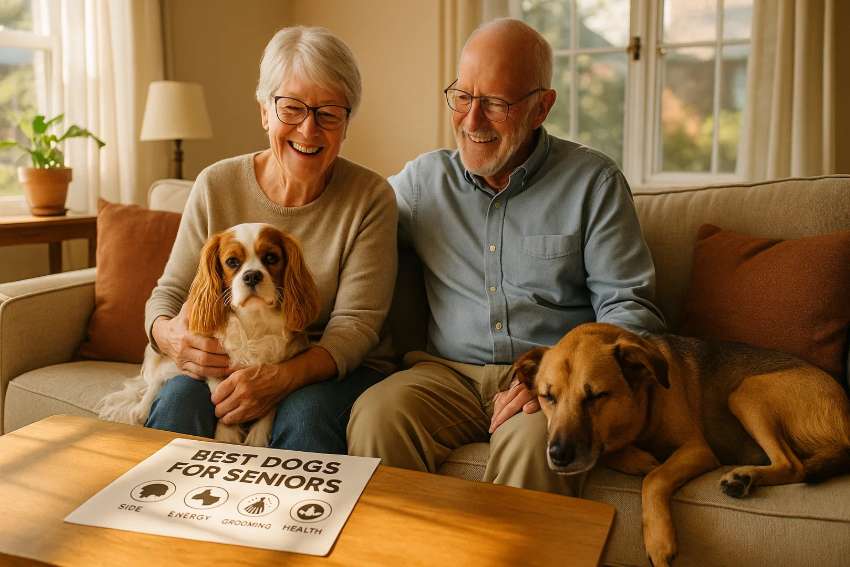
1. What Seniors and Retirees Should Look for in a Dog
Before you fall in love with a specific breed, think about your daily life over the next 10–15 years – not just today.
1.1 Energy level and exercise needs
Can you comfortably walk a dog once or twice a day, most days of the year?
Do you enjoy gentle strolls, or long hikes?
Would you prefer a dog that’s happy with short walks and sofa time, or one that needs serious daily workouts?
1.2 Size and physical manageability
Smaller and medium dogs are easier to lift into cars, bathtubs and onto exam tables.
Very large or powerful dogs may be hard to control if they pull on the leash.
If you have joint issues, balance problems or use a walking aid, a calmer, smaller dog is usually safer.
1.3 Grooming and health
Do you want a low-shedding dog (more grooming) or a shedding dog with a simpler coat?
Can you afford regular professional grooming if needed?
Are you prepared for potential health issues common in some breeds?
1.4 Long-term planning
Where will you be living in 5–10 years (apartment, house, assisted living)?
Do you have family or friends who could help with the dog if your health changes?
Would a younger dog, an adult dog, or a senior dog fit best with your future plans?
2. Small Companion Breeds That Often Suit Seniors
Many retirees want a small, friendly companion who enjoys cuddles, short walks and living close to people. These breeds are often a good match when responsibly bred and well socialised.
2.1 Cavalier King Charles Spaniel
Why they’re popular with seniors:
Very affectionate “lap dog plus” – they love being close to their people.
Gentle, soft temperament when bred for health and good character.
Moderate exercise needs – daily walks and play, but usually not extreme.
Things to consider:
Serious inherited health issues (especially heart and neurological problems) are common in poorly bred Cavaliers.
Choose breeders who do proper health testing, or consider adopting through a Cavalier rescue that screens for medical needs.
They don’t like being left alone for long hours every day.
2.2 Bichon Frise
Why they fit many retirees:
Cheerful, sociable and people-focused.
Small but not extremely fragile.
Often get along well with visitors and grandchildren when introduced properly.
Things to consider:
Curly coat needs regular brushing and grooming (every 4–8 weeks).
They thrive on company; early training helps prevent separation anxiety.
2.3 Shih Tzu / Lhasa Apso (well-bred, well-groomed)
Why many older adults like them:
Companion breeds designed to live closely with humans.
Generally small, sturdy and adaptable to apartment living.
Moderate exercise needs – happy with daily walks and indoor play.
Things to consider:
Long coats require regular grooming or a short “puppy cut”.
Regular eye and facial care is important to keep them comfortable.
2.4 Havanese
Why they’re a good match for some retirees:
Friendly, outgoing and usually love being with people.
Small and adaptable to city or rural life.
Enjoy gentle play and companionship more than intense sports.
Things to consider:
Like Bichons, they need consistent grooming and coat care.
They are social dogs – best for seniors who are home a good portion of the day.
3. Medium Dogs for Active, Outdoorsy Retirees
Many seniors and retirees are still very active – enjoying long walks, hiking, gardening and travel. For these owners, a slightly more energetic dog can be a perfect companion.
3.1 Whippet
Why they suit “walk-then-relax” lifestyles:
Gentle, affectionate and usually calm indoors.
Enjoy short bursts of fast running, then often become cuddly couch potatoes.
Short coat – very low grooming needs (but they do shed a bit).
Things to consider:
Need secure fencing and careful off-leash management (strong chase instinct).
Thin skin and body – can be sensitive to cold, so coats and warm bedding are important.
3.2 Cocker Spaniel (English or American)
Why some retirees like them:
Friendly, people-centred and generally eager to please.
Enjoy walks and play, but don’t usually require extreme daily exercise.
Moderate size – easier to lift and manage than big breeds.
Things to consider:
Feathered coat and ears need regular brushing and grooming.
Early training and socialisation matter – some lines can be more sensitive.
3.3 Small or medium mixed-breed dogs
Why mixed breeds are worth a serious look:
Adult mixed-breed dogs in shelters often have known temperaments.
Staff and foster carers can guide you toward dogs that are calm, friendly and low to moderate energy.
You give a home to a dog that really needs one, rather than starting from scratch with a puppy.
Things to consider:
Ask specifically for a dog that is good with older adults and okay with a quieter lifestyle.
Look for dogs who are not overly strong pullers or extremely nervous/reactive.
4. Pugs and Other Short-Nosed Breeds: Cute but Caution Needed
Pugs and some other brachycephalic (short-nosed) dogs are very popular with seniors because they are:
Affectionate and clownish, with big personalities.
Generally people-focused and often tolerant of visitors.
Happy to share the sofa and live close to humans.
But:
Short-nosed breeds can suffer from serious breathing problems, eye issues and overheating.
They may need more vet care over their lifetime than some other breeds.
Exercise in hot weather can be dangerous for them.
If you love the look and personality of such breeds, choose breeders who focus strongly on health and good breathing, and be prepared for possible higher medical costs.
5. Why Senior Dogs Can Be Perfect for Senior Humans
Puppies are adorable – but they bite, chew, wake you at night and require months of intense training and supervision. For many retirees, a calm adult or senior dog is actually a far better match.
5.1 Advantages of adopting a senior dog
You can see their real temperament and energy level immediately.
Most are already house-trained and past the destructive puppy stage.
They often need shorter walks and more naps – ideal for quieter lifestyles.
Many older dogs in shelters just want a warm bed and a loving companion.
5.2 Things to consider with senior dogs
They may have existing health issues that require medications or special diets.
Their remaining time may be shorter – emotionally challenging, but very meaningful.
Vet clinics or rescues can give you a realistic idea of expected care and costs.
For many retirees, giving a senior dog a peaceful, loving home for their final years is deeply rewarding – and often easier day-to-day than raising a lively puppy.
6. Breeds That Can Be Too Demanding for Many Seniors
With the right support, some older adults succeed with almost any dog. But in general, these types are more challenging for many retirees:
High-drive working and herding breeds (e.g. Border Collies, Belgian Malinois, working-line German Shepherds)
Need intense mental and physical exercise every day.
Can develop serious behavior issues if understimulated.
Large, powerful guard breeds
Can be difficult to control physically if they lunge or pull.
Require confident, experienced training and careful management.
Ultra-giant breeds
Hard to lift and move.
High food and health costs; shorter average lifespan.
These dogs aren’t “bad” – they just belong with owners who have the physical capacity, time and experience to meet their very specific needs.
7. Practical Tips for Seniors Choosing a Dog
Whatever breed or mix you’re considering, these steps can make the decision safer and more enjoyable:
7.1 Talk honestly with rescues, breeders and vets
Describe your daily routine, health, home and future plans.
Ask which dogs they would not recommend for your situation.
Be open to suggestions you didn’t expect – the “right” dog may not match the picture in your head.
7.2 Involve family or friends
Discuss who could help with dog care during illness, hospital stays or future moves.
Consider co-adopting a dog with a trusted family member who lives nearby.
7.3 Try fostering first
Some rescues offer foster-to-adopt programs.
This lets you test living with a dog before making a permanent commitment.
7.4 Plan for the dog’s future
Include your pet in your plans and documents (who will take them if something happens to you).
Talk to family about your wishes so your dog will be safe and cared for, whatever happens.
8. Final Thoughts: The Right Dog Can Make Retirement Richer
For many seniors and retirees, a dog is more than a pet – they are a daily reason to get up, go outside, move your body and connect with another living being. The best dogs for older adults are:
Calm and friendly, not overly intense,
Physically manageable and suited to your home,
Healthy enough to enjoy the coming years – but not so young and wild that they exhaust you.
Whether you choose a gentle small companion breed, a relaxed medium dog, or a grateful senior rescue, the key is to match the dog to your real life, your energy and your future plans. Done well, the bond you build in your retirement years can be one of the most rewarding chapters of your life – for both you and your four-legged friend.