If your dog has a “sensitive stomach,” you’re probably living with some mix of loose stools, gassiness, occasional vomiting, or unpredictable appetite. It’s frustrating—especially because the pet food aisle (and the internet) makes it sound like there’s one perfect brand that fixes everything. In real life, sensitive stomachs usually have a few common causes, and the best food is the one that matches your dog’s specific trigger.
This guide explains what “sensitive stomach” really means, which ingredients commonly cause trouble, what to look for in a gentle diet, how to switch foods safely, and when you should stop experimenting and see a veterinarian.
1. What “Sensitive Stomach” Usually Looks Like (And What It Might Mean)
Most owners use “sensitive stomach” to describe recurring GI symptoms that come and go. Common signs include:
Soft stool or intermittent diarrhea
Excess gas, bloating, noisy stomach sounds
Occasional vomiting (especially after eating quickly)
Frequent grass-eating
Stool that changes with treats, table scraps, or new foods
These symptoms can come from different issues, such as:
Food intolerance: difficulty digesting certain ingredients (not the same as a true allergy).
Food allergy: immune reaction, often includes skin/ear problems as well as GI signs.
Dietary indiscretion: eating trash, fatty foods, too many treats.
Stress gut: anxiety, schedule changes, travel, or new environments.
Parasites or infection: especially in puppies or dogs who visit parks/daycare.
Chronic conditions: pancreatitis, inflammatory bowel disease, or other GI disease.
Key point: The “best dog food” depends on whether your dog needs lower fat, simpler ingredients, more fiber, or a veterinary therapeutic diet.
2. Before You Change Food: Quick Checklist (This Prevents Endless Trial-and-Error)
Food switching is expensive and stressful when you’re guessing. Before you buy another bag, do these basics:
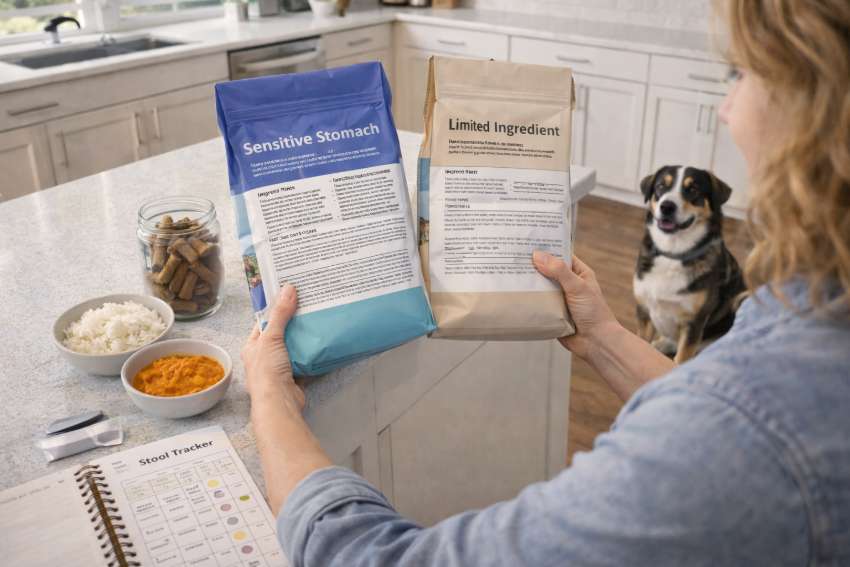
Track symptoms for 7–10 days: stool consistency, vomiting, gas, appetite, and any triggers (treats, chews, new foods).
Check treats and chews: many “mystery stomach issues” come from rich treats, bully sticks, pig ears, or table scraps.
Consider parasites: especially if your dog is young or goes to dog parks—ask your vet about fecal testing.
Rule out “too fast/too much” feeding: gulping can cause vomiting and gas.
Pro tip: If you don’t control treats and extras, you’ll never know if the new food helped.
3. What to Look for in the Best Food for Sensitive Stomachs
Look for formulas designed for digestibility and stability. The most helpful features are often:
Limited ingredient list: fewer variables makes triggers easier to identify.
Single primary protein: reduces the chance of reacting to multiple proteins.
Moderate, high-quality fiber: supports stool quality (too little or too much can cause issues).
Appropriate fat level: lower fat can help dogs prone to pancreatitis or greasy stools.
Added prebiotics/probiotics: can help some dogs (but they’re not a cure-all).
Clear labeling and consistent formulation: stability matters for sensitive dogs.
Three Common “Sensitive Stomach” Food Styles
Gentle digestion formulas: designed for easier digestibility and firmer stools.
Limited-ingredient diets (LID): fewer ingredients, often single protein + single carb.
Veterinary therapeutic GI diets: best for recurring or severe problems, especially with weight loss or frequent vomiting.
4. Common Ingredients to Avoid (Or At Least Watch Closely)
Not every dog reacts to the same thing, but these are frequent troublemakers for sensitive dogs. Avoiding them can reduce flare-ups while you’re stabilizing the gut.
4.1 High-Fat Ingredients and “Rich” Extras
Greasy table scraps, fatty meat trimmings
Very rich treats (pig ears, some jerky treats, high-fat chews)
Foods with very high fat content for dogs prone to pancreatitis
Why it matters: high fat can trigger vomiting, diarrhea, and pancreatitis in vulnerable dogs.
4.2 Too Many Protein Sources in One Formula
Recipes that include multiple meats (chicken + beef + fish, etc.)
“Mixed protein” kibble and especially mixed-protein treats
Why it matters: if your dog reacts to one protein, multiple proteins make it difficult to identify and avoid.
4.3 Certain Common Proteins (If Your Dog Is Sensitive)
These aren’t “bad proteins,” but they are common triggers in dogs with food sensitivities:
Chicken
Beef
Dairy
Note: a true food allergy is less common than food intolerance, but these proteins show up in many diets and treats, making them frequent suspects.
4.4 Artificial Colors, Heavy Flavor Coatings, and “Mystery” Additives
Highly flavored, heavily coated kibbles that encourage overeating
Artificial colors (not always harmful, but often unnecessary for sensitive dogs)
Why it matters: some dogs do better with simpler, more consistent formulas.
4.5 Sudden Diet Changes (The “Ingredient” That Causes the Most Diarrhea)
Even the perfect food can cause issues if you switch too fast.
5. Best “Ingredient Profiles” That Often Work Well
Instead of chasing a single brand, focus on profiles that tend to be gentler.
5.1 Single Protein + Gentle Carb
Proteins often used: turkey, lamb, salmon, whitefish (varies by dog)
Carbs often used: rice, oats, sweet potato (varies by dog)
Who it helps: dogs with mild sensitivity or inconsistent stools, especially when treats are controlled.
5.2 Lower-Fat Diets
Formulas marketed for weight management or “low fat” (read labels and confirm with your vet if pancreatitis is a concern)
Who it helps: dogs with greasy stools, repeated vomiting after rich meals, or a history of pancreatitis.
5.3 Veterinary GI Diets
These are often the most reliable option for chronic GI issues because they’re designed for digestibility and consistency.
Who it helps: recurring diarrhea/vomiting, weight loss, frequent flare-ups, multiple failed food trials.
Trade-off: can cost more, but often saves money by reducing repeated vet visits and endless food switching.
6. How to Switch Dog Food Without Causing Diarrhea
A slow transition is essential for sensitive dogs. A common approach is a 7–14 day transition, longer if your dog is very reactive.
Days 1–3: 75% old food + 25% new
Days 4–6: 50% old + 50% new
Days 7–10: 25% old + 75% new
Day 11+: 100% new
If symptoms worsen: pause at the previous ratio for a few days. If your dog develops repeated vomiting, watery diarrhea, or lethargy, contact your vet.
7. Treats, Chews, and Human Food: The Hidden Cause of “Sensitive Stomach”
Many dogs can tolerate their main food perfectly, but react to extras.
Best practice: choose one simple treat that matches the main diet’s protein.
Avoid rich chews: especially during a diet trial (no “mystery” chews).
Skip table scraps: especially fatty foods, dairy, spicy foods, and leftovers.
Helpful rule: keep treats under 10% of daily calories, and lower if your dog is actively having GI issues.
8. When “Sensitive Stomach” Is Actually a Medical Problem
If symptoms are frequent or severe, food isn’t the full answer. Contact a vet if you see:
Diarrhea lasting more than 48 hours or watery diarrhea
Repeated vomiting, especially if your dog can’t keep water down
Blood in stool or vomit
Weight loss, reduced appetite, or lethargy
Signs of dehydration (dry gums, weakness, sunken eyes)
Recurring GI episodes that keep returning despite careful diet control
Important: Puppies, seniors, and small dogs can dehydrate quickly. If your dog is very young, very old, or has other health issues, seek help sooner.
9. A Simple “Sensitive Stomach” Plan That Works for Many Dogs
If your dog is having mild but recurring issues, this structured approach can help you stop guessing:
Step 1: stop all table scraps and reduce treats to one simple option
Step 2: choose a gentle formula (limited ingredient or sensitive digestion style) with a single protein
Step 3: transition slowly over 10–14 days
Step 4: track stool and vomiting daily for 3–4 weeks
Step 5: if not improving, ask your vet about fecal testing and a veterinary GI diet
Reminder: For suspected food allergies, your vet may recommend a structured elimination diet trial. Randomly switching foods often delays the answer.
Final Thoughts: The “Best” Food Is the One Your Dog Can Digest Consistently
For sensitive stomachs, the winning formula is usually showing up in your dog’s stool quality and overall comfort—not on the front of the bag. Focus on simple ingredient profiles, appropriate fat levels, and controlled treats. Switch slowly, track results, and don’t hesitate to involve a vet when symptoms are persistent or severe.
Your action step: choose one gentle diet strategy (limited ingredient, sensitive digestion, or vet GI diet), commit to a slow transition, and keep everything else (treats, chews, scraps) consistent for at least a few weeks. That’s how you get a clear answer—and a happier stomach.